UMN Lecturers Trusted to Fill Strategic Positions in The National Board of ASPRODI DKV Indonesia 2026-2030
June 20, 2026
Showcasing 58 Student Businesses, UMN’s Skystar Ventures Successfully Hosts Startup Demo Day & Exhibition 2026
June 20, 2026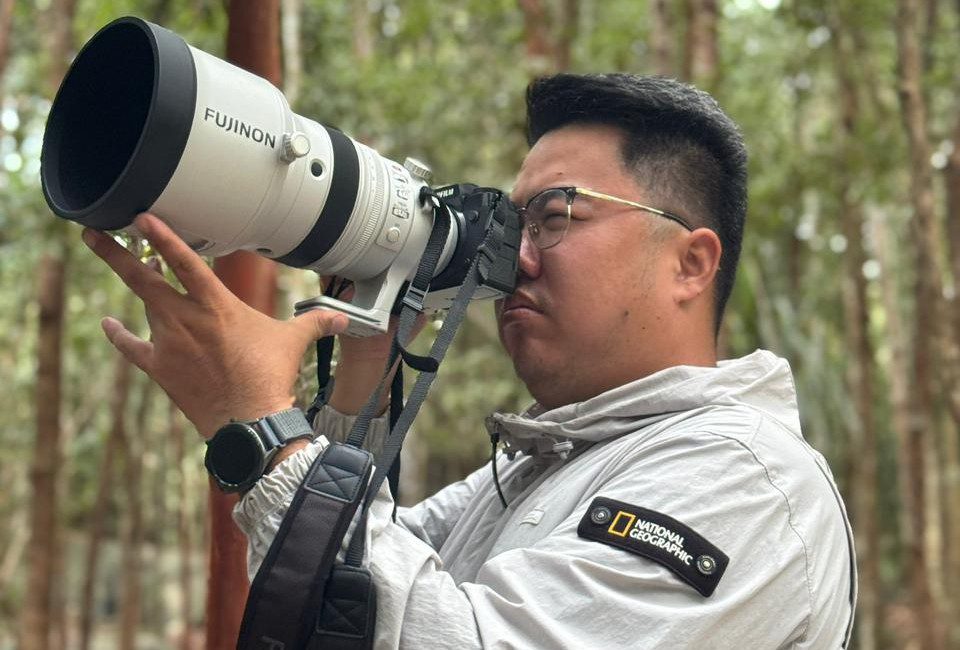
Donny Fernando documenting an object during a field assignment. (Source: UMN)
Tangerang, Wednesday (27/05/2026) – An alumnus of the Journalism study program at Universitas Multimedia Nusantara (UMN) has successfully built a career as a photo journalist at the renowned media outlet National Geographic Indonesia. His interest in the world of journalism began during his university years.
Becoming a witness to major events that will later be recorded in history is a dream for many. For Maximilian Georgius Donny Fernando—an alumnus of UMN’s Journalism program, not only at the undergraduate level but also at the postgraduate level—that very dream guided his steps into the world of journalism. Today, he has successfully built a career as a visual journalist at National Geographic Indonesia.
“I actually chose journalism based on a desire to be in the same location when history is being made. For example, when great news or major events are happening, I want to be there,” said the man known as Donny.
His journey in developing journalistic sensitivity cannot be separated from his university years at UMN. Donny revealed that the two courses that most influenced his current career were In-Depth Journalism and Intercultural Communication, which were honed during his undergraduate and postgraduate studies.
“In In-Depth Journalism, we learned how to research something. At National Geographic Indonesia, one of the things that makes our visuals deep is that we know what we’re photographing, how to photograph it, and why we’re photographing that visual. That comes from research, so our photos end up being very contextual,” Donny explained regarding the importance of research in journalistic photography.
Beyond technical skills and in-depth research, the academic environment at UMN also shaped him as a person. Donny shared how field assignments during his university days—such as covering labor protests, creating documentaries, and covering football matches—taught him the meaning of equality when dealing with sources.
“The lesson I learned during campus was that the streets are the second teacher. We must not look down on others, and we must not look down on ourselves in the eyes of others. UMN taught me to learn how to be a person who positions themselves as well as possible with the sources and subjects we will encounter,” he said.
Alongside this, Donny’s interest in photography itself had already taken root during his university years. For him, the student years were the best time to experiment and learn from failure. The turning point that solidified his commitment to this path came during his internship.
“I felt that I had used up my quota of trial and error in photography while I was on campus. The moment that ultimately made me stay focused on photography was, I think, when I first did my internship. I was thrown directly into the massive 411 protest in 2016, and out in the field I experienced what journalism life is like. This job carries a high stakes value, and that made me think, ‘Oh, the value of this job is very high because the stakes are also high.’ When the risk is great, the reward is also considerable,” Donny explained.
Stepping further into the professional world at National Geographic Indonesia, Donny also felt a significant difference from his university days. While in college, he hadn’t fully paid attention to his surroundings; the professional world demanded that he open his eyes wider.
“When I was at UMN, I didn’t pay attention to my surroundings yet. But when I joined Natgeo, time taught me to pay more attention to the details around me, whether nature or people, and everything in it—animals, flora, fauna, and culture,” he added.
Donny’s daily routine is now filled with thorough preparation before heading into the field for a major assignment (grand expedition). The behind-the-scenes process of a National Geographic photo shoot involves intensive discussions with writer colleagues to temper the photographer’s ego, online visual research to find new angles that have never been explored, and rigorous curation.
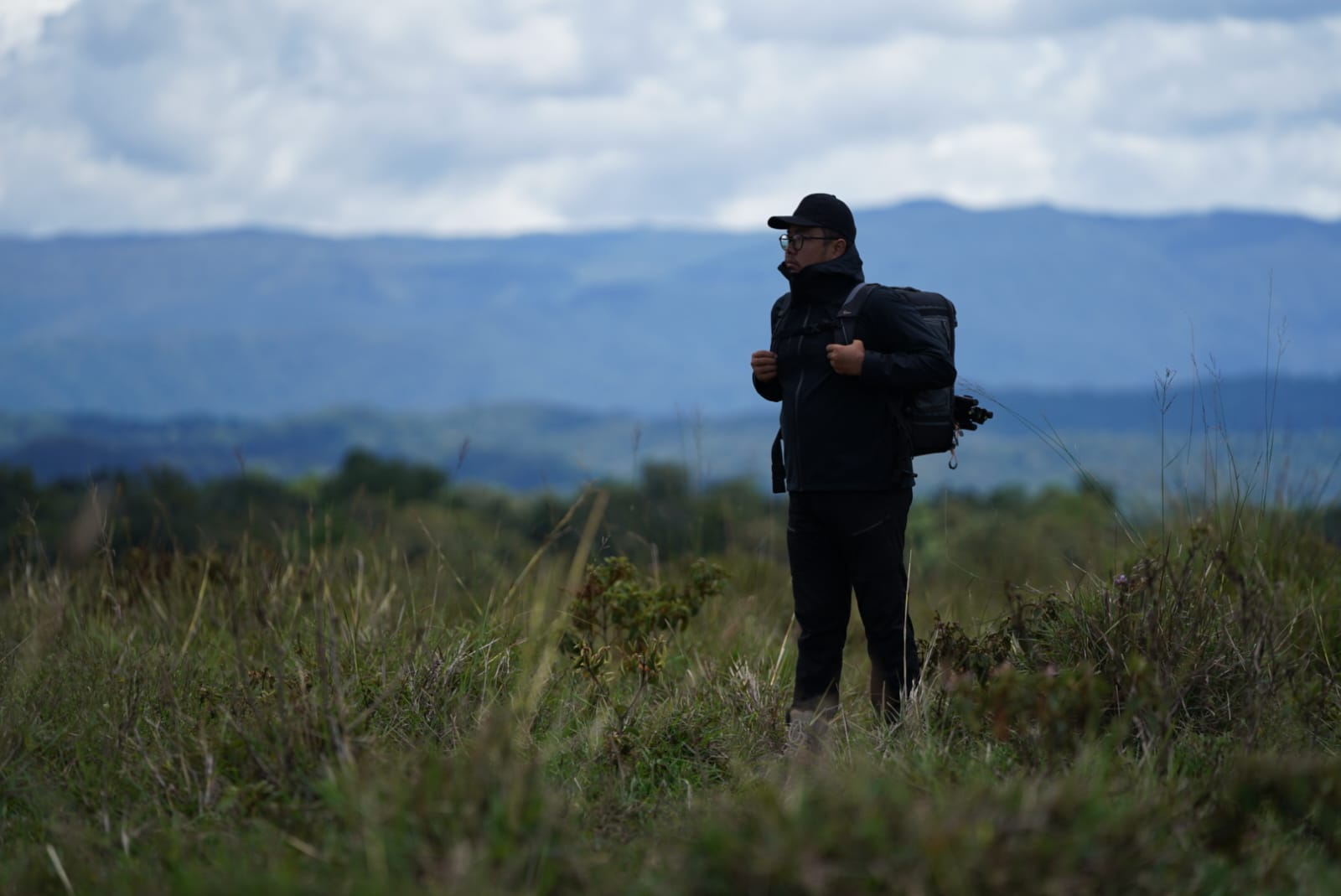
Donny Fernando during a field documentation assignment for a visual and feature project at National Geographic Indonesia. (Doc. UMN)
“Every day, photos must be backed up to hard drives to avoid file crashes. I curate my own photos as well as photos from contributors across Indonesia before bringing them to the editor. We from Indonesia also have to report our features to Natgeo US in Washington via email,” Donny shared, revealing his behind-the-scenes work process.
Among the many assignments he has undertaken, one of Donny’s proudest moments was when his photo was selected as the cover of National Geographic Indonesia’s “Puspara Mahakam” edition. That photo was born of an accident and split-second alertness while he and his team were lost at sea.
“My boat was alone and I was already exhausted. Suddenly, on my right side, a flock of red whistling ducks flew by in great numbers. My friend shouted, ‘Donny! Your 3 o’clock!’ I immediately turned right, I didn’t see what I was photographing, I just relied on instinct. It was actually like a blind shot. I took as many photos as I could, and when I realized it, ‘This is my cover.’ I felt that my alertness was still reliable,” he recalled enthusiastically.
Despite producing beautiful work, the challenges in the field are not easy to overcome. Assignments in a remote nature often confront him with unpredictable extreme weather, dangerous terrain that nearly sent his vehicle off a cliff, and threats from deadly wildlife.
“The biggest challenge is certainly the weather, which is already very unpredictable now. Second, the threats from existing species. For example, when I was at Wasur National Park in Merauke, our biggest threat was the Black Papua venomous snakes. That’s a species that made me think twice when wanting to move,” he revealed about the extreme side of his work.
Speaking about challenges and looking at the development of his alma mater today, Donny believes that UMN continues to grow in its production of creative professionals. However, he also reminded us of the major challenges that educational institutions must face along with the shifting business models of the media industry.
“Where does UMN position itself now—does it see media as a sunset business or a shifting business? I think UMN is starting to reach out for collaborations as well, not only with conventional media players but also with creative industries that present new ways of storytelling in journalistic aspects,” he said.
Also read: 3 UMN Study Programs That Support Sustainability.
Closing the conversation, Donny emphasized to creative students who often doubt the future prospects of the visual industry that this era actually places visuals in a crucial position. However, he advised that the main key to winning the competition among thousands of people is to find one’s own originality and visual identity.
“I will quote Pandji Pragiwaksono, ‘Being different is slightly better than being good.’ So now, originality and authenticity are important. Your visual identity speaks about your identity, and that is the key. You are still young, use up your quota of mistakes, increase your trials, don’t lose hope if you make mistakes. Stay grounded and keep learning forever, because we stop living when we stop learning,” Donny concluded, offering motivation to his juniors at UMN.
By: Tangika Valencia
English translation by Levina Chrestella Theodora
Kuliah di Jakarta untuk jurusan program studi Informatika| Sistem Informasi | Teknik Komputer | Teknik Elektro | Teknik Fisika | Akuntansi | Manajemen| Komunikasi Strategis | Jurnalistik | Desain Komunikasi Visual | Film dan Animasi | Arsitektur | D3 Perhotelan , di Universitas Multimedia Nusantara. www.umn.ac.id