UMN and UTE Expand International Collaboration in Academic and Research Fields
June 20, 2026
Free Education Consultation to Millions in Scholarships Available at The UMN Open House 2026!
June 20, 2026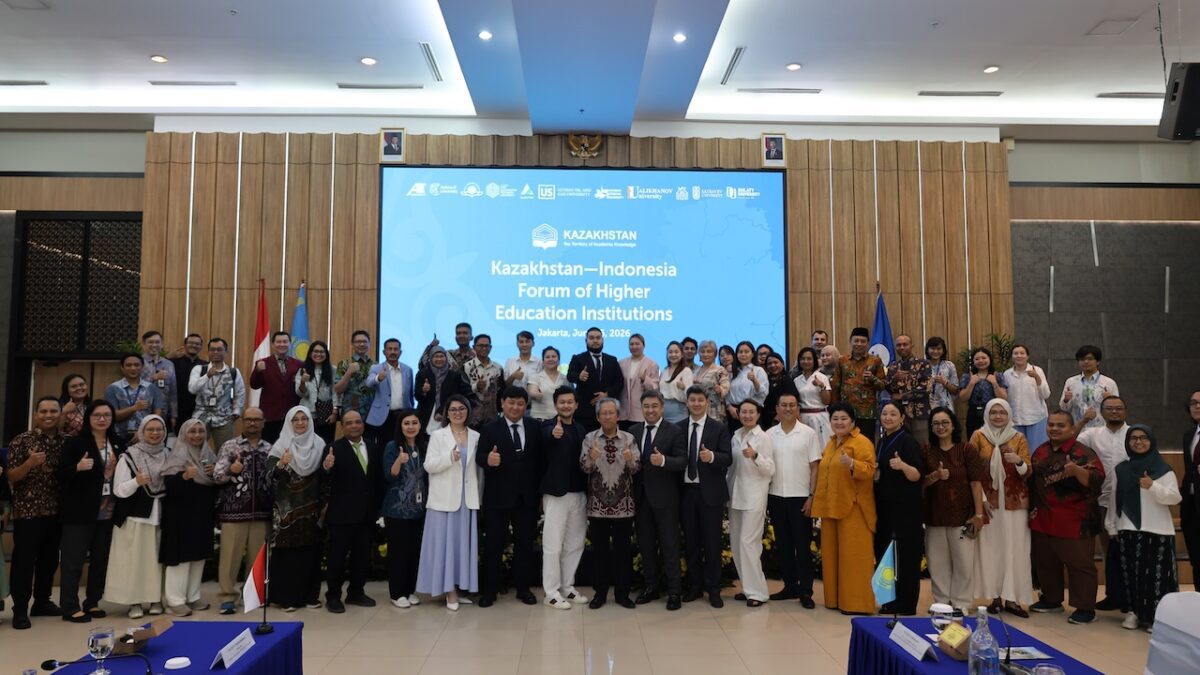
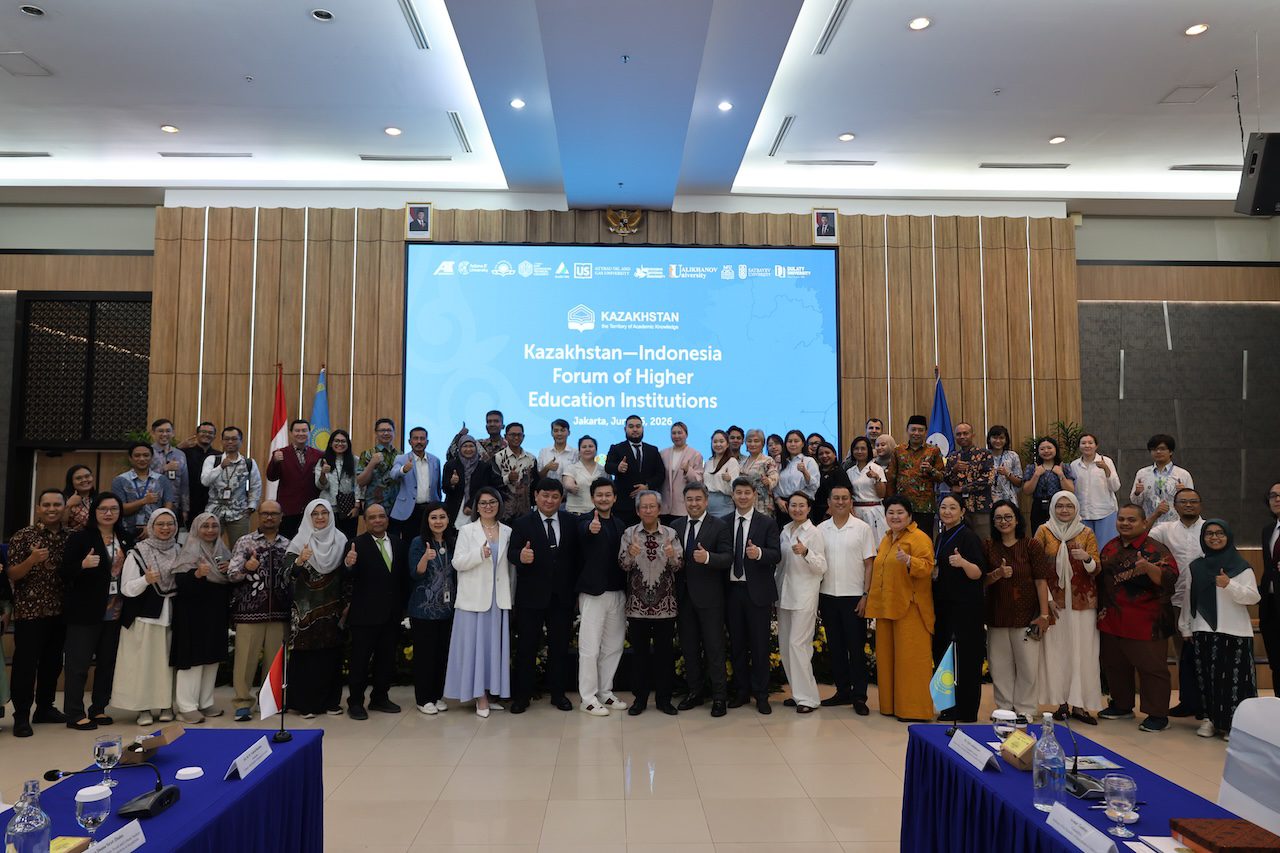
Group photo session at the Kazakhstan – Indonesia Forum of Higher Education Institutions at UMN Campus. (Doc. UMN)
Tangerang, (15/06/2026) – In an effort to accelerate its steps toward becoming a World-Class University, Universitas Multimedia Nusantara (UMN) has once again expanded its global partnership network. UMN officially hosted the “Kazakhstan – Indonesia Forum of Higher Education Institutions” while simultaneously signing strategic collaboration agreements with 11 universities from Kazakhstan.
The “Kazakhstan – Indonesia Forum of Higher Education Institutions” served as a strategic platform for dialogue to explore potential for academic cooperation between universities in both countries. This international-scale event was officially opened by the Ambassador of the Republic of Indonesia to Kazakhstan, H.E. Dr. M. Fadjroel Rachman.
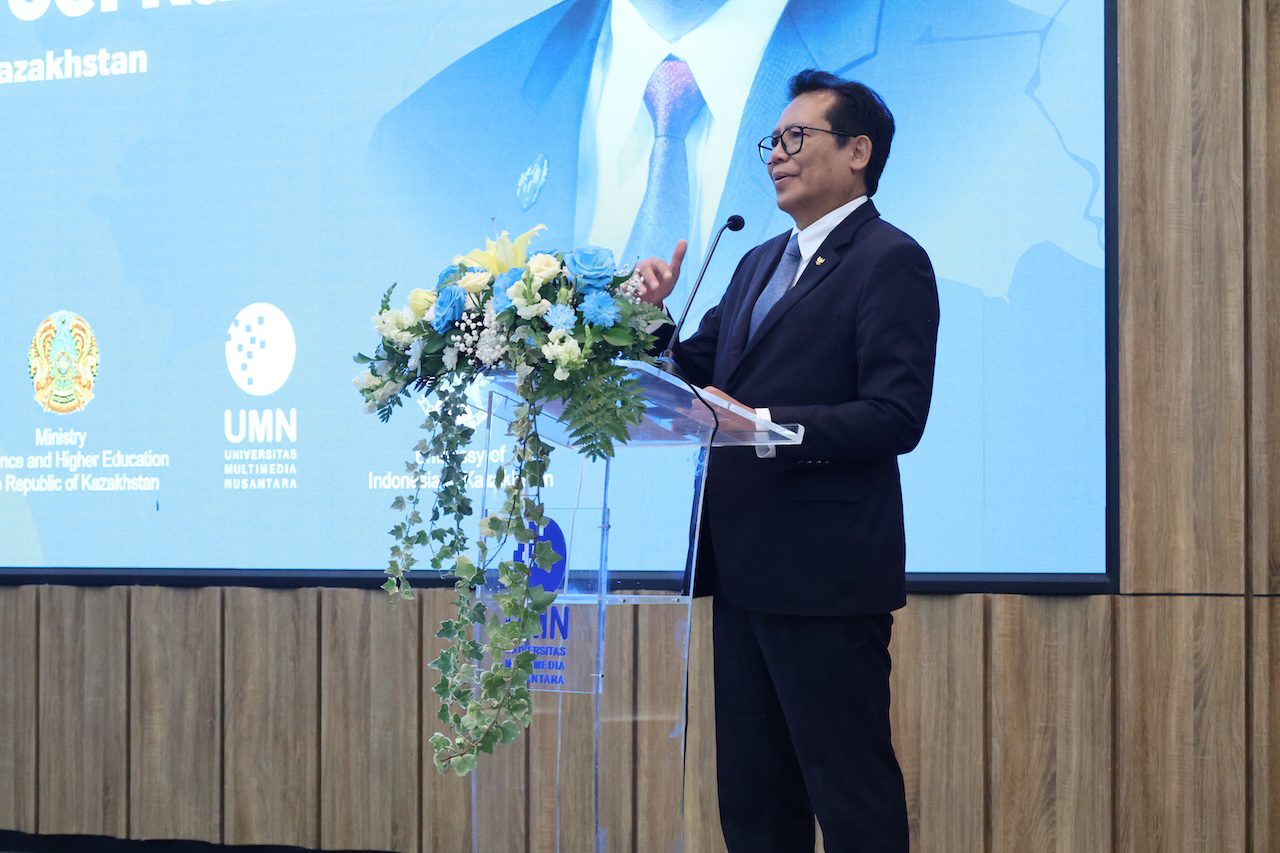
H.E. Dr. M. Fadjroel Rachman, Indonesian Ambassador to Kazakhstan, at the Kazakhstan – Indonesia Forum of Higher Education Institutions. (Doc. UMN)
“I am delighted with today’s Forum between Indonesian and Kazakhstani universities. This activity is not merely a gathering place, but rather about how to build strategic partnerships, particularly in the field of education. This Forum is certainly intended to discuss future collaboration between universities in Indonesia and Kazakhstan,” Fadjroel said.
During the dialogue, Fadjroel emphasized his vision of expanding collaboration to include student exchanges and research collaborations on topics such as Artificial Intelligence and Sustainability. The initial phase of this collaboration is expected to increase the number of Kazakhstani students studying in Indonesia.
“I hope the collaboration between universities in Indonesia and Kazakhstan can be realized and not merely written on paper. I believe that education is the future of a nation, and through education, it is hoped to become a bridge for a bright national future,” he concluded.
Following the opening of the discussion forum, Arnur Tanbay, Deputy Head of Mission of the Embassy of the Republic of Kazakhstan to Indonesia, also shared his perspective on the importance of educational collaboration between countries.
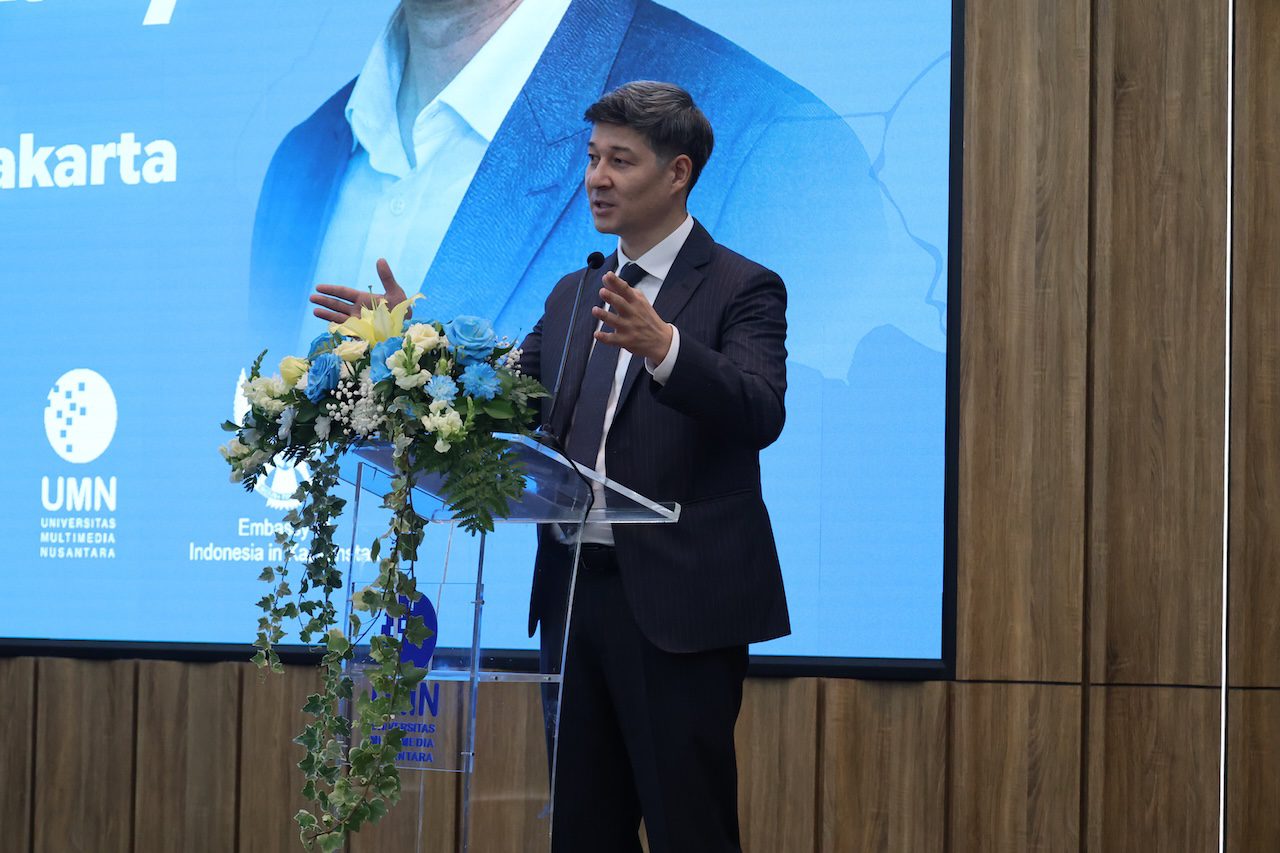
Arnur Tanbay, Deputy Head of Mission of the Embassy of the Republic of Kazakhstan to Indonesia, at the Kazakhstan–Indonesia Forum of Higher Education Institutions. (Doc. UMN)
“Dialogue between universities in Indonesia and Kazakhstan is strategic and symbolizes how important education is. Looking at the world, which is currently developing rapidly, I see that higher education is not just a place to study but also to generate new innovations and economic growth,” Arnur said.
Arnur also affirmed his vision, which aligns with Fadjroel’s, of increasing the number of student and research exchanges and covering topics currently needed worldwide. Through this collaboration, it is hoped that various new innovations and ideas will emerge in the future.
In line with this spirit, strong support also came from the Kazakhstani government. Serik Kalkamanov, Director for International Cooperation of the Ministry of Science and Higher Education of Kazakhstan, who attended in person, reinforced his ministry’s commitment to facilitating and overseeing international academic agreements so that they run optimally.
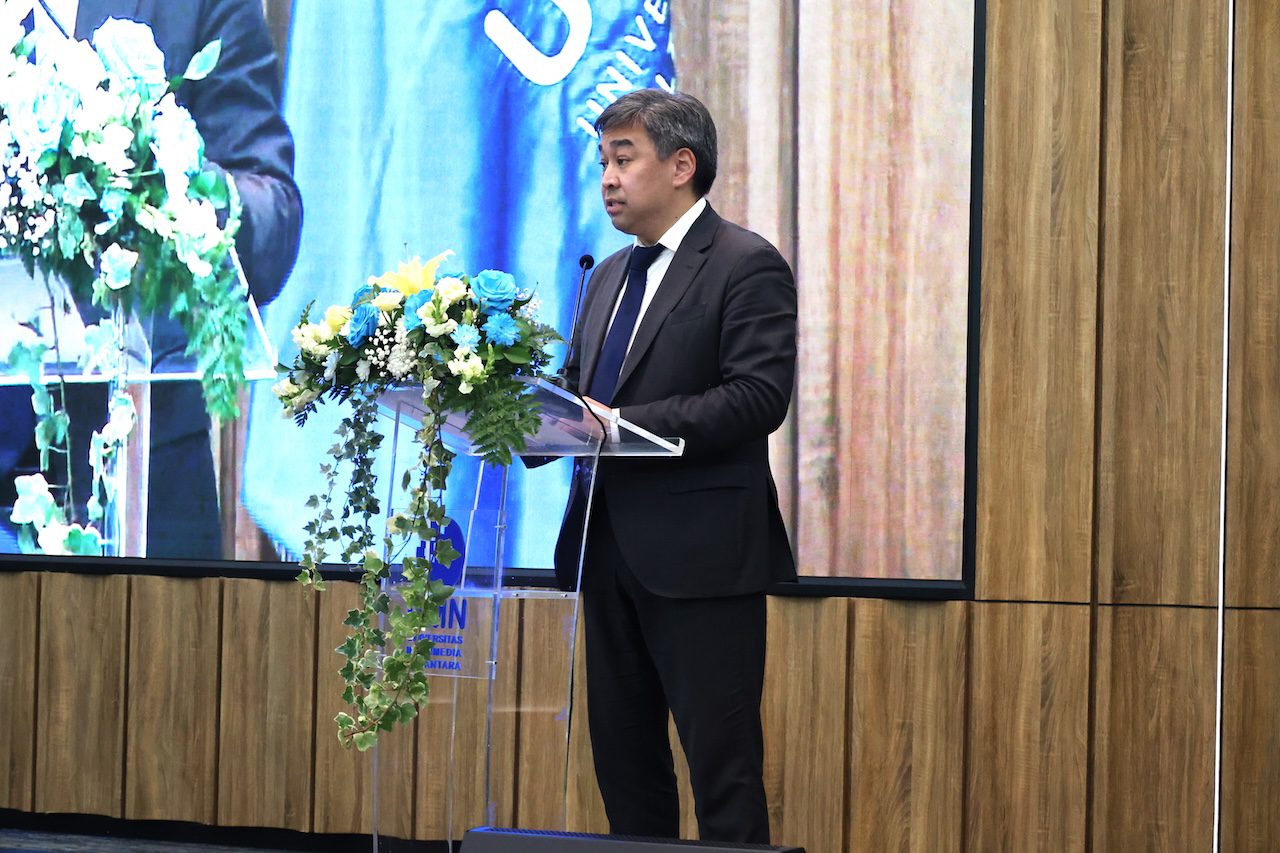
Serik Kalkamanov, Director for International Cooperation of the Ministry of Science and Higher Education of Kazakhstan, at the Kazakhstan – Indonesia Forum of Higher Education Institutions. (Doc. UMN)
“This collaboration initiative is important for us. We want to encourage students to study, both in Indonesia and in Kazakhstan. Academic exchange between the two countries is an important matter that can make a real contribution to the nation,” Serik said.
Furthermore, he explained that student and researcher mobility is projected to spur innovation. This step will be achieved through joint research across strategic sectors, including economics, Artificial Intelligence (AI), healthcare, and cybersecurity. This agreement is expected to serve as evidence of the seriousness with which educational institutions in both countries approach moving forward together.
Welcoming the enthusiasm and grand vision of the Kazakhstani delegation, UMN Rector Dr. Andrey Andoko affirmed his institution’s readiness to serve as the main driving force. The hosting of this forum was considered highly aligned with UMN’s goal of accelerating improvements in educational quality toward global standards.
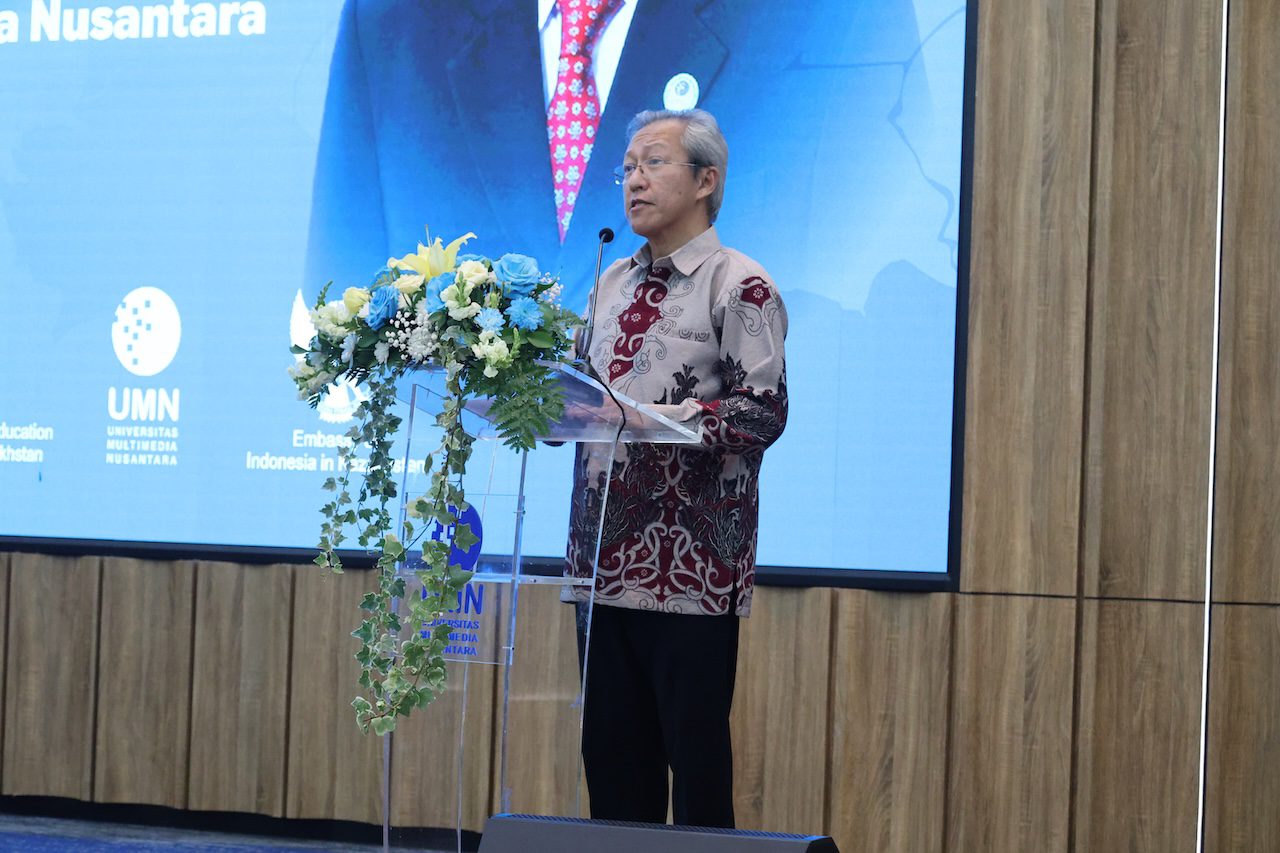
UMN Rector, Dr. Andrey Andoko, at the Kazakhstan – Indonesia Forum of Higher Education Institutions. (Doc. UMN)
“This is a special moment for UMN to be able to facilitate and collaborate on various important matters in higher education with the Kazakhstani delegation. Currently, we are indeed focused on continuing to expand collaborations with international university partners. I hope this collaboration is not merely formalized, but can also be followed by real action,” Andrey responded.
Furthermore, Andrey noted that UMN shares a common direction with Kazakhstan, particularly in the fields of Artificial Intelligence (AI) and sustainability. By signing this agreement, UMN is ready to realize productive, high-impact academic synergy.
Collaboration between UMN and 11 Universities in Kazakhstan
On this occasion, UMN also officially established collaborations with 11 universities from Kazakhstan, including: ALT University named after Mukhamedzhan Tynyshbayev, Astana IT University, Civil Aviation Academy, D. Serikbayev East Kazakhstan Technical University, Kazakh National University of Water Management and Irrigation, Atyrau University of Oil and Gas named after Safi Utebayev, L.N. Gumilyov Eurasian National University, Kokshetau University named after Shoqan Ualikhanov, Pavlodar Pedagogical University named after Alkey Margulan, Kazakh National Research Technical University (Satbayev University), and M.H. Dulaty Taraz Regional University.
“UMN is very excited to collaborate with eleven universities in Kazakhstan. I hope this collaboration can be implemented immediately. The collaboration opportunities will include one-semester student exchanges, student mobility, visiting professors, international competitions, and joint research,” Prof. Dr. Friska Natalia, S.Kom., M.T., Vice Rector for Academic Affairs and Internationalization, explained.
For Friska, collaboration between UMN and universities in Kazakhstan is highly feasible given that UMN’s curriculum and academic topics focus on AI and Sustainability, topics that are also needed by the world and various international universities.
“I hope this collaboration can run well, and we are also open to even more collaborations. Of course, these collaboration opportunities can cover even more programs,” she concluded.
On the same occasion, UMN also facilitated collaboration between Indonesian and Kazakhstani universities. The Indonesian universities involved included: Universitas Islam Negeri Sultan Syarif Kasim Riau, Universitas Islam Riau, Universitas Pembangunan Nasional Veteran Jakarta, Universitas Alma Ata Yogyakarta, President University, Binus University, Institut Teknologi Bandung, Universitas Katolik Indonesia Atma Jaya, Telkom University, Tarumanegara University, Universitas Islam Negeri Syarif Hidayatullah Jakarta, Universitas Negeri Jakarta, Universitas Pertamina, and Universitas Negeri Surabaya.
By Public Relations UMN
English translation by Levina Chrestella Theodora
Kuliah di Jakarta untuk jurusan program studi Informatika| Sistem Informasi | Teknik Komputer | Teknik Elektro | Teknik Fisika | Akuntansi | Manajemen| Komunikasi Strategis | Jurnalistik | Desain Komunikasi Visual | Film dan Animasi | Arsitektur | D3 Perhotelan , di Universitas Multimedia Nusantara.