Interesting Content Isn’t Enough: UMN Rector Highlights “News We Can Use” in the Era of the News Creator
October 8, 2026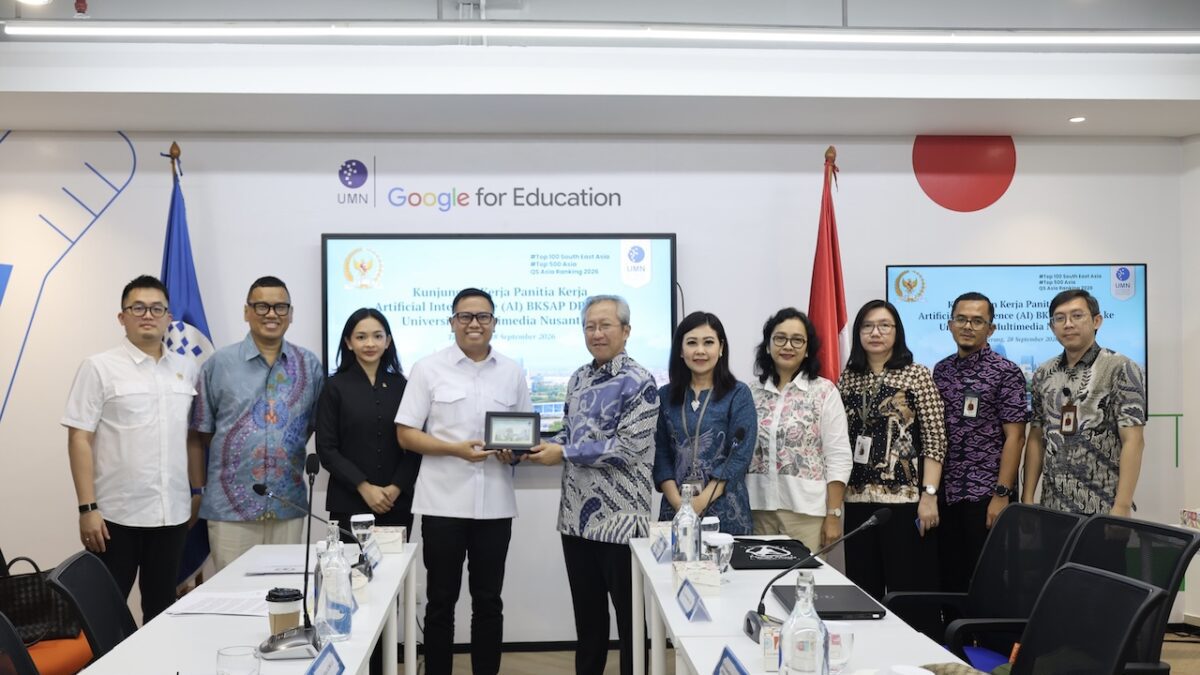
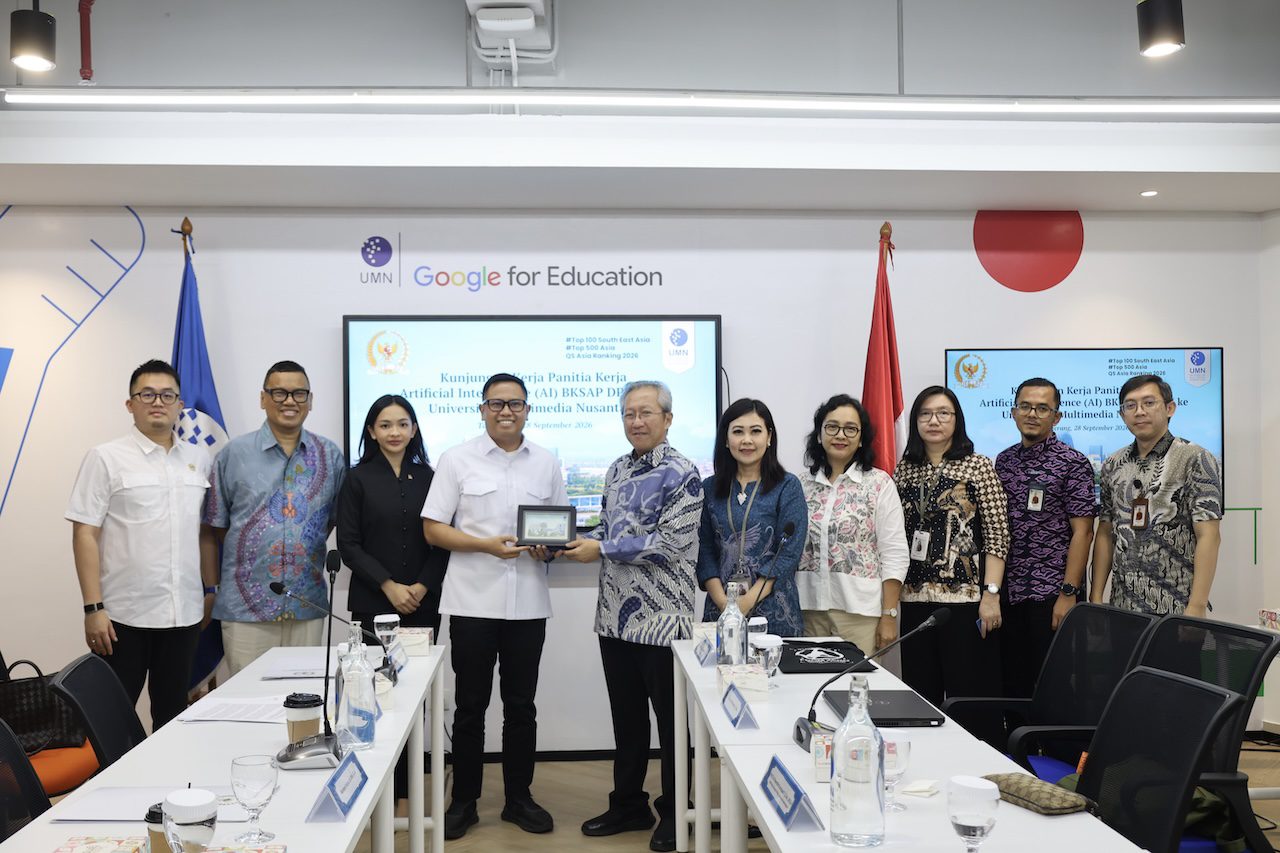
Group photo of UMN’s rectorate and deans with the BKSAP delegation from the DPR RI during their visit to the UMN campus (Doc. CorCom UMN)
Tangerang, (28/09/2026) – Universitas Multimedia Nusantara (UMN) received a visit from the Inter-Parliamentary Cooperation Agency (BKSAP) delegation of the Indonesian House of Representatives (DPR RI) as part of a working visit on the development and implementation of artificial intelligence (AI). The visit provided a space to discuss the use of AI, including the need for regulation and its impact on various sectors in Indonesia.
AI development is one of the strategic issues being discussed in international forums. In the discussion, the DPR’s BKSAP addressed how technological progress can continue to be accepted and used by the public while still being accompanied by appropriate regulation to anticipate negative effects such as deepfakes and data privacy concerns. The discussion was attended by the Chair of the Cooperation Committee, Bramantyo Suwondo, M.IR., along with members of the DPR’s BKSAP.
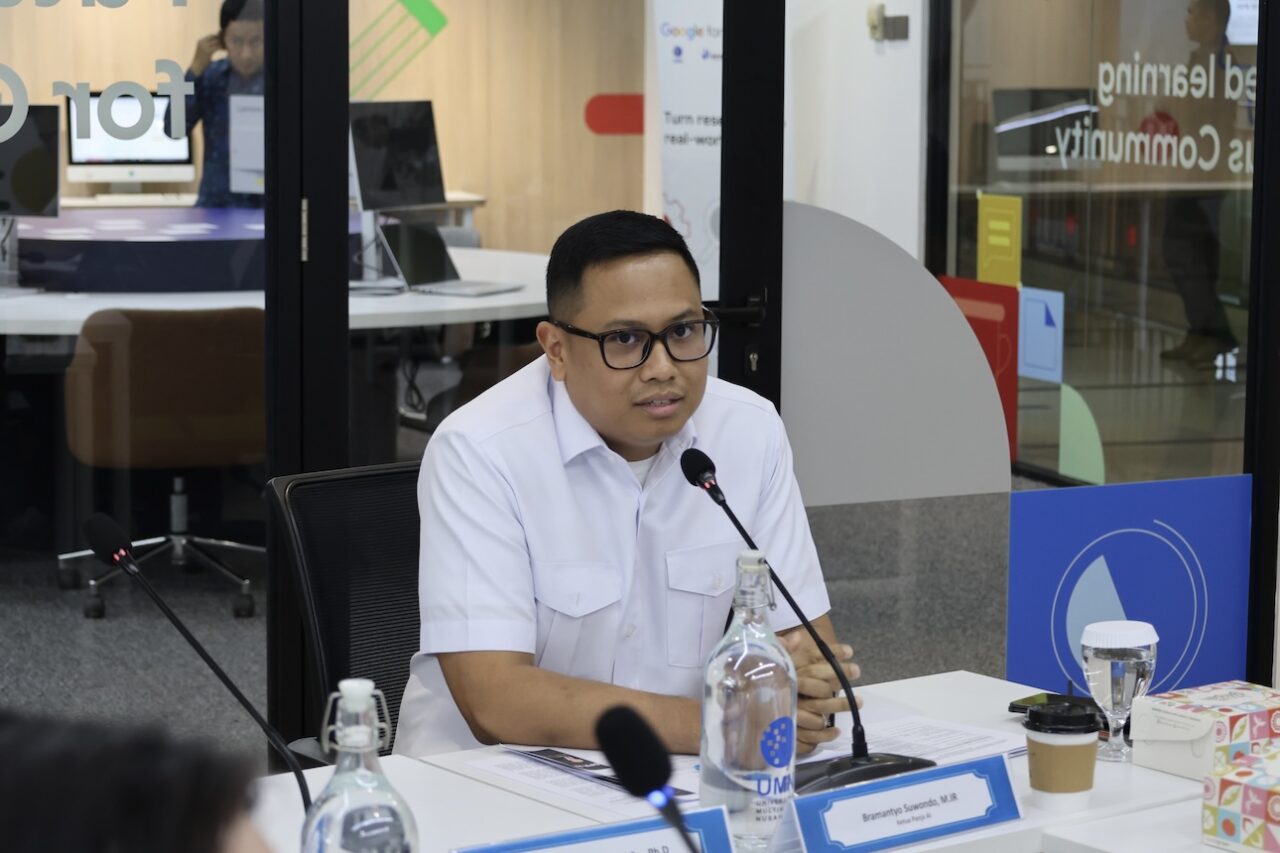
Bramantyo delivering his presentation and taking part in the discussion with UMN (Doc. CorCom UMN)
“Regulating the development of AI is currently a strategic issue worldwide, and we often come across it in international forums. Indonesia itself needs to look at how we can keep embracing technological progress alongside the right regulation, given that this technology is good but also has many negative effects, such as deepfakes, data privacy, and others,” Bramantyo said in opening the discussion.
Bramantyo also highlighted how AI is changing education, not only for school and university students but for teaching staff as well. In his view, AI can open up a range of new jobs while also transforming several industries.
“We don’t want people to avoid AI. On the contrary, we want to see how AI can help in daily life and open up new opportunities in the future. Looking at the development of AI itself, regulation can’t be discussed with KOMDIGI (the Ministry of Communication and Digital Affairs) alone; it has to cover various sectors in Indonesia, from education and health to banking,” he added.
Bramantyo hopes the discussion can serve as a space for various sectors, including universities, to share their perspectives and needs regarding the implementation of AI. Responding, UMN Rector Dr. Andrey Andoko said universities have a role in ensuring AI development proceeds with attention to ethics and academic integrity.
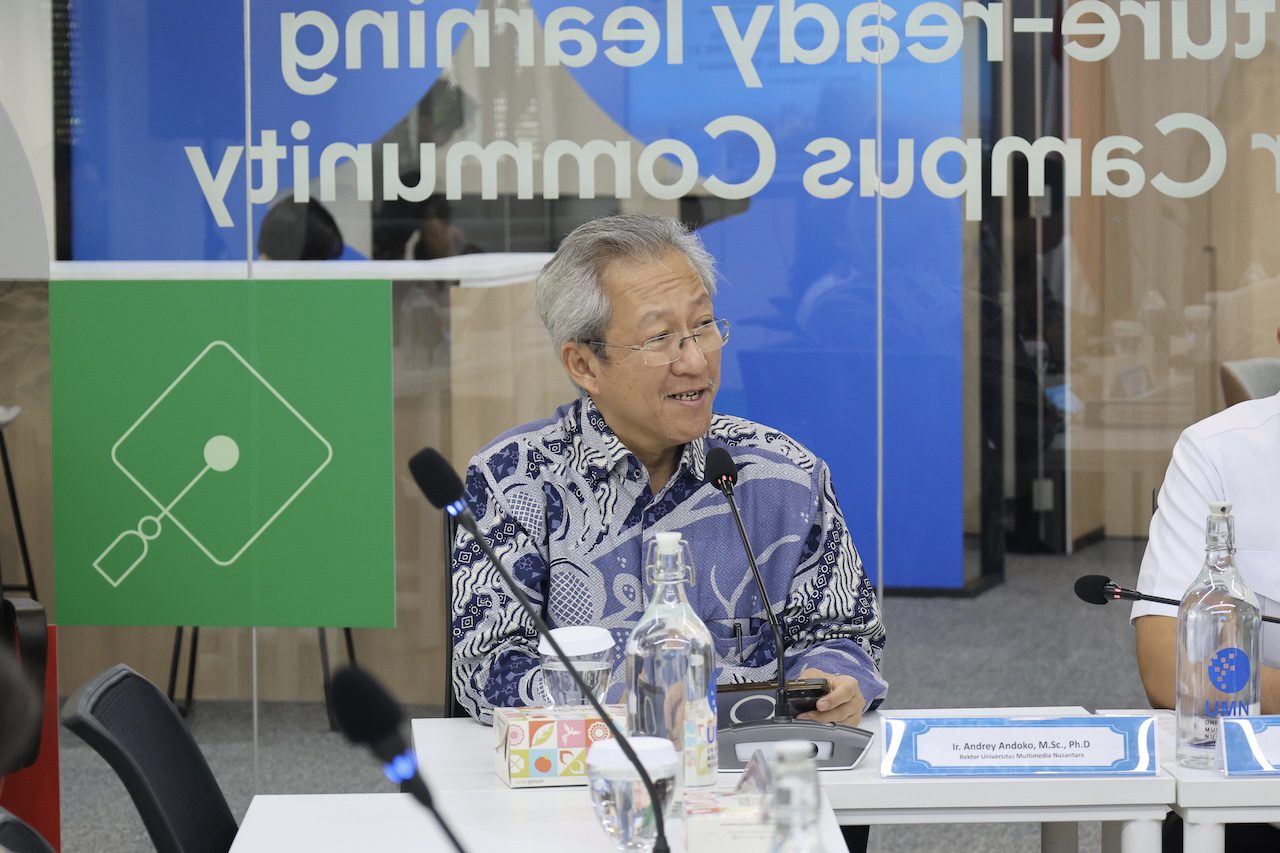
Andrey in discussion with the DPR’s BKSAP (Doc. CorCom UMN)
“For us, this issue is important. Since last year, UMN has integrated AI alongside sustainability in learning, research, and campus governance. With AI in particular, we are fully aware that technological development is something that can no longer be avoided, including in education,” Andrey said.
Andrey also highlighted the importance of applying responsible AI within universities. In his view, the right AI regulation is needed not only to maintain a safe and ethical space for technology to develop, but also to protect the public, innovators, and industry.
“For us, this issue is a moral and academic responsibility of universities. UMN is here as a strategic partner to the government, and this discussion is evidence of triple helix collaboration between universities, government, and society. We are ready to hear the legislature’s direction and open to various other collaborations in the future, which we hope can be sustained and become a solid foundation for producing a young generation that is globally competitive,” Andrey said.
In the discussion, UMN’s Vice Rector for Academic Affairs and Internationalization, Prof. Dr. Friska Natalia, S.Kom., M.T., also presented the ways AI has been applied across all of UMN’s study programs. According to Friska, applying AI is not only meant to introduce students to the technology, but also to sharpen human skills.
“To this day, we are still developing how this framework can be implemented not only for students, but also for lecturers, and how to integrate it with or simulate it alongside various industry sectors,” Friska explained.
The discussion was also attended by the Dean of UMN’s Faculty of Engineering and Informatics, Dr. Eng. Niki Prastomo, S.T., M.Sc., and the Dean of UMN’s Faculty of Art and Design, Muhammad Cahya Mulya Daulay, S.Sn., M.Ds. The BKSAP delegation from the DPR RI present included Irine Yusiana Roba Putri, S.Sos., M.Comn&MediaSt., Abraham Sridjaja, S.H., M.H., C.L.A., Surya Utama, S.I.P., and Ruby Chairani Syiffadia, B.A. (Hons), M.Sc.
By Rachel Tiffany | UMN News Service
English translation by Levina Chrestella Theodora
Kuliah di Jakarta untuk jurusan Program Studi Informatika | Sistem Informasi | Teknik Komputer | Teknik Elektro | Teknik Fisika | Akuntansi | Manajemen | Komunikasi Strategis | Jurnalistik | Desain Komunikasi Visual | Film dan Animasi | Arsitektur | D3 Perhotelan , di Universitas Multimedia Nusantara. www.umn.ac.id