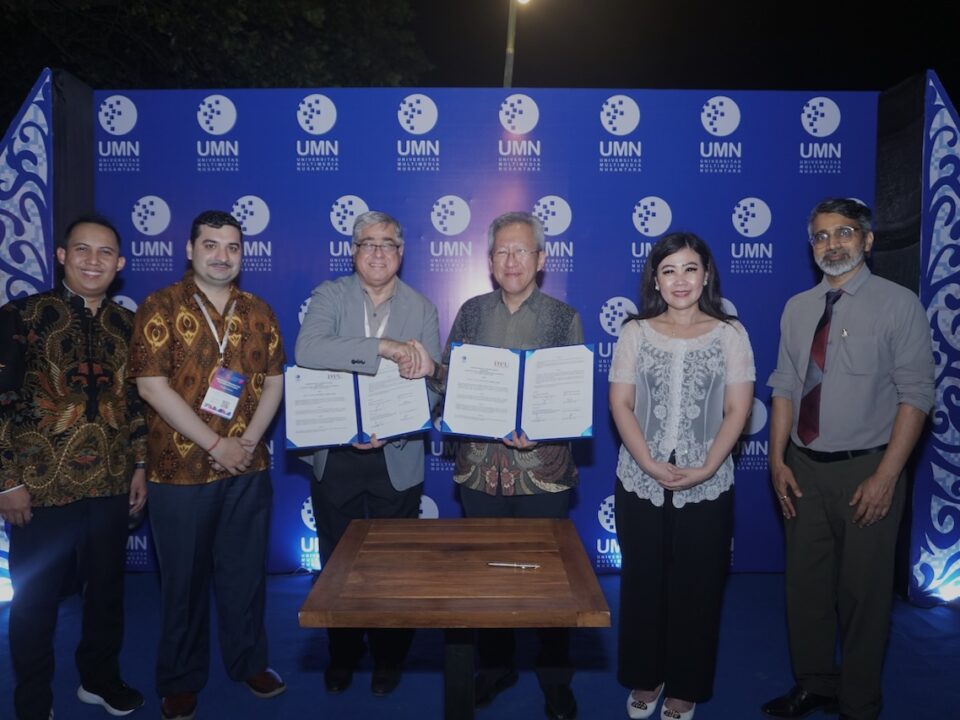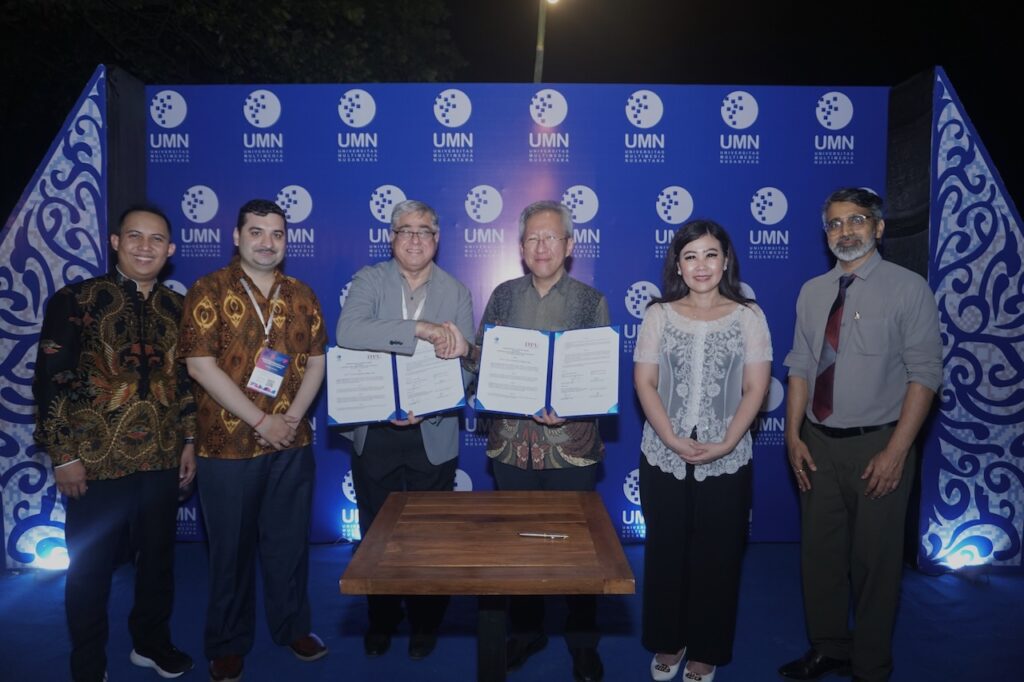

UMN Connect Gala Dinner 2026 Strengthens International Partnerships
November 13, 2026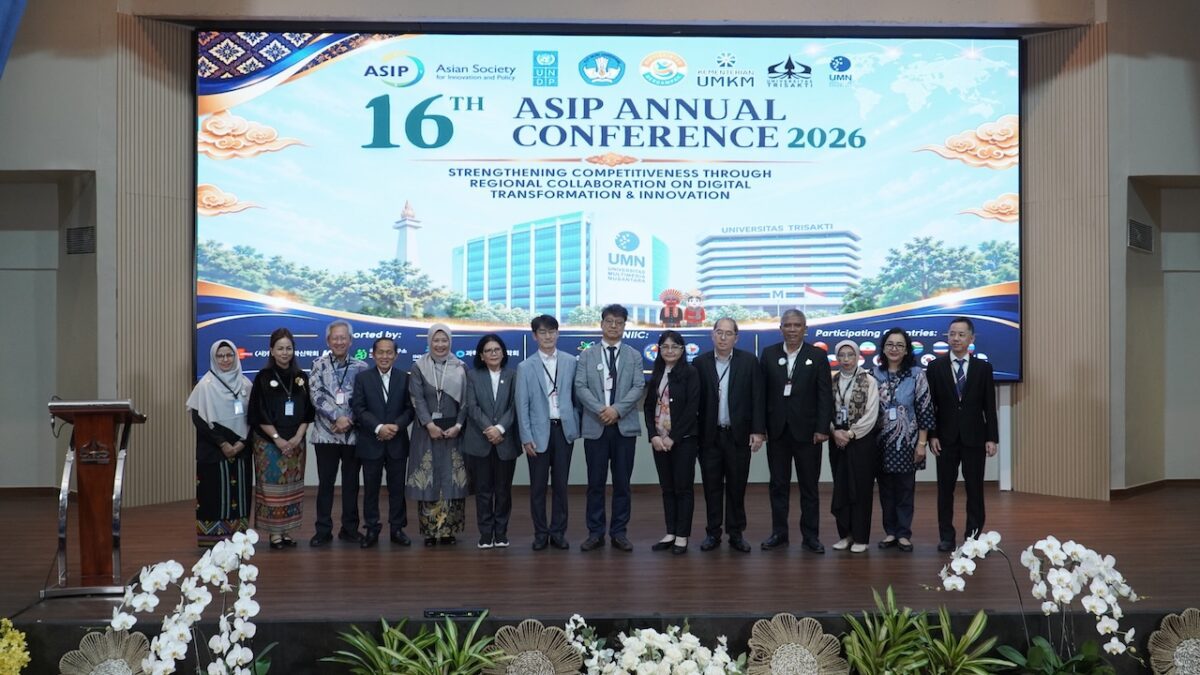
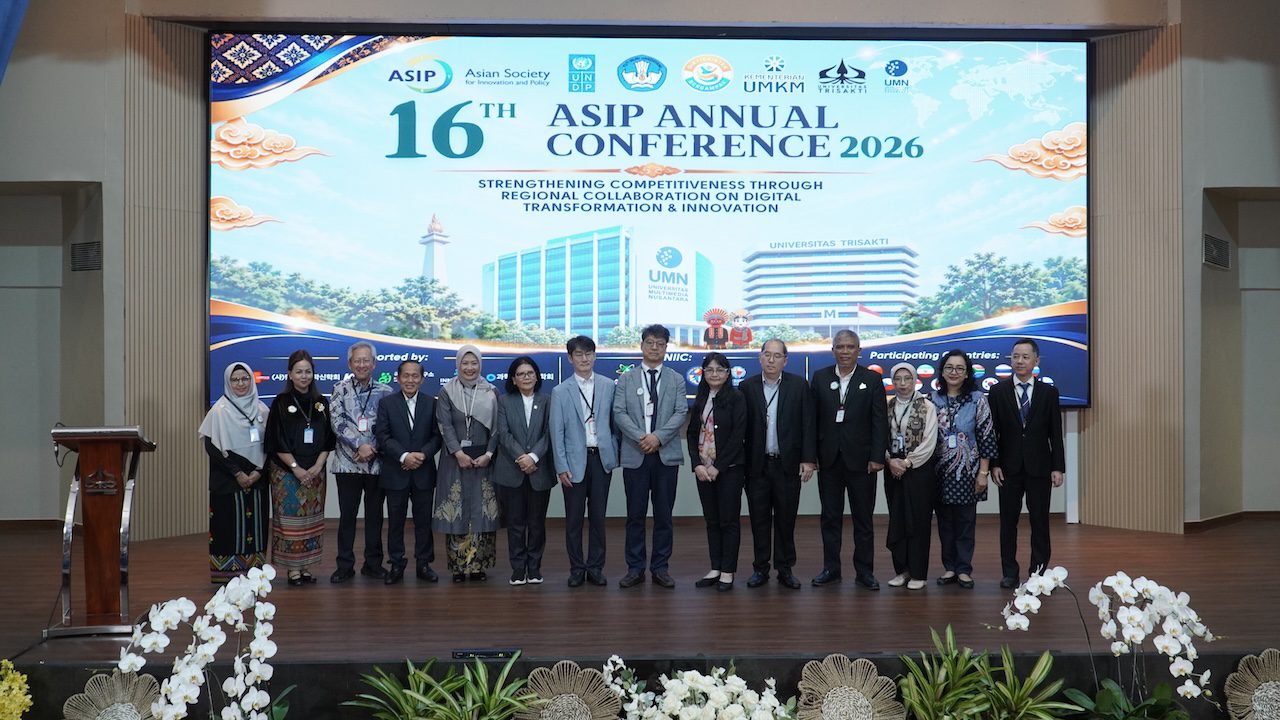
Group photo of the participant on 16th ASIP Annual Conference 2026 at Universitas Trisakti (Doc. CorCom UMN)
Jakarta, (19/11/2026) – As UMN approaches its 20th anniversary, Universitas Multimedia Nusantara (UMN) continues to expand its role in research, innovation, and digital transformation through global collaboration. One of these efforts was UMN’s involvement as a co-host of the 16th Asian Society for Innovation and Policy (ASIP) Annual Conference, organized in collaboration with Universitas Trisakti.
With the theme “Strengthening Competitiveness Through Regional Collaboration on Digital Transformation & Innovation,” the conference brought together academics, industry professionals, and policymakers from 16 countries. The event was also supported by Indonesia’s Ministry of Micro, Small, and Medium Enterprises (MSMEs) and the United Nations Development Programme (UNDP).
The conference opened with remarks from Conference Chair Dr. Ir. Muhammad Burhannudinnur, M.Sc., IPU, ASEAN Eng. He highlighted how collaboration across countries and sectors plays a key role in turning digital capabilities into real-world innovations. These efforts can help strengthen competitiveness while supporting more inclusive and sustainable development.
The discussions covered several key topics, including Artificial Intelligence (AI), healthcare, entrepreneurship, and sustainability. ASIP President Dr. Ko Young Joo also highlighted how research and policy papers can help shape better policies and strengthen Research and Development (R&D). He hoped the conference would open up more opportunities for regional collaboration, especially across Asia.
Bringing Higher Education into the Innovation Ecosystem
The conference also created space for universities, government, and industry to connect and explore new ways to work together. Rector of Universitas Trisakti, Prof. Dr. Ir. Kadarsah Suryadi, DEA, ASEAN Eng., shared that international forums like this bring different perspectives to the table and create room for wider partnerships. He also hoped the collaboration between Universitas Trisakti and UMN would lead to meaningful initiatives with real impact.
UMN Rector Ir. Andrey Andoko, M.Sc., Ph.D., also highlighted how fast-moving technology continues to reshape different industries. He emphasized that keeping up with AI and technological developments is essential for universities to stay relevant in an increasingly connected world.
“We can see how quickly AI is evolving today. That is why understanding digital transformation and technology is important for us to stay relevant and keep growing in today’s global era,” Andrey explained.
He hopes the conference will be more than just a place to exchange ideas among universities, government, and industry. More importantly, it should encourage collaborations that turn ideas into real action. This way, research and innovation can address actual needs and contribute to society.
Connecting Government, Industry, and Universities to Drive Innovation
From the government’s perspective, Secretary of the Ministry of MSMEs Loto Srinaita Ginting highlighted the major role MSMEs play in Indonesia’s economy. The data she presented showed that Indonesia has tens of millions of MSME business units, with around 96.7% classified as micro-enterprises.
She explained that entrepreneurship is an important driver of economic growth and job creation. However, businesses cannot grow on their own. They need a supportive ecosystem that helps business owners sustain their operations, grow, and take their businesses to the next level.
One of the government’s initiatives is Sapa UMKM, a digital platform that connects ministries, government agencies, local governments, the private sector, and universities. The platform aims to make information easier to access, bring data together, and connect business owners with various services and growth opportunities.
Meanwhile, Prof. dr. Ardi Findyartini, Ph.D., Director of Transformative Learning Strategies and Systems at the Directorate General of Science and Technology, Ministry of Higher Education, Science, and Technology (Kemdiktisaintek), highlighted the need to connect university research with the actual needs of industry and society.
“Universities need to build stronger connections between research and the needs of industry and society. Research should go beyond academic publications. It should also lead to technologies, products, and solutions that create real impact. That is why collaboration between universities, government, industry, and society is essential to bringing research into practical applications, commercializing innovation, and growing the startup ecosystem,” Ardi explained.
She also highlighted the importance of digital transformation across universities, including the responsible use of AI to support education and research. She added that building a stronger innovation ecosystem requires a pentahelix approach, bringing together five key elements: universities, government, industry, society, and the media.
Through this conference, UMN aims to keep building stronger connections across sectors and countries. Beyond generating knowledge, universities are expected to play an active role in driving innovation and developing solutions that make a real difference in society.
By Rachel Tiffany | UMN News Service
Kuliah di Jakarta untuk jurusan program studi Informatika| Sistem Informasi | Teknik Komputer | Teknik Elektro | Teknik Fisika | Akuntansi | Manajemen| Komunikasi Strategis | Jurnalistik | Desain Komunikasi Visual | Film dan Animasi | Arsitektur | D3 Perhotelan , di Universitas Multimedia Nusantara. www.umn.ac.id