Bachelor of
Film & Animation
What is Film & Animation?
Film and Animation is a study program that teaches the science of how to make works in the form of moving images. Students will learn technical matters such as story making, camera use, image preparation and editing, as well as the skills that support good and quality filmmaking.
In addition to learning how the film production process is done, the Film and Animation Study Program also teaches the students, as young filmmakers, about marketing techniques in the film industry, in order to understand the next steps after producing a film.
Film and Animation Study Program of Multimedia Nusantara University becomes a place for students who want to become young filmmakers and understand the process of making quality films as well as the development of the film industry today.
Why Choose UMN’s
Film & Animation?
Film and Animation Study Program of Multimedia Nusantara University is the only study program that combines film and animation into one program. However, students can choose between the two to obtain deeper knowledge based on their interests.
Equipped with knowledge in that follows the development of technology, students are expected to be ready to face the advancement of the existing industry. Entrepreneurship is also part of learning and curriculum. Students can start their own business with the works they have created.
FAQ
Why Choose Film & Animation at UMN?
For prospective students interested in film, animation, and the audiovisual industry, choosing a study program is not only about learning how to make films. The learning environment, opportunities for collaboration, specialization options, and connections with the creative industry are also important considerations.
UMN’s Film and Animation Study Program offers a learning approach that integrates film and animation within one collaborative learning environment. Students can choose a specialization according to their interests while becoming accustomed to working across disciplines, as is common in the professional creative industry.
Film and Animation in One Learning Ecosystem
One of the advantages of Film at UMN is that film and animation students are part of an interconnected learning environment. This collaboration allows students to develop works that combine various visual approaches.
In the Film (Live Action) specialization, students learn the creative and technical processes involved in various moving image formats, ranging from fiction films, web series, advertisements, music videos, 360 VR videos, e-learning, to various other digital formats.
Students can also work on projects with real clients and collaborate with students from the Animation specialization to create hybrid works that combine live action, animation, and Visual Effects (VFX).
Meanwhile, the Animation specialization provides learning experiences in various techniques, including 2D animation, 3D animation, stop motion, and VFX. Students learn the entire production process, from concept development and pre-production to production and post-production.
Opportunities to Deepen VFX
For students interested in visual effects, the Visual Effects (VFX) Concentration is available. Learning focuses not only on the final visual output but also on understanding the entire production pipeline.
Students are introduced to industry-standard VFX workflows, including the supervision process during on-location filming through to visual effects production. These competencies are relevant to the needs of the film, animation, advertising, and audiovisual industries, which increasingly utilize visual technologies.
Learning Through Projects and Collaboration
The learning experience in Film and Animation at UMN does not stop at classroom theory. Project-based learning allows students to become accustomed to producing works while working as part of a team.
This approach helps students understand how an audiovisual production is developed step by step, from an initial idea into a finished work ready to be presented. Students can also participate in various activities outside the classroom, such as film and animation festivals, student exchanges, international student mobility, summer camps, internships, and projects with local and international partners.
Various elective courses also provide opportunities to develop more specific competencies according to students’ interests and career plans.
Part of an Internationally Recognized Art and Design Environment
Another consideration when choosing Film & Animation at UMN is the ecosystem of the Faculty of Art and Design (FSD), which has achieved international recognition.
Universitas Multimedia Nusantara ranked 151–200 globally and 3rd nationally in the QS World University Rankings by Subject: Art and Design. The ranking covers the fields within UMN’s Faculty of Art and Design, namely Visual Communication Design (DKV), Film & Animation, and Architecture.
This achievement provides an indication of the recognition of the Art and Design fields developed by UMN at the global level.
Supported by Relevant Software and Tools
To support the learning process, Film and Animation at UMN also has Software and Tools Partners, namely MSP, Toon Boom, and Adobe. This support complements students’ experience in using various tools related to film, animation, and audiovisual content production.
In addition to producing works for academic purposes, students also have opportunities to develop intellectual property (IP), particularly through the development and distribution of animation works.
So, Why Choose Film & Animation at UMN?
Film & Animation at UMN is suitable for prospective students who want to explore the audiovisual industry more broadly, rather than simply learning how to make films. Students can choose between the Film or Animation specialization, deepen their knowledge of VFX, develop works through project-based learning, and collaborate across disciplines within one ecosystem.
With opportunities to participate in international programs, festivals, internships, and projects with industry partners, students also gain experiences that go beyond technical learning in the classroom.
Combined with UMN’s achievement in the QS World University Rankings by Subject: Art and Design, ranking 151–200 globally and 3rd nationally, Film & Animation at UMN is an option for prospective students who want to develop creative, technical, and collaborative skills to enter the ever-growing film, animation, VFX, and audiovisual industries.
If you would like to see the works of Film UMN students, prospective students can also explore their works and projects through the official Film UMN channel. For further information about specializations, curriculum, facilities, or the admission process, UMN Education Consultants (EC) are ready to provide information according to your interests and career plans.
How Does the Film & Animation UMN Admission Process Work?
For prospective students who are interested in the world of film, animation, and the audiovisual industry, understanding the admission process is an important step before starting their studies. In addition to choosing a study program, prospective students also need to understand the admission pathways, selection process, and documents that need to be prepared.
The Film Study Program at Universitas Multimedia Nusantara (UMN) is an undergraduate program that awards a Bachelor of Arts (S.Sn.) degree and has two main specializations, namely Film and Animation. Prospective students can prepare themselves from the beginning by choosing an admission pathway that suits their circumstances and achievements.
What admission pathways are available for Film UMN?
Film UMN offers several admission pathways for new students, namely the Academic Pathway, Regular Test Pathway, Scholarship Test Pathway, and achievement-based scholarship pathways.
For the Academic Pathway, selection is based on academic grades from school. In addition to academic transcripts for certain subjects, prospective Film students also need to prepare an A4-sized storyboard consisting of five frames and two paragraphs of narrative, accompanied by a statement letter.
Meanwhile, the Regular Test Pathway uses several selection materials, namely English, Mathematics, Psychological Test, and Drawing Test. Prospective students who wish to have the opportunity to receive a scholarship through the test can also take the Scholarship Test Pathway, with selection materials covering English, Mathematics, Psychological Test, and Drawing Test.
Are there admission pathways based on achievements?
Yes. Film UMN also provides several scholarship pathways that prospective students can choose based on their achievements.
Some of them include the Academic Achievement Scholarship, Sports and Arts Scholarship, Science Olympiad Scholarship, as well as scholarship pathways for children of teachers, principals, employees, or school staff.
With these various options, prospective students can consider pathways not only based on test results but also based on the academic and non-academic achievements they have obtained.
How can I apply?
New student registration is conducted through the UMN Online Admission system. In the registration form, prospective students need to fill in the admission period and education level, personal information, school information, academic data, parent or guardian information, and supporting documents.
In the form, prospective students also select the program, registration pathway, examination schedule if required, and intended study program. Academic documents such as report cards and certificates or proof of achievements can also be uploaded through the system according to the requirements of the selected admission pathway.
After completing all the required data and documents, prospective students proceed with the selection stages according to the chosen pathway. For test-based pathways, the examination schedule will follow the available options in the registration system.
Do I need to prepare my drawing skills?
For prospective Film students who choose a test-based pathway, the Drawing Test is one of the selection components. Therefore, preparation is not limited to subjects such as English and Mathematics but also includes visual skills.
However, prospective students do not need to consider drawing ability as the sole determining factor for admission to Film UMN. There are several admission pathways that can be chosen according to each prospective student’s criteria.
Another interesting aspect is that, after being accepted as a student, there is a Foundation Year that helps new students become familiar with the fundamentals of film and animation while also preparing them to determine their specialization. In the first semester, students are introduced to the fundamentals of moving image art as well as general film and animation skills, including the use of cameras and design software.
How do I determine which pathway is most suitable?
Before applying, prospective students should review their strengths and achievements. If they have academic grades that meet the requirements, the Academic Pathway can be an option. For those who want to participate in a skills-based selection process, the Regular Test Pathway is available. Meanwhile, prospective students with certain achievements can consider the available scholarship pathways.
By understanding these options from the beginning, the admission preparation process can be carried out in a more focused manner.
Conclusion
The Film & Animation UMN admission process begins by choosing a suitable admission pathway, registering through UMN Online Admission, completing the required documents, and then following the selection stages based on the chosen pathway.
Prospective students can choose the Academic Pathway, Regular Test, Scholarship Test, or achievement-based scholarship pathways. For test-based pathways, prepare for English, Mathematics, Psychological Test, and Drawing Test.
If you would like to learn about the latest admission schedule, requirements for each pathway, available scholarships, or the Film & Animation UMN selection process, prospective students can contact the UMN Education Consultant (EC) to receive information and assistance throughout the admission process. [Contact EC Now!]
What Is the Difference Between Film & Animation UMN’s Regular Program and International Program?
For prospective students who are interested in the world of film, animation, and the audiovisual industry, Universitas Multimedia Nusantara (UMN) provides both a Regular Program and an International Program. So, what differentiates the two? Do students in the International Program receive a different Film & Animation curriculum?
In general, the field of study remains within the UMN Film Study Program, which integrates film and animation education in one environment. This program offers two main options, namely Film and Animation, allowing students to deepen their knowledge in a field that aligns with their interests.
What Do Students Learn in Film & Animation UMN?
The UMN Film Study Program uses a learning approach that combines theory, technical skills, creativity, technology, and entrepreneurship. In the Film field, students learn story writing, producing, directing, cinematography, production design, post-production, sound design, marketing, and distribution. Students also learn to develop works that combine live action with animation.
Meanwhile, the Animation field equips students with skills in 2D animation, hybrid animation, motion graphics, 3D visualization, and VFX. Students can also build their primary expertise according to the field they wish to pursue.
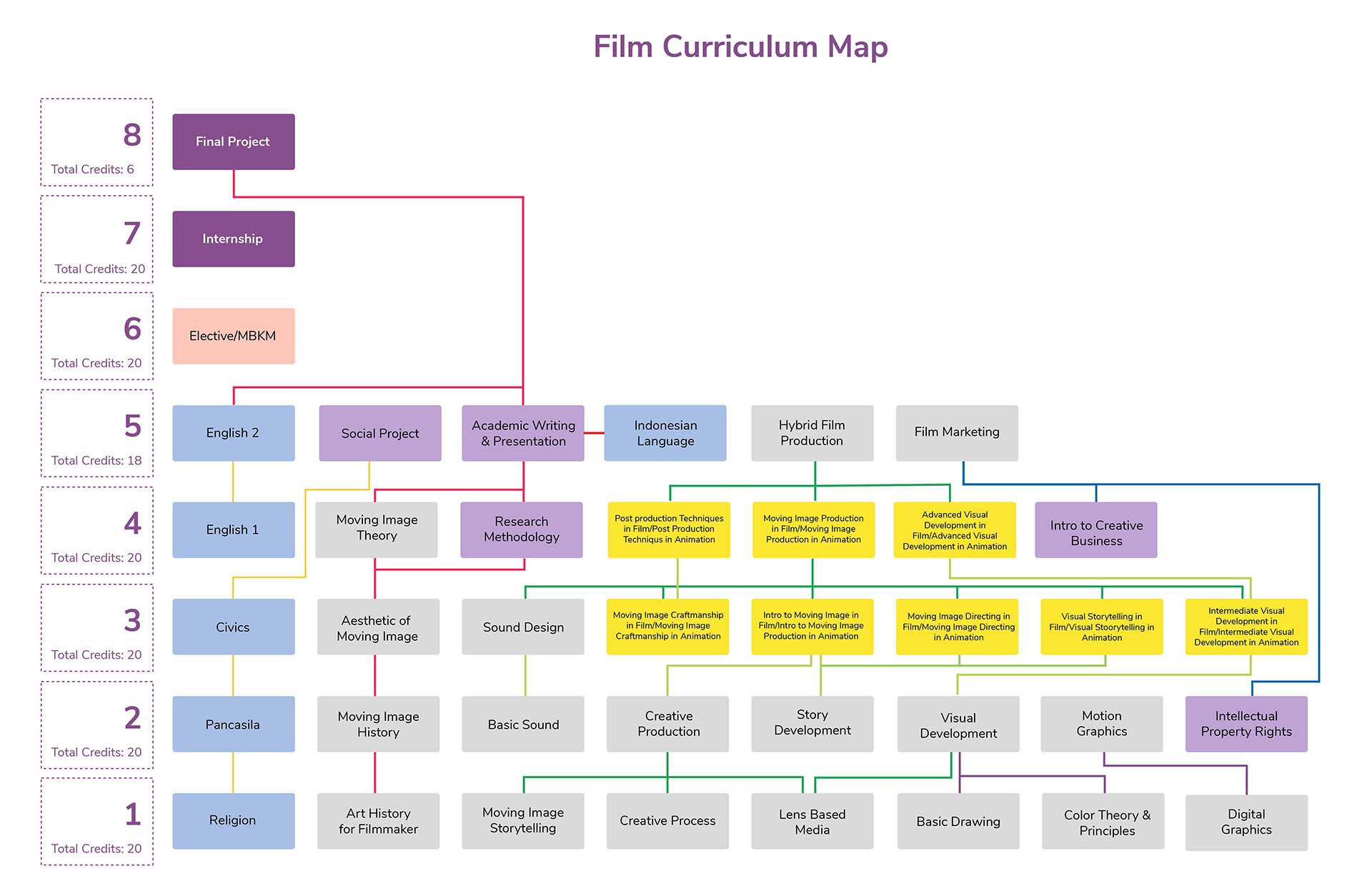
The learning process takes place progressively. The first year focuses on the history and context of film and animation, the second year introduces various forms and types of media, while in the third year students begin determining their areas of expertise through elective courses. In the fourth year, these competencies are applied through internships and the final project.
So, What Is the Difference Between the Regular Program and International Program?
The main difference lies in the admission pathway and the context of the learning experience, rather than in becoming a different Film or Animation major.
The Regular Program is a full-time study pathway available to students in general. Meanwhile, the International Program is intended for students who wish to follow an international class pathway, including international students who want to pursue an undergraduate education at UMN.
Film UMN officially provides opportunities for international students to apply. For information regarding International Class admission, prospective students are directed to contact the UMN International Office.
Therefore, prospective students do not need to consider the International Program as a new study program with different areas of expertise. Film and Animation remain the main focus of the learning process.
What Are the Benefits of Choosing the International Program?
The different learning context can provide a more international experience. An international classroom environment allows students to interact with individuals from more diverse cultural backgrounds.
This is relevant to the nature of the film and animation industry, which is not limited to the Indonesian market. The ability to communicate, collaborate, understand different perspectives, and work in a multicultural environment can provide additional skills when students are later involved in creative projects on an international scale.
Nevertheless, the Regular Program also prepares students to enter the global industry. The vision of Film UMN itself aims to produce graduates who are creative, competent, and internationally minded.
Practical Experience Remains an Important Part
Regardless of the pathway chosen, practical experience is an important part of Film UMN’s education. Students are required to complete an internship as part of the curriculum. This internship program is designed to allow students to apply the knowledge gained during their studies while also understanding the real working environment in the moving image field.
Students can also develop their competencies through projects, elective courses, and experiences outside the classroom. In this way, learning does not stop at theory but is directed toward the ability to produce work and work professionally.
So, Should You Choose the Regular Program or International Program?
If you want to follow a regular study pathway and do not have a specific need to attend international classes, the Regular Program can be an option.
Meanwhile, the International Program can be considered by prospective students who want a learning experience with an international context and a more multicultural environment.
What should be considered is that you should not choose solely because you assume that the International Program has a higher-level Film & Animation curriculum. Both remain within the Film UMN educational ecosystem, with Film and Animation as the main areas of focus.
Conclusion
The difference between Film & Animation UMN’s Regular Program and International Program mainly lies in the admission pathway and the context of the learning experience. The fields of study remain focused on Film and Animation, with learning covering creative and technical aspects, technology, and entrepreneurship.
Through progressive learning, elective courses, internship experience, and opportunities to develop expertise, students are prepared to enter the growing moving image industry.
Therefore, the best choice depends on your needs, background, and the learning experience you want to gain. If you would like to learn more about the differences in admission pathways, requirements, or learning experiences between the two programs, the UMN Education Consultant (EC) is ready to provide information before you make your choice. ContactECNowContact EC Now
What Do Students Learn in Film & Animation UMN?
For prospective students who are interested in the world of filmmaking and animation, choosing the Film Study Program is not simply about learning how to make films. The creative industry requires talent who understand the production process comprehensively, are able to work in teams, and can adapt to technological developments and various audiovisual formats.
The Film Study Program at Universitas Multimedia Nusantara (UMN) integrates film and animation within a collaborative learning environment. Students can choose a specialization based on their interests while gaining experience working across fields, similar to professional production environments.
Learning the Production Process from Start to Finish
Learning at Film UMN covers both the creative and technical processes involved in producing audiovisual works. Students not only learn how to produce creative works but also understand the stages required to bring them to life.
In the Film (Live Action) Specialization, students learn about various forms of moving image, ranging from fiction films, web series, advertisements, music videos, 360 VR videos, educational videos, to various digital content formats.
Project-based learning allows students to become accustomed to working in teams and managing productions collaboratively. Students also have opportunities to work on projects with real clients, allowing them to understand how creative processes are applied to professional needs.
Interestingly, Film students can also collaborate with students from the Animation Specialization to produce hybrid works that combine live action, animation, and Visual Effects (VFX).
What About the Animation Specialization?
For students who are more interested in animation, Film UMN provides learning in various techniques, ranging from 2D animation, 3D, stop motion, to VFX.
Students learn the animation process comprehensively, from concept development, pre-production, production, to post-production. By understanding the entire process, students not only develop technical skills but also understand how an animation work is built from an idea into an audiovisual product.
The learning process also supports students in developing and distributing the intellectual property (IP) they create. This gives students the opportunity to explore their work and further develop their creative potential.
Exploring Visual Effects (VFX)
In addition to Film and Animation, students can deepen their knowledge of Visual Effects (VFX). In this concentration, students are introduced to visual effects technology and workflows that follow industry standards.
The learning process covers the production pipeline comprehensively, including the supervision process during on-location shooting through to the visual effects production stage. These competencies can be applied to various audiovisual productions that require integration between real footage and digital visual elements.
Learning Beyond the Classroom
The learning experience at Film UMN also takes place through various activities outside of lectures. Students have opportunities to participate in student exchanges, international student mobility, summer camps, film and animation festivals, internships, as well as projects with local and international partners.
Various elective courses are also available to help students strengthen specific competencies according to their interests and career goals. Thus, students have the opportunity to shape the expertise they want to develop throughout their studies.
Learning to Use Relevant Tools
The learning process is also supported by various Software and Tools Partners, namely MSP, Toon Boom, and Adobe. The use of these various tools supports students in exploring the production processes of film, animation, and audiovisual works.
However, the skills developed are not limited to mastering software and tools. Students are also encouraged to collaborate, manage projects, develop ideas, and understand workflows across different fields.
So, What Do Students Learn?
Film & Animation UMN covers the creative and technical processes of audiovisual production comprehensively, with options to deepen knowledge in Film (Live Action), Animation, or Visual Effects.
Students can explore various forms of creative work, ranging from films, animation, advertisements, and music videos to 360 VR and digital content. Project-based learning and cross-disciplinary collaboration also provide students with an experience that is closer to the nature of the creative industry.
Through this ecosystem, students are not only directed to become creators of creative works but also creators who are able to work collaboratively, understand production processes, develop specializations, and adapt to developments in the audiovisual industry.
If you would like to see the work produced by Film & Animation UMN students, you can also explore various works they have created through the official Film UMN channels. To learn more about the specializations, curriculum, facilities, and admission process, the UMN Education Consultant (EC) is ready to provide information according to your interests and career plans.
What Are the Career Prospects for Film & Animation UMN Graduates?
For prospective students interested in the world of film and animation, one of the important questions to consider before choosing a study program is, “What can I do after graduation?” This question is understandable because the creative industry offers many career fields with increasingly diverse roles as technology and digital media continue to develop.
The Film Study Program at Universitas Multimedia Nusantara (UMN) prepares students to work in film, animation, Visual Effects (VFX), and various audiovisual industries. Learning focuses not only on technical skills, but also on experience working in teams, managing projects, and developing specializations according to individual interests.
What Career Fields Can Film & Animation UMN Graduates Pursue?
The career options for Film & Animation UMN graduates are quite broad because students gain experience in various stages of production. In the Film (Live Action) field, students are prepared to be involved in the moving image ecosystem, ranging from fiction films, web series, advertisements, music videos, 360 VR videos, e-learning, to various digital content formats.
This experience can serve as a foundation for careers in various production roles, such as directors, producers, screenwriters, cinematographers, production designers, editors, sound designers, as well as various other creative and technical positions.
Meanwhile, students in the Animation Specialization study 2D and 3D animation, stop motion, and VFX. These competencies can be developed for various professions in the animation industry, including animators, 3D artists, character artists, storyboard artists, motion designers, and other roles in the animation production process.
For those who specialize in Visual Effects (VFX), students learn the visual effects production pipeline, from supervising the shooting process to VFX production. These competencies can be applied to film, advertising, animation, and various audiovisual content that requires visual effects.
Not Limited to Working in the Film Industry
One thing prospective students need to understand is that Film & Animation competencies are not limited to working at film production companies.
The ability to create and develop audiovisual content is also relevant to the needs of the advertising, media, entertainment, digital content, education, and various other industries that require visual communication.
Film UMN students also produce works in various formats, such as advertisements, music videos, educational videos, and other audiovisual content. This means that the competencies developed during their studies can be applied to various creative industry needs.
Industry Experience Is Built During University
Career preparation does not only begin after students graduate. Film UMN applies project-based learning, allowing students to become accustomed to working in teams and managing the production process.
Students can also work on projects with real clients and collaborate with students from other fields. This experience helps students understand working practices that are closer to those found in the professional industry.
In addition, students have opportunities to participate in internship programs, film and animation festivals, student exchanges, international student mobility programs, summer camps, and projects with local and international partners. Various elective courses also allow students to strengthen specific competencies according to their interests and career goals.
Opportunities to Develop Creative Works and Intellectual Property
Careers in the creative industry do not always have to begin by working for a company. The Animation Specialization at Film UMN also supports the creation and distribution of students’ intellectual property (IP).
This provides students with opportunities to develop original works and explore their creative potential. Works produced during their studies can also become part of their portfolio, which is important for demonstrating their abilities when entering the industry.
Why Is Collaboration Experience Important?
The film and animation industry involves many different professions. A single production may require writers, directors, animators, artists, designers, editors, sound designers, and other production professionals.
Therefore, experience working across fields is an important part of Film UMN’s learning process. Film and Animation students can collaborate with one another, including in producing hybrid works that combine live action, animation, and VFX.
This experience helps students understand that the success of a production depends not only on individual abilities, but also on the ability to communicate, collaborate, and fulfill roles within a creative team.
Conclusion
The career prospects for Film & Animation UMN graduates are not limited to jobs in the film industry. Graduates can pursue careers in film, animation, VFX, advertising, media, entertainment, and various other audiovisual industries.
With the Film (Live Action) and Animation Specializations, as well as opportunities to deepen their knowledge of VFX, students can build expertise according to their interests. Project-based learning, experience working with real clients, internships, festivals, international programs, and cross-disciplinary collaboration are also part of the process of preparing students for the professional world.
Ultimately, graduates’ career paths will be strongly influenced by the specialization, experience, and portfolio they build during their studies. Therefore, for prospective students who want to pursue careers in the creative industry, Film & Animation UMN provides opportunities to explore various fields while developing competencies that can be further developed according to their individual professional goals.
If you would like to learn more about the specializations, curriculum, internship experiences, facilities, and career options in Film & Animation UMN, the UMN Education Consultant (EC) is ready to provide information based on your interests and career plans. [Contact EC Now!]
What Is the Difference Between Film and Animation at UMN? Understanding the Focus and Specialization Options
For prospective students who are interested in the creative industry, choosing between Film and Animation can sometimes be confusing. Both use visual media to tell stories, but their production processes, techniques, and competencies have different characteristics.
At Universitas Multimedia Nusantara (UMN), Film and Animation are instead part of one integrated learning environment. This allows students to learn the fundamentals of both fields while collaborating before deepening their knowledge in the area that aligns with their interests.
What Do Students Learn in Film UMN?
The Film (Live Action) Specialization focuses on creating moving image works that involve live-action shooting. Students learn various film production processes, from developing ideas to producing works that are ready to be showcased.
The formats of the works that can be developed are also diverse, including fiction films, web series, advertisements, music videos, 360 VR videos, educational videos, and various digital content formats.
Learning is project-based. Students work in teams and manage productions in a manner similar to an industry environment. They can also work on projects with real clients, allowing them to understand not only the creative and technical aspects but also become accustomed to handling professional production requirements.
Interestingly, Film students can collaborate with Animation students to create hybrid works that combine live action, animation, and VFX.
So, What Do Students Learn in Animation UMN?
Unlike film (live action), which uses live-action shooting as one of the main elements of its production, the Animation Specialization focuses on creating movement and visuals through various animation techniques.
Students can learn 2D animation, 3D, stop motion, and VFX. The learning process covers the entire production process, from concept development, pre-production, production, to post-production.
Students do not only create animation as creative works but are also given opportunities to develop intellectual property (IP) and explore possible distribution channels for the works they create.
Therefore, Animation students can build more specialized competencies according to the fields they wish to pursue in the creative industry.
What About Visual Effects (VFX)?
In addition to understanding Film and Animation, students can also deepen their knowledge through the Visual Effects (VFX) Concentration.
VFX is an interesting area because it can connect these two fields. Students are introduced to industry-standard visual effects technology and workflows and learn about the production pipeline comprehensively.
The learning process covers everything from supervising on-location shooting to visual effects production. These competencies can be applied to works that combine real-world elements with digital visuals.
What Makes Film and Animation UMN Different?
It is important to understand that Film and Animation UMN are not two separate study programs operating within separate learning environments. Both are integrated into one Film and Animation Study Program and are part of an ecosystem that allows students interested in Film and Animation to collaborate.
This approach provides an experience that is relevant to the nature of the creative industry. In a professional production, various areas of expertise need to work together to create a single work.
Students can also participate in film and animation festivals, student exchanges, international student mobility, summer camps, internships, as well as projects with local and international partners. Elective courses are available to help students develop more specific competencies according to their interests and career goals.
So, Should You Choose Film or Animation?
If You are interested in shooting, directing, film production, cinematography, web series, advertisements, or various live action formats, the Film Specialization may be a suitable choice.
Meanwhile, if You are more interested in 2D animation, 3D, stop motion, VFX, character development, or creating visual worlds, the Animation Specialization can be an option to explore further.
However, prospective students do not need to view the two as completely separate choices. In fact, one of the strengths of the Film UMN ecosystem is the opportunity to understand and collaborate across different fields.
Conclusion
What is the difference between Film and Animation at UMN? The main difference lies in their production focus. Film (Live Action) focuses on various forms of moving image based on live-action shooting, while Animation explores the creation of moving visuals through techniques such as 2D, 3D, stop motion, and VFX.
Both remain within one collaborative learning ecosystem. Students can build competencies according to their chosen specialization while gaining cross-disciplinary experience through collaborative projects and productions.
Therefore, the choice between Film and Animation should be based on your interests, the types of work you want to create, and the career direction you want to pursue.
If you are still unsure about which specialization is most suitable, the UMN Education Consultant (EC) is ready to provide information about the curriculum, specializations, facilities, learning experience, and career prospects of Film and Animation at UMN.
National Accreditation
General Information
| Credits | 245.28 (ECTS) / 146 (SKS) |
| Education Type | Bachelor Program |
| Duration | 4 years |
| Language | Indonesia |
| Bachelor's Degree | Bachelor of Art (B.A) / (S.Sn.) |
| Type of Program | Full-time |
Vision & Mission
Vision
Being featured Studies Program produces graduates who are creative, competent and international perspective in the fields of film, television and animation, based on Information and Communication Technology (ICT), entrepreneurial and noble character.
Mission
Organize learning in the fields of film, television and animation based on Information and Communication Technology (ICT), which is supported by qualified teachers and the curriculum up to date the link and match with the industrial world.
Carry out research programs that contribute to the development of film, television and animation.
Utilizing the science of film, television and animation in order to carry out community service.
Career Prospect
FIlm
FIlm Director, Screenwriter, Director of Photography, Production Designer, Sound Designer, Film Editor, Film Producer, Film Critic, Film Researcher, Videographer, Video Artist, Film Scoring Composer.
Animation
Storyboard Artists/Visual Storytellers, Character Designers, Character Modeller, Environment/Layout Artists (Scene Planners), Animators (2D, 3D, Stop Motion), Technical Artists (Riggers, Facial Artists, etc), Visual FX Artists, Render Artists & Compositors, Animation Producers, Animation Directors, Motion Graphic Artists and Animator.
Further Study
Graduates of UMN's Film and Animation study programs can pursue further studies in the field of film as well as in other areas of art and design.
Partnership & Collaborations
UMN’s Film and Animation Study Program has been working with the Indonesian Film and Animation Creator Certification Body (LSPKFT) in conducting professional competency tests for the workforce. In addition, we have also collaborated with the Indonesian Film and Television Employees Association (KFT) for professional certification.
Together with the Indonesian Animation Industry Association (AINAKI) we were involved in the creation of the Indonesian National Work Competency Standards (SKKNI) for Animation. Besides that, UMN Film and Animation Study Program has collaborated with KUMA (Korea University of Media Arts), LJMU (Liverpool John Moores University), and HKBU (Hong Kong Baptist University) for student activities such as student exchanges, co-productions, as well as film screenings and discussions.
UMN’s Film and Animation Study Program has also been incorporated into the Association of Indonesian Film and Television Study Programs (PROSFISI).
Specialization in Film
Goals
Students will study the process of creating works in the form of moving images based on real-life realities and objects, such as narrative and documentary films. They will learn everything from story writing, production, directing, and video editing to the marketing or distribution process to the general public.
Career Prospects
FIlm Director, Screenwriter, Director of Photography, Production Designer, Sound Designer, Film Editor, Film Producer, Film Critic, Film Researcher, Videographer, Video Artist, Film Scoring Composer.
Specialization in Animation
Goals
Students will learn how to create moving-image works based on imaginary or fictional realities and objects, as products of human imagination, using both 2D and 3D formats through traditional and digital methods.
Career Prospects
Storyboard Artists/Visual Storytellers, Character Designers, Character Modeller, Environment/Layout Artists (Scene Planners), Animators (2D, 3D, Stop Motion), Technical Artists (Riggers, Facial Artists, etc), Visual FX Artists, Render Artists & Compositors, Animation Producers, Animation Directors, Motion Graphic Artists and Animator.
Student Scolarship
UMN scholarship program is offered to high school students in 12th grade who have academic, sports, and artistic achievements while in 11th grade. In addition, UMN also offers the program to high school/vocational school students who won medals in the National and International Science Olympics. As a form of appreciation for the dedication of teachers and employees/ staff in educating the nation's children, UMN provides scholarships in the form of a 50% reduction in fees for teachers/principals and a 30% reduction in fees for children of the employees/staff in high schools/vocational schools (both public and private) who want to continue their education at UMN.
Entry Requirement
- Graduated from Senior High Schools – Natural Science Program, Social Science Program, Language Program
- Graduated from Senior Vocational Schools with competencies in drawing technique, Multimedia, Visual Communication Design, Graphic and Animation
Students are required to attend academic guidance meetings at least 3 times per semester. The schedule of the meetings will be provided by the respective academic supervisors. Students have to bring the academic guidance book for the meeting and they need to make sure that the academic supervisor signs it.
Continuing Education Department (CED) is an educational development program at Universitas Multimedia Nusantara (UMN) which is part of the Kompas Gramedia Group. We have various programs in language courses, human development, Testing Centers for national and international certifications, and training programs. UMN’s CED is designed to meet the needs of high school and college students, as well as the public and professionals.
Students of the Film and Animation Study Program are encouraged to find internship opportunities that align with their interests and competencies, such as film production, animation, post-production, cinematography, directing, screenwriting, sound design, or visual effects (VFX).
Internship opportunities can be found through various channels, including industry networks, faculty recommendations, peer connections, social media, career fairs, or through the Career Development Center (CDC) at Universitas Multimedia Nusantara (UMN), which provides information and guidance to help students gain professional experience in the creative industry.
To complete the Undergraduate Program (S-1) at Multimedia Nusantara University, students must prepare, present, and defend the thesis in front of the thesis examination board, in accordance with the provisions of the study program. The preparation of the thesis is done individually and the students can choose the supervisor directly provided that the selected supervisor agrees.
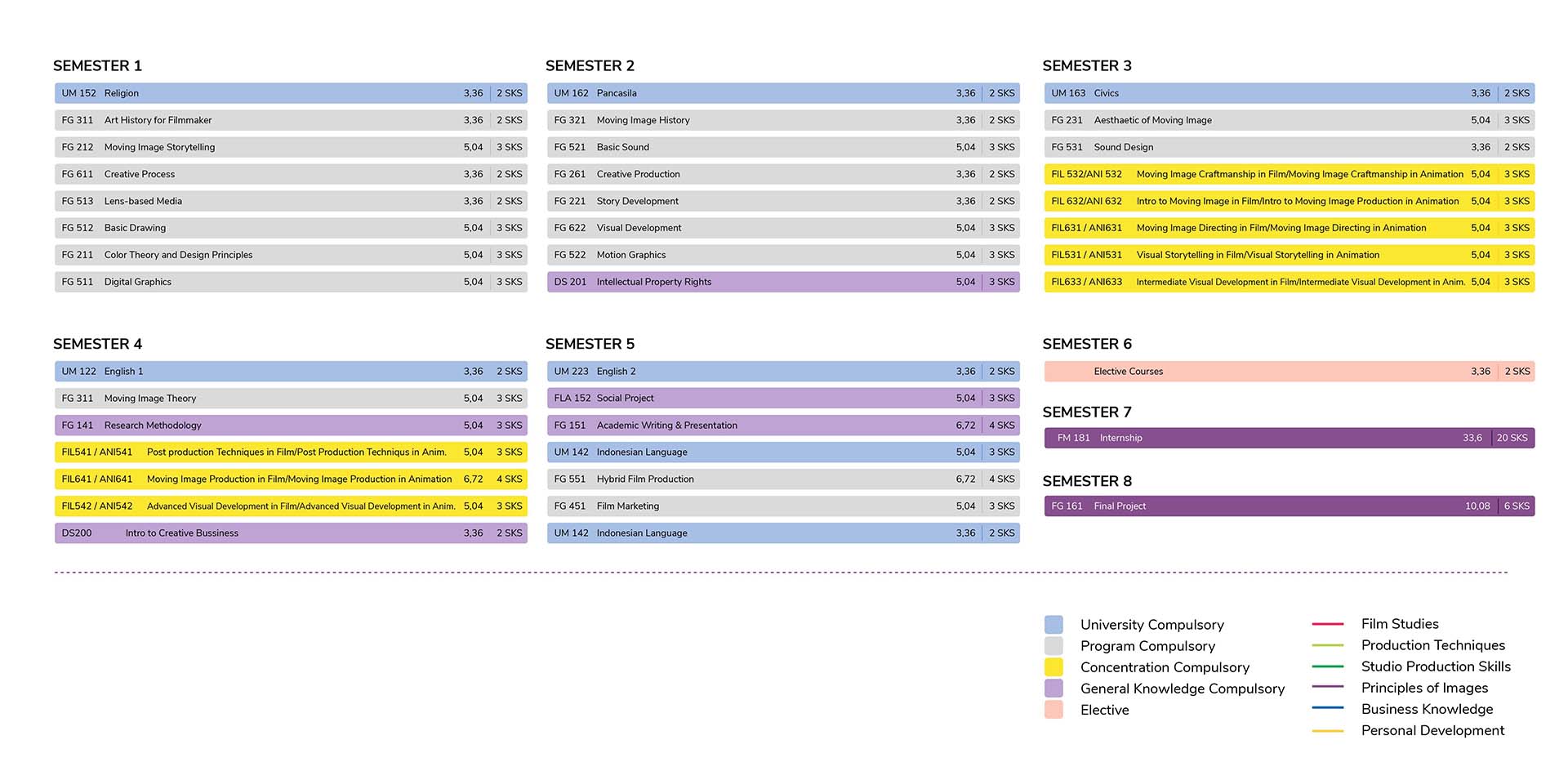
| Code | ELO |
| ELO 1 | Able to study various forms of moving images by using rules, principles, and research methods to produce research reports. |
| ELO 2 | Able to produce moving images or derivative products by utilizing technological developments and innovations. |
| ELO 3 | Able to convey information and present ideas, results of studies, research and skills in the field of moving images, verbally and non-verbally, to related parties in formal and informal forums. |
| ELO 4 | Able to comprehend context, think logically, critically and systematically in the development or implementation of science and technology in moving images. |
| ELO 5 | Able to comprehend the design and marketing of moving image products and derivative products using elements of local wisdom that have selling value and get copyright recognition from Indonesia. |
| ELO 6 | Able to show awareness in implementing workplace work ethics and health, safety, and security procedures. |
| ELO 7 | Able to show independent performance, responsibility, discipline, and make decisions appropriately. |
| ELO 8 | Able to work in teams and respect the diversity, opinions, or original findings of others and evaluate the results of group work responsibly. |
PROFESSIONAL PROFILE OF GRADUATES CHARACTER OF GRADUATES AFTER AT LEAST 2 YEARS OF GRADUATION TO 3-5 YEARS OF WORK
- Professionals with analytical skills who can practice and master creative concepts, visual storytelling, ICT, and
research in creating moving images in the film industry. - Individuals who develop and conduct lifelong learning in moving images both formally and informally through higher education, training, and professional certification and play an active role in developing their profession.
- Independent, responsible, and resilient individuals who can solve problems and collaborate by showing leadership
character and entrepreneurial spirit with a global outlook rooted in local wisdom.
–












To support the learning process, umn provided a complete and sophisticated college facility, according to industrial standards. Through the existence of the facility, students have been invited to be close to the industrial world since sitting in college and to have competence that matches the needs of the industry. That way, it will make it easier for umn students to find jobs, even before graduation.
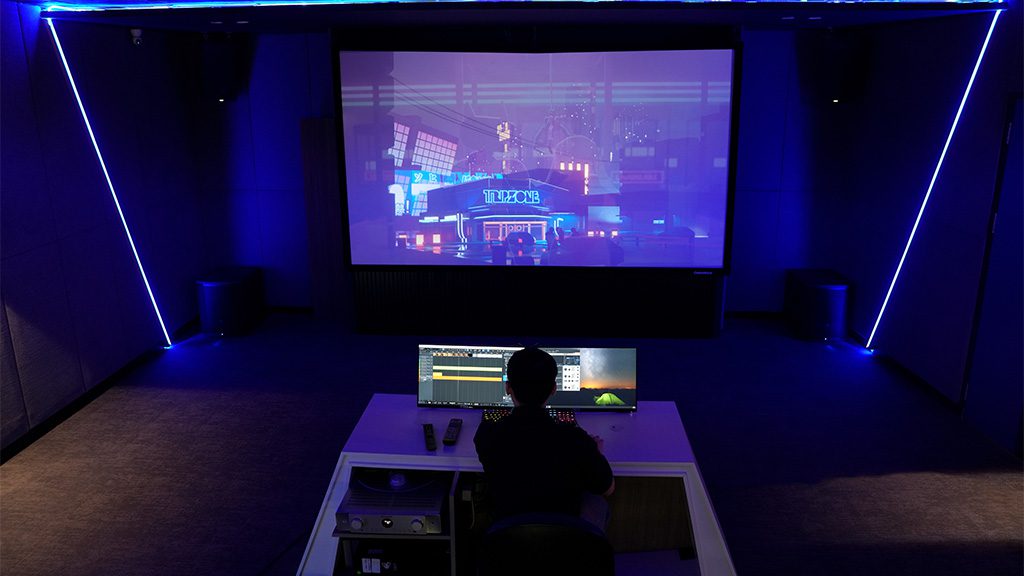
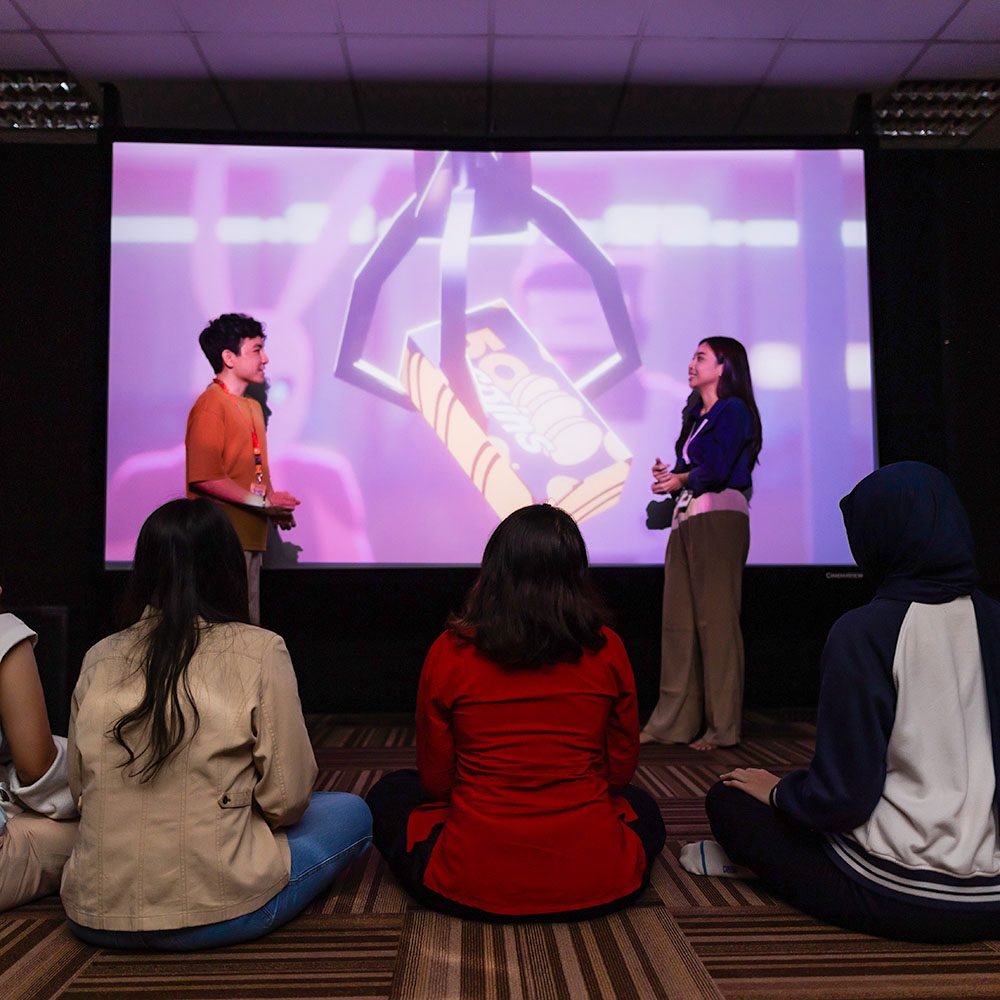
Cinema room is a facility provided for film students to showcase their works in the […]
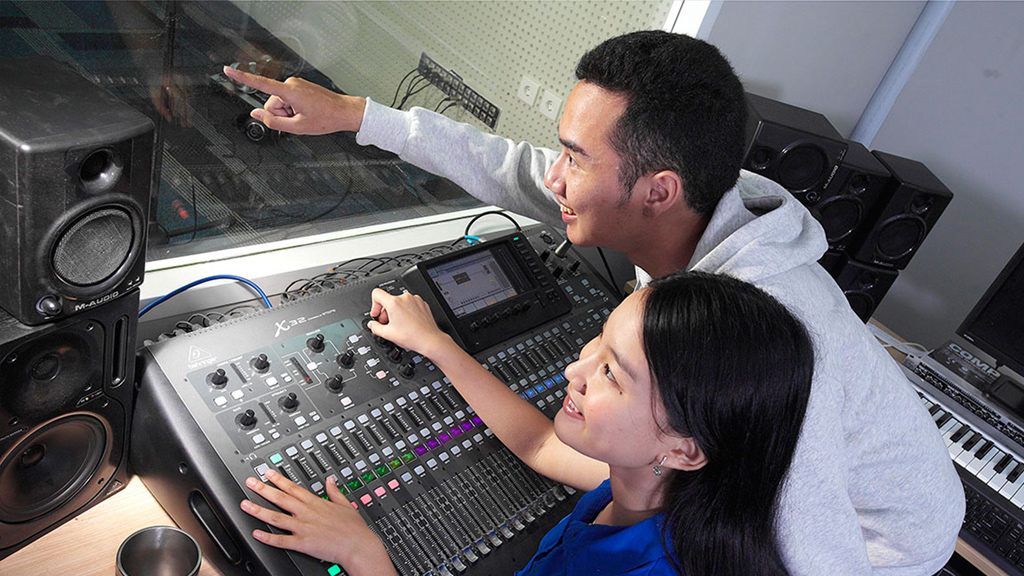
To produce high quality audio in accordance with industry standards, UMN facilitates students with the […]
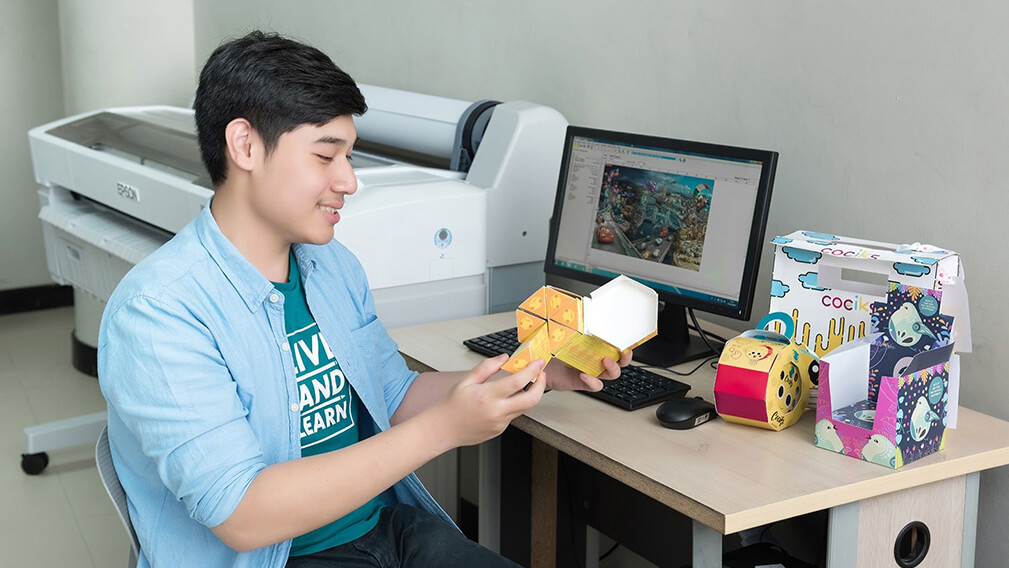
This laboratory facilitates UMN students to print their work using 3 mechanical engine units that […]

UMN is committed to creating an inclusive and supportive learning environment for all students. The […]
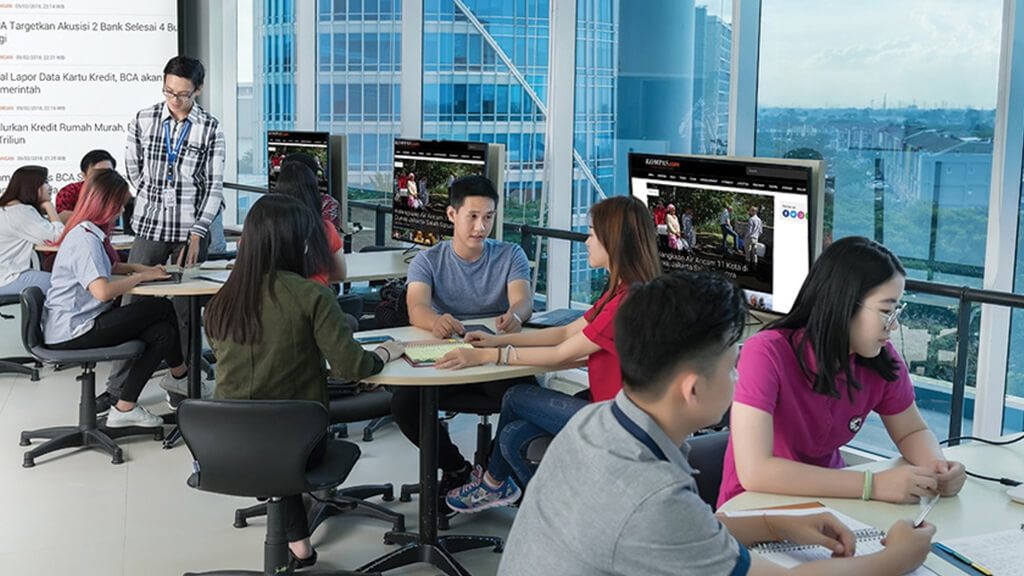
A laboratory equipped with technological tools that can help students hold discussions and design concepts. […]
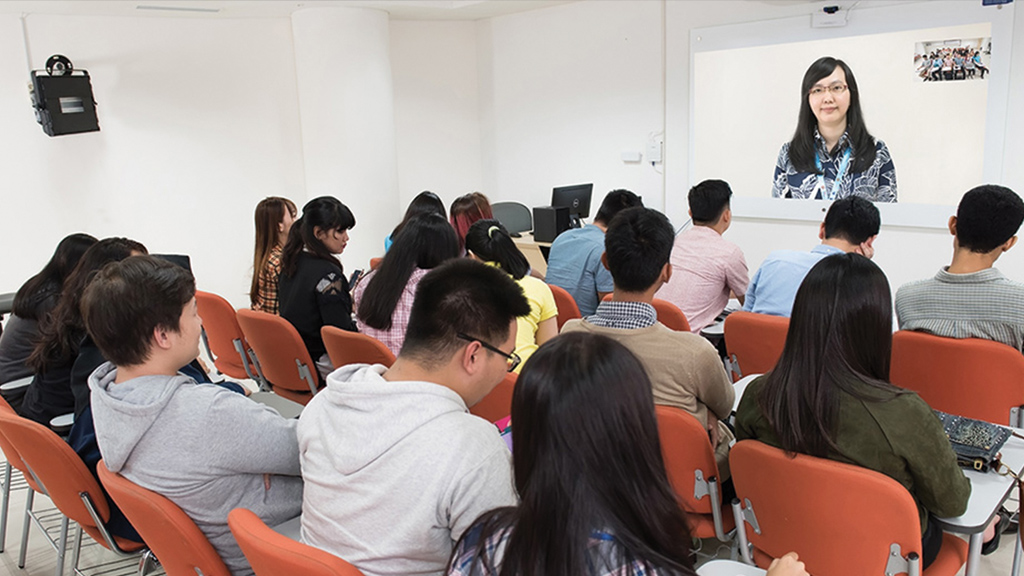
UMN developed two advanced online learning methods (e-learning) which are virtually synchronous and asynchronous. In […]
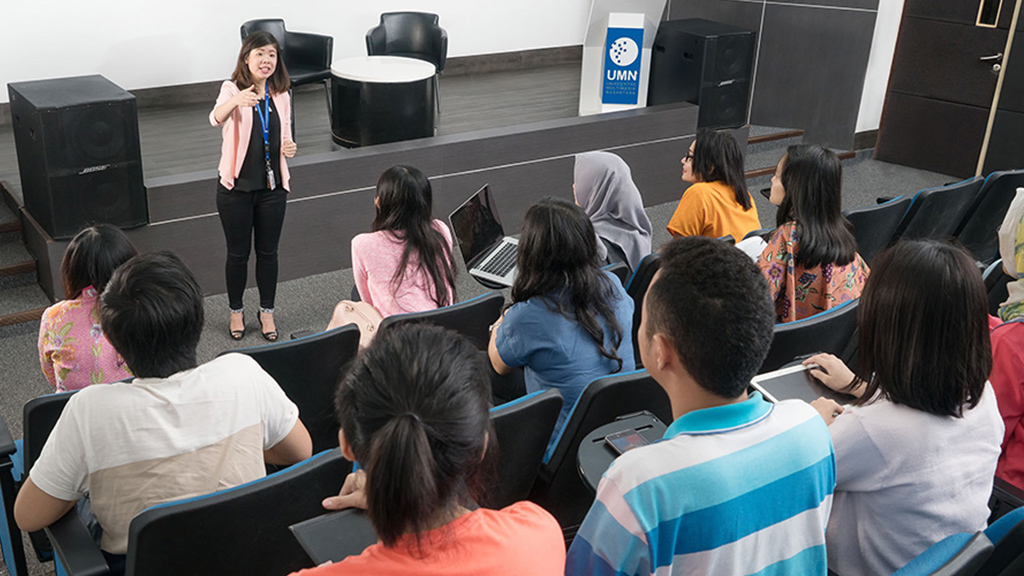
This modern theater hall has a capacity of up to 200 people. This room is […]

With the extent of modern interior designs, tens of thousands of local and international reading […]

Every UMN student holds an account to log in to the MYUMN application that provides […]
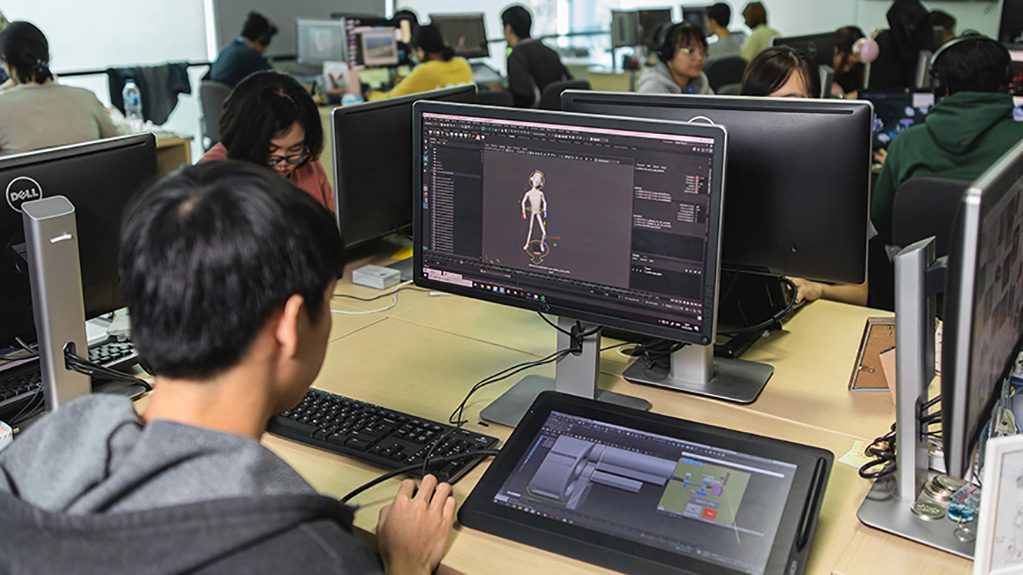
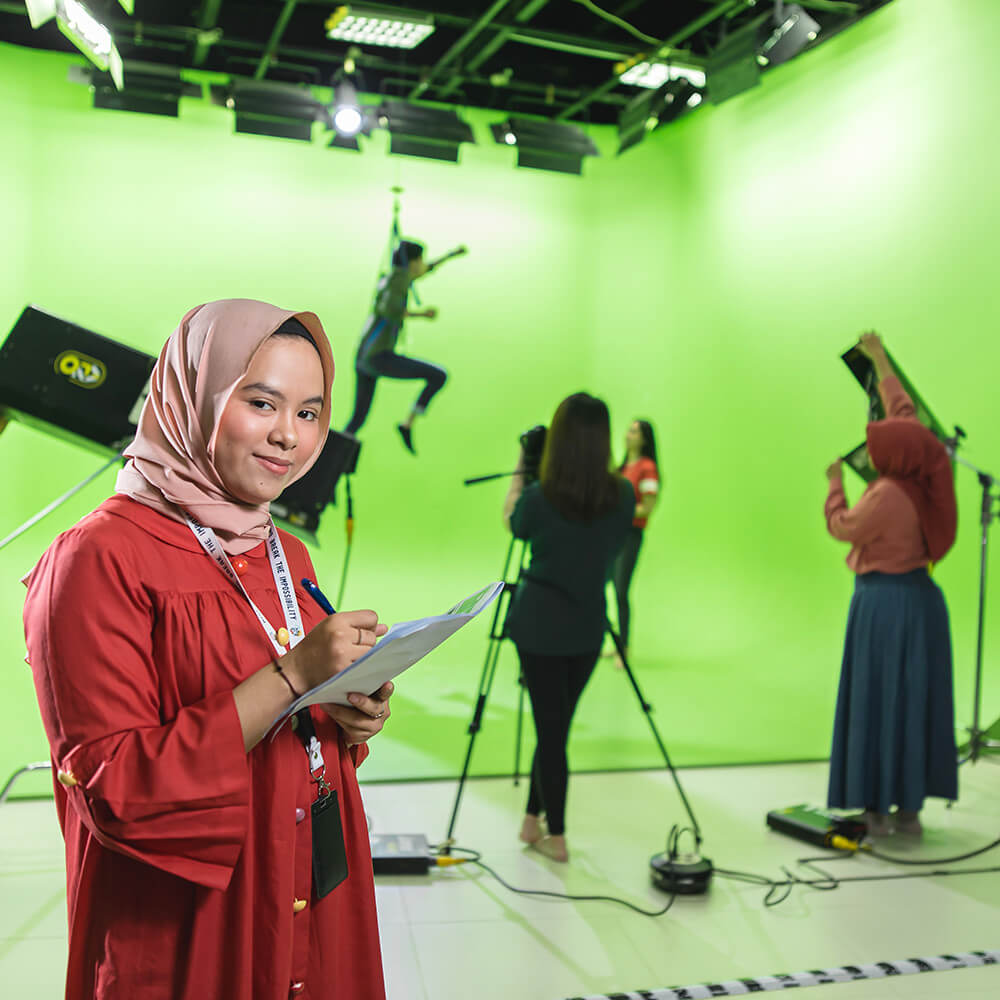
This studio is replete with computers with high capacity for film production and animation needs. […]
Extracurricular Student Activities
In order to help students explore and develop their non-academic potentials, UMN also provides a variety of extra-curricular activities for students which is locally called UKM, Student Activity Unit.
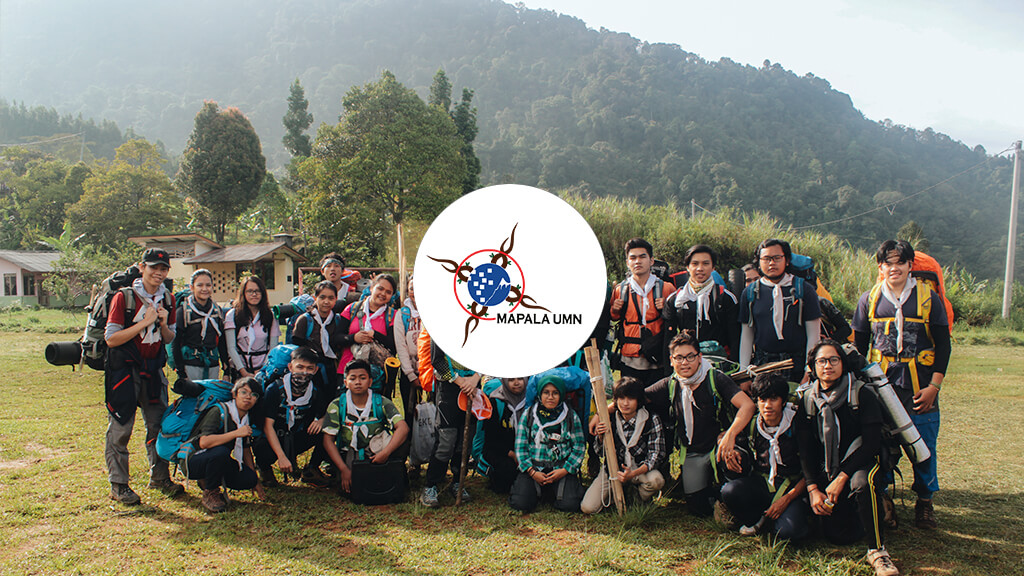
Student who are Nature Lovers in University Multimedia Nusantara can join and participate in UMN’s […]
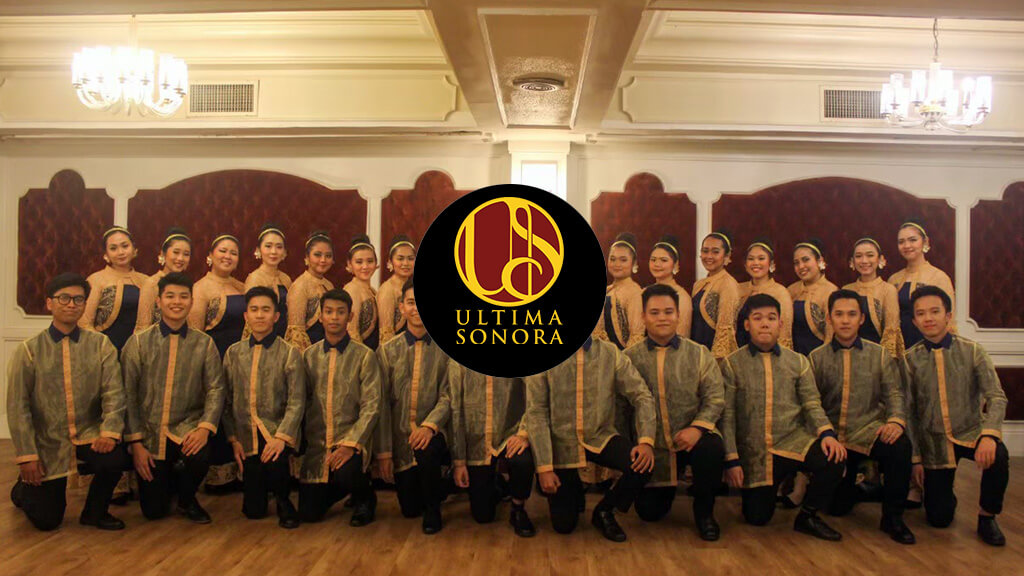
Ultima Sonora is the Universitas Multimedia Nusantara Choir ensemble which has been established since 2007. […]
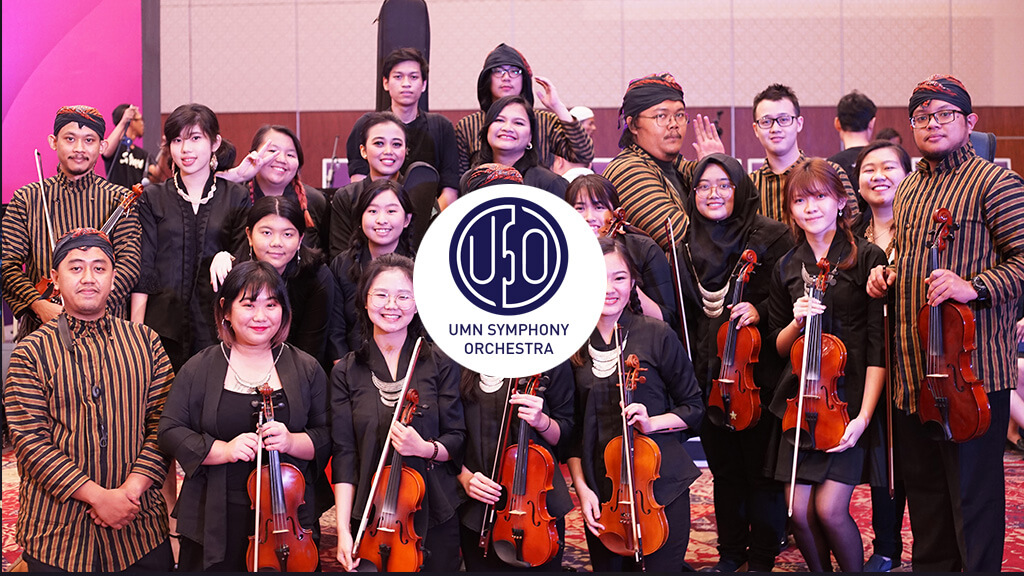
UMN Symphony Orchestra (USO), is one of the arts and culture UKM at UMN. As […]
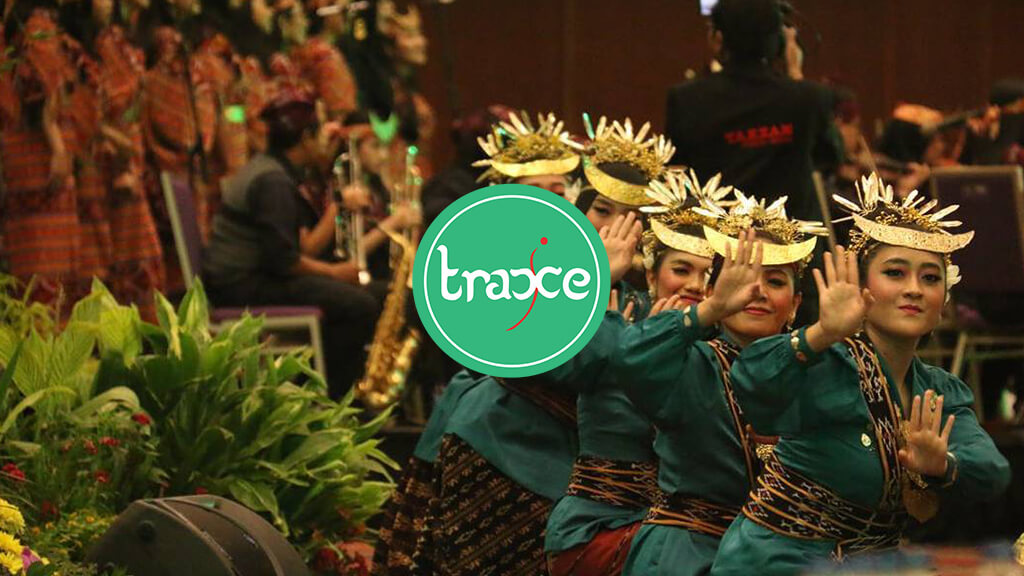
Traditional Music and Dance or familiarly known as TRACCE is one of the Student Activity […]
Qorie is one of the many Student Activity Units at Universitas Multimedia Nusantara that has […]
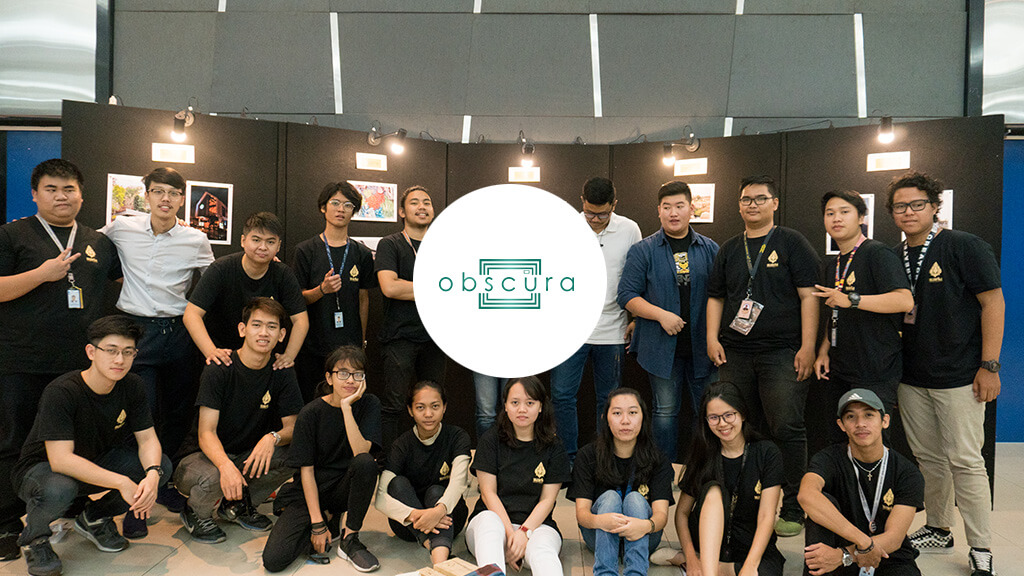
Obscura is a Student Activity Unit (UKM) engaged in photography under the auspices of Universitas […]

SEE OTHER
UMN’S STUDENT ACTIVITIES
Recapitulation of Copyright Innovation – Film
TESTIMONIAL

“As a film student who requires a lot of practice, at UMN I got it right away. I got hands-on experience while filming with seniors. My own shooting was also supervised by experienced lecturers. The second is connection, and I get a lot of it from UMN. Currently, apart from being a content creator, I am currently producing short films for festivals with my lecturers at UMN. There are many brand projects that I also work on with fellow alumni.”
Kristo Immanuel Caesar
Film UMN 2015 | Content Creator

"During my first semester at UMN, I have gained a wealth of knowledge beyond what I ever expected. I have become more independent, open-minded, and empathetic to new environments. Studying here has significantly deepened my understanding of film, and I look forward to gaining even more insights in the coming semesters."
Elda Fonseca
Film 2024, Timorense Student
CERTIFICATION
Information Literacy
Information literacy is an ability that individuals have in determining, searching, managing and evaluating information effectively and efficiently. This training is open to UMN active students. For further information, please contact: library.umn.ac.id
Adobe Certification
Adobe is a fundamental software suite widely used in the film and animation industry. Recognizing this need, UMN provides Adobe certification programs, available either individually or as a complete package. For more information, please contact the Center for Enrichment and Development (CED).
KFT Professional Certification
In response to the growing demand for professional certification, the UMN Film Study Program collaborates with the Indonesian Film and Television Workers Association (KFT) to provide certification for various industry-recognized professions. Please contact your Academic Advisor for more information.
Green Building Training
UMN collaborates with the Green Building Council Indonesia (GBCI) to organize Greenship Associate training and certification every December. For Film students, this program provides valuable insights into sustainable practices within the creative industry—such as eco-friendly production design, energy-efficient studio management, and green filmmaking principles. This initiative allows participants to gain both knowledge and certification in sustainability, applicable to film production environments. For more information, please contact [email protected].
“Since studying in the Film and Animation Study Program, I had the opportunity to make 3 animated short films as a final task of the semester. From this experience I had the opportunity to learn and experiment a lot with the way to tell stories. Now when I create comics, it feels like I can use all that science. Not only that, in UMN there are many student activities to make new friends, gain more insights, and improve teamwork. It is all very helpful from the stage of looking for a job until the time when you already work.”
Bryan Arfiandy
Komikus, Kosmik
Film & Animation
Filmmaking is a very favorable, aesthetic yet complex form of art. Only through teamwork, hard work and perseverance, a good film can be made. Live shoot, animated or CGI are our means to achieve it.
Edelin Sari Wangsa, S.Ds., M.Sn. – Ketua Program Studi Film