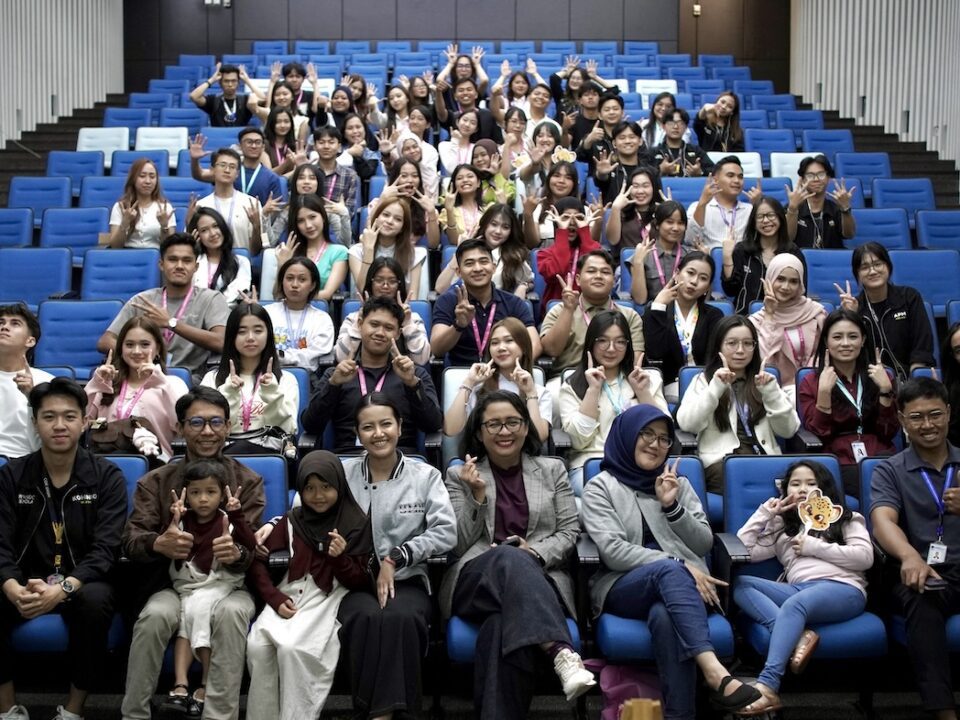

UMN PJJIK Gathering 2026: Fostering Warmth and Togetherness Beyond Distance
November 9, 2026
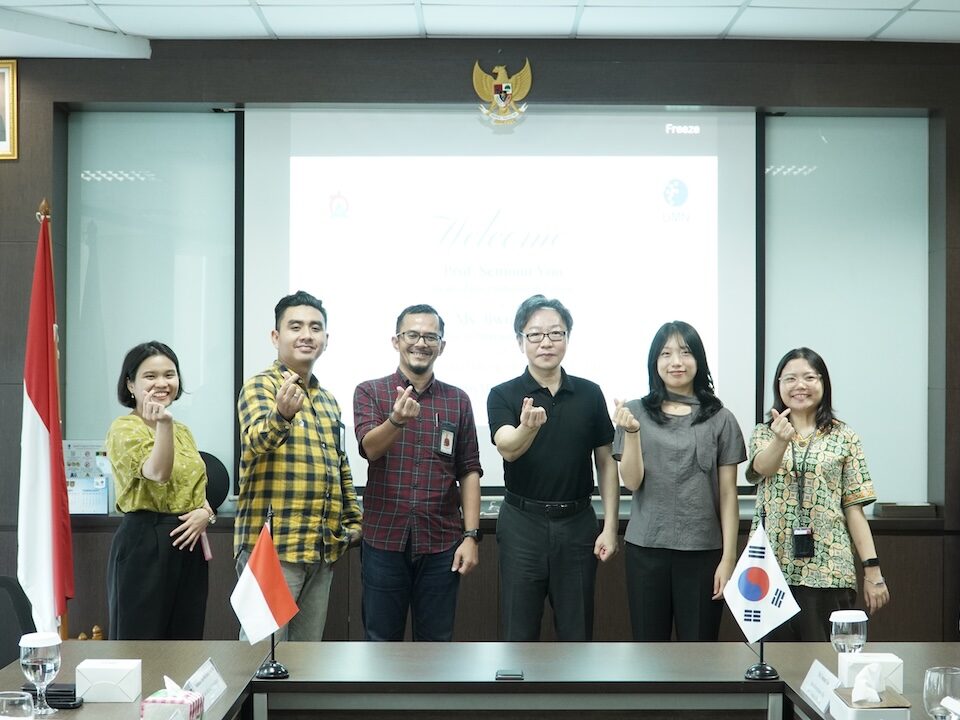
Strengthening Collaboration, FSD UMN and KUMA Explore New Academic Opportunities
November 6, 2026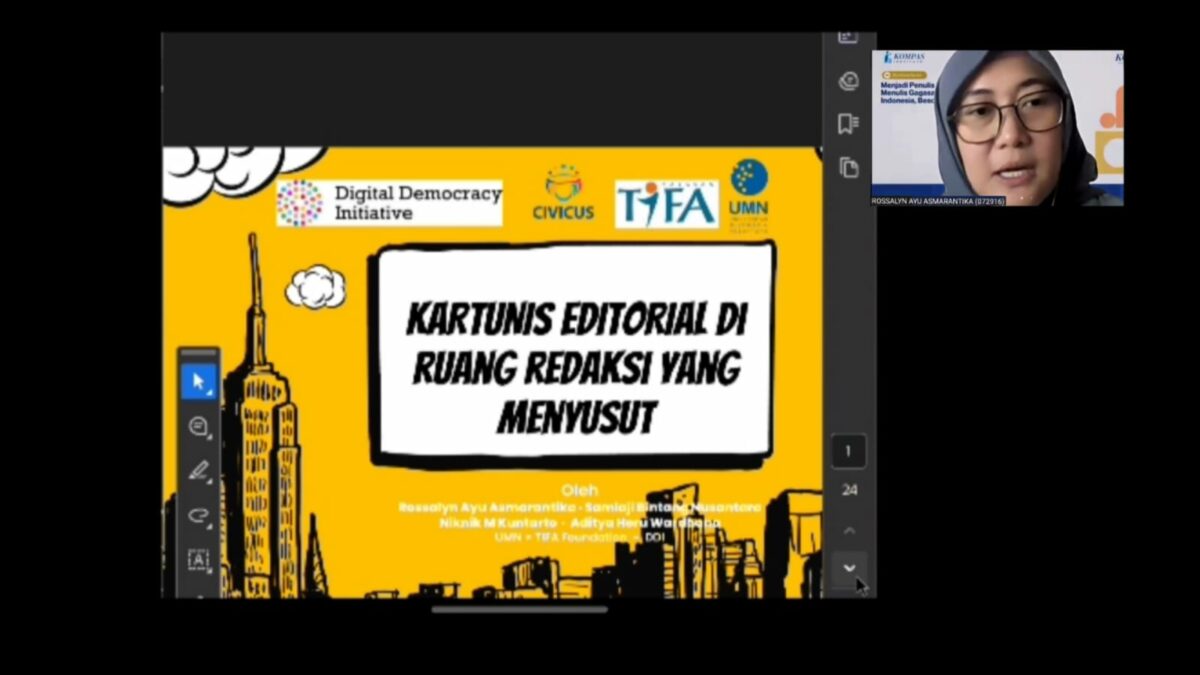
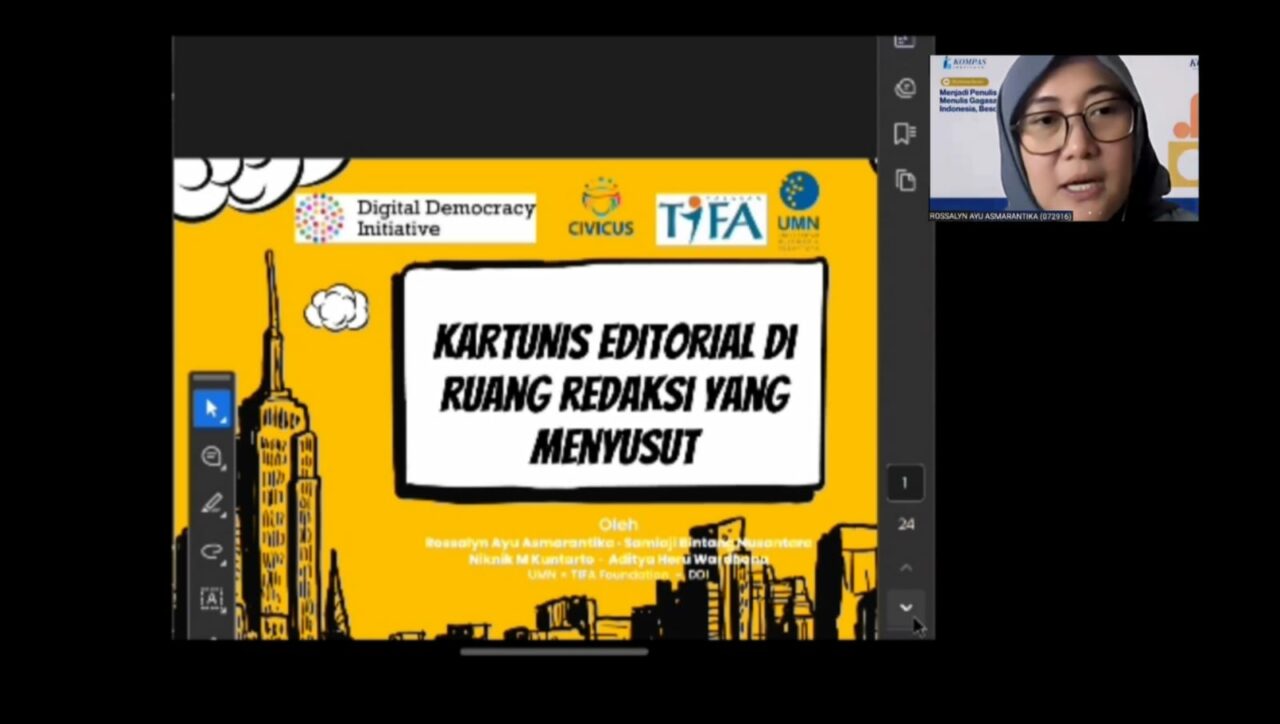
Rossalyn Asmarantika presented her research findings during an online webinar (Doc. UMN)
TANGERANG, November 5, 2026 – The Journalism and Content Creation Program, Faculty of Communication Sciences (FIKOM), Multimedia Nusantara University (UMN), held an online webinar and public research dissemination event titled “The Role of Editorial Cartoons in Digital Media in Safeguarding Democracy” on Wednesday (November 4, 2026). The event explored opportunities to develop editorial cartoons as a medium for social criticism and public expression amid the transformation of digital media.
This event is part of the “Reviving Editorial Cartoons for Digital Democracy” program, supported by the TIFA Foundation and the CIVICUS Alliance. The discussion featured several speakers, including Rossalyn Asmarantika, a journalism lecturer at UMN; Tommy (Thomdean), a contributor to Harian Kompas, The Jakarta Post, The Strategy, and Kontan.co.id; Citra Dyah Prastuti, Acting Secretary-General of the Indonesian Online Media Association (AMSI); and Eva Danayanti, Country Program Manager at IMS Indonesia and a lecturer at UMN. Dr. Niknik M. Kuntarto, an expert in forensic linguistics and a lecturer at UMN, moderated the discussion.
Program Coordinator Aditya Heru Wardana explained that the program aims to revive editorial cartoons as a way for the public to express their opinions. According to him, cartoons can convey critical messages through humor and satire.
Through this program, the team also organized four training sessions for student press organizations. These trainings are expected to encourage students to create and publish editorial cartoons. In addition, the team conducted research to identify the challenges and opportunities for developing editorial cartoons amid changes in the media landscape.
A representative from the TIFA Foundation also emphasized the importance of spaces for free expression in a democracy. Editorial cartoons, according to the representative, are not merely entertainment but rather part of journalistic practice that can support freedom of expression and public participation. The development of digital media is also seen as opening opportunities to reach a wider audience, including the younger generation.
Research Reveals Challenges Faced by Editorial Cartoonists
In her presentation, Rossalyn Asmarantika explained that the study used a qualitative approach through semi-structured, in-depth interviews with eight editorial cartoonists from five cities: Jakarta, Semarang, Surabaya, Makassar, and Medan. Some interviewees had practiced for decades.
The study explored the cartoonists’ career paths, their roles within newsrooms, the impact of media cost-cutting measures, the shift to digital platforms, monetization opportunities, and the pressures and threats to their creative freedom.
One highlighted finding is the increasingly limited space for editorial cartoons in mass media. Many media outlets no longer provide dedicated pages for cartoons, and editorial cartoonists are also affected by corporate efficiency policies. This situation also impacts the next generation of cartoonists in Indonesia.
In addition, changes to the journalism awards system have also drawn attention. The editorial cartoon category in the Adinegoro Awards has reportedly been discontinued since 2023. This illustrates the increasingly limited space for recognition of editorial cartoon work.
Despite these challenges, this study finds that editorial cartoons can still thrive through digital media. Their visual format, which resonates closely with audiences, can be leveraged to convey social criticism, enhance political literacy, and reach younger generations.
Editorial Cartoons as Part of Journalistic Practice
Tommy (Thomdean) discusses the creative process and the responsibilities of an editorial cartoonist in conveying criticism. According to him, this work requires not only drawing skills but also sensitivity to issues and an understanding of the information to be conveyed.
He explains that the process of creating an editorial cartoon involves gathering information, developing ideas, and creating sketches, which are then submitted to the editor. Revisions are also part of the process.
“It’s true that our job is to act as watchdogs; we call out what’s wrong. If positive changes follow, that’s a bonus,” Tommy said.
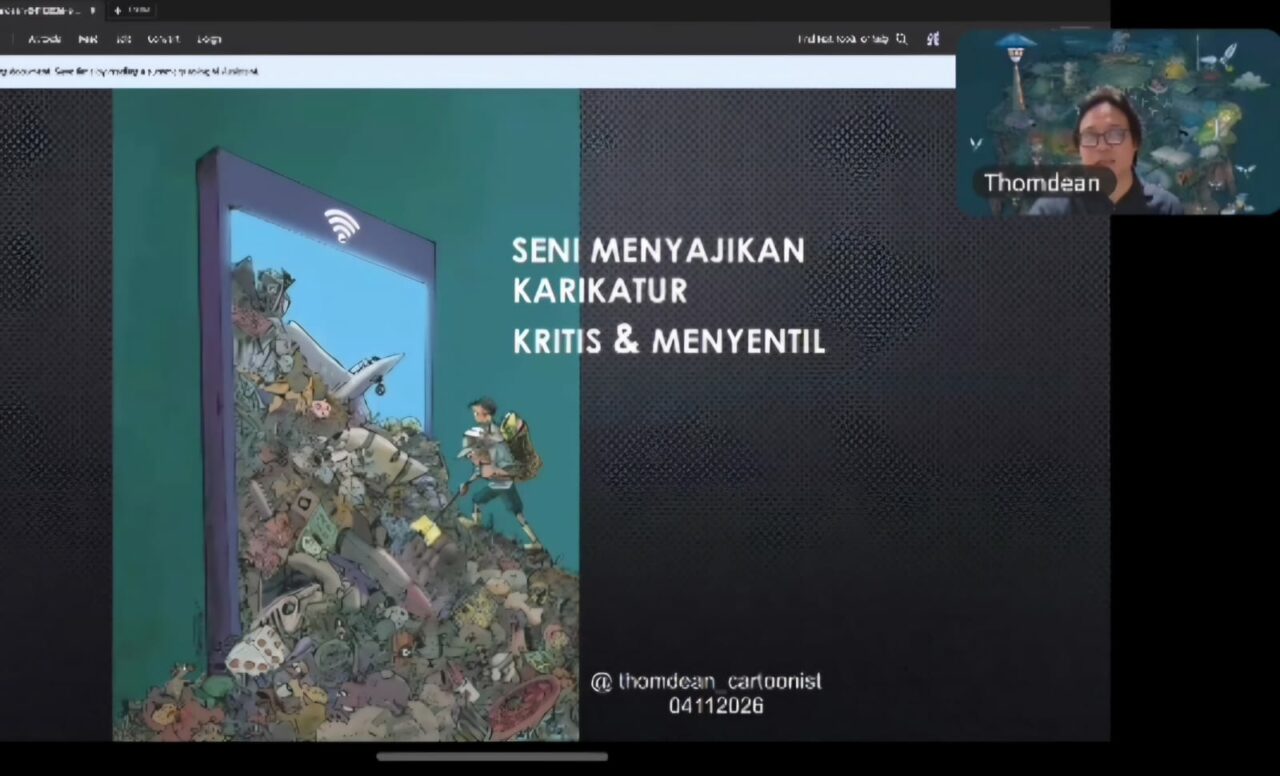
Tommy (Thomdean) is sharing his views on the role of editorial cartoonists in conveying criticism through visual art. (Photo courtesy of UMN)
He also emphasized that a cartoon’s power lies not solely in the quality of its artwork, but in the message it conveys to readers.
“The main thing isn’t the drawing itself, but does the message get across? Does the message align with what we want to convey?” he said.
According to him, editorial cartoons can serve as an educational tool for the public, including in discussing issues such as financial literacy and investment.
Meanwhile, Citra Dyah Prastuti highlighted media strategies for maintaining the presence of editorial cartoons amid shifting audience behavior. She believes editorial cartoons remain relevant because they can be part of a media outlet’s identity and character.
She also urged media outlets not to focus solely on page views. Reader loyalty and a media outlet’s ability to build relationships with its audience should be key considerations in developing journalistic products.
Citra also touched on the potential of cartoons as a medium for campaigns, education, and activism. In her view, developing strong visual characters can help media outlets connect with readers while ensuring the sustainability of editorial cartoons.
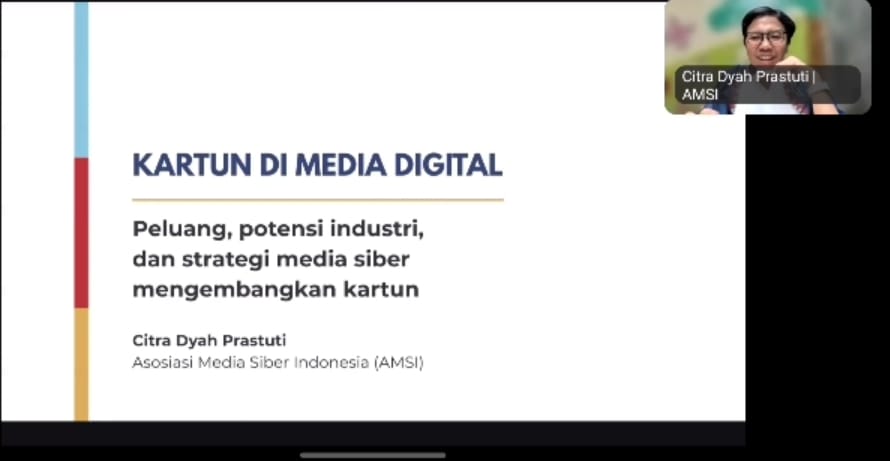
Citra Dyah Prastuti discussed media strategies for developing editorial cartoons as part of a media outlet’s identity (Doc. UMN)
Strengthening Visual Identity and Connection with the Audience
Eva Danayanti discussed changes in audience behavior, as more people access information through social media. This trend is driving media outlets to develop more interactive visual content aligned with audience habits, particularly among younger audiences.
She cited several media outlets that incorporate local characters and cultural elements into their visual content, such as Babat ID in Central Java and Teknokra from the University of Lampung. This approach can make the criticism conveyed feel more closely connected to the public’s experiences.
“By developing characters with a truly unique visual identity, distinct personalities, a distinctive critical style, and a close connection to the audience’s culture and experiences,” Eva explained.
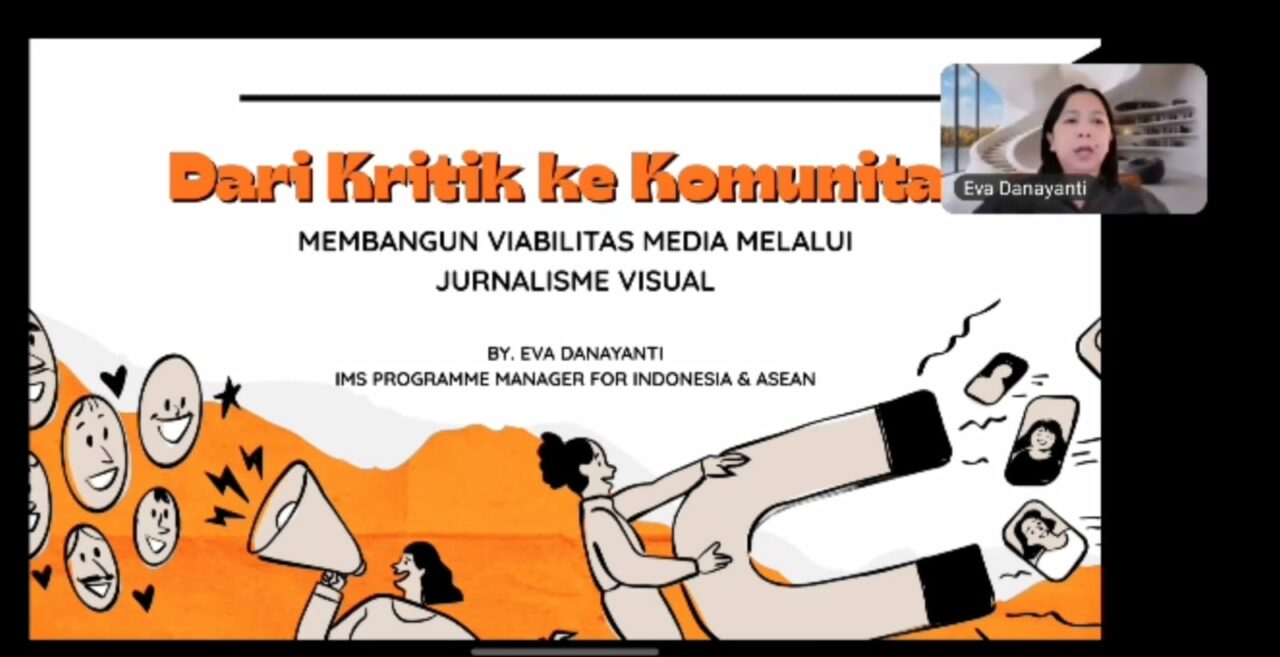
Eva Danayanti explains the importance of developing visual characters that resonate with the audience’s culture and experiences (Doc. UMN)
According to her, consistent visual characters can serve as an identity for media outlets while also building a loyal readership. Thus, editorial cartoon development should focus not only on view counts but also on long-term relationships with the audience.
This discussion highlights that editorial cartoons still have room to grow amid the digital transformation. Despite facing challenges such as media industry efficiency pressures, shifting patterns of information consumption, and limited spaces for expression, editorial cartoons retain the potential to be an important part of journalism.
Through research, training, and collaboration between academics and media practitioners, the “Reviving Editorial Cartoons for Digital Democracy” program is expected to foster a new generation of editorial cartoonists and strengthen the role of visual works as a medium for criticism, education, and guarding democracy.
By Manuela Salomonsz | UMN News Service
English translation by Levina Chrestella Theodora
Kuliah di Jakarta untuk jurusan program studi Informatika| Sistem Informasi | Teknik Komputer | Teknik Elektro | Teknik Fisika | Akuntansi | Manajemen| Komunikasi Strategis | Jurnalistik | Desain Komunikasi Visual | Film dan Animasi | Arsitektur | D3 Perhotelan , di Universitas Multimedia Nusantara. www.umn.ac.id