
UMN and Dongseo University Inaugurate Strategic Collaboration, Opening International Opportunities for Students
May 31, 2026
UMN Career and Scholarship Expo 2026 Presents Over 50+ Companies and Further Study Scholarships!
May 20, 2026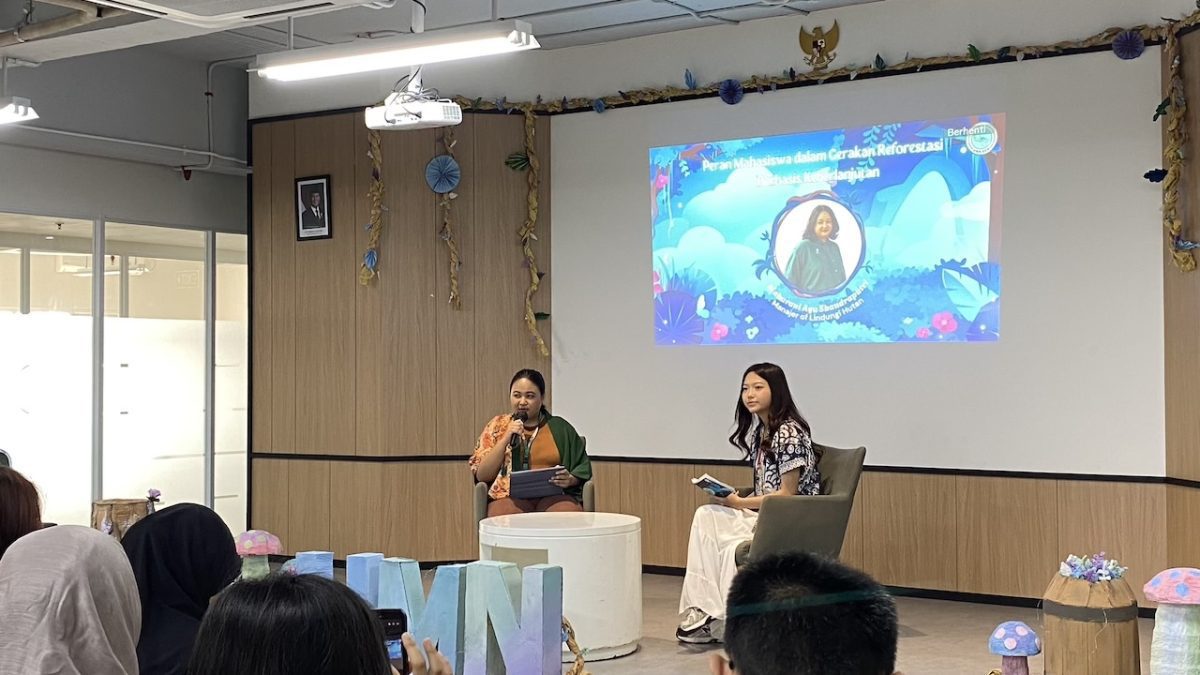
TANGERANG – UMN ECO held an Ecoprint seminar and workshop titled “Nirvana Roots” at Universitas Multimedia Nusantara (UMN) on Thursday (21/05/2026). This series of activities marks the first step of UMN ECO 2026 in inviting students to be more concerned about environmental issues, particularly reforestation and the sustainability of land ecosystems.
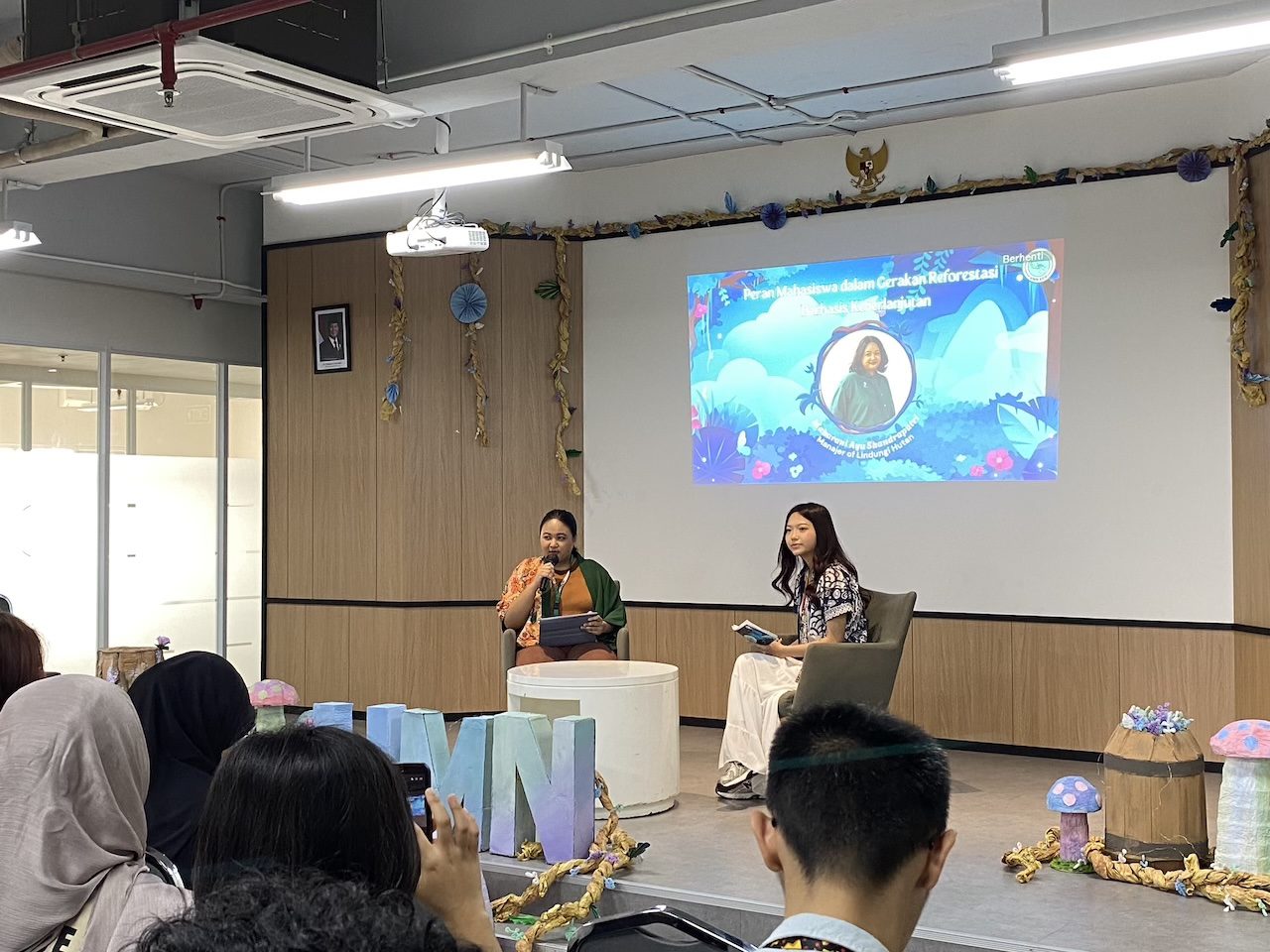
The event began with a seminar themed “The Role of Students in Sustainability-Based Reforestation Movements,” held in the Nias Room, Building D, UMN. The seminar featured Maharani Ayu Shandraputri from the Partnership of Lindungi Hutan as a speaker to discuss the role of students as a generation capable of bringing about change through simple and consistent actions.
Through this initial series of activities, UMN ECO 2026 invites all participants to understand better the importance of preserving land ecosystems through innovative and sustainable approaches.
UMN’s Student Development Officer, Yovidia Yovran Very Agista, S.Psi., explained that “Nirvana Roots” was born out of concern over the increasingly dire environmental conditions. According to her, deforestation and natural resource management issues are becoming more frequent and require greater attention, especially from the younger generation.
She believes that students have an important role in building environmental awareness going forward. Through the seminar and workshop, UMN ECO aims to invite students to understand that the Earth is currently not doing well and needs genuine contributions from various parties.
“This is one of the things we want to build or develop with our friends at UMN here – we want to increase everyone’s awareness so that we know the Earth is not doing well,” said Yovidia.
In addition to the seminar, participants were invited to an Ecoprint workshop held in the garden area of Building D at UMN. In the workshop, participants practiced ecoprint techniques using natural leaves and flowers on cloth drawstring bags. This activity is a creative way to introduce environmental issues through activities that are close to daily life.
Yovidia hopes that this series of activities will not just end with a seminar and workshop but will also mark the beginning of a change in student behavior toward protecting the environment. According to her, caring for the Earth needs to start with small steps taken together and consistently.
“And hopefully, with this workshop and seminar, it is a form of real action from all of you. Hopefully, in the future, everyone will love the Earth more and want to preserve our planet together,” Yovidia expressed.
The President of UMN’s Student Executive Board (BEM), Josephine Arumi, also expressed her hope that UMN ECO can become a platform that offers new experiences while fostering students’ awareness of the surrounding environment. She believes activities like this can be the first step toward a broader, positive impact.
According to Josephine, students not only need to understand environmental issues in theory but also begin to realize their role in protecting nature through simple daily actions.
“Through this activity, we are actually inviting all of you to care about the environment and realize the importance of our role in protecting nature,” said Josephine.
During the seminar session, Maharani Ayu Shandraputri highlighted how environmental issues today often only become a passing trend. She admitted to being worried that environmental movements stop at temporary campaigns rather than building real behavioral change in society.
According to her, the biggest challenge in sustainability is not a lack of information but rather a person’s consistency in practicing environmentally conscious habits. Maharani believes that maintaining an idealistic view of the environment becomes a challenge in itself when someone is under pressure from work, family, or social circles.
“I’m a bit concerned whether the idealism that is now becoming more normalized will later fade. For example, if today we are still idealistic, but later we are faced with situations that create quite a bit of pressure,” Maharani explained.
She also explained that environmental movements should not be built with a blame-oriented approach. Instead, environmental campaigns should be a space for building collective awareness so that more people feel comfortable getting involved in change.
Maharani believes that a movement can last longer if it creates value and changes people’s mindsets. For her, the success of an environmental campaign is not just about exposure or popularity, but about how the movement can gradually change habits and culture.
“Secondly, it’s about value benefits. Whether the campaign or movement we initiate drives changes in behavior and mindset,” said Maharani.
In the seminar, Maharani also emphasized the importance of building a system that makes it easy for people to care about the environment. She cited UMN ECO as one step that can create a safe space for students to start getting involved in the sustainability movement.
According to her, big changes always start with small steps taken consistently by one person, then grow into a larger community and movement. From these simple habits, environmental awareness can spread, creating a greater impact on society.
Through the “Nirvana Roots” ecoprint seminar and workshop, UMN ECO aims to provide a space for reflection and real action, helping students get closer to environmental issues. Not only are participants invited to understand the problems of deforestation and sustainability, but they are also invited to see that change can begin with simple actions taken consistently.
This series of activities also serves as a reminder that the movement to protect the environment does not always have to start with big steps. Awareness, small habits, and consistency are important foundations for building a culture of environmental care that can endure across generations.
UMN ECO is a student activity under the auspices of UMN’s BEM (Student Executive Board) that aims to increase student awareness through concrete actions to preserve the environment. The name ECO itself comes from three words: Earth, Caring, and Operation, representing the spirit of protecting the environment without damaging nature. This “Nirvana Roots” activity is part of the UMN ECO series and is also related to Sustainable Development Goal (SDG) 15, which focuses on “Life on Land.”
By Melinda Chang | UMN News Service
English translation by Levina Chrestella Theodora
Kuliah di Jakarta untuk jurusan program studi Informatika| Sistem Informasi | Teknik Komputer | Teknik Elektro | Teknik Fisika | Akuntansi | Manajemen| Komunikasi Strategis | Jurnalistik | Desain Komunikasi Visual | Film dan Animasi | Arsitektur | D3 Perhotelan , di Universitas Multimedia Nusantara.