MSME Training by UMN and Bank Indonesia Banten Helps Products Grow and Level up
October 8, 2026
UMN Explores International Collaboration with University College Dublin
October 7, 2026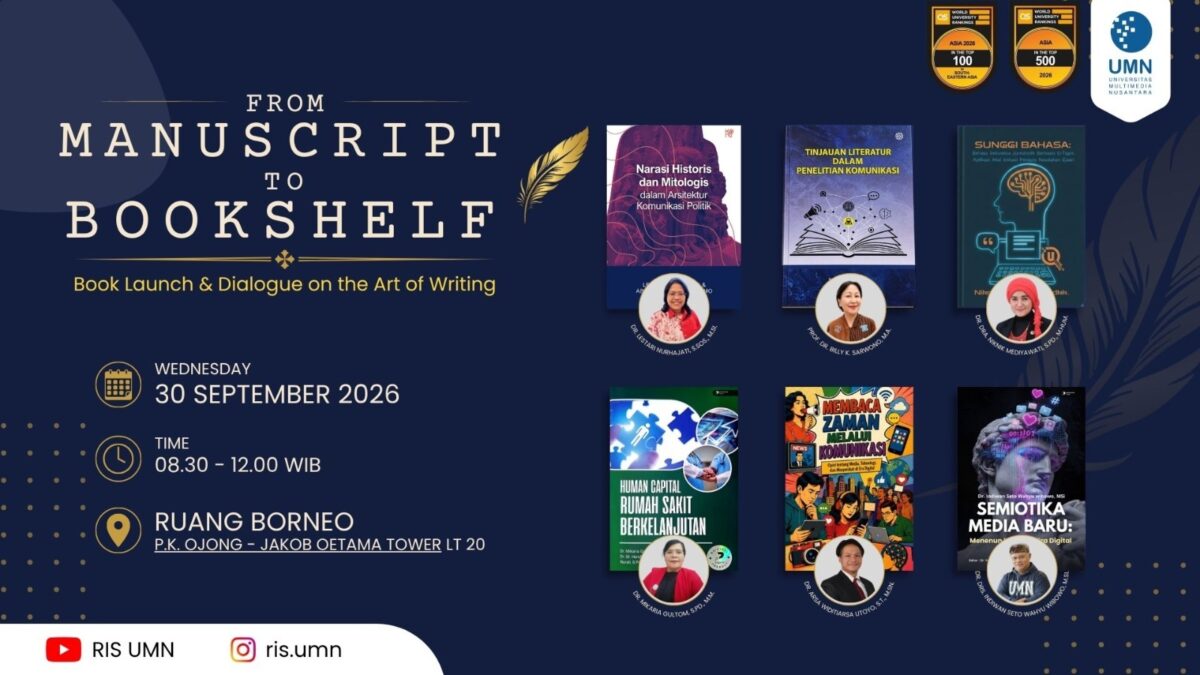
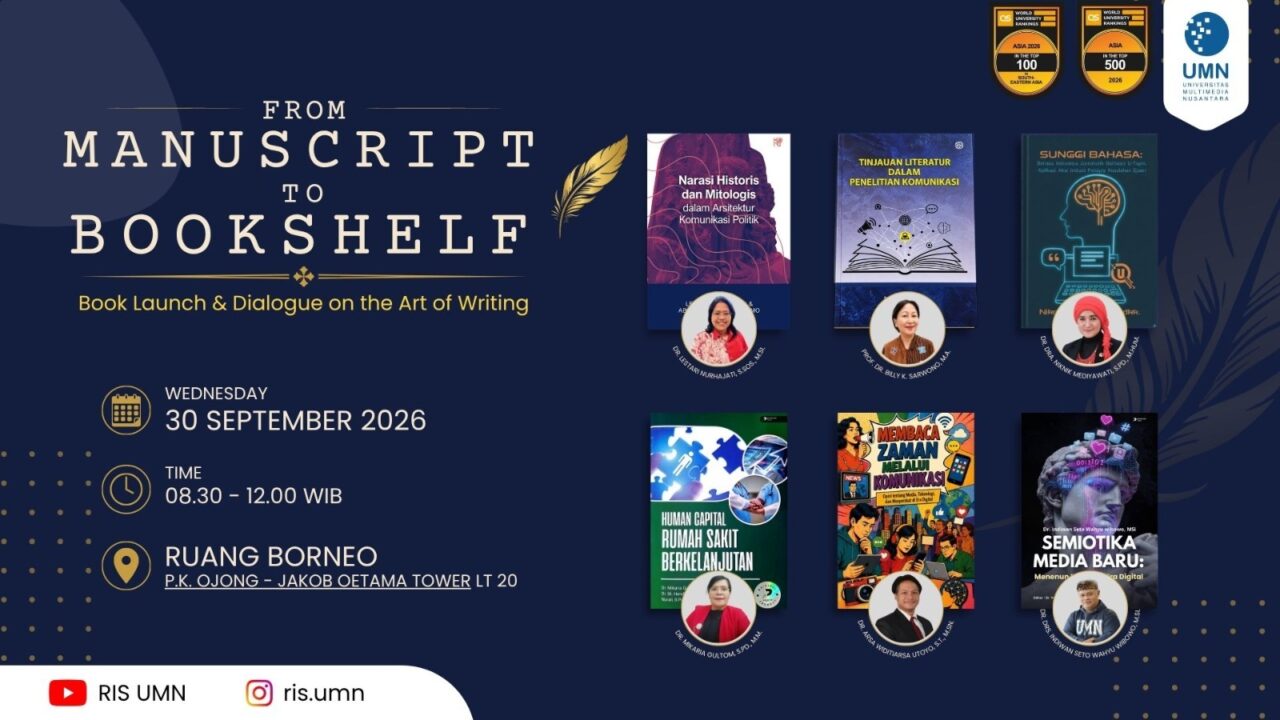
Six books on a wide range of themes—political communication, research methodology, language and journalism, artificial intelligence (AI), and new media semiotics—were launched at “From Manuscript to Bookshelf: Book Launch & Dialogue on the Art of Writing” at UMN on Wednesday (30/9/2026).
TANGERANG – Writing a book amid rapid technological change and a flood of information is a challenge in itself for academics. Even so, research and academic thinking can still be developed into work that reaches further and is easier to access in book form. That spirit was on display at “From Manuscript to Bookshelf: Book Launch & Dialogue on the Art of Writing,” held by Research, Innovation, and Sustainability (RIS) at Universitas Multimedia Nusantara (UMN) on Wednesday (30/9/2026).
The event, held in the Borneo Room of UMN’s P.K. Ojong–Jakob Oetama Tower, is the latest in a series of similar events that have been running since 2025. On this occasion, six books were launched covering a wide range of topics, from the Indonesian language, political communication, and communication research to human resource management in hospitals and developments in media and digital communication.
For Jansen Wiratama, S.Kom., M.Kom., Publications Manager of Research, Innovation, and Sustainability at UMN, publishing books is a form of academic productivity that needs continued encouragement. He praised authors who have maintained their enthusiasm for writing and developed their research findings to the point of publication, including work involving external partners and published by Penerbit Buku Kompas.
“These days, writing books feels like something that’s starting to decline among academic practitioners and students alike, but I really do appreciate that Bu Niknik’s team
That spirit was visible in the variety of works launched at the event. One of them is Sunggi Bahasa, written by five UMN lecturers from across study programs: Dr. Niknik M. Kuntarto, M.Hum.; Marlinda Vasty Overbeek, S.Kom., M.Kom.; Moeljono Widjaja, B.Sc., M.Sc., Ph.D.; Samiaji Bintang Nusantara, S.T., M.A.; and Rudi Sutomo, S.Kom., M.Si., M.Kom. Published by Penerbit Buku Kompas, the book grew out of research on developing an artificial intelligence-based language error-filtering system to improve the quality of Indonesian-language journalistic texts in the digital era.
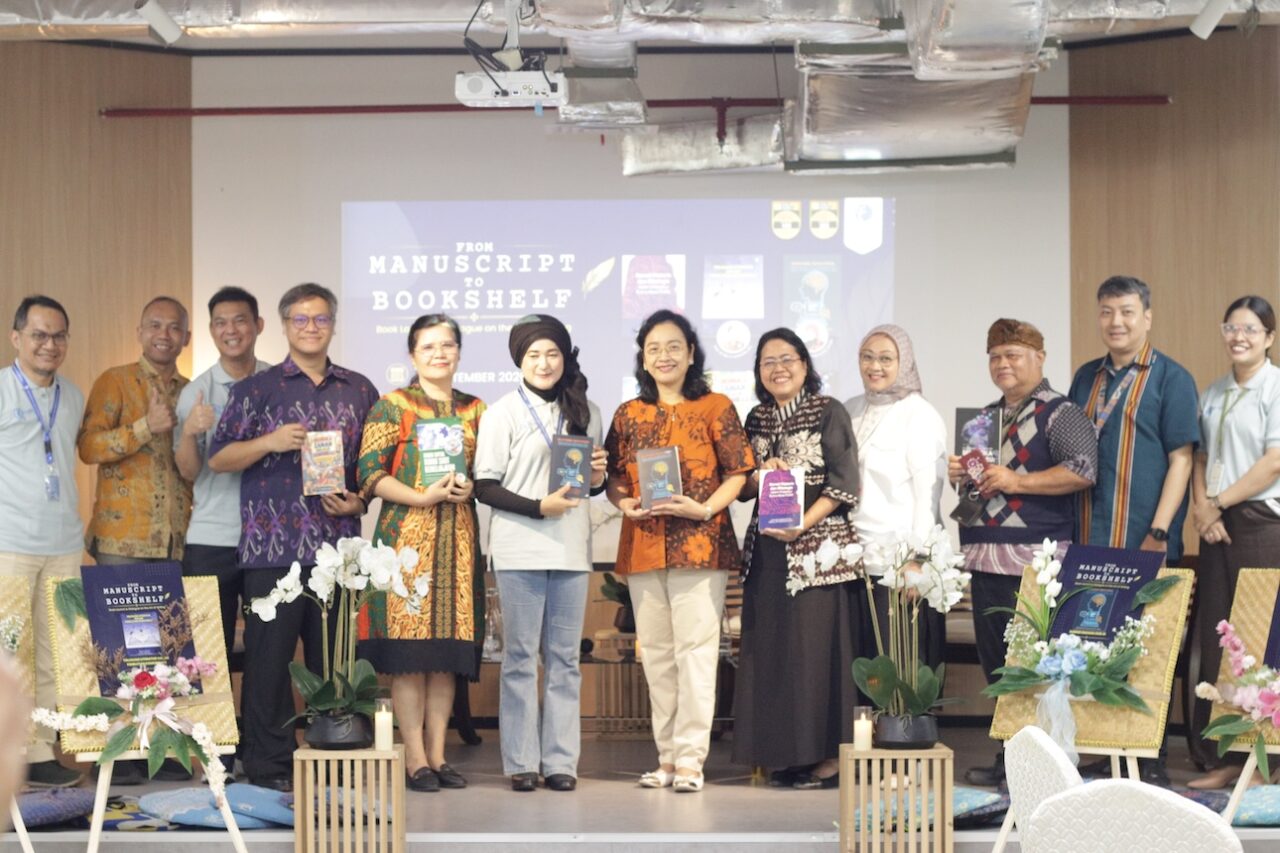
The handover of Sunggi Bahasa by UMN’s Vice Rector for Research, Innovation, and Sustainability, Dr. Sari Monik Agustin, S.Sos., M.Si., to the writing team at “From Manuscript to Bookshelf: Book Launch & Dialogue on the Art of Writing,” held by Research, Innovation, and Sustainability (RIS) at Universitas Multimedia Nusantara (UMN) on Wednesday (30/9/2026).
Rather than discussing language purely in linguistic terms, Sunggi Bahasa brings together three fields: the Indonesian language, journalism, and technology. One example is U-Tapis, an Indonesian language error filtering application developed by UMN lecturers from across study programs to help detect and correct language use. The book describes U-Tapis’s development as drawing on several artificial intelligence algorithms.
For Niknik, the title Sunggi Bahasa means holding the Indonesian language high as the language of unity. “Sunggi Bahasa is also a story about a kind of love: love for Indonesia, love for the homeland. And I especially hope someone in the next world is listening, because the word Sunggi came from a suggestion by a wonderful UMN student who left us all just a few days ago, Annisa. Let us pray together for her peace there,” Niknik said.
The technology developed in Sunggi Bahasa is also not meant to replace the human role in understanding language. Samiaji Bintang Nusantara, one of the book’s authors and a journalism veteran, explained that language errors in news reporting cannot simply be pinned on journalists. The speed of news production and the demands of newsroom work are among the factors that can affect the writing process.
For that reason, the book is positioned as part of an effort to help journalists improve the quality of their language use, not to judge journalistic practice as it stands. Language filtering technology is presented as a tool that can support that process, while human understanding and ability remain essential to using it.
The meeting point between technology and human ability was also a concern in developing U-Tapis. Marlinda Vasty Overbeek explained that the technology was built through various artificial intelligence algorithms, including machine learning and deep learning. To date, that development has produced around 11 modules that detect language errors and offer corrections.
On the other hand, the arrival of AI also brings new challenges to the learning process. Moeljono Widjaja, one of the authors of Sunggi Bahasa, believes that using AI in education must be paired with critical thinking skills, so the technology is not used merely to get instant answers.
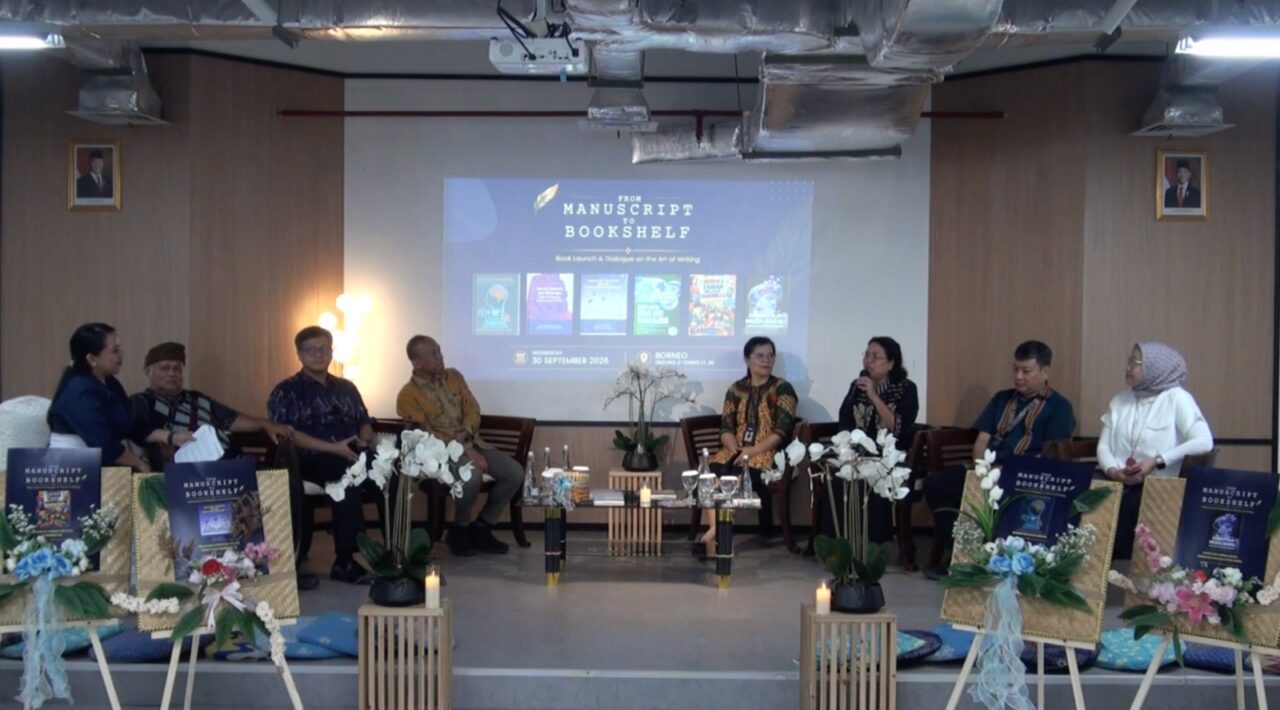
An interactive book discussion session with the authors at “From Manuscript to Bookshelf: Book Launch & Dialogue on the Art of Writing,” held by Research, Innovation, and Sustainability (RIS) at Universitas Multimedia Nusantara (UMN) on Wednesday (30/9/2026).
Besides Sunggi Bahasa, the five other books show the breadth of knowledge carried from the research and writing process to readers. Narasi Historis dan Mitologis dalam Arsitektur Komunikasi Politik (Historical and Mythological Narratives in the Architecture of Political Communication) by Dr. Lestari Nurhajati and Abdullah Madiokusumo examines how history and mythology shape messages, symbols, identity, legitimacy, and public perception in political communication.
Meanwhile, Tinjauan Literatur dalam Penelitian Komunikasi (Literature Review in Communication Research) by Prof. Dr. Billy K. Sarwono, Dr. Agustinus Rusdianto Berto, S.Sos., M.Si., Dr. Fitria Angeliqa, M.Si., and Dr. Camelia Pasandaran discusses how to conduct a literature review critically. The book treats a literature review as more than an exercise in collecting or summarizing sources, framing it instead as the process of bringing various pieces of information together to arrive at a complete understanding of a research problem.
Two other books focus on managing people and the dynamics of communication amid changing times. Human Capital Rumah Sakit Berkelanjutan (Human Capital for the Sustainable Hospital) by Dr. Mikaira Gultom, M.M.; Dr. St. Hendro Budiyanto, S.Pd., M.M., CHRA; and Nurali, S.Pd., M.M. discusses human resource management as a foundation for building hospitals that are adaptive, professional, and sustainable. Its scope covers workforce competency, work culture, collaboration, leadership, and ongoing capacity development.
Membaca Zaman melalui Komunikasi (Reading the Times Through Communication) by Dr. Arsa Widyatarsa Utoyo, S.T., M.Sn., meanwhile, takes readers into a communication landscape that is shifting ever faster. The movement of information, the virality of news, the shaping of perception through images, and the roles of media, algorithms, digital platforms, influencers, data, and artificial intelligence are all part of the dynamics that shape how society understands reality.
The question of how meaning is formed in digital spaces is also a concern in Semiotika Media Baru: Menenun Makna di Era Digital (New Media Semiotics: Weaving Meaning in the Digital Era) by Dr. Indiwan Seto Wahjuwibowo, M.Si. The book invites readers to see how meaning is no longer carried by text alone, but is also shaped by symbols, algorithms, interactions, social media, artificial intelligence, and everyday digital culture.
Taken together, these books show that the process of going “From Manuscript to Bookshelf” does not end with producing a book. Behind every work lies research, experience, problems, and academic restlessness, which are then formulated into knowledge that can be shared with readers. The six books launched also show how academic ideas can travel across different fields and respond to problems emerging in society.
Through this event, the spirit of writing is positioned not only as an activity that produces publications, but also as part of an effort to keep knowledge growing and to pass it on to the next generation of readers. From manuscripts that begin in research and thought, ideas then find a wider space in which to be read, debated, and developed further.
By Melinda Chang | UMN News Service
English translation by Levina Chrestella Theodora
Kuliah di Jakarta untuk jurusan program studi Informatika| Sistem Informasi | Teknik Komputer | Teknik Elektro | Teknik Fisika | Akuntansi | Manajemen| Komunikasi Strategis | Jurnalistik | Desain Komunikasi Visual | Film dan Animasi | Arsitektur | D3 Perhotelan , di Universitas Multimedia Nusantara. www.umn.ac.id