
Strengthening Collaboration, UMN Launches Visiting Professor Program with Chang Gung University
April 23, 2026
Expanding Its Global Network, UMN Explores Strategic Collaboration with Harbin Institute of Technology, Shenzhen
April 23, 2026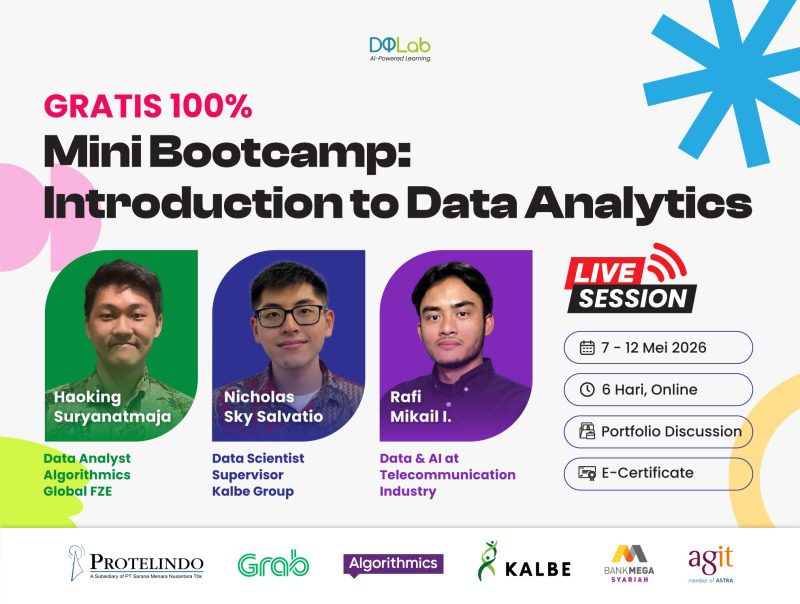
UMN Bootcamp Poster. (Courtesy of QDLab)
In today’s digital age, the term “data analytics” is increasingly heard. From business and technology to education, everyone is talking about data. However, many people still wonder: what exactly is data analytics used for? Is it only relevant to large corporations, or does it also connect to students’ daily lives?
Simply put, data analytics is the process of analysing data to uncover meaningful insights and then using those insights to inform decision-making. So, data isn’t just a collection of numbers or tables—it’s something that can “tell a story” when processed the right way. According to IBM, data analytics helps organizations improve efficiency, understand patterns, and make more accurate, fact-based decisions.
Where Is Data Analytics Used?
If we look closer, we actually come into contact with data analytics almost every day. When opening shopping apps like Tokopedia or Shopee, the products that appear on the homepage aren’t displayed randomly—they’re based on an analysis of our search history and habits. The same thing happens with entertainment platforms like Netflix and Spotify, where the system learns what we watch or listen to to provide recommendations that feel relevant.
Even on social media platforms like Instagram and TikTok, the content we see in our feeds is determined by our daily interactions. All of these experiences show that data analytics has become part of our daily lives, even if we often don’t realize it.
Why Do Students Need to Know About Data Analytics?
This is where things are often overlooked. Many students view data analytics as something complex and relevant only to specific majors. In reality, the modern workplace is increasingly shifting toward a data-driven approach, where nearly every major decision is supported by robust analysis. Even for non-technical roles like marketing, business, or human resources, the ability to understand data remains a significant asset.
Additionally, understanding data helps students develop a more critical, structured mindset as they become accustomed to examining facts before reaching conclusions. The World Economic Forum notes that the ability to understand data is one of the key skills of the future, given the rapid advancements in technology and AI. This means students don’t have to become data experts, but they should at least possess the basic ability to read and interpret data-driven information.
Data Analytics in the Workplace
Upon entering the workforce, the role of data analytics becomes far more strategic. Companies use data to understand customer behavior, determine marketing strategies, and evaluate overall business performance. Decisions are no longer based solely on intuition but are supported by concrete data. According to McKinsey & Company, organizations that rely on data for decision-making tend to be more productive and better able to compete. This explains why many companies are now seeking candidates who not only possess theoretical knowledge but can also understand and interpret data effectively.
Data Analytics Is Not Just About Tools, But a Way of Thinking
One common misconception is that data analytics is solely about using tools like Excel, SQL, or Python. In reality, what matters more is the mindset behind it. Data analytics trains individuals to ask deeper questions, identify patterns in available information, and make decisions based on facts, not assumptions.
This mindset is highly relevant for students, even while they’re still in college. For instance, when working on research assignments, analyzing survey results, or making decisions within campus organizations, the ability to understand data can help produce more precise and well-directed decisions.
Data analytics isn’t something distant or complicated. In fact, we experience it every day—from online shopping and watching movies to using social media.
For students, understanding data analytics isn’t just about following trends; it’s about preparing for a workforce that’s becoming increasingly complex and data-driven. This skill helps cultivate a more critical, structured, and relevant way of thinking aligned with today’s industry needs.
In the future, it won’t just be those who are “data-savvy” who excel, but those who can understand and leverage data to make better decisions. Start honing your data analytics skills by joining the DQLab Mini Bootcamp Batch 11! Register now via the following link: https://bit.ly/MINIBC11_
DQLab UMN
English translation by Levina Chrestella Theodora
Kuliah di Jakarta untuk jurusan program studi Informatika| Sistem Informasi | Teknik Komputer | Teknik Elektro | Teknik Fisika | Akuntansi | Manajemen| Komunikasi Strategis | Jurnalistik | Desain Komunikasi Visual | Film dan Animasi | Arsitektur | D3 Perhotelan , di Universitas Multimedia Nusantara.