
UMN Expands Its National and International Collaboration Network
October 22, 2026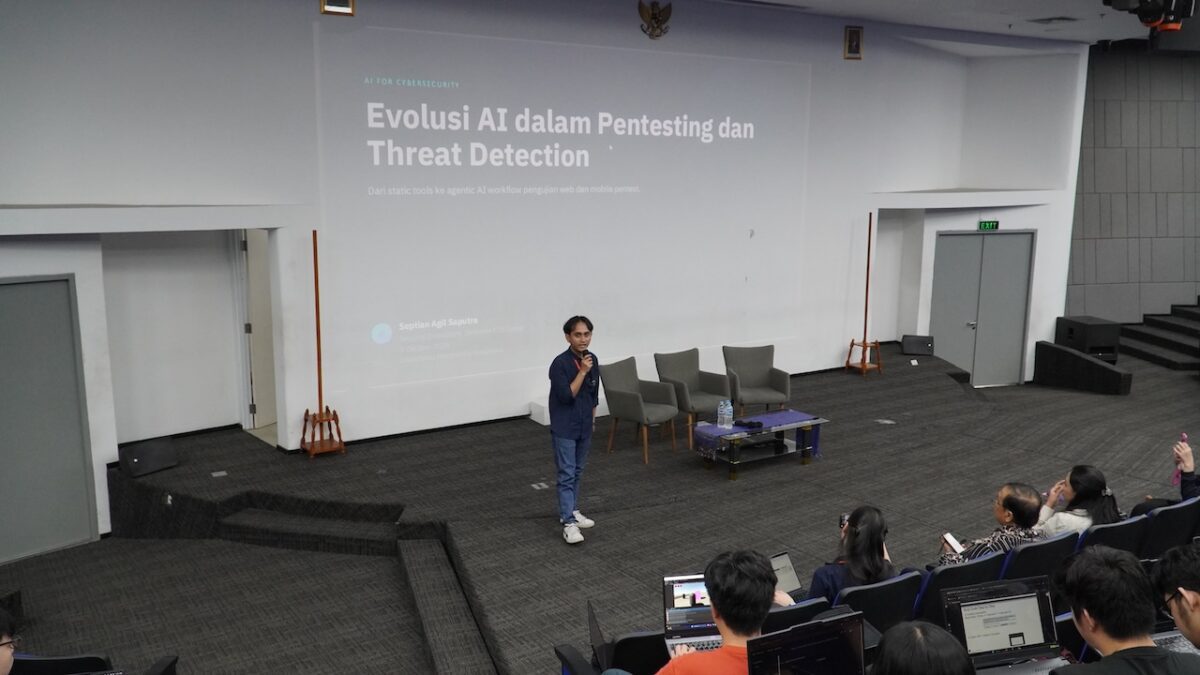
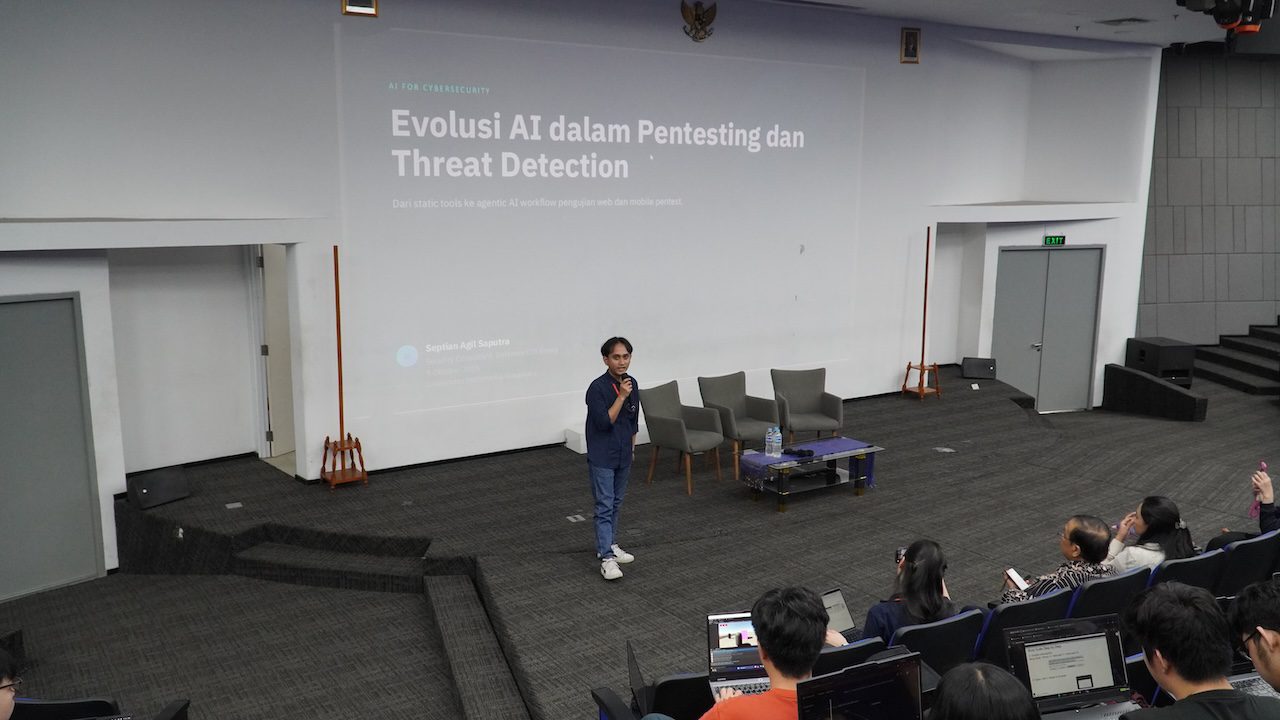
The UMN Informatics guest lecture with CTI Group (Doc. CorCom UMN)
Tangerang (09/10/2026) – The UMN Informatics Study Program, in collaboration with CTI Group, held the guest lecture “Artificial Intelligence (AI) for Cybersecurity: The Evolution of AI in Pentesting and Threat Detection,” bringing in an industry practitioner to discuss developments in AI and cybersecurity.
The guest lecture by UMN Informatics and CTI Group is a way of putting university-industry collaboration into practice, and reflects UMN’s commitment to preparing students and equipping them with the knowledge and skills they will need in the workplace.
The lecture opened with an introduction to CTI Group and its internship program for students, delivered by Widya Marcelina of Education Partnership. She welcomed the continuing collaboration between UMN and CTI Group with enthusiasm.
“We’re opening up internship opportunities through CTI Group’s CTIZENSHIP program for students in UMN’s Informatics Study Program. The internship program doesn’t only give students direct work experience; it also pushes them to keep sharpening their abilities. I hope that students will go on to join us and become part of CTI Group,” Widya said.
The guest lecture featured Septian Agil Saputra, Security Consultant at Defenxer, CTI Group, as the speaker. In this session, Agil covered a range of topics, from the AI and cybersecurity landscape and AI in cyber threats to skill and career preparation and a demonstration of the Hermes Agent.
“Right now, the use of AI is no longer just a future technology in cybersecurity; it has become part of security practice itself. My experience as a white hat is facing black hats every day, because they hack companies or individuals using all kinds of techniques. AI’s role has become important for white hats, and we can’t refuse it, because otherwise we fall behind in dealing with hackers,” Agil said.
Continuing on the current AI and cybersecurity landscape, Agil explained that AI is not limited to chatbots. He sees three waves in AI’s development: the first wave of static tools, the second wave where AI acts as a co-pilot, and the third wave of agentic AI, meaning AI that is able to plan and carry out actions based on a goal it has been given.
“In my analysis, with agentic AI, humans act as the supervisor who decides whether an action can go ahead or not. Agentic AI has a high degree of autonomy and can plan and execute actions on its own. But human approval is still needed, because without it the system could wreak havoc on a server,” Agil said.
In Agil’s view, there are still plenty of tools claiming to use AI-driven technology when not all of them actually use a Large Language Model (LLM) component in their automation. He also highlighted the security risks in applications developed using AI, particularly when developers don’t go back and check the logic and data validation, as in transactional and banking applications. On top of that, using an LLM requires attention to output validation so that it doesn’t trigger unintended actions.
“The trend in 2026 is that LLMs can be used to bypass things without it being reported, which can become an ecosystem of uncensored models for offensive automation. In the wrong hands, that can be dangerous. There are also dual-use and governance issues, including how customer data can be misused,” Agil explained.
What Is AI’s Role in the Future, and What Skills Should You Prepare?
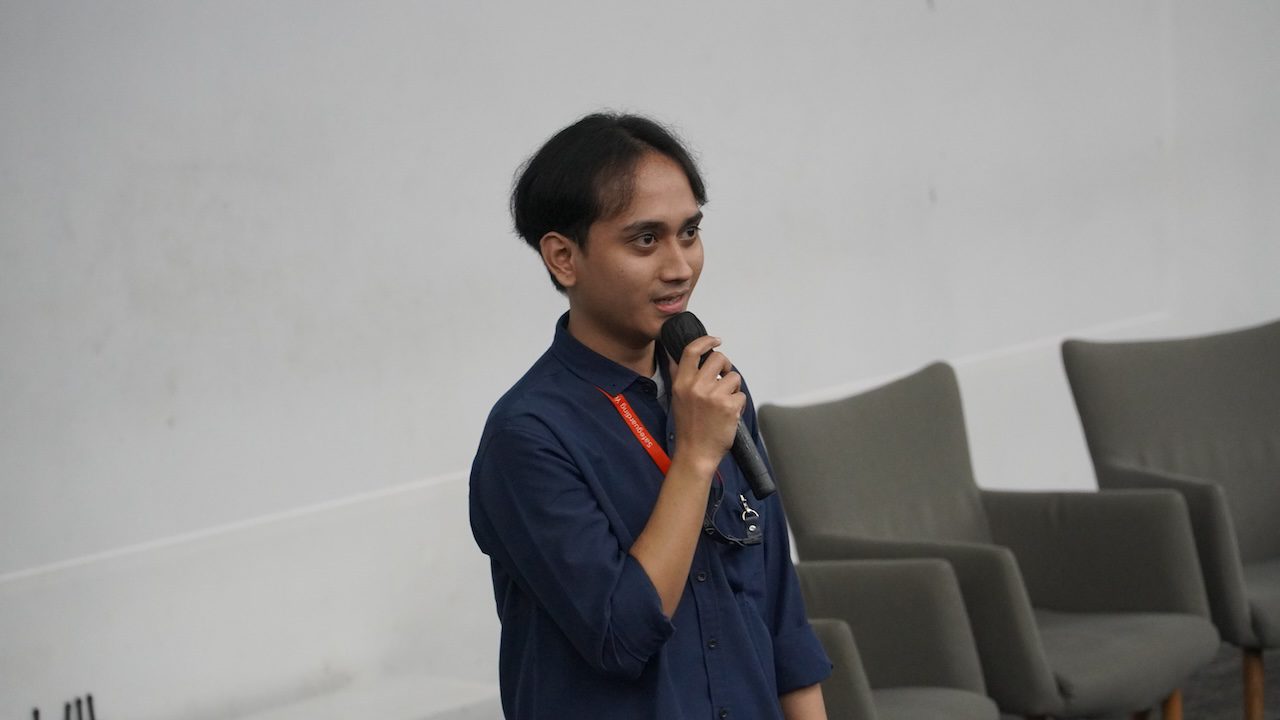
Agil delivering the guest lecture material (Doc. CorCom UMN)
As a practitioner, Agil set out a number of hard skills students need in order to keep up with technological developments and prepare for their careers ahead. Those foundational abilities include an understanding of networking, programming languages, agent orchestration literacy, and prompt engineering.
“It’s not only about understanding and knowledge. You of course still need to sharpen the soft skills you’ll need later on, from report writing and the ability to explain technical things to a non-technical audience, through to ethics and the legal side,” Agil said.
For Agil, students can start preparing these abilities while they are still at university. They can do so by taking training through various platforms, getting involved in events or competitions, and taking certifications to gauge the skills they have.
At the end of the guest lecture, Agil told students not to worry about being replaced by AI. In his view, AI cannot fully replace work in informatics because humans still have an important role, particularly in decision-making and accountability.
“AI is just a machine, and it has no accountability. We as humans still have the role of taking action, which makes the fundamentals important. In the same way, as long as we keep adding value to our abilities, we won’t be replaced by AI,” Agil concluded.
By Rachel Tiffany | UMN News Service
English translation by Levina Chrestella Theodora
Kuliah di Jakarta untuk program studi Informatika | Sistem Informasi | Teknik Komputer | Teknik Elektro | Teknik Fisika | Akuntansi | Manajemen | Komunikasi Strategis | Jurnalistik | Desain Komunikasi Visual | Film dan Animasi | Arsitektur | D3 Perhotelan di Universitas Multimedia Nusantara. www.umn.ac.id