
UMN ECO: A student-driven society promoting sustainable initiatives
December 4, 2025
From AI-Based Marriage Counseling to Plastic Bricks, UMN MMT Students Sweep The Boards at The ASEAN Competition
November 27, 2025
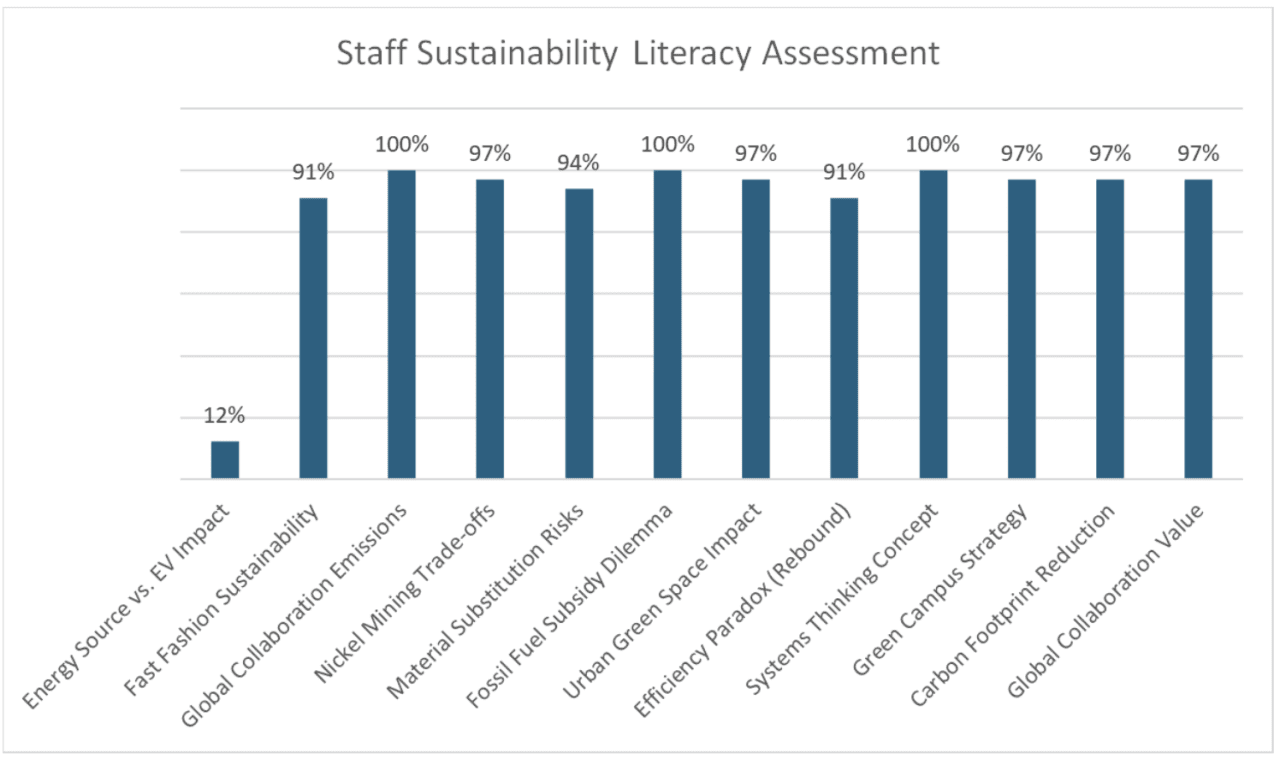
Based on the latest survey results, the overall sustainability literacy rate among staff stands at 85%. The data was collected via email, providing a direct and professional channel for staff participation.
While the high overall score indicates an exceptional foundational understanding of sustainability, the analysis reveals a singular, significant knowledge gap regarding energy transitions. This report breaks down these findings to help the university leverage staff expertise while addressing specific blind spots.
Survey Results Visualized
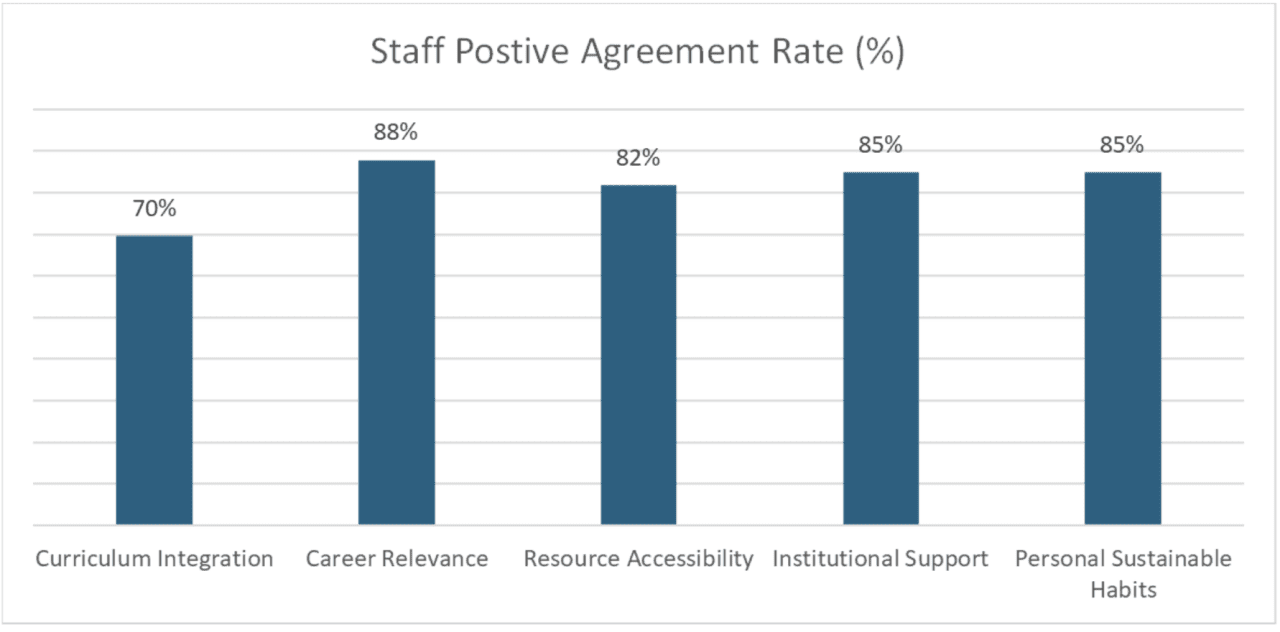
The following charts illustrate the performance across the 12 key knowledge indicators and the 5 key perception areas.
Key Findings Analysis (Aligned with Graphic Labels)
1. Exceptional Proficiency Areas (Score >95%)
Staff members demonstrate near-perfect mastery of the majority of sustainability concepts:
- Global Collaboration, Fossil Fuel Subsidies, & Systems Thinking (100%): Staff showed a flawless understanding of these high-level systemic and policy frameworks.
- Nickel Mining, Urban Green Space, Green Campus, Carbon Reduction, & Global Value (97%): Extremely high scores indicate that staff are well-versed in the practical and ecological trade-offs of modern green strategies.
2. High Understanding (Score 90% – 95%)
Staff show a very strong and reliable grasp of these core sustainability topics:
- Material Substitution Risks (94%): A clear understanding that replacing one resource with another can lead to new environmental challenges.
- Fast Fashion Sustainability & Efficiency Paradox (91%): Strong awareness of the nuances in consumer-driven industries and the “rebound effect” of efficiency gains.
3. Critical Knowledge Gap (Score <20%)
Despite high performance in almost all areas, one specific topic represents a major outlier:
- Energy Source vs. EV Impact (12%): This is the most significant knowledge gap identified. Staff members overwhelmingly struggled to identify how the “greenness” of electric vehicles is heavily dependent on the carbon intensity of the power grid. This area requires immediate educational focus to align technical knowledge with general sustainability awareness.
- Staff Perception & Engagement (Positive Agreement Rate)
Beyond technical literacy, the survey measured staff sentiment regarding the university’s sustainability environment (Likert Scale 4 & 5):
- Career Relevance (88%): Staff strongly believe that sustainability knowledge is essential for their professional roles and future development.
- Institutional Support & Personal Sustainable Habits (85%): A vast majority feel supported by the university and actively practice sustainable behaviors in their personal lives.
- Resource Accessibility (82%): Most staff feel that the university provides the necessary materials and information to stay informed.
- Curriculum Integration (70%): While still high, this is the lowest perception score. It suggests that while staff are personally committed, they see room for improvement in how sustainability is formally integrated into academic and operational programs.
Survey Accessibility:
Here is a link to view the original questionnaire used: Staff Sustainability Literacy
Conclusion & Recommendations
The 85% literacy rate reflects a staff body that is “Sustainability Fluent.” Staff possess a deep and sophisticated understanding of sustainability as an interconnected web of policy, ecology, and economics.