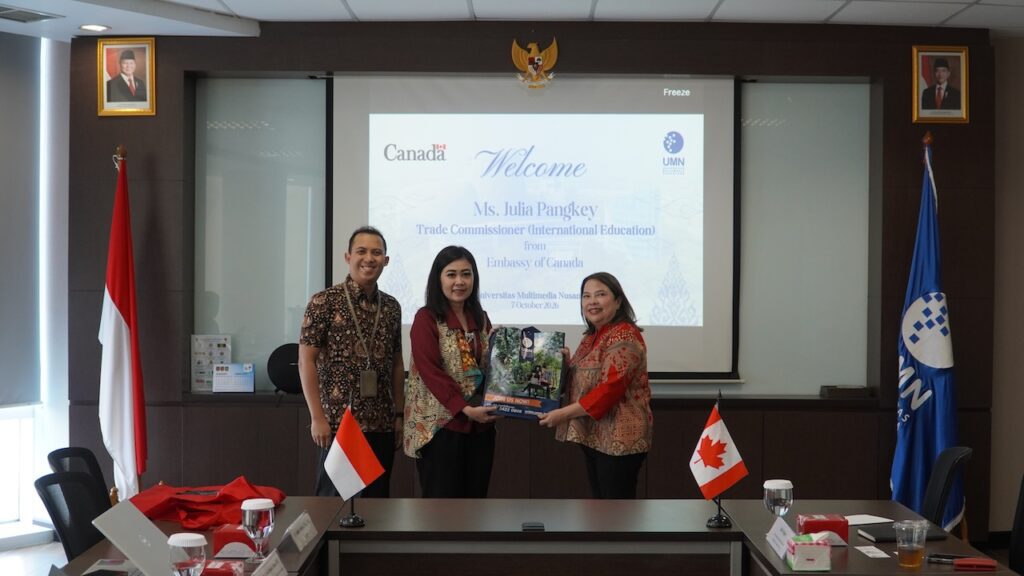
Universitas Multimedia Nusantara Welcomes Maynooth University to The UMN Campus
June 5, 2026
Aligning Learning with the Workforce, UMN Informatics Receives Appreciation from CIMB Niaga
May 31, 2026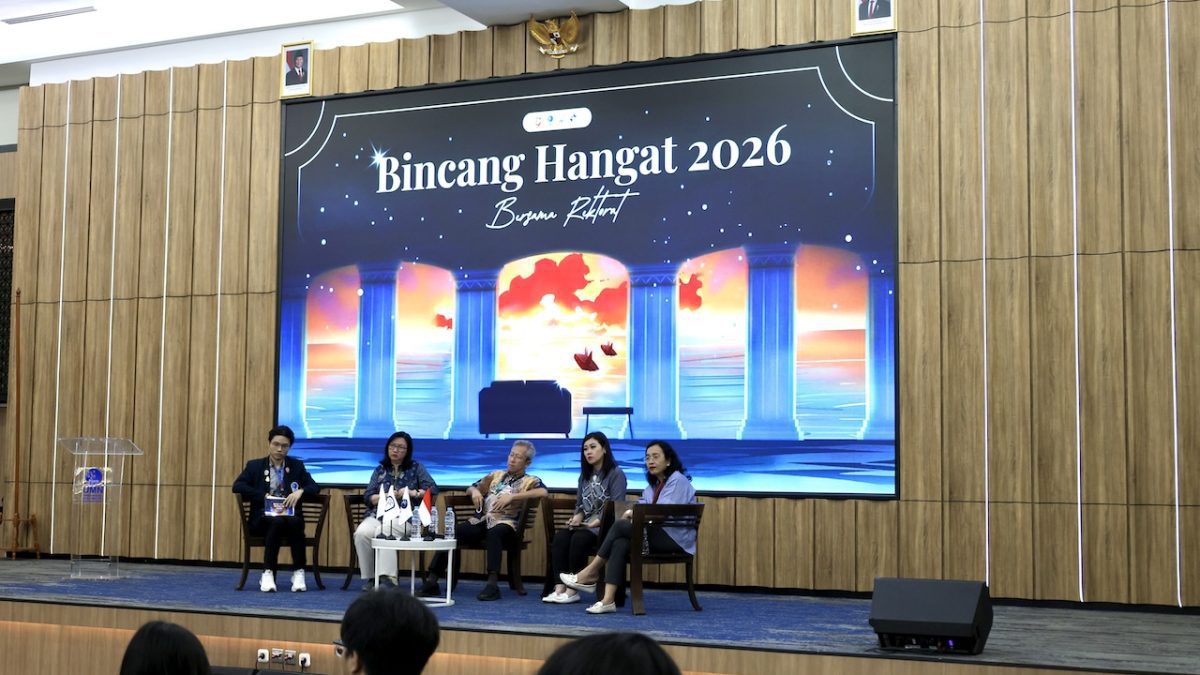
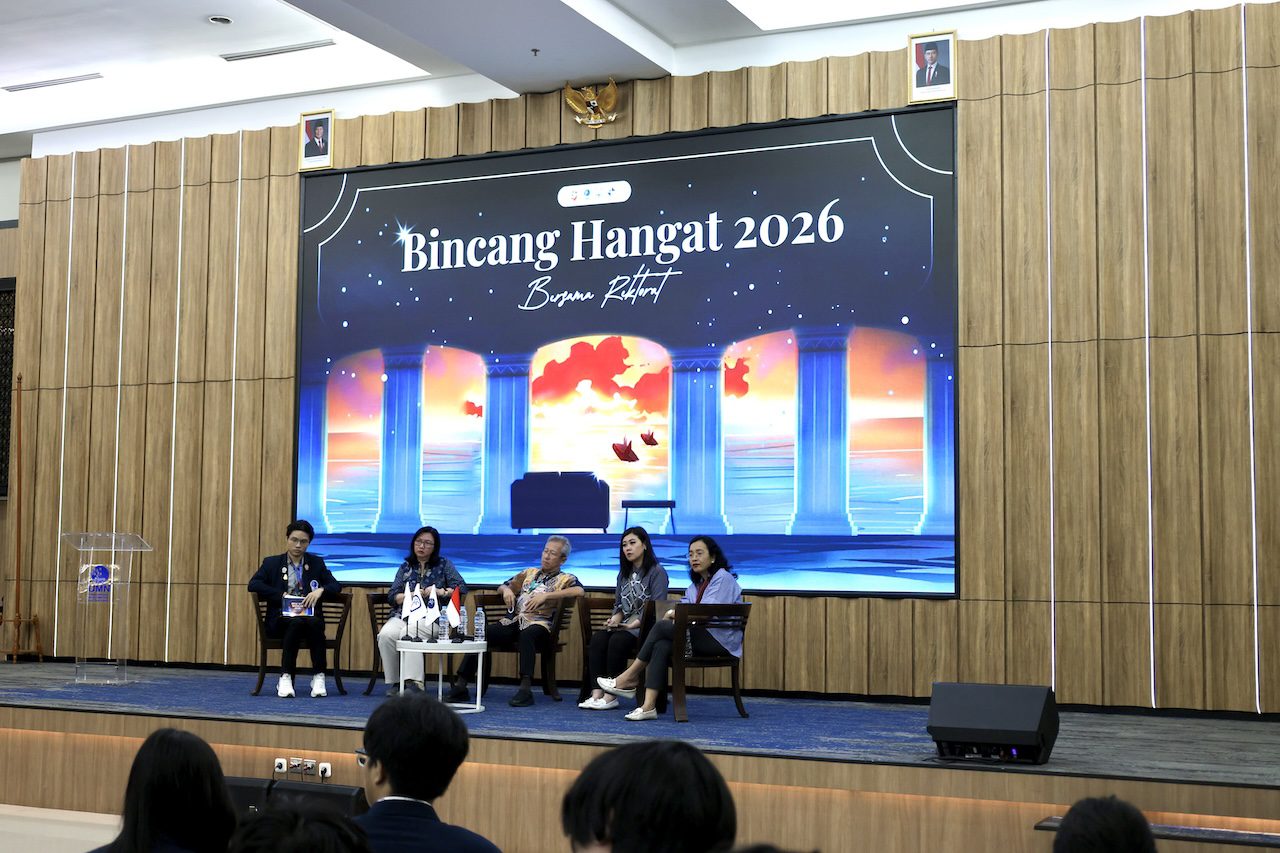
Tangerang, (05/06/2026) – The UMN Rectorate once again held a warm talk session with UMN students. This talk session was intended to open dialogue and gather student aspirations, as students are one of UMN’s main stakeholders. Through these warm conversations, UMN can continuously improve support for student academics.
This talk session was facilitated by UMN Student Engagement and featured all four members of the UMN rectorate: Dr. Andrey Andoko as Rector of UMN; Prof. Dr. Friska Natalia, S.Kom., M.T., as Vice Rector for Academic and Internationalization Affairs; Dr. Ika Yanuarti, S.E., M.S.F, CSA., as Vice Rector for Student Affairs; and Prof. Dr. Florentina Kurniasari T., S.Sos., M.B.A., as Vice Rector for Research, Innovation, and Sustainability.
“This moment is very important for us, representing the entire UMN family. We can listen to students’ aspirations and discuss them together. For me, all the aspirations conveyed by students are a form of their love for UMN. Through this forum, they discuss facilities, infrastructure, academics, and various things that UMN can improve,” explained Andrey.
For Andrey, UMN students themselves are the ones who see and hear about the facilities and learning at UMN. This aligns with UMN’s commitment to provide quality facilities and infrastructure continuously. Andrey also affirmed that he will continue to strive to support students.
“I hope that through this activity, students can be open and convey all their aspirations, so that UMN can make quick and precise improvements on various matters that still need enhancement. Furthermore, this forum also serves as a space for us to build more open and sustainable communication with students,” he added.
Enriching this forum, Friska was also open to various academic improvements, ranging from the use of laboratory facilities and in-class learning tutors to UMN’s academic service system and internationalization programs that support academics at UMN.
“Input from students is very important for us, so that through this forum, we can identify the problems faced by students, evaluate them, and provide appropriate solutions. We want students to gain quality academic knowledge without neglecting the supporting factors of learning itself,” emphasized Friska.
In this forum, Friska also explained various internationalization achievements UMN has achieved, including the QS World University Rankings, QS Rankings by Subject, QS Sustainability Rankings, UI Green Metric, THE Impact, SCImago Institution Ranking, and international accreditations held by the faculties. Friska hopes that through this forum, students can learn about UMN’s various accomplishments.
Continuing the discussion, Ika also shared her perspective.
“Speaking about academic and non-academic activities, we will continue to strive to support the development of student abilities. Not only in learning, but we also pay attention to student activities, both Student Organizations (UKM) and existing programs. We believe that these activities are not merely student pastimes but also enhance soft skills,” Ika explained.
On this occasion, Ika also invited students to pay attention to sustainability programs implemented at UMN. One example is electricity savings. For Ika, small steps in saving electricity can have a significant impact. This is also a form of environmental care within UMN’s 5C values (Caring, Credible, Competent, Competitive, and Customer Delight). Sari also shared her perspective on strengthening sustainability implementation within the UMN environment.
“In line with the roadmap and topics we emphasize at UMN, currently, many activities at UMN focus on sustainability topics. Of course, this applies to all members of UMN’s academic community, including UMN students. This implementation applies not only to activities but also to UMN’s facilities and infrastructure,” Sari said.
Through this forum, Sari hopes that students can become more actively involved in supporting various sustainability initiatives on campus. She also emphasized that collaboration between students and the institution is key to creating a more responsible, innovative, and sustainable campus environment.
By Rachel Tiffany | UMN News Service
English translation by Levina Chrestella Theodora
Kuliah di Jakarta untuk jurusan program studi Informatika| Sistem Informasi | Teknik Komputer | Teknik Elektro | Teknik Fisika | Akuntansi | Manajemen| Komunikasi Strategis | Jurnalistik | Desain Komunikasi Visual | Film dan Animasi | Arsitektur | D3 Perhotelan , di Universitas Multimedia Nusantara.