UMN Career and Scholarship Expo 2026 Presents Over 50+ Companies and Further Study Scholarships!
May 20, 2026
Preparing Students’ Futures, UMN Inaugurates Collaboration with L’Oréal Indonesia
May 20, 2026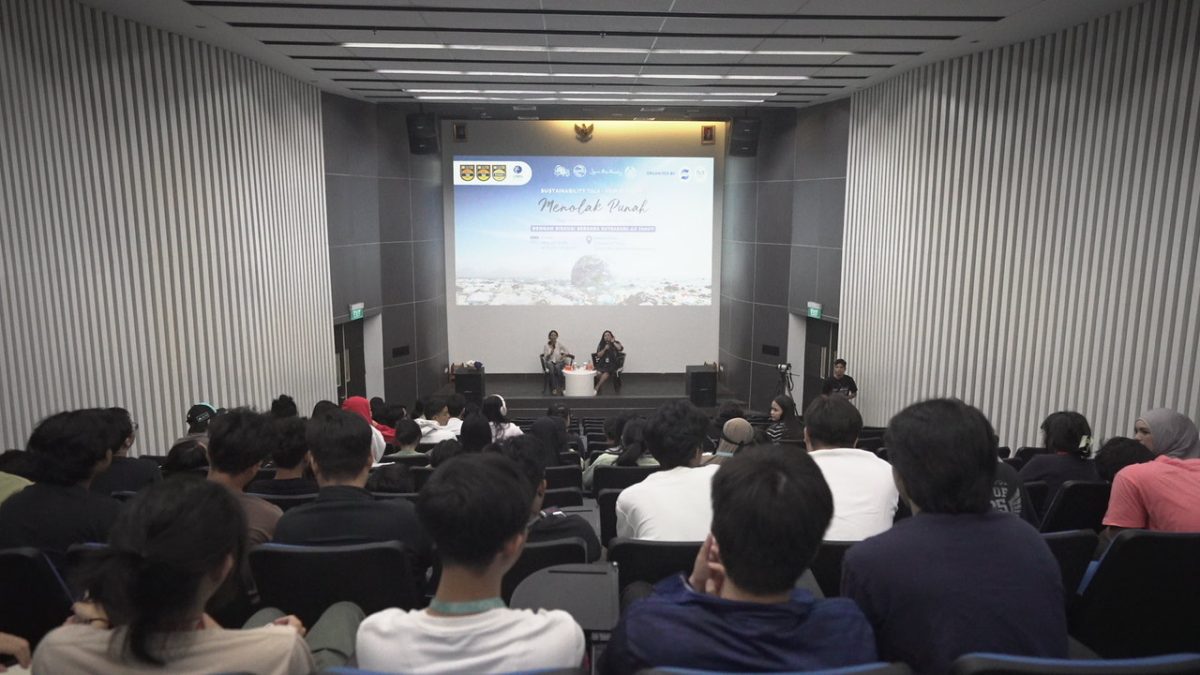
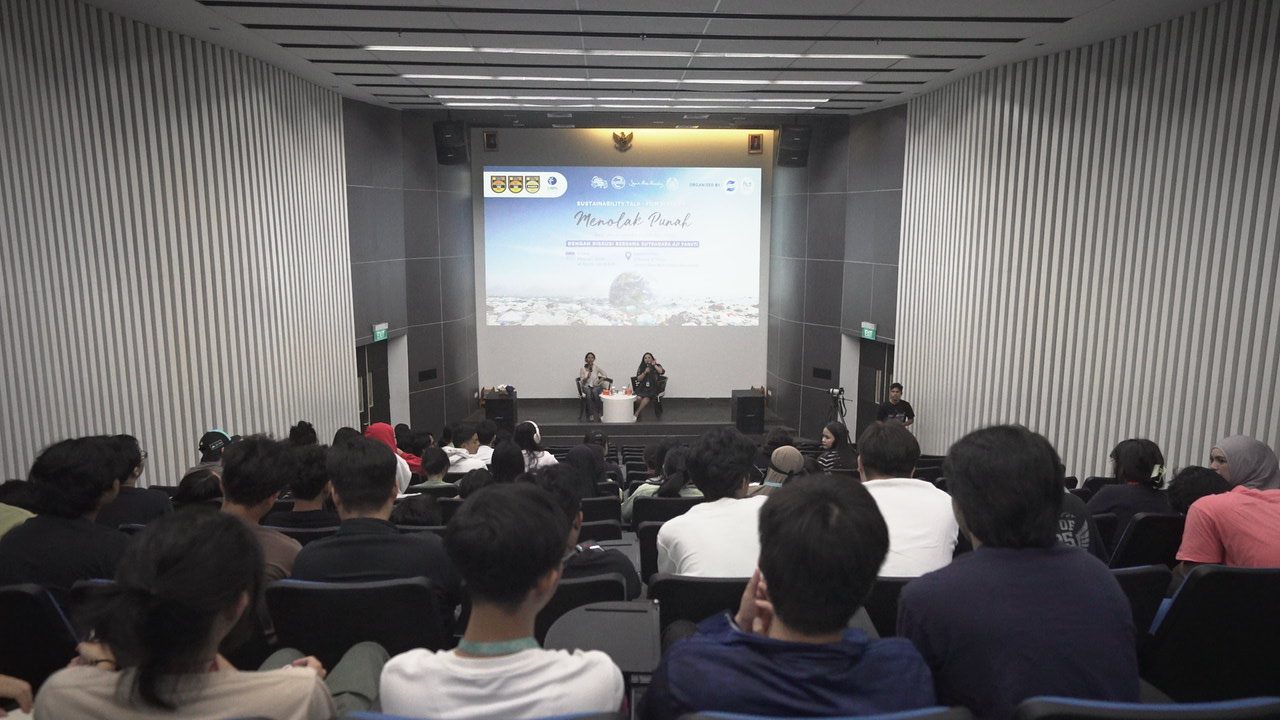
Implementation of Sustainability Talks and the “Menolak Punah” Film Screening. (Doc. RIS UMN)
TANGERANG – Environmental crises are often imagined as large-scale disasters happening out there. In reality, however, these crises are quietly unfolding inside our wardrobes, washing machines, and even clinging to our own skin. Highlighting the urgency of this issue, the Faculty of Art & Design (Fakultas Seni & Desain/FSD) at Universitas Multimedia Nusantara (UMN), in collaboration with the Center for Sustainability UMN, held a Sustainability Talk and screening of the documentary film titled “Menolak Punah” (Refusing Extinction).
This activity also raised issues closely related to several Sustainable Development Goals (SDGs), particularly SDG 3: Good Health and Well-being, SDG 12: Responsible Consumption and Production, SDG 13: Climate Action, SDG 14: Life Below Water, and SDG 15: Life on Land. Issues of microplastics, textile waste, fast fashion consumption patterns, and the loss of traditional weaving practices paint a vivid picture of how environmental, health, cultural, and consumption problems are interconnected in daily life.
The Sustainability Talk session was directly guided by Maria Advenita Gita Elmada, S.I.Kom., M.Si., who facilitated a critical discussion between the student audience and Aji Yahuti, the filmmaker who directed the documentary.
The film “Menolak Punah,” produced by Ekspedisi Indonesia Baru (a work by Aji Yahuti and Dandhy Laksono), delivers a harsh wake-up call about the latent dangers of fast fashion. Rather than merely depicting environmental destruction, the film uncovers the frightening reality of the modern fashion industry’s reliance on synthetic materials like polyester. The documentary reveals that millions of microplastic particles are released each time polyester clothing is washed. These particles not only pollute water and soil but have now become airborne pollutants.
During the discussion, one of the film’s most crucial points was addressed: microplastics from clothing have now invaded human vital organs—their residues have even been found in sperm and breast milk. If this lifestyle continues to be passed down, the long-term accumulation of microplastics could potentially trigger degenerative diseases, respiratory disorders, and even strokes, ultimately becoming a time bomb for the country’s public health system. Beyond health, the film also touches on the irony of cultural disconnection, where local weaving traditions, once closely tied to natural wisdom, are gradually being displaced by the mass influx of factory-made synthetic threads.
Speaking before the UMN academic community, Aji Yahuti emphasized that the main goal of this film is not to lecture but to spark conversation within society. The film serves as an alarm bell, encouraging society—especially the younger generation—to keep discussing and dissecting the ecological crisis before their eyes.
The greatest solution was emphasized as behavioral change at the individual consumer level. Students were invited to be more selective when buying clothes, to prioritize natural fibers that biodegrade, and to reduce their consumption of plastic-based fashion consciously. Tangible evidence that the event successfully opened the audience’s eyes is evident in the evaluation results. Based on pre- and post-event tests administered to participants, there was an 80% increase in knowledge of the fashion and environmental crises.
Through this collaboration between FSD and CfS in the Sustainability Talk, UMN hopes that discussions about sustainable fashion will not end with the film’s closing credits. Because, as the work’s powerful message conveys, keeping the conversation about the Earth alive and ongoing is the first step toward truly refusing extinction.
By Center for Sustainability UMN
English translation by Levina Chrestella Theodora
Kuliah di Jakarta untuk jurusan program studi Informatika| Sistem Informasi | Teknik Komputer | Teknik Elektro | Teknik Fisika | Akuntansi | Manajemen| Komunikasi Strategis | Jurnalistik | Desain Komunikasi Visual | Film dan Animasi | Arsitektur | D3 Perhotelan , di Universitas Multimedia Nusantara.