
Students from KUMA Korea and NSUADA Russia Explore Jakarta via UMN’s “Public Transport Tour”
December 12, 2025
PT Surveyor Indonesia (Persero)’s TJSL Program Inaugurates Clean Water Facilities in Carita Village, UMN Ready to Support Sustainable Education
December 11, 2025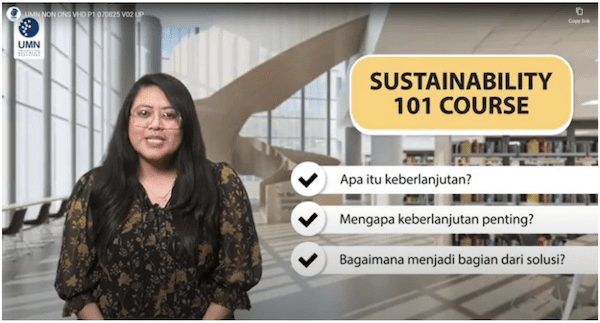
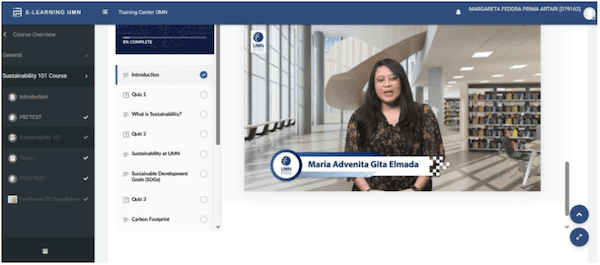
To assess sustainability literacy and knowledge among all students, the institution has implemented a structured assessment tool integrated into the BPP Learning Management System (LMS), which is mandatory for all new students. All incoming students are required to complete the Information Literacy – Sustainability Knowledge (Sustainability 101) module, which functions as both a baseline assessment and a learning platform to ensure a shared foundational understanding of sustainability. The module is designed using a pre-test–learning–post-test framework, enabling systematic measurement of students’ knowledge development.
Within the LMS, the module consists of several key components, including a pre-test to measure initial literacy levels, learning materials covering fundamental sustainability concepts, sustainability at UMN, carbon footprint, green skills, and the role of individuals, as well as quizzes and post-tests to evaluate understanding and measure improvement. The pre-test and post-test results serve as a quantitative assessment tool, providing evidence of learning outcomes and supporting continuous improvement of sustainability education at the institutional level. Through this approach, the institution ensures that all students acquire a baseline level of sustainability knowledge while establishing a measurable and scalable assessment system for monitoring and reporting.
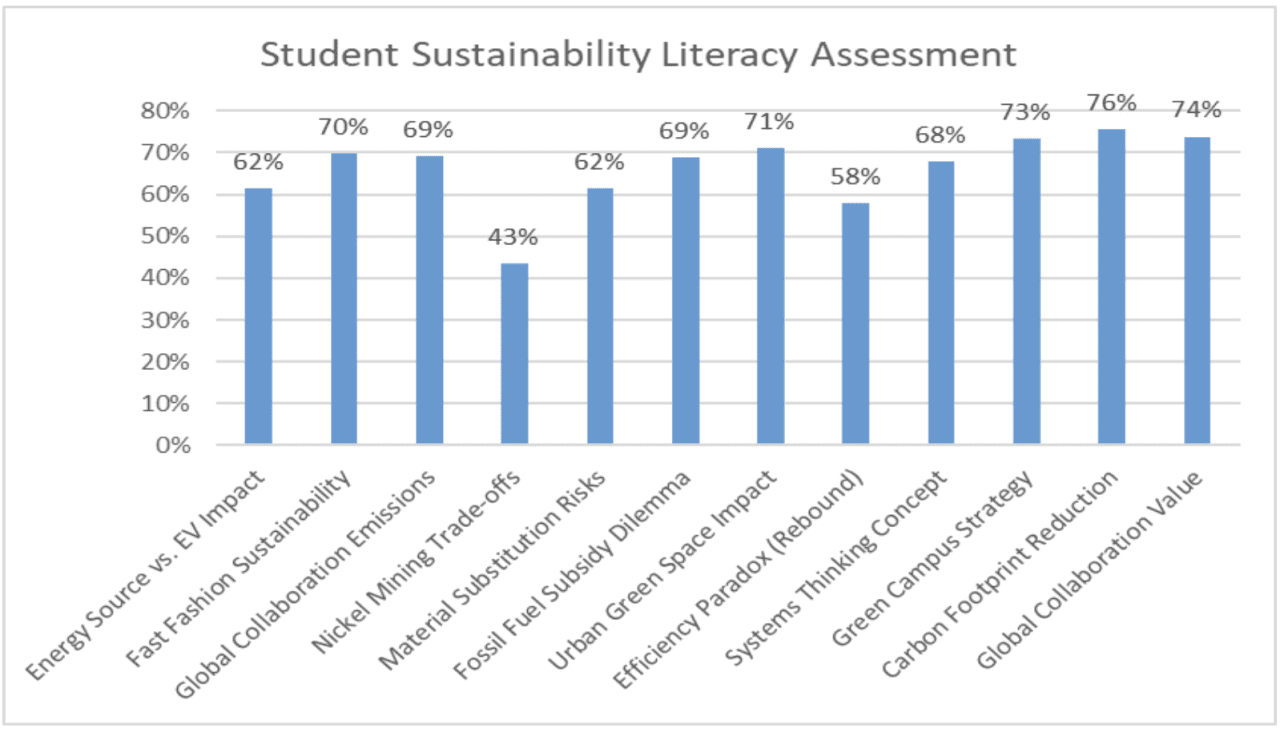
Based on the latest survey results, the overall sustainability literacy rate stands at 66%, indicating a solid foundational understanding among students. However, the analysis reveals a gap between students’ understanding of general concepts and their ability to navigate complex technical trade-offs. Students demonstrate strong proficiency in areas such as carbon footprint reduction (76%), global collaboration value (74%), and green campus strategy (73%), reflecting good awareness of key sustainability principles.
In the moderate understanding range (60–69%), students show adequate awareness in topics such as systems thinking (68%), energy source vs. EV impact (62%), and material substitution risks (62%), but still require deeper critical analysis. More critically, knowledge gaps are evident in areas such as the efficiency paradox (58%) and especially nickel mining trade-offs (43%), which represents the lowest scoring area and highlights challenges in understanding real-world sustainability trade-offs.
From the perception perspective, students generally recognize sustainability as relevant to their future careers (67%) and report applying sustainable habits (63%). However, institutional support and curriculum integration (59%) received the lowest ratings, indicating a need for stronger institutional visibility and deeper integration into academic programs.
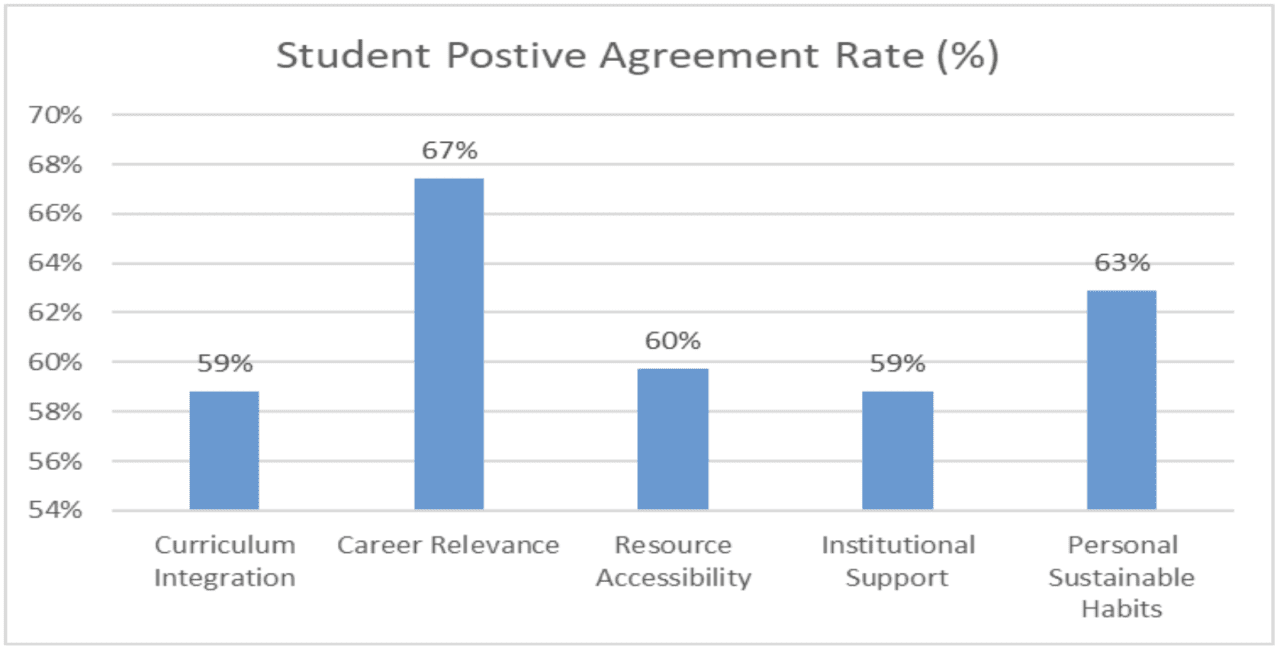
Overall, the findings position students as “sustainability aware” but not yet “sustainability fluent.” While they understand the what and why, they still face challenges in applying this knowledge to complex, real-world sustainability issues, particularly those involving trade-offs and systemic impacts.
Survey Accessibility:
Here is a link to view the original questionnaire used: Questioner Student Literacy Sustianability.pdf