
UMN Talent in The Film “Setan Alas!”, Now Playing in Theaters
March 24, 2026
Cultural Fusion: Exchange Students from Cambodia, India, and Kazakhstan Explore Jakarta’s Heritage and Modernity
March 29, 2026
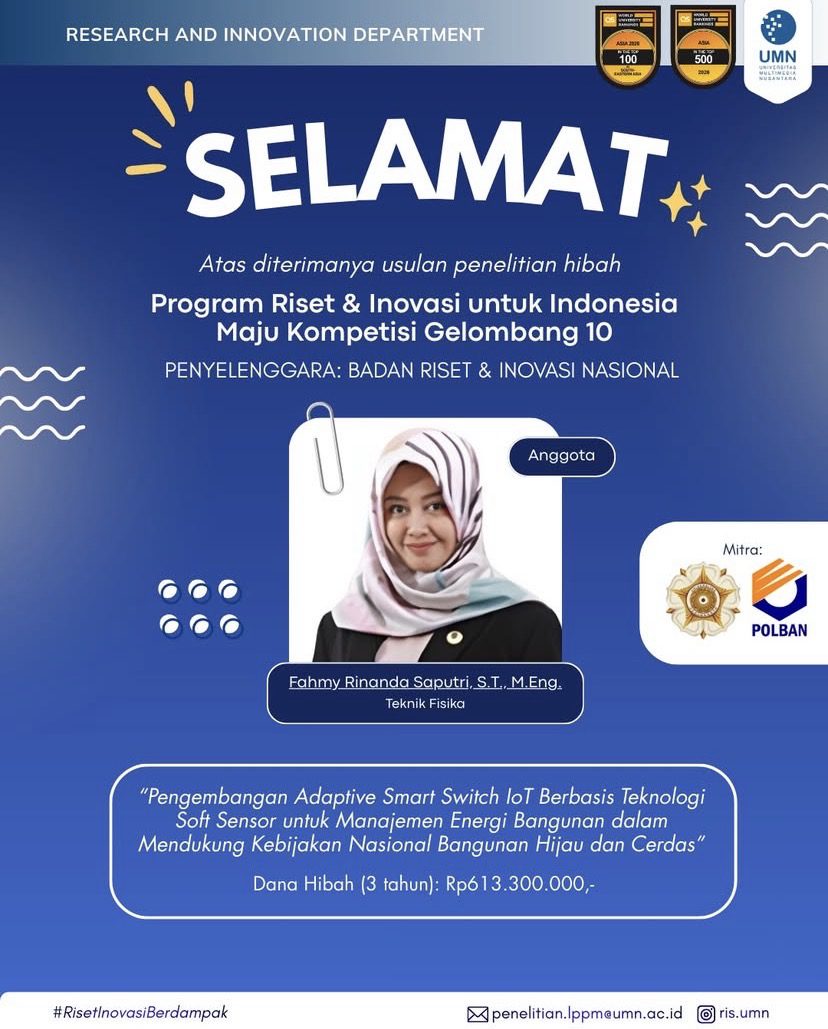
Tangerang – A lecturer at Universitas Multimedia Nusantara (UMN), Fahmy Rinanda Saputri from the Physics Engineering program, has successfully secured a grant from the National Research and Innovation Agency (BRIN). Fahmy and her colleagues are researching an IoT-based Adaptive Smart Switch using soft sensor technology for building energy management.
This research aims to support the national Green Building policy, given the growing need for efficient and sustainable buildings. It also seeks to address the challenge of integrating technology into existing (older) buildings, which often require high renovation costs and lack infrastructure supporting modern features.
“Buildings (offices, malls, hotels, etc.) are known to have very high energy and water consumption, yet they hold significant savings potential if managed according to green building principles,” Fahmy said when asked about his reasons for focusing on building energy management.
“Conventional smart switches are difficult to implement in existing buildings without major modifications,” he added.
When discussing the expected impact of this research, Fahmy said he and his partners aim to improve building energy efficiency, targeting a reduction in energy consumption of up to 30% in buildings. They also seek to enhance building system protection against cyber threats (cybersecurity) and accelerate the implementation of Green and Smart Buildings in Indonesia.
To meet these expectations, this research aims to provide adaptability, cost efficiency, and system integration in achieving Green Building targets.
Adaptability: Developing a smart switch that supports the Single Line Diagram (SLD) system so it can be easily installed in both new and existing buildings.
Cost Efficiency with Soft Sensors: Replacing some of the need for expensive physical sensors with data-driven soft sensor algorithms to monitor room conditions.
System Integration: Unifying energy control, occupancy monitoring, and cybersecurity into a single IoT platform that operates automatically and responds to real-time conditions on-site.
Fahmy also hopes this research can catalyze the advancement of national technology products, support the transformation of the smart building market in Indonesia by providing technical and security-superior local alternatives, and create a smarter, more energy-efficient energy management system to support sustainable development in Indonesia.
By Putu Wiena | UMN News Service
English translation by Levina Chrestella Theodora
Kuliah di Jakarta untuk jurusan program studi Informatika| Sistem Informasi | Teknik Komputer | Teknik Elektro | Teknik Fisika | Akuntansi | Manajemen| Komunikasi Strategis | Jurnalistik | Desain Komunikasi Visual | Film dan Animasi | Arsitektur | D3 Perhotelan , di Universitas Multimedia Nusantara.