UMN Increases Water Recycling to Over 70%
Desember 31, 2025UMN Strengthens Commitment to Prevent Modern Slavery and Human Trafficking Through Institutional Policy
Desember 23, 2025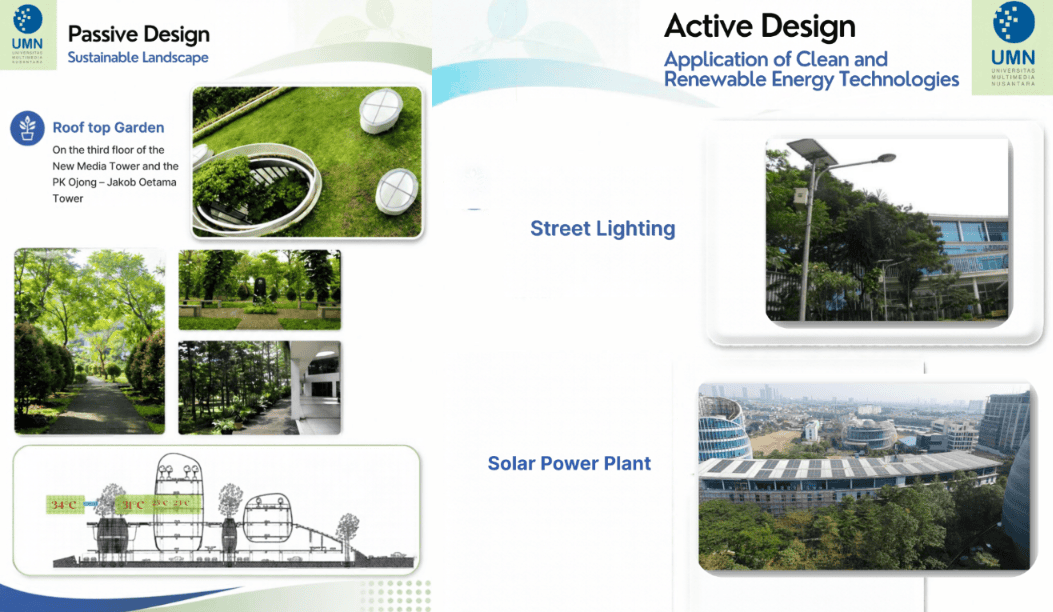
Universitas Multimedia Nusantara (UMN) establishes its commitment to reducing energy consumption through its institutional sustainability policy and Green Campus guidelines. These policies provide a framework for integrating energy efficiency into campus operations, with an emphasis on the efficient use of energy resources and the implementation of environmentally responsible practices. 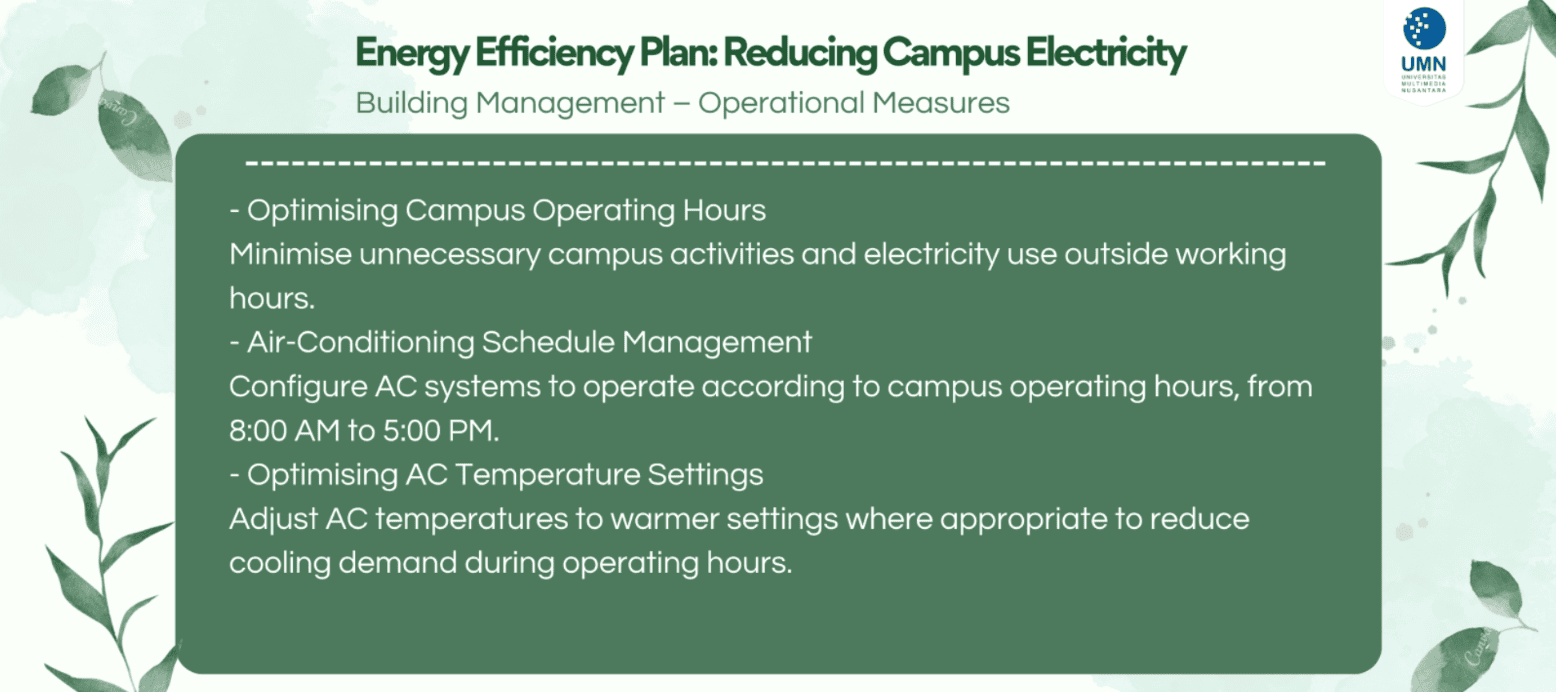
Institutional Sustainability Policy
Through Rector’s Decree No. 1029/SK-R/XI/2025 on UMN’s Sustainability Policy, the university commits to gradually reducing institutional carbon emissions and improving energy and water efficiency as part of its campus operations.
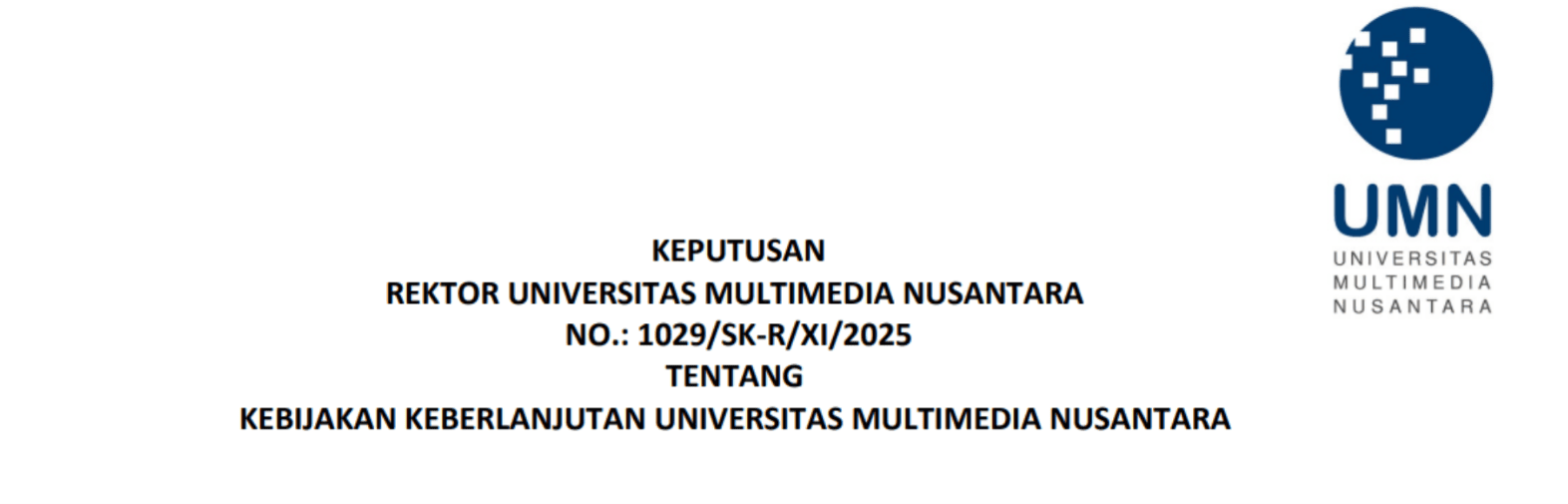



(Rector’s Decree No. 1029/SK-R/XI/2025, Diktum KELIMA point (c), on campus operations and energy efficiency)
The policy also requires each university unit to develop sustainability action plans and report indicator achievements periodically to university leadership through the Sustainability Coordinator. Regular monitoring and evaluation are conducted to support continuous improvement in institutional sustainability performance.

(Rector’s Decree No. 1029/SK-R/XI/2025, Diktum KETUJUH and Diktum KEDELAPAN, on action plans, reporting, monitoring, and evaluation).
Green Campus Guidelines for Energy Efficiency
UMN further specifies its approach to energy management through Rector’s Decree No. 1031/SK-R/XI/2025 on the Guidelines for Green Campus Management. Article 1 point 8 establishes the principle of planned, efficient, and effective energy use. Article 2 paragraph 9 outlines measures to improve energy efficiency, including the use of energy-efficient equipment, reducing dependence on air conditioning, and optimising natural ventilation and lighting.
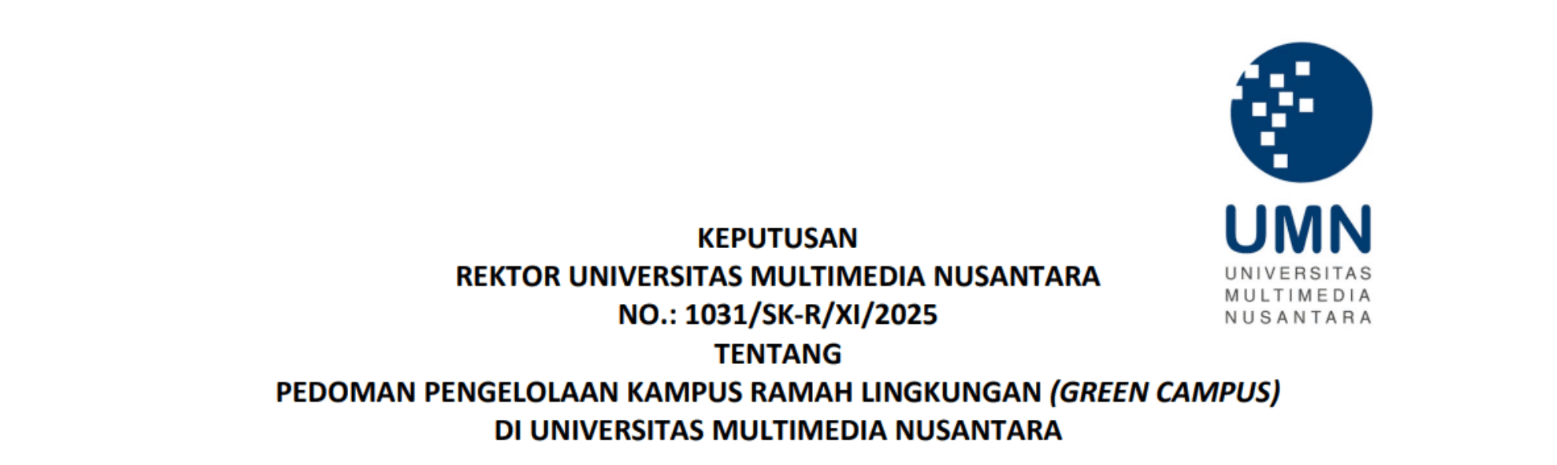
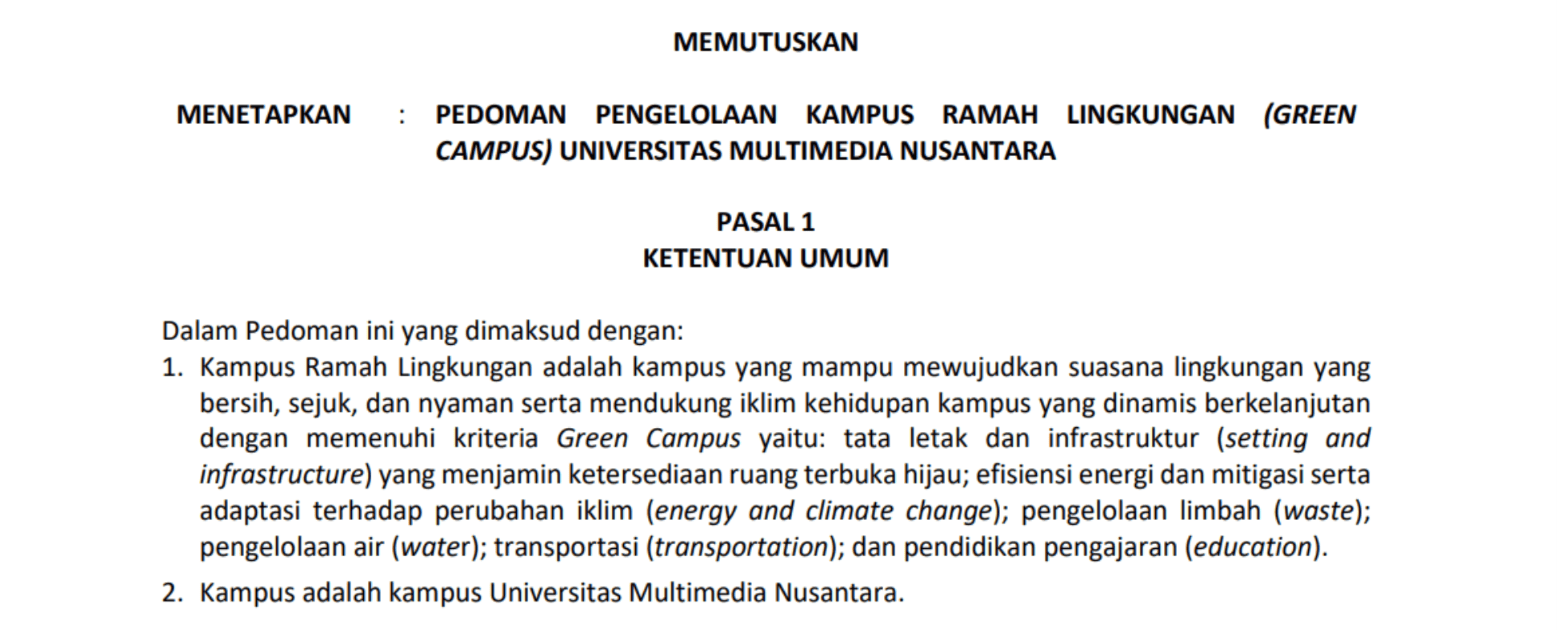

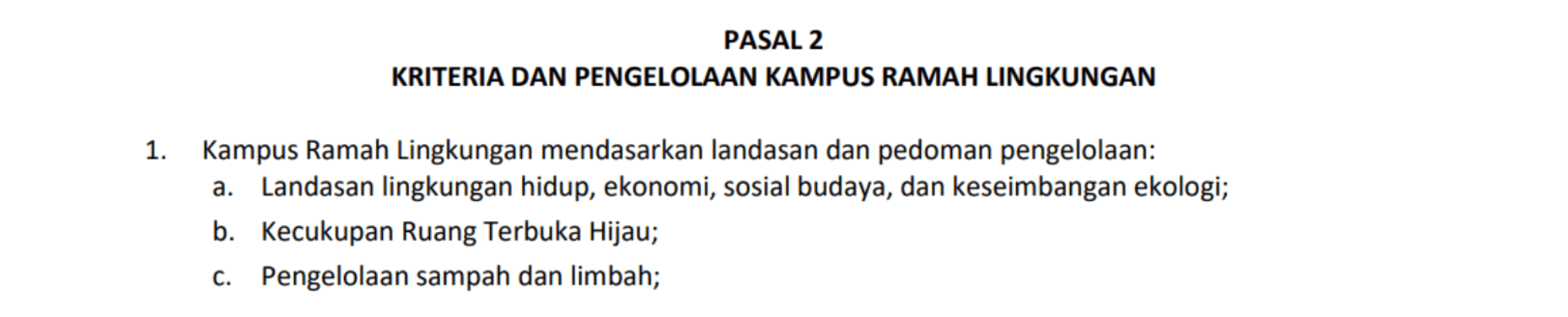

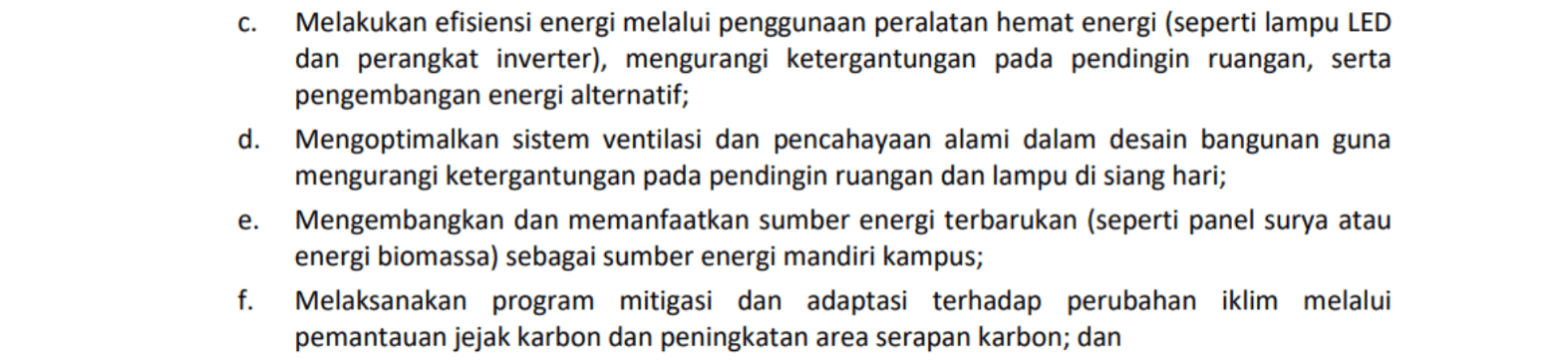
(Rector’s Decree No. 1031/SK-R/XI/2025, Article 1 point 8 and Article 2 paragraph 9(c)–(f), on energy use and energy efficiency measures).
Long-Term Planning for Energy-Efficient Campus Buildings
UMN’s commitment to energy efficiency also extends to its long-term campus development plan, as outlined on its official Campus Master Plan page. The plan highlights the development of energy-efficient academic buildings using passive design strategies, alongside the preservation of green spaces and rooftop gardens. These design principles aim to improve energy conservation and reduce reliance on artificial cooling, integrating energy efficiency into the university’s long-term infrastructure planning.
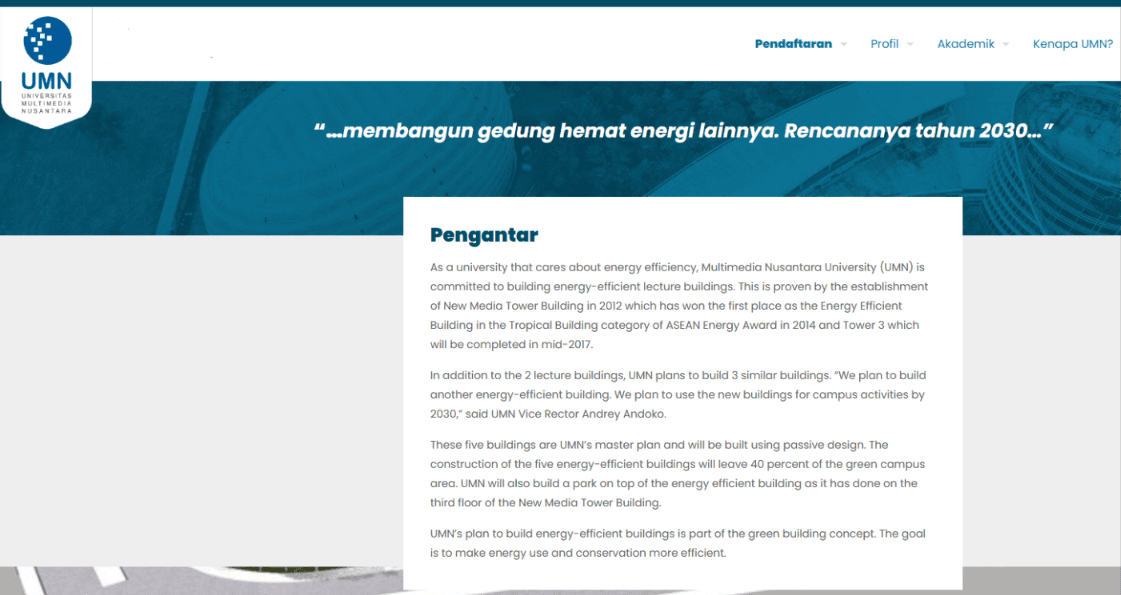
(Publicly available: UMN Campus Master Plan page highlighting energy-efficient buildings, passive design, and green spaces.)
Implementation of Energy Efficiency Measures
Building on UMN’s sustainability policies and Green Campus guidelines, UMN’s Building Management implements operational measures to reduce electricity consumption. These include adjusting campus operating schedules to minimise unnecessary electricity use outside working hours, configuring air-conditioning systems according to campus operating hours, and setting warmer temperatures where appropriate to reduce cooling demand.
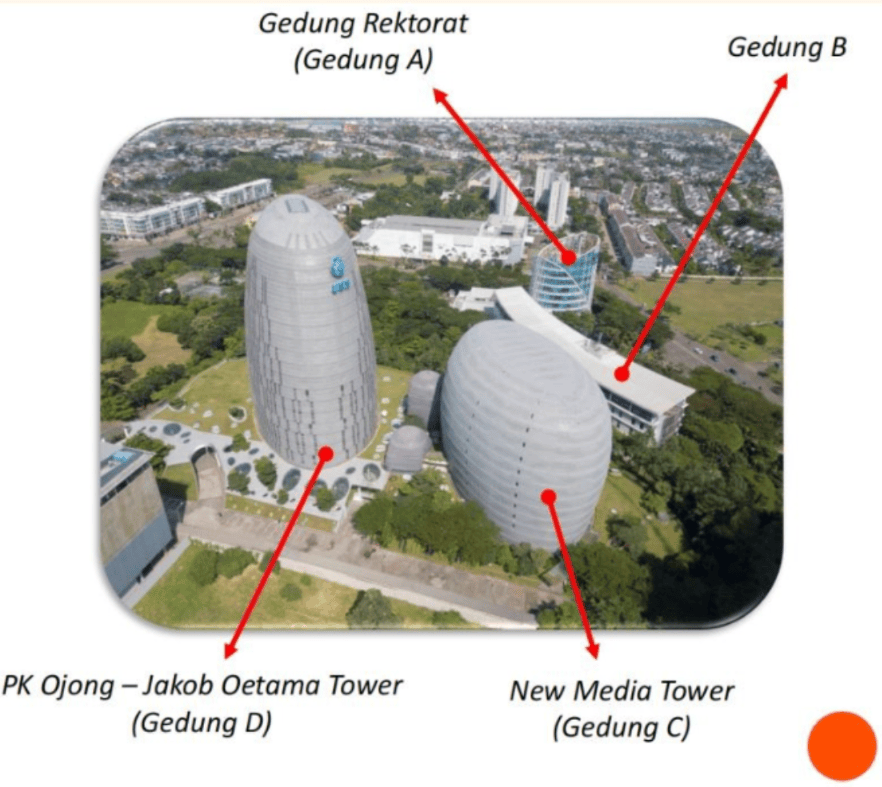
UMN Buildings (Doc. UMN)
Beyond these operational measures, UMN has incorporated energy efficiency into campus design and infrastructure through passive cooling strategies, green spaces, double facades, solar-powered streetlights, solar panels, and treated wastewater reuse for irrigation, toilet flushing, and cooling towers. Together, these initiatives demonstrate how UMN translates its energy efficiency commitments into campus operations and infrastructure.
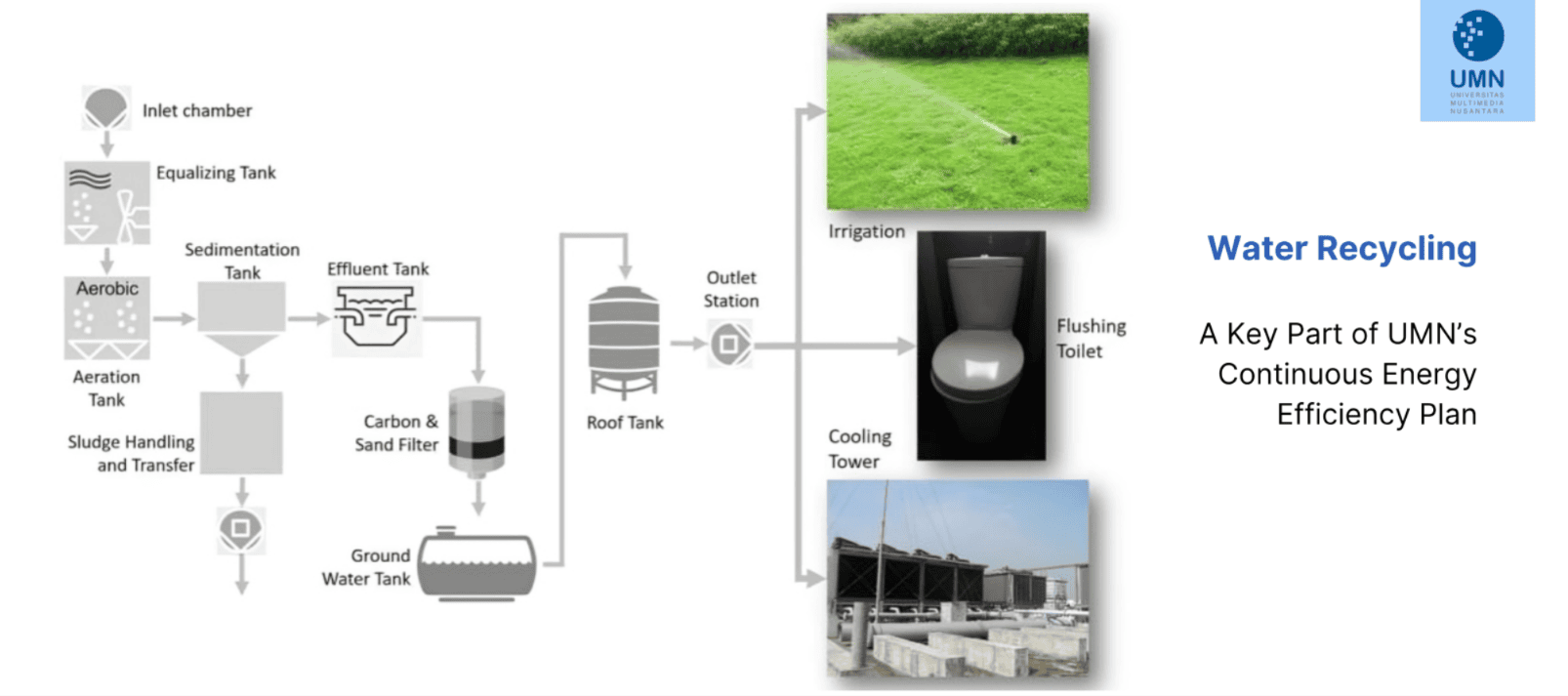
(Implementation evidence: Building Management documentation, air-conditioning settings, campus design features, solar installations, and water reuse systems).
Through its sustainability policy, Green Campus guidelines, and operational initiatives, UMN establishes a framework for energy efficiency and continues to implement measures aimed at reducing overall campus energy consumption.