
UMN Together with ULAB and USM Shared Perpectives Regarding Fake News and Deepfake
December 12, 2025
UMN and Spectrum UniTec are Both Open to Partnership and Collaboration Opportunities
December 17, 2025Universitas Multimedia Nusantara (UMN) has committed to reducing its carbon emissions as a core step toward achieving net zero healthy, and the university continues to make steady progress through concrete actions and verified milestones. Rather than positioning net zero healthy as a long-term vision alone, UMN actively implements emission reduction strategies across campus development, daily operations, and institutional planning, embedding sustainability into its overall growth.
- Stronger Global Recognition in Sustainability
(Doc. UMN)
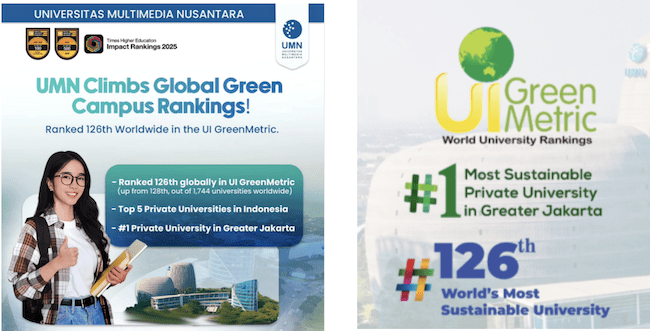
In 2025, UMN improved its position in the UI GreenMetric World University Rankings, rising from 128th place in 2024 to 126th place globally. This achievement reflects the university’s consistent progress in environmental management, infrastructure, energy efficiency, waste management, water conservation, and education. Read more here.
- Net Zero Ready Certification as Concrete Implementation
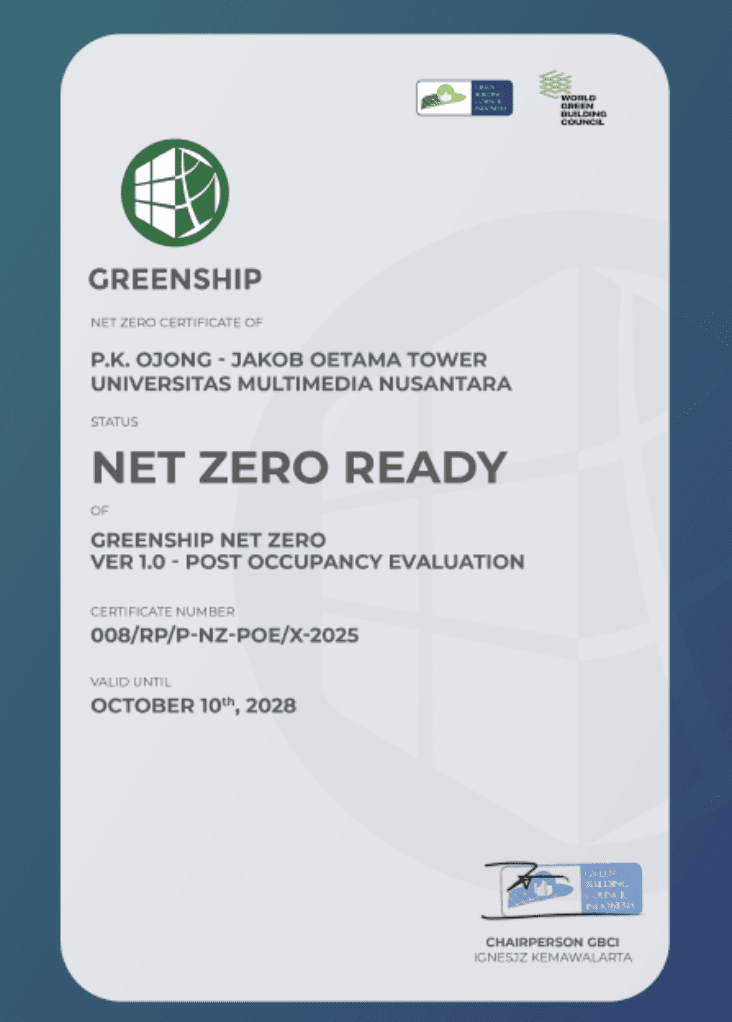
A major milestone was achieved in 2025 when UMN earned the Greenship Net Zero Ready Certification from Green Building Council Indonesia. PK Ojong – Jakob Oetama Tower UMN is now recognized as the first certified high rise building for Net Zero Ready in Indonesia.
This certification represents the real implementation of UMN’s emission reduction roadmap. With the construction sector contributing around 39 percent of global carbon emissions, adopting net zero ready standards is a strategic step that goes beyond reputation. Energy efficient buildings reduce electricity consumption, lower operational costs, extend infrastructure lifespan, and provide better thermal comfort for the academic community.
As emphasized by dean of the faculty of technology and engineering UMN, this achievement should not be seen as symbolic. Instead, it serves as a foundation for deeper sustainability transformation at UMN. The certification reinforces the development of buildings based on Net Zero Energy and Net Zero Carbon concepts through renewable energy integration, smart energy management systems, and a circular approach to resource management. It is also expected to encourage cross disciplinary collaboration among faculty members and students to further embed sustainability into innovation and research. Find out here.
- Institutionalizing Sustainability Through the Center for Sustainability
To ensure continuity and structured implementation, UMN has formally established the Center for Sustainability. The center coordinates sustainability programs, research initiatives, policy development, and cross sectorcollaboration. Its presence strengthens governance and ensures that sustainability is integrated across academic and operational functions.
- Strengthening Energy Efficiency Through Data and Systems
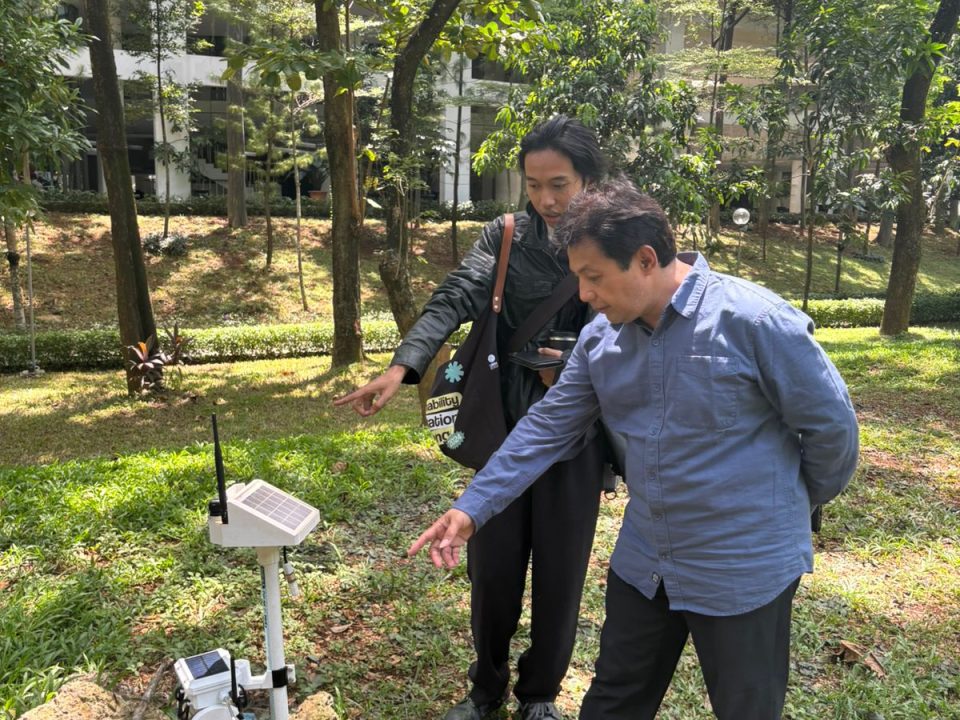
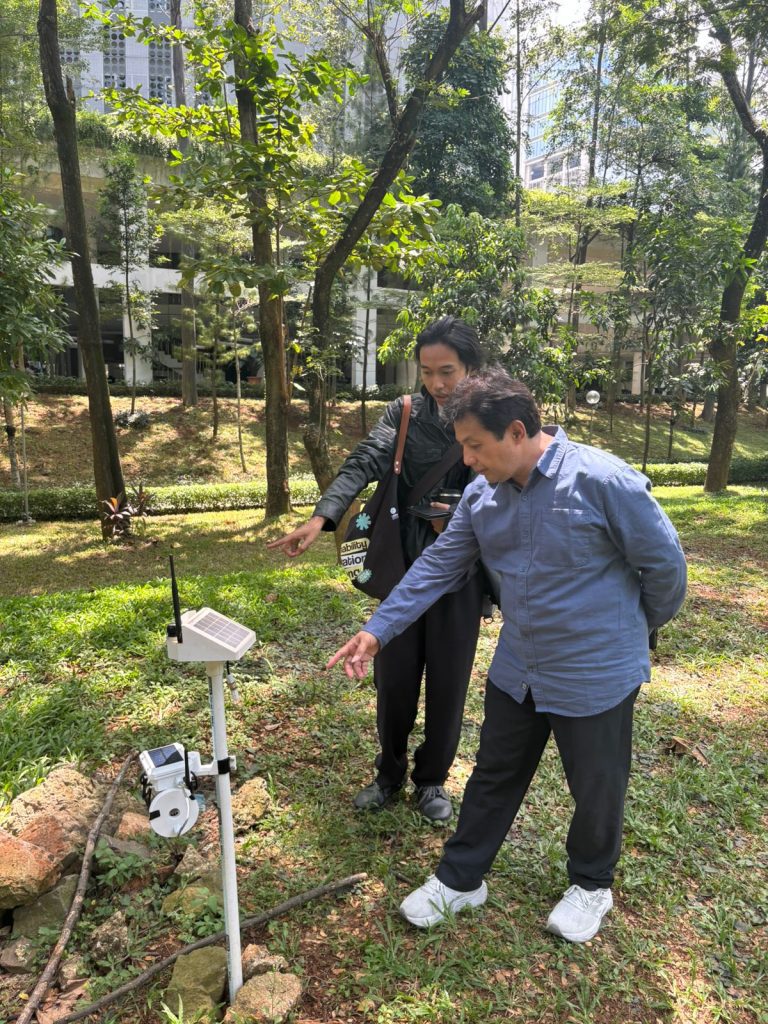
Energy efficiency remains a key pillar in UMN’s emission reduction strategy. The university continues to integrate energy saving practices and efficient systems into daily campus operations. These include the installation of energy efficient lighting and equipment, optimization of HVAC systems, and sustainable infrastructure planning.
UMN has also developed a comprehensive internal energy dashboard to support a data driven approach in monitoring and managing energy consumption across campus buildings. Explore more about holistic energy efficiency approach by UMN and data driven energy management system at UMN.
- Carbon Management and Awareness Programs
Beyond infrastructure, UMN actively promotes energy conscious behavior within its academic community. Through carbon management programs and emissions reduction initiatives, the university encourages students, faculty, and staff to adopt more sustainable practices in their daily activities. Read more here. UMN also consistently organizes programs and activities that contribute to the Sustainable Development Goals, ensuring that sustainability values are embedded in education, research, and community engagement.
Looking ahead to 2050, UMN remains focused on expanding renewable energy exploration, including solar power potential, integrating smart energy management systems, and scaling green building implementation. Continuous improvement, innovation, and institutional commitment will guide the university’s transition toward a low carbon campus.
Electric Vehicle Charging
(Doc. UMN)
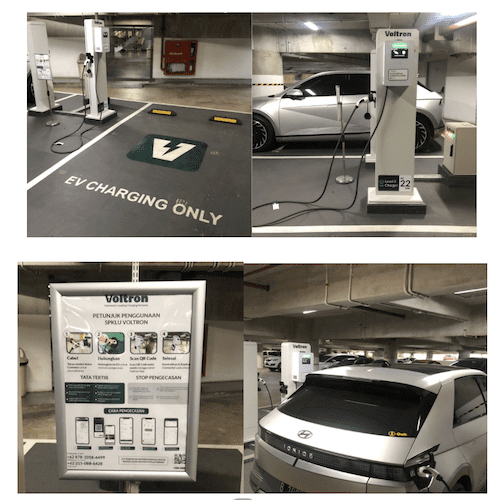
As part of its commitment to achieving net-zero emissions and supporting sustainable mobility, Universitas Multimedia Nusantara (UMN) has begun facilitating the transition toward low-carbon transportation by providing electric vehicle (EV) charging facilities on campus. Currently, UMN provides two EV charging spots that can be utilized by members of the campus community and visitors. The availability of this infrastructure encourages the adoption of cleaner transportation alternatives and helps reduce reliance on fossil fuel-based vehicles.
(Doc. UMN)
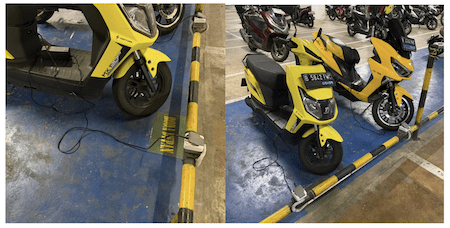
UMN also provides electricity access specifically for charging electric motorcycles, making it easier for users of two-wheeled EVs to utilize campus facilities. This support ensures that not only electric cars but also electric motorbikes can conveniently recharge on campus. By accommodating diverse types of electric vehicles, UMN strengthens its commitment to inclusive and sustainable transportation while supporting broader carbon management efforts and encouraging greater awareness and participation in environmentally responsible transportation practices within the campus community.
Car Sharing Initiative
(Doc. UMN)
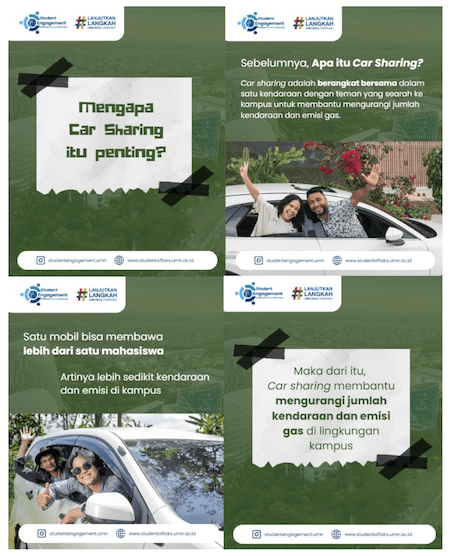
To support sustainable mobility and reduce transportation-related emissions, Universitas Multimedia Nusantara (UMN) encourages students to adopt car sharing practices when commuting to campus. By traveling together in one vehicle, multiple students can share a single car, reducing the number of vehicles entering the campus area. This initiative helps lower greenhouse gas emissions while also reducing traffic congestion and parking demand within the campus environment.
With verified certifications, improved global rankings, structured governance, and continuous operational enhancements, Universitas Multimedia Nusantara demonstrates that its sustainability efforts are driven by an intensified focus on emission reduction, ensuring steady and measurable progress in the years ahead.