UMN Launches RPL Program, Offering More Flexible Access to Higher Education for Professionals
April 12, 2026
UMN Halalbihalal 2026: UMN Strengthens Ties with the Media and Introduces Its Latest Educational Innovations
April 13, 2026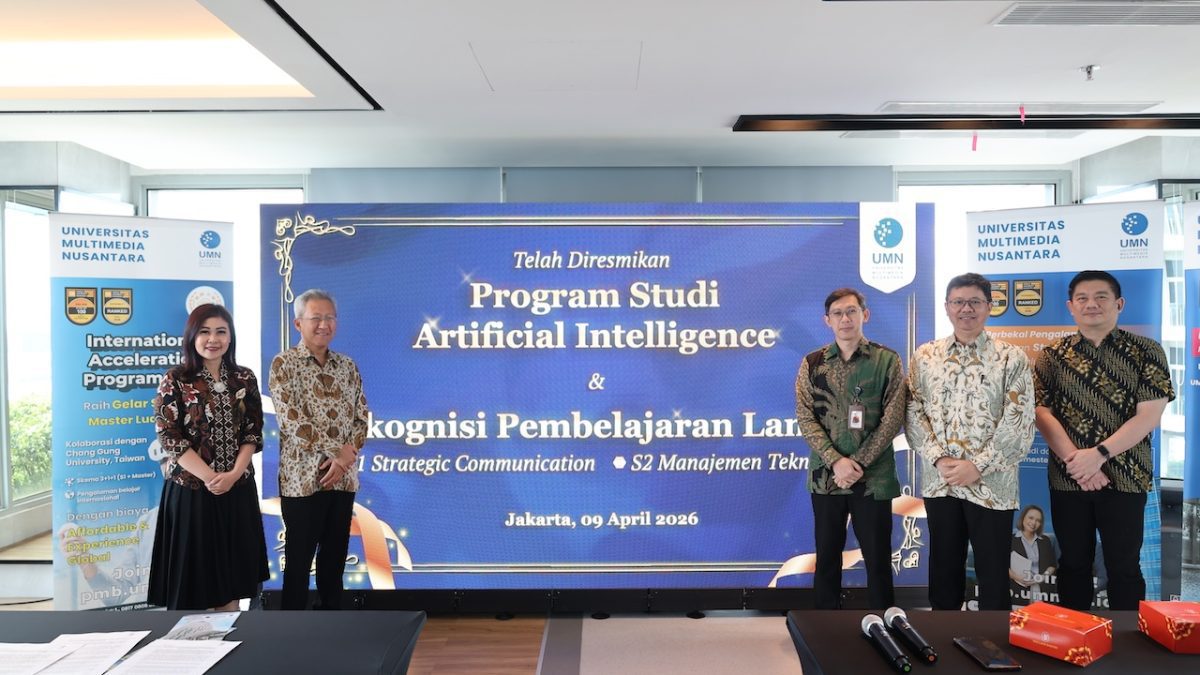
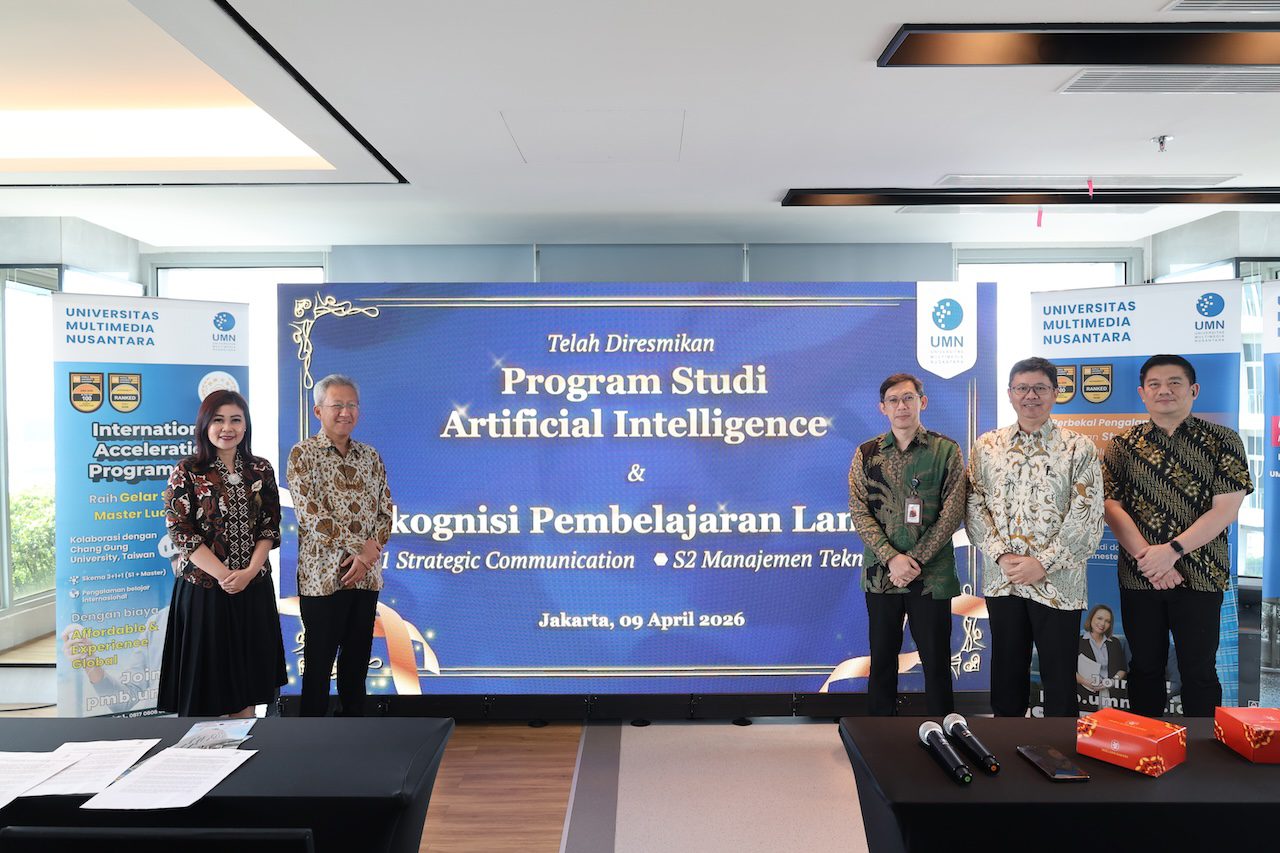
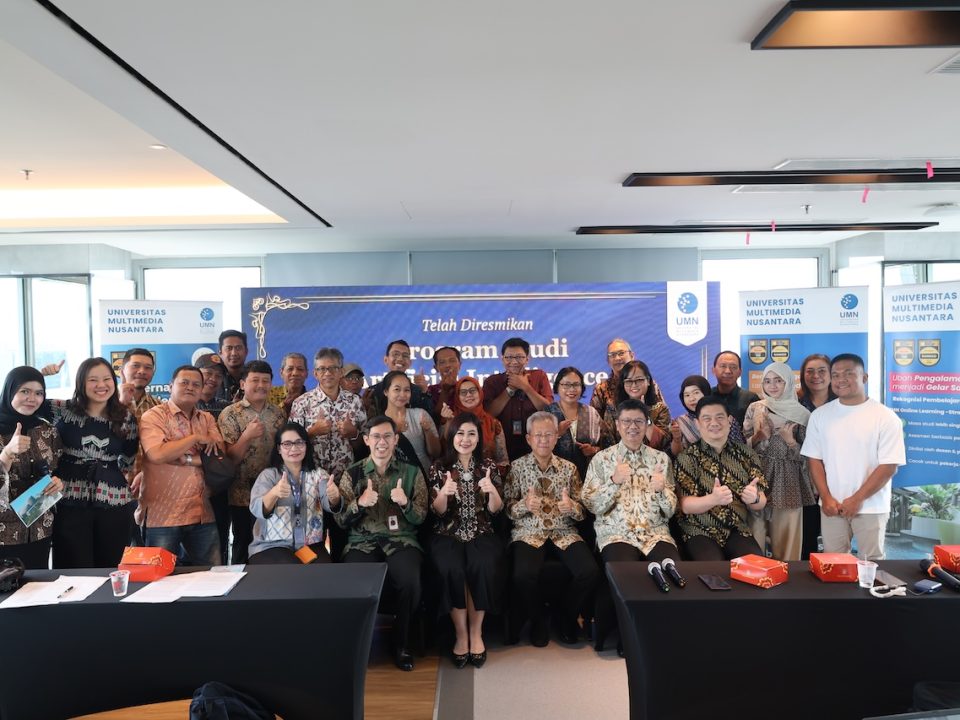
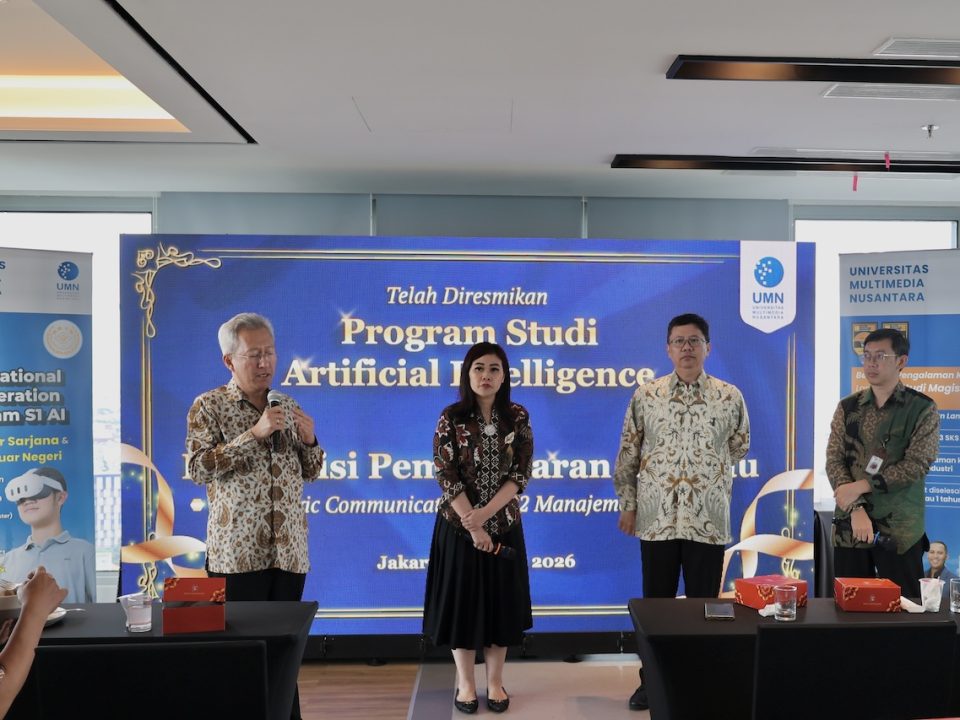
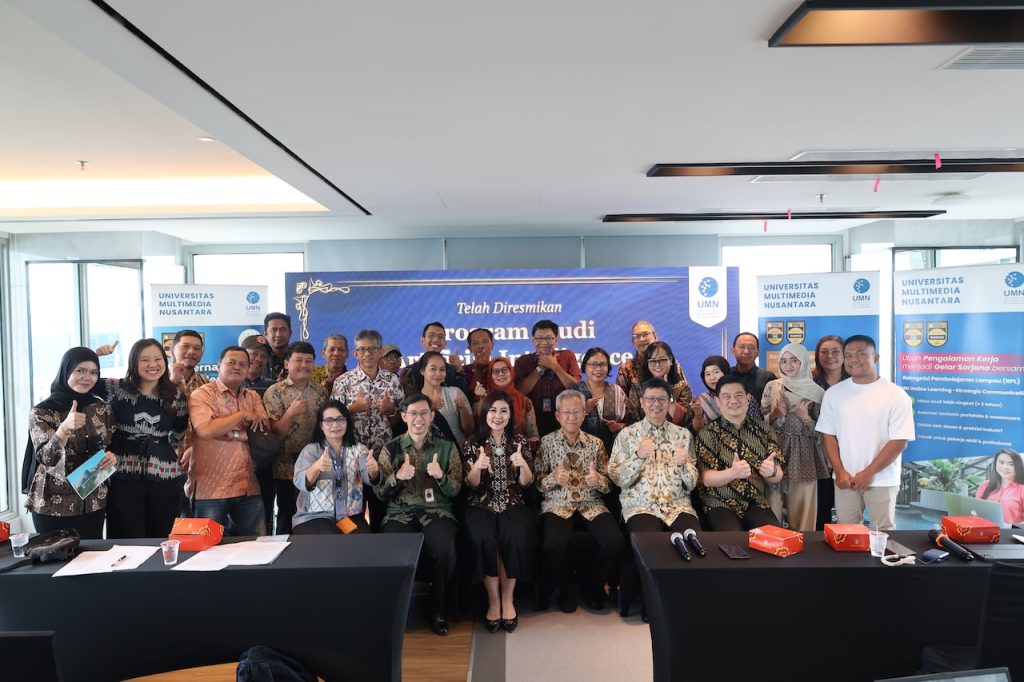
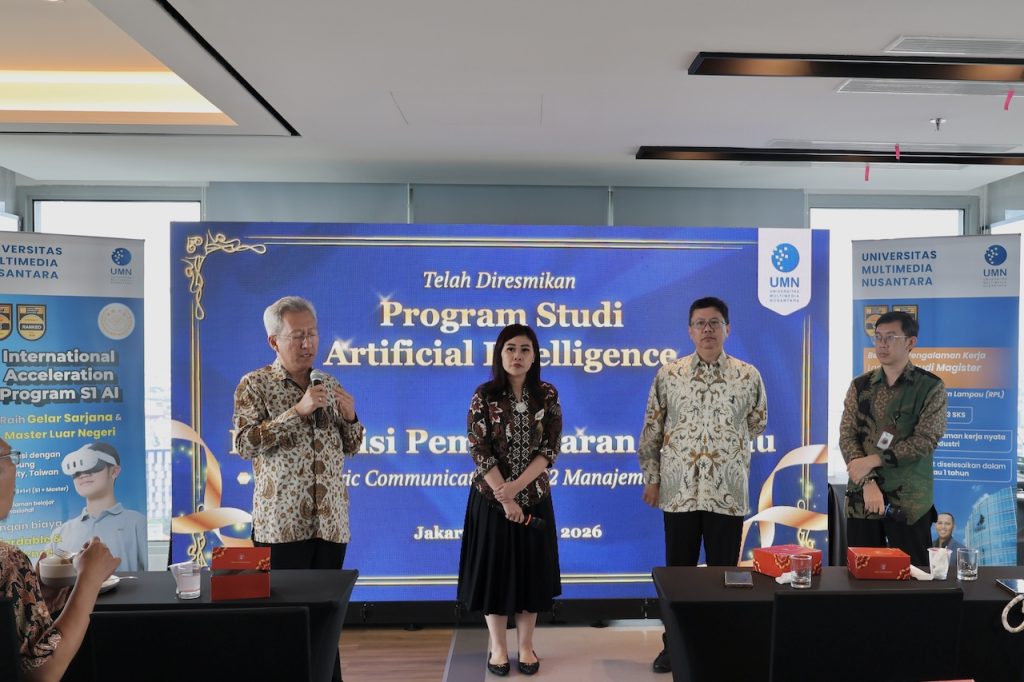
Launch of UMN’s Bachelor’s Degree Program in AI. (Doc. UMN)
JAKARTA, April 9, 2026 – Universitas Multimedia Nusantara (UMN) has officially launched its Bachelor’s Degree Program in Artificial Intelligence (AI). The launch of this program was officiated by the UMN Rectorate at Ascott Menteng, Jakarta. The launch of the AI Program serves as tangible proof of UMN’s vision as a leading institution in the field of Information and Communication Technology (ICT).
With the rapid advancement of technology, the demand for talent in the field of artificial intelligence is increasing across various sectors. On the other hand, sustainability has also become a primary concern in technological development, including artificial intelligence, which is now expected not only to be innovative but also to be responsible regarding environmental, social, and ethical aspects. Addressing these challenges, UMN’s AI Program is designed not only to focus on technological development but also to emphasize the concept of Sustainable Artificial Intelligence—one that is both sustainable and relevant to industry needs.
UMN Rector, Dr. Andrey Andoko, M.Sc., stated that the launch of this program is a strategic step in responding to the rapid pace of technological development.
“The launch of the Artificial Intelligence Undergraduate Program aligns with UMN’s vision of excelling in ICT-based fields, one of which is Artificial Intelligence. This technology is a new development in society and is evolving quite rapidly. This has driven us to establish the Artificial Intelligence Program,” Andrey explained.
In addition to its rapid development, Andrey also noted that artificial intelligence is having an impact across various fields while also causing disruption. For Andrey, proficiency in artificial intelligence is an essential skill that all UMN graduates must master. The topic of artificial intelligence itself has already been integrated into UMN’s curriculum as part of the learning process.
“For me, in-depth knowledge of artificial intelligence is essential. This is so that future UMN graduates can contribute to the development of artificial intelligence and its future applications,” Andrey added.
Andrey hopes that the launch of the Artificial Intelligence Bachelor’s Program will produce experts capable of contributing to the development of industrial and business productivity. Not only that, but he also hopes that prospective students will eventually contribute and make an impact on the broader community.
In line with this, UMN’s Vice Rector for Academic Affairs and Internationalization, Prof. Dr. Friska Natalia, S.Kom., M.T., emphasized that UMN’s AI Program is designed not only to focus on theory but also on sustainable real-world applications.
“We are delighted and proud to launch the Artificial Intelligence Undergraduate Program in 2026. This program does not merely study the concepts and theories of Artificial Intelligence; UMN also emphasizes Sustainable Artificial Intelligence. Here, AI technology is utilized not only for its advancements and sophistication but also with a strong emphasis on responsibility and ethical standards. With this sustainable AI approach, it is hoped that students will eventually be able to create a sustainable impact—both socially and environmentally—on society,” Friska explained.
Friska also highlighted an established collaboration for the Artificial Intelligence Bachelor’s Program: the International Acceleration program with Chang Gung University in Taiwan. This program not only emphasizes learning but also provides students with global experience.
“Through the collaboration with Chang Gung University in Taiwan, students can complete 3 years of study at UMN plus 1 year at Chang Gung University without additional costs, paying only the tuition fee at UMN. Through this program, students can also extend their studies by an additional year at Chang Gung University to complete a Master’s program, so that in a total of 5 years, students can earn both a Bachelor’s and a Master’s degree,” Friska explained.
Friska also added that the AI Bachelor’s Program’s curriculum is competency-oriented, not only at the national level but also internationally. Moving forward, to further emphasize this commitment, Friska will explore various collaborations with other universities at the international level.
“The official intake for the AI Bachelor’s Program will open in the fall semester of 2026/2027. I hope that many prospective students will choose and join the program by recognizing its various strengths, given that AI knowledge will continue to evolve and is essential, particularly in the future workforce,” concluded Friska.
The Advantages of UMN’s Artificial Intelligence Undergraduate Program
UMN’s AI program represents a strategic initiative to address future technological challenges. Academically, students will not only acquire expertise in AI but also develop innovative, sustainable, critical, and creative perspectives, along with a deep understanding of human needs in the field of AI.
The Dean of the Faculty of Engineering and Informatics at UMN, Asst. Prof. Dr Eng. Niki Prastomo, S.T., M.Sc., explained that the curriculum focuses on mastering AI and data analysis, developing practical AI-based solutions for industry, and applying sustainability principles.
“From a sustainability perspective, we also emphasize aspects such as energy efficiency, social responsibility, and transparency in AI system development, so that we prepare graduates who are not only competent but also adaptable to technological changes,” explained Dr. Eng. Niki Prastomo, S.T., M.Sc., Dean of the Faculty of Engineering and Informatics at UMN.
Niki also added that the AI Undergraduate Program emphasizes sustainability, where AI development takes into account environmental, ethical, and social aspects. Thus, prospective students can make a tangible impact on human needs through their implementation.
“Furthermore, the AI program at UMN will focus on various aspects, ranging from project-based learning, internships, and applied research in collaboration with industry, technopreneurship orientation, and, of course, international networking with partner universities regarding student exchanges and joint research,” Niki added.
The AI Undergraduate Program features a curriculum designed to remain relevant in the future and across sectors such as energy, healthcare, and social services. Technically, the curriculum will focus on the foundations of AI, namely Machine Learning, Deep Learning, NLP, and Multi-Agent Systems. In this regard, Niki also emphasized that the curriculum will be continuously updated to align with technological advancements and industry needs.
“Students joining UMN’s AI Program will receive a comprehensive education, including technology- and multimedia-based learning, access to state-of-the-art learning and research laboratories, collaborative and project-based learning methods, internship opportunities, research with industry partners, and UMN’s internationalization programs. Through this, students will not only grasp theory but also gain strong practical experience,” said Niki.
Niki hopes that UMN’s AI Program will become a hub for developing AI talent that is not only technically proficient but also possesses a sense of social responsibility that is human-centered and sustainable. UMN aims to produce graduates who can contribute innovatively through AI and make a tangible impact on society at large, both nationally and internationally.
By Rachel Tiffany | UMN News Service
English translation by Levina Chrestella Theodora
Kuliah di Jakarta untuk jurusan program studi Informatika| Sistem Informasi | Teknik Komputer | Teknik Elektro | Teknik Fisika | Akuntansi | Manajemen| Komunikasi Strategis | Jurnalistik | Desain Komunikasi Visual | Film dan Animasi | Arsitektur | D3 Perhotelan , di Universitas Multimedia Nusantara.