
UMN and UiTM Strengthen International Collaboration, Discusses The Future of AI in Creative Industries
March 15, 2026
Strengthening Its Global Network, UMN Welcomes 34 International Exchange Students
March 15, 2026
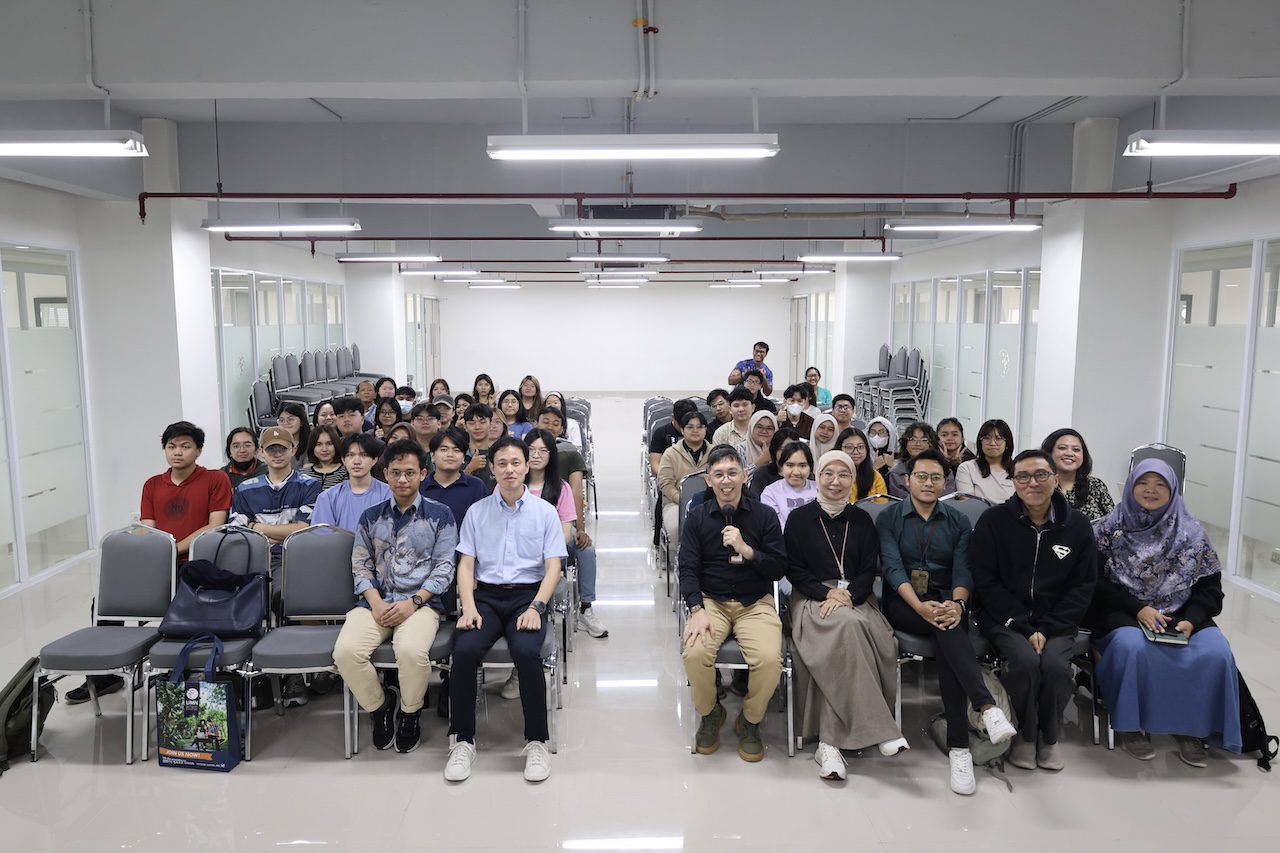
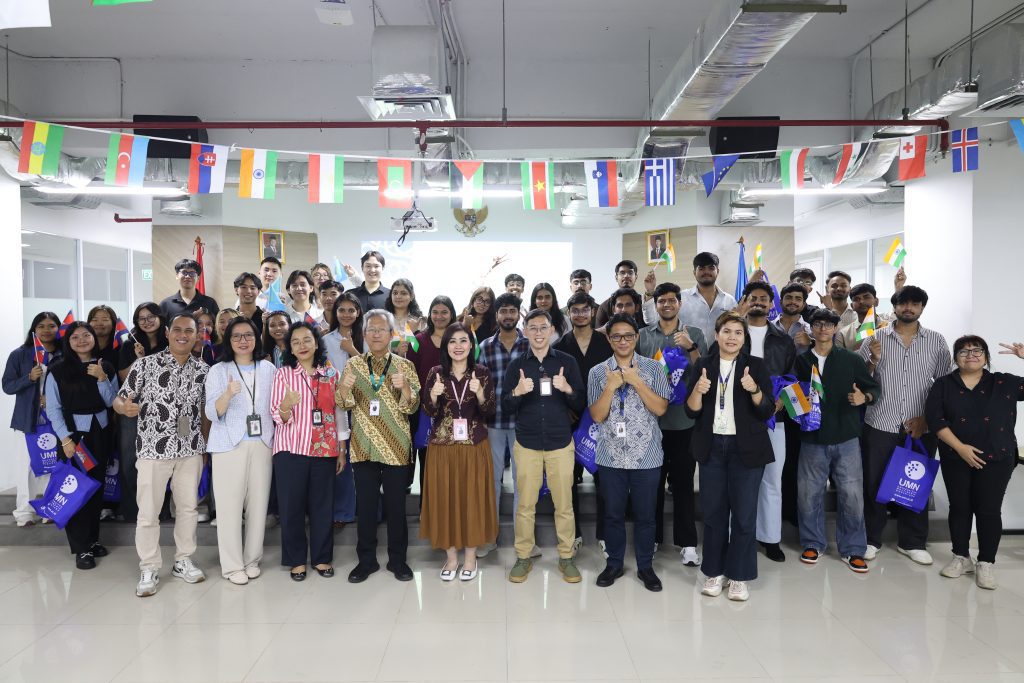
Group photo of the UMN Physics, Engineering, and Architecture programs with Yasuhiro. (Doc. UMN)
Tangerang, (February 3, 2026) – UMN’s Physics, Engineering, and Architecture programs hosted a guest lecture with Assoc. Prof. Dr. Eng. Yasuhiro Shimazaki from the Department of Architecture and Civil Engineering, Research Center for Collaboration Area Risk Management, Toyohashi University of Technology, Japan. In this guest lecture, Yasuhiro addressed the topic “Physics-Based Architecture Design.”
To strengthen sustainability learning, UMN continues to equip students with perspectives an various topics. On this occasion, Yasuhiro explored the role of physics in architectural design, particularly within the context of sustainable architecture in Japan.
“We must first understand that the world’s current vision is moving toward sustainability; Japan itself is currently focusing on Zero Energy Buildings (ZEB) with a target to achieve this by 2050. This is not merely for aesthetic reasons, but because the reality is that the building sector consumes a significant amount of energy,” Yasuhiro explained.
According to Yasuhiro, ZEB does not mean a building uses no energy at all. This concept emphasizes reducing reliance on non-renewable energy (fossil fuels) and designing buildings capable of generating their own energy from renewable sources.
“Looking at buildings in Japan, from traditional to modern, they always adhere to environmental principles that harmonize with nature, from the space and atmosphere to the architectural design itself. Of course, by considering all factors, buildings in Japan are always designed with a sustainable concept, starting from the planning process to the final result,” he explained.
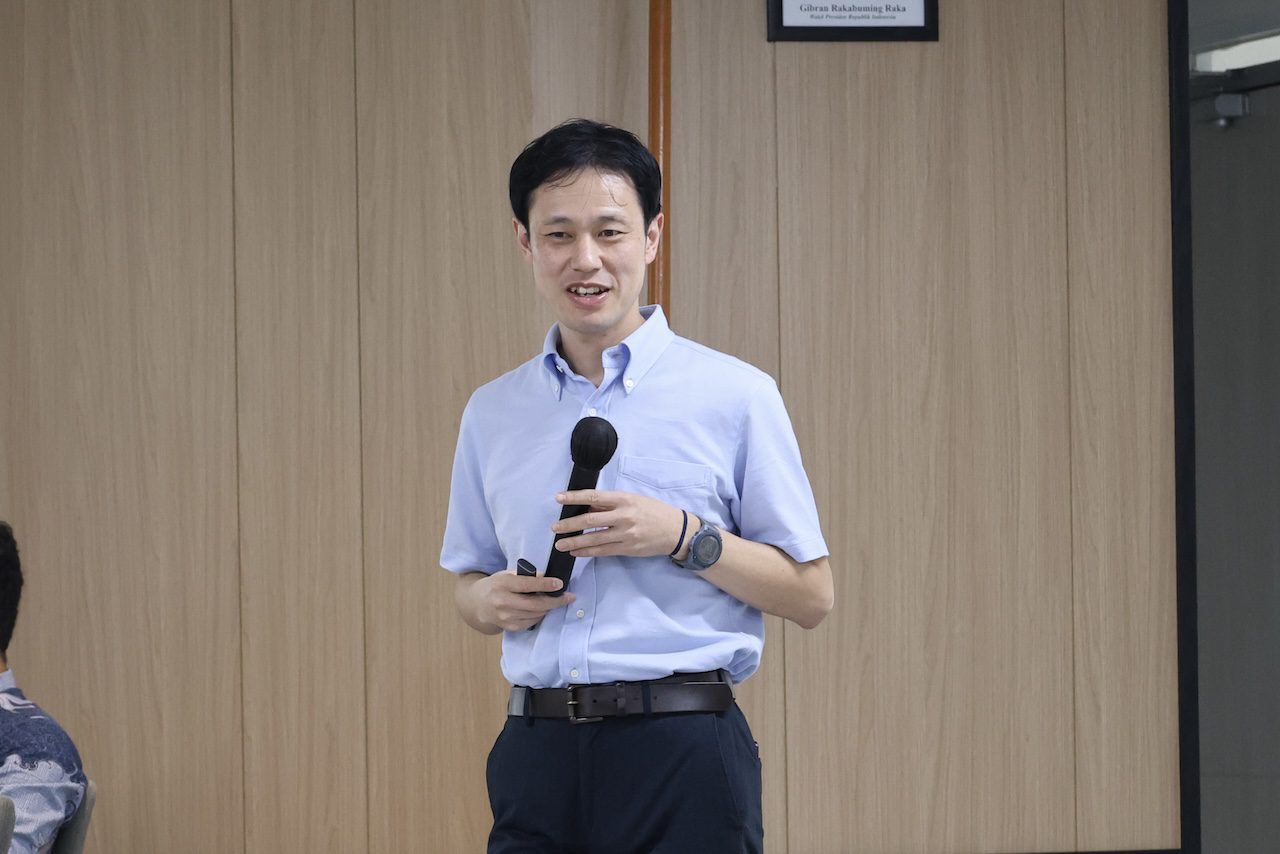
Presentation of the guest lecture material by Yasuhiro. (Doc. UMN)
Based on studies in physics and architecture, sustainable buildings have become a primary goal, attracting public attention. In addition to the United Nations’ (UN) vision regarding sustainable development, buildings themselves consume as much as 40% of energy, and this issue is not limited to Japan but also affects other continents, such as Europe, the Americas, and Indonesia.
“Buildings consume a significant amount of energy from electronic devices, such as heaters, lights, air conditioners, chargers, and various other items for human comfort. Of course, the excessive energy consumption of buildings has a significant impact on the environment and human health,” Yasuhiro emphasized.
Clarifying this, it does not mean humans must survive without using energy; rather, the primary mission is to provide solutions that allow people to remain comfortable while carrying out activities inside buildings.
“In my opinion, human comfort inside buildings remains a crucial aspect, given that these structures are, after all, occupied by people. We cannot design buildings solely with energy efficiency in mind without considering temperature, humidity, lighting, sound, and various other psychological factors,” he added.
Yasuhiro shared insights into the situation in Toyohashi, Japan, a city with a population of 370,000. He described evaluations conducted both quantitatively and qualitatively, using measurements of temperature, humidity, and environmental quality, as well as human perceptions of comfort.
Delving deeper into his presentation, Yasuhiro noted that physics is not merely about making calculations. More than that, the study of physics in architectural buildings plays a role in creating better environmental conditions because, fundamentally, the principles used vary significantly from country to country. However, one must still consider the location and local traditions.
“So, what does the future of architecture in Indonesia look like based on existing research? According to my findings, Indonesia needs to understand the current situation—including climate conditions and cultural context—and establish benchmarks. Most importantly, we must introduce technology and philosophy to the next generation,” Yasuhiro concluded in his guest lecture.
By Rachel Tiffany | UMN News Service
English translation by Levina Chrestella Theodora
Kuliah di Jakarta untuk jurusan program studi Informatika| Sistem Informasi | Teknik Komputer | Teknik Elektro | Teknik Fisika | Akuntansi | Manajemen| Komunikasi Strategis | Jurnalistik | Desain Komunikasi Visual | Film dan Animasi | Arsitektur | D3 Perhotelan , di Universitas Multimedia Nusantara.