
3 UMN Study Programs That Support Sustainability
September 25, 2026
UMN Discovery Day 2026 Introduces Campus Life and Preparation for the Future
September 25, 2026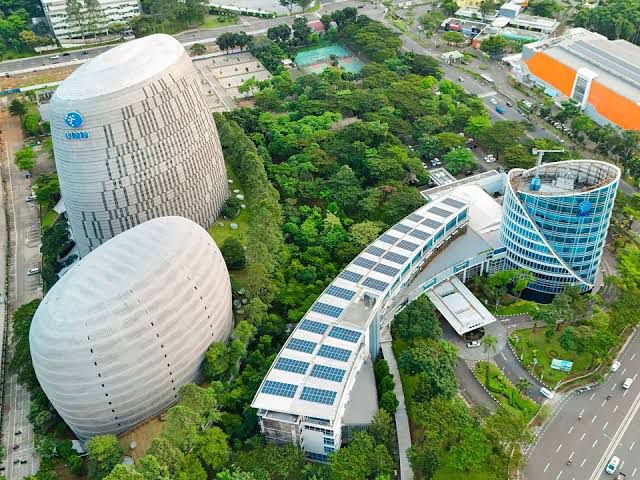
Exploring the Sustainability Program at Universitas Multimedia Nusantara
Universitas Multimedia Nusantara (UMN) is known not only as a campus that is innovative in technology, media, and communication, but also as an institution that continues to strengthen its commitment to sustainability and environmental preservation.
This commitment is clear in many aspects of campus life: from the physical design and resource management to integrating sustainability values into the curriculum and everyday campus life.
Read also: 5 Study Programs That Focus on Green Technology.
Evidence of UMN’s Commitment to Sustainability
1. A Real Green Campus
One piece of evidence of UMN’s commitment to sustainability is its participation in the UI GreenMetric ranking, a ranking of sustainable universities worldwide. In the latest ranking, UMN placed highly both globally and nationally and became one of the best private universities in Indonesia for sustainability. This achievement shows that UMN does not merely talk about the environment but applies it in practice on campus.
UMN’s campus facilities are designed on environmentally friendly principles. The buildings are designed for energy efficiency and to maximize natural light, while energy-saving building technology and a more prudent water management system support the effort to create a sustainable green campus.
2. Waste and Resource Management
In addition to environmentally friendly buildings, UMN also focuses on responsible resource management. The campus runs a composting program for organic waste and works with partners such as Plasticpay to promote non-organic waste management through recycling and a circular-economy approach. In this way, UMN does not simply dispose of waste in a sorted manner, but seeks to process it into economic value and social benefit.
Read also: Facilities and Green Technology on a Modern Sustainable Campus.
3. Sustainability in the Curriculum
One aspect that makes UMN different is integrating sustainability education directly into the academic curriculum. Sustainability education is not merely the theme of seminars or campus activities, but also material that students study seriously through various relevant courses.
In the spirit of the Sustainable Development Goals (SDGs), UMN offers various courses that include discussions of sustainability and environmental issues in a range of study contexts. These courses cover topics such as green energy management, sustainable urban planning, environmental impact analysis, and socio-economic issues related to sustainability.
4. Sustainability Education Outside the Classroom
UMN understands that sustainability education does not end in the classroom. Through campaigns, workshops, and Sustainability Week, students are encouraged to think critically about environmental issues and to take real action. These activities help build an active environmental culture on campus. Sustainability is not just a theory, but a practice in everyday life.
For example, students are invited to see the real impact of energy use and waste reduction, and how organizations can apply sustainability principles in their operations. This kind of education aims to produce graduates who not only understand global issues, but are also ready to contribute professionally to sustainable solutions in the future.
Read also: Green Jobs: New Career Opportunities for Students!
Conclusion
Universitas Multimedia Nusantara has shown that sustainability is not just a slogan, but an integral part of the campus’s identity. Through a combination of environmentally friendly infrastructure, responsible resource management, and integrating sustainability into the academic curriculum, UMN prepares students to become innovative leaders attuned to the challenges of the future.
In a world that pays increasing attention to environmental and sustainability issues, UMN positions itself as an institution that not only teaches knowledge, but also instills values of global responsibility. This is not just about a physically green campus, but about a generation that is broad-minded, critical, and ready to contribute to sustainable development in Indonesia and the world.
By Levina Chrestella Theodora
English translation by Levina Chrestella Theodora
Kuliah di Jakarta untuk jurusan program studi Informatika| Sistem Informasi | Teknik Komputer | Teknik Elektro | Teknik Fisika | Akuntansi | Manajemen| Komunikasi Strategis | Jurnalistik | Desain Komunikasi Visual | Film dan Animasi | Arsitektur | D3 Perhotelan , di Universitas Multimedia Nusantara.