
How to Make Every Thesis Advisor Meeting Count
October 10, 2026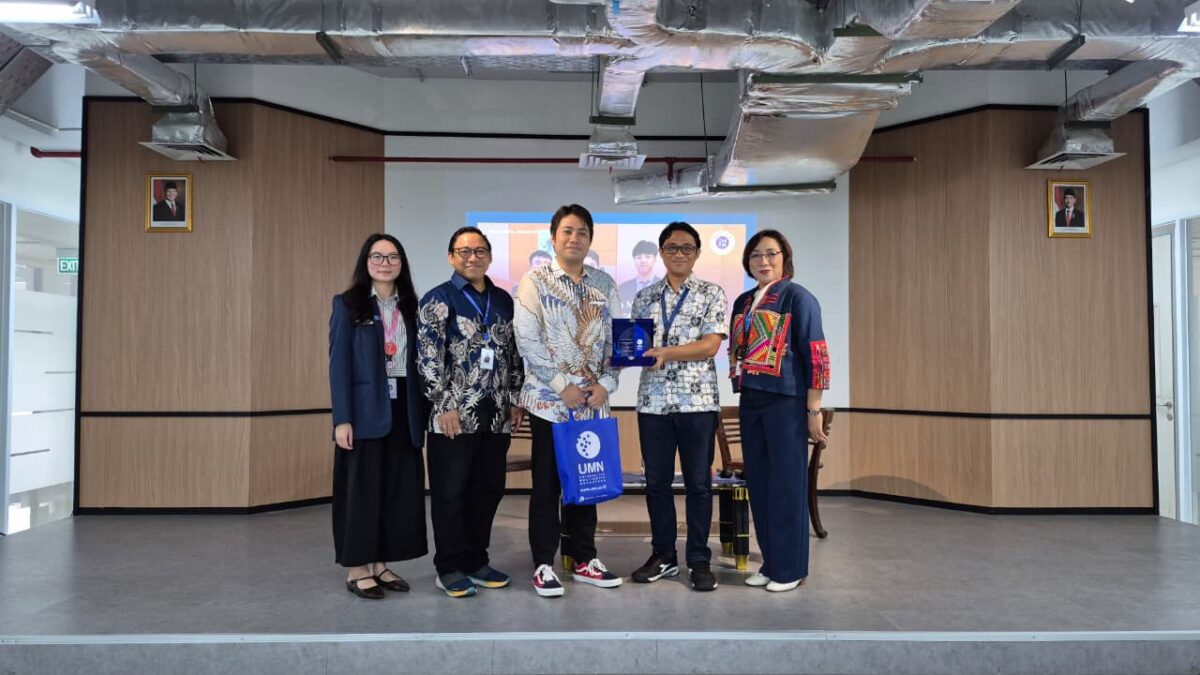
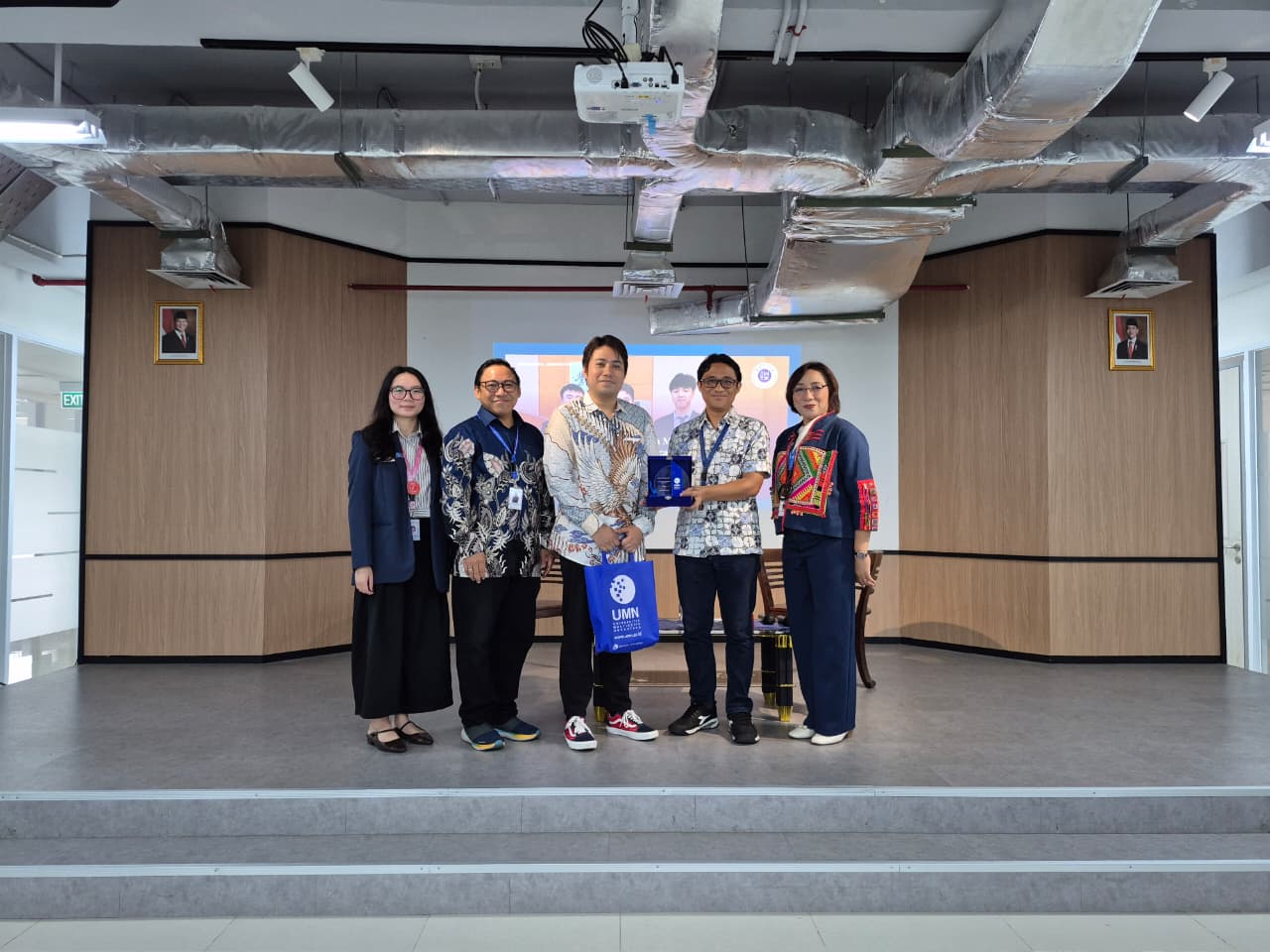
The Communication Science Study Program team at UMN presents a plaque to Dr. Ryan (Doc. Faculty of Communication Science UMN).
Tangerang, October 8, 2026 – The Strategic Communication Study Program at Universitas Multimedia Nusantara (UMN) held an international guest lecture titled “What I Learned from My Experience as a Travelling Academician” on Thursday, October 8, from 9 to 11 a.m. WIB at Borneo Room, 20th Floor, Building D, UMN. The event featured Dr. Al Ryanne Gabonada Gatcho, an Associate Professor at the School of Foreign Languages and Literature, Hunan Institute of Science and Technology. Around 90 students and lecturers attended the session to learn more about intercultural communication through academic insights and the cross-cultural experiences shared by the Manila-born academic.
Dr. Ryan’s visit to UMN was made possible through his academic and personal connection with Dr. Hendar Putranto, coordinator of the Intercultural Communication course (MSC3123). They first met while participating in the International Visiting Professor program at Parul University, India, in February 2026. Their meeting marked the beginning of a professional relationship that continued to grow, eventually creating an opportunity to share knowledge and enrich the learning experience of UMN students.
The guest lecture opened with remarks from Lilik Dwi Mardjianto, Ph.D., Dean of the Faculty of Communication Science at UMN. He welcomed the initiative to bring international academics to campus to enrich the curriculum. Having international academics share their knowledge gives students the opportunity to explore different academic perspectives and gain a broader understanding of communication in multicultural societies.
During the session, Dr. Ryan shared his experiences traveling to different countries and explained how these journeys helped him understand cultural differences and communication styles across social settings. For him, traveling is more than just a hobby. It is also an opportunity to learn how cultural backgrounds influence the way people deliver messages, choose their words, and interact with others.

“I really enjoy traveling to different countries. It gives me a great opportunity to learn about and understand the cultures of different countries, especially in terms of communication” stated Dr. Ryan.
His cross-cultural experiences taught him that differences in communication styles should not immediately be seen as strange or wrong. Instead, these differences can be a starting point for developing acceptance and awareness of the diverse values, customs, and ways people interact within different cultural contexts.
“Although cultural and communication differences may seem challenging, I see them as something worth learning about. These differences have taught me about acceptance and awareness, reminding me that people from different countries also come from different cultural backgrounds”, explained Dr. Ryan.
From a theoretical perspective, Dr. Ryan introduced Communication Accommodation Theory, developed by Howard Giles. The theory explains how people adjust or maintain their communication styles when interacting with others. He discussed three key concepts: convergence, which refers to adjusting one’s communication style to match the other person’s; divergence, which involves maintaining or emphasizing differences in communication styles; and maintenance, which means keeping one’s own communication style without making significant adjustments.
These concepts help students understand how communication choices are shaped by identity, the context of an interaction, and the purpose of communication.
Students showed their enthusiasm through a range of questions during the discussion session. Their questions covered practical challenges in cross-cultural interactions as well as theoretical topics, including cultural identity. The discussion allowed students to connect everyday experiences with concepts in intercultural communication and explore how these theories can help explain real-life communication situations.
Toward the end of the lecture, Dr. Ryan emphasized the importance of respecting cultural differences without losing one’s own identity. Being open to other cultures, he explained, does not mean abandoning one’s cultural background. Instead, respecting differences while remaining aware of one’s own identity allows cultures to continue to grow and helps build stronger relationships across cultures.
His message highlighted that intercultural communication competence goes beyond recognizing differences or adjusting communication styles. It also involves building respectful relationships, understanding one’s own identity, and allowing others to express themselves through their own cultural backgrounds. In this way, intercultural communication is not simply about adapting to others. It is also about building relationships where differences can be respected without becoming barriers to mutual understanding.
Through this international guest lecture, UMN students had the opportunity to connect intercultural communication theories with real-life experiences in an increasingly globalized world. The event also highlighted how academic mobility and the internationalization of higher education can encourage knowledge exchange, bring together perspectives from different countries, and enrich the learning experience.
The professional relationship that developed into this academic collaboration also shows that internationalization does not only happen through formal programs. It can also grow from personal connections that create opportunities for dialogue, learning, and the exchange of ideas.
By Rachel Tiffany | UMN News Service
Kuliah di Jakarta untuk jurusan program studi Informatika| Sistem Informasi | Teknik Komputer | Teknik Elektro | Teknik Fisika | Akuntansi | Manajemen| Komunikasi Strategis | Jurnalistik | Desain Komunikasi Visual | Film dan Animasi | Arsitektur | D3 Perhotelan , di Universitas Multimedia Nusantara. www.umn.ac.id