Preparing Students’ Futures, UMN Inaugurates Collaboration with L’Oréal Indonesia
May 20, 2026
Expanding Global Networks, UMN Discusses Collaboration Opportunities with The Italian Embassy to Indonesia and Uni-Italia
May 14, 2026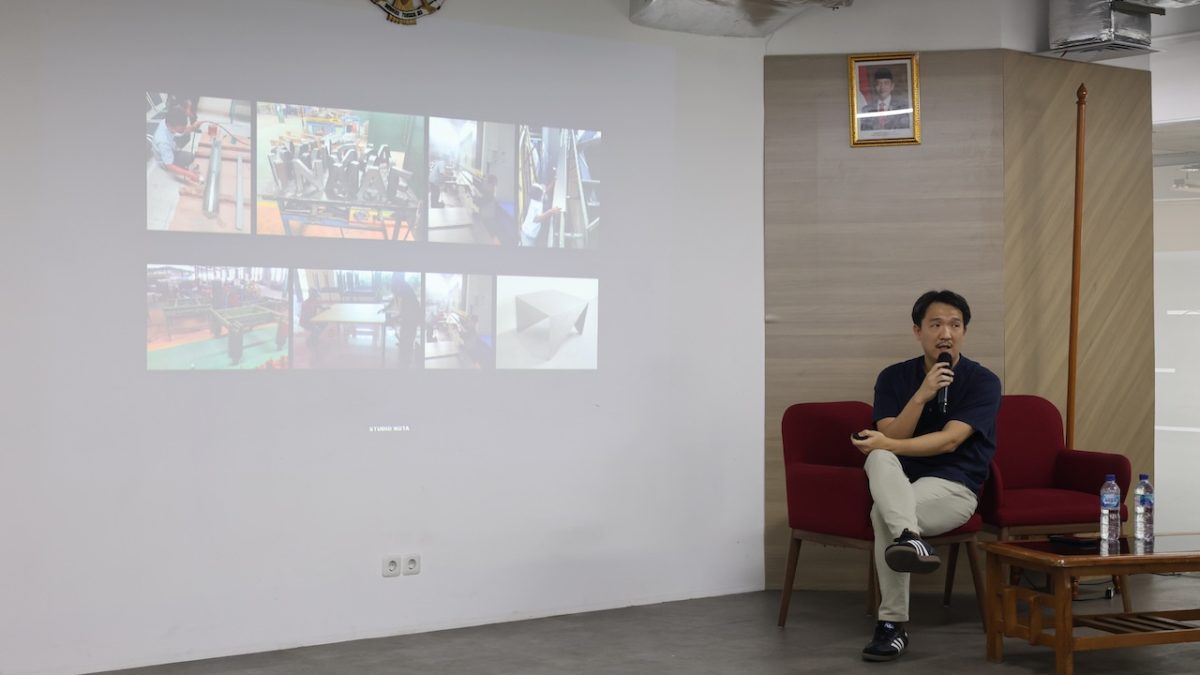
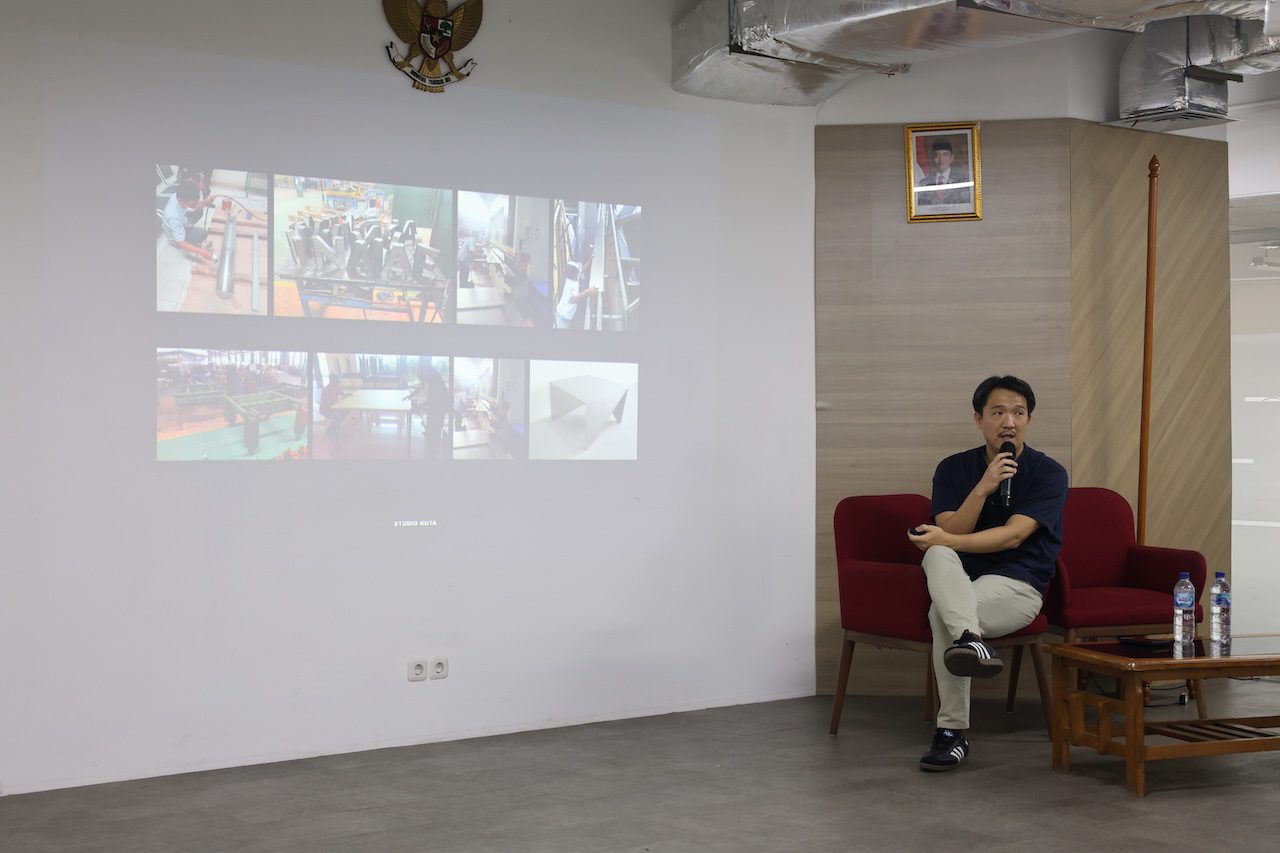
Talkshow session of the PPAr Clinic with Erick. (Doc. UMN)
Tangerang, (09/05/2026) – The UMN Architecture Professional Program (PPAr) invited two speakers, Ar. Erick Kristanto as Founder and Principal Architect of Studio Kota and Ar. Suwardana Winata as Deputy of the Architect Education Board at IAI Nasional (Indonesian Institute of Architects), to the PPAr Clinic. Through this activity, students were invited to understand the dynamics of the architecture profession, both personally and professionally, amid industrial and technological developments.
The PPAr Clinic activity began with a talk show titled “Taking Architecture Personally & Professionally” featuring Ar. Erick Kristanto. He shared his perspectives on the architecture profession and how he has consistently risen and developed his abilities over time.
“My early journey was certainly not smooth. I once went through a phase of depression. Even so, I always maintained the mindset of remaining productive regardless of my mental state. My career journey began in 2015, with absolutely no connections when starting Studio Kota,” Erick explained.
Throughout his career journey, Erick did not remain idle in building Studio Kota. He participated in various architecture competitions; for him, this step was not only about expanding connections and seeking victories. More than that, Erick sees competitions as a means of experimentation to measure his abilities and as an intellectual asset.
“I kept searching for something specific—what do I want? The more we search for what we want, the more options appear. One of my projects in 2019, ‘Tujuhari Coffee,’ became a place where people not only gathered but also served various functions. The space evolved into a multifunctional venue hosting diverse activities, from fashion shows and art exhibitions to intimate weddings,” he explained.
Erick feels that this concept works well because it encourages people from various backgrounds and interests to interact. For Erick, the most important thing in architecture is seeing how function and design are used over the long term, so it doesn’t stop at just photographing the building.
“In undertaking a project, we must be able to improvise through everything. Explore everything that exists—’beauty and ugliness.’ We cannot continuously look only at the good side but must balance the side considered ‘ugly’; that side might hold much history and philosophy that can be developed,” Erick added.
Amidst rapidly advancing technology, Erick also highlighted the role of Artificial Intelligence (AI) in modern architectural practice. According to him, the existence of AI is quite helpful in his work because, as an architect, he not only designs but also handles many repetitive tasks that AI can assist with.
“It should be known that AI will not replace or threaten the architecture profession. Given the demands of an increasingly innovative world, I believe that if we continue to think critically and creatively, an architect will not be replaced by AI. There are quite a few human abilities that AI cannot replace,” he concluded.
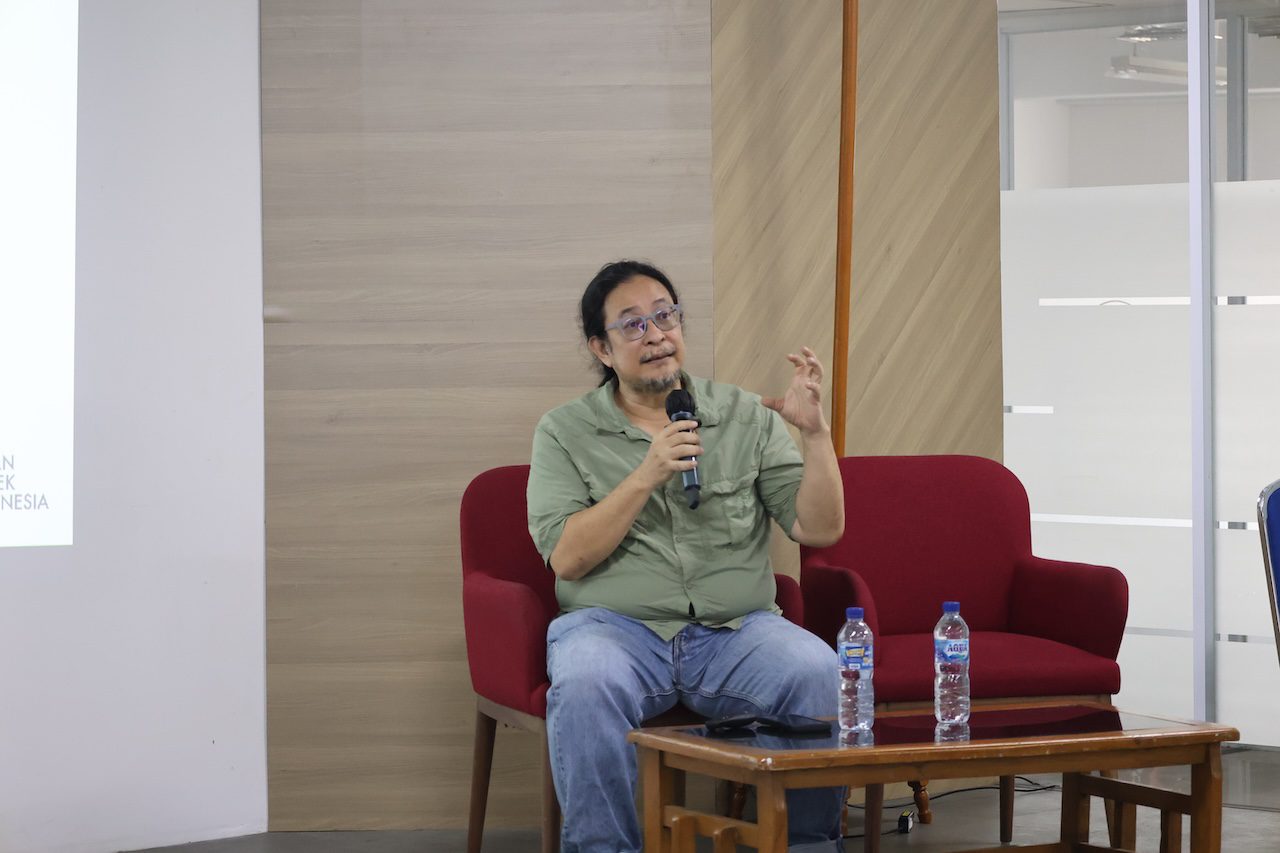
Material presentation by Suwardana at the PPAr Clinic. (Doc. UMN)
During this PPAr Clinic activity, prospective students also received a brief presentation on the material from Ar. Suwardana Winata, highlighting one of the advantages of PPAr UMN: students can later undertake internships and receive architectural recognition from IAI nationwide.
“IAI is a specialized organization for architects to help architects develop and enhance their capabilities as architects, both legally and technically. PPAr itself is part of IAI’s education. By joining and participating in learning at PPAr, students can later become part of IAI, undertake internships, and take the architecture exam at the end,” Suwardana explained.
Suwardana also emphasized the importance of learning at PPAr for students who wish to pursue a career in architecture. In addition to the short duration of study, the learning at PPAr, particularly at UMN, integrates many aspects that align with the needs of the architecture industry, bridging UMN and IAI Indonesia.
Through PPAr, UMN continues to encourage the emergence of young architects who not only understand design and technical aspects but also adapt to the dynamics of a professional, sustainable, creative industry.
For more information about PPAr UMN, please contact:
+6281282183889 (Flavia Kynesha)
+6287780833593 (Sorta Yocevina)
https://www.instagram.com/profesiarsitekumn/
By Rachel Tiffany | UMN News Service
English translation by Levina Chrestella Theodora
Kuliah di Jakarta untuk jurusan program studi Informatika| Sistem Informasi | Teknik Komputer | Teknik Elektro | Teknik Fisika | Akuntansi | Manajemen| Komunikasi Strategis | Jurnalistik | Desain Komunikasi Visual | Film dan Animasi | Arsitektur | D3 Perhotelan , di Universitas Multimedia Nusantara.