Undergraduate Program in
Information System
What is Information Systems?
Information Systems is a combination of information technology and business management. In this study program, students will learn how to create and build a system companies can use to manage a business.
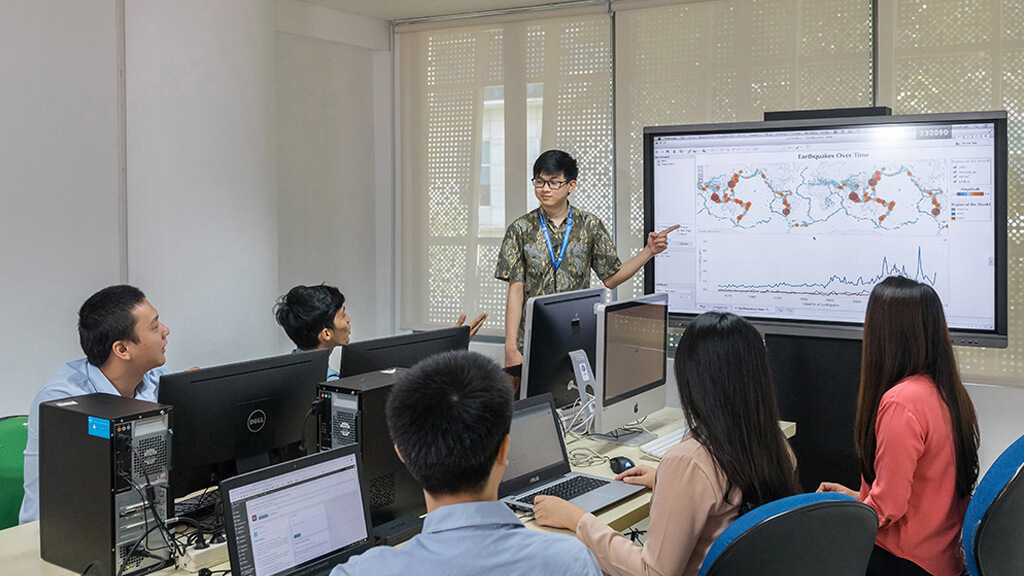
Through the data obtained, students will learn how to analyze, process, and visualize it so that it can be used as a consideration by business management in making decisions in a company.
UMN’s Information Systems study program is a place for students to learn how to manage information, which can be used to design a useful system for human activities.

Why Choose
UMN’s Information System?
UMN’s Information Systems study program has several specializations students can choose from to learn more deeply. UMN Information Systems focuses on Mahadata, so several specializations that support this include Big Data Analytics, Enterprise Resource Planning Specialist, and Database Specialist.
Of course, this will prepare students to face technological and industrial developments in the future. In addition, UMN Information Systems students will have the opportunity to get two international certifications, namely the Data Visualization certificate and the Data Modeling certificate, which will be very useful for students in the world of work later.
FAQ
Why Choose the Information Systems Study Program at UMN?
Choosing a study program is an important step in preparing for the future. For prospective students who are interested in both technology and business, the Information Systems Study Program at Universitas Multimedia Nusantara (UMN) can be an excellent choice.
The Information Systems Study Program at UMN is designed to equip students with the ability to develop technology-based solutions that address the needs of organizations and industries. Students not only learn technical aspects such as programming and data management, but also gain an understanding of business processes, user requirements analysis, and information technology project management.
Through a curriculum that keeps pace with industry developments, students explore various areas, including systems analysis, databases, application development, business intelligence, digital transformation, information security, and data-driven technologies. Learning is also supported by Outcome-Based Education (OBE) and Project-Based Learning (PBL) approaches, allowing students to develop their competencies through real-world projects.
In addition to classroom learning, Information Systems students at UMN have opportunities to participate in various activities that support their personal and professional development, such as internships, research, competitions, professional certifications, and collaborations with industry partners. These experiences help students develop skills that are relevant to industry needs while building their professional portfolios before graduation.
UMN is also supported by lecturers with academic and professional experience in the field of information technology. The learning process is complemented by laboratory facilities, supporting software, and a learning environment that encourages students to innovate and collaborate.
Graduates of the Information Systems Study Program at UMN have broad career opportunities across various industries. Potential career paths include System Analyst, Business Analyst, IT Consultant, Data Analyst, Project Manager, Database Administrator, UI/UX Analyst, Enterprise System Specialist, and Digital Transformation Consultant. As organizations increasingly adopt digital transformation, Information Systems graduates are among the professionals sought after by companies.
By combining technological skills, business knowledge, project experience, and industry collaboration, the Information Systems Study Program at UMN prepares students to become adaptive and innovative professionals who are ready to address the challenges of the digital era.
How to Apply to the Information Systems Study Program at UMN?
Prospective students who wish to join the Information Systems Study Program at UMN can apply through the admission pathways available at UMN. The application process is conducted online by completing the registration form, submitting the required documents, and following the selection process according to the chosen admission pathway.
For information regarding admission schedules, requirements, tuition fees, scholarships, and available admission pathways, prospective students can visit the UMN New Student Admission website or contact the UMN admissions team. This allows prospective students to obtain complete information and choose the admission pathway that best suits their needs.
What Will You Learn in the Information Systems Study Program at UMN?
The Information Systems Study Program at Universitas Multimedia Nusantara (UMN) focuses on how information technology can be utilized to help organizations and businesses address various challenges. Students do not only learn how to develop systems or applications, but also understand how technology can be used to improve efficiency, productivity, and decision-making.
Throughout the program, students will study the fundamentals of information technology, including programming, algorithms, databases, and software development. These subjects provide a foundation for understanding how information systems are designed, developed, and managed according to user needs.
In addition to technical skills, students will also gain an understanding of business processes. They will learn to analyze organizational needs, design technology-based solutions, and evaluate the effectiveness of developed systems. The combination of technology and business knowledge is one of the key characteristics of the Information Systems Study Program.
The Information Systems curriculum at UMN also covers various areas relevant to current industry developments. Students have the opportunity to study systems analysis and design, information technology project management, business intelligence, data analysis, information security, cloud computing, digital transformation, as well as web and mobile application development.
Learning in the Information Systems Study Program at UMN applies Outcome-Based Education (OBE) and Project-Based Learning (PBL) approaches. This means that students do not only study theories in the classroom, but also work on various projects designed to develop their problem-solving skills. Through these projects, students learn to collaborate, communicate effectively within teams, and develop solutions that address real-world needs.
In addition to academic activities, students have opportunities to participate in internships, research, competitions, seminars, and professional certification programs. These experiences help students broaden their knowledge, develop practical skills, and build portfolios that can provide added value when entering the workforce.
Throughout their studies, students will develop various competencies needed in the digital era. These include not only technical skills, but also critical thinking, analytical skills, communication, project management, leadership, and the ability to adapt to continuously evolving technologies.
Upon completing their studies, graduates of the Information Systems Study Program at UMN are expected to be able to design, develop, manage, and evaluate information systems that support organizational needs. These competencies open career opportunities in various fields, including Business Analyst, System Analyst, IT Consultant, Data Analyst, Project Manager, and other professions that contribute to digital transformation across industries.
With a curriculum aligned with industry needs, project-based learning experiences, and the development of both technical and professional skills, the Information Systems Study Program at UMN prepares students to contribute effectively to the challenges and opportunities of the digital era.
What Is the Difference Between the Regular Program and International Program in Information Systems at UMN?
The Information Systems Study Program at Universitas Multimedia Nusantara (UMN) offers two study pathways: the Regular Program and the International Program. Both programs share the same goal of equipping students with competencies in information systems that are relevant to industry needs. The main differences lie in the learning experience, language of instruction, and opportunities to gain international academic exposure.
The Regular Program is designed for students who want to pursue an Information Systems education through a curriculum that keeps pace with technological developments and industry requirements. Students will study various subjects covering programming, systems analysis, databases, software development, and digital transformation through Project-Based Learning (PBL) and Outcome-Based Education (OBE) approaches.
Meanwhile, the International Program offers a learning experience with a stronger focus on the global environment. In this program, selected courses are delivered in English, and students have opportunities to interact with guest lecturers, international students, and academic partners from overseas. These experiences help students develop cross-cultural communication skills while strengthening their readiness to pursue careers in international environments.
Students in the International Program also have opportunities to participate in various international programs organized or facilitated by UMN, such as student exchange programs, international mobility programs, collaborative activities with partner universities, and overseas learning experiences, subject to the applicable program requirements. These opportunities provide valuable academic experiences while broadening students’ global perspectives.
Both the Regular Program and the International Program follow the same learning outcomes. Students in both programs will develop core competencies in Information Systems, ranging from system development and business analysis to data management and the application of technology to support organizational needs. Therefore, maintaining the quality and competencies of graduates remains a priority in both programs.
The choice between the Regular Program and the International Program can be tailored to each prospective student’s goals and personal development plans. For students who want to gain international learning experience, improve their English proficiency, and expand their global networks, the International Program can be an appropriate choice. Meanwhile, the Regular Program continues to provide a comprehensive learning experience through a relevant curriculum oriented toward industry needs.
Before making a decision, prospective students are encouraged to review the curriculum, tuition fees, and academic opportunities offered by each program. By understanding the characteristics of both pathways, prospective students can choose the program that best matches their interests, needs, and future career plans.
Do You Need to Be Good at Coding to Study Information Systems at UMN?
No. Prospective students do not need to be proficient in coding before entering the Information Systems Study Program at Universitas Multimedia Nusantara (UMN). The program is designed to help students develop programming skills gradually, starting from basic concepts and progressing to their application in information systems development.
At the beginning of the program, students will be introduced to the fundamentals of programming, algorithms, and computational logic. These subjects provide a foundation for understanding how applications and information systems are developed. Through structured learning, lecturers guide students in developing their coding skills step by step, even if they have no prior programming experience.
However, it is important to understand that Information Systems is not solely focused on coding. The program combines knowledge of information technology and business. In addition to programming, students will learn how to analyze user requirements, understand business processes, manage databases, design digital solutions, and manage information technology projects.
In other words, coding is one of the skills students will develop, but it is not the only competency they need to master. Students will also develop analytical thinking, problem-solving, teamwork, communication, and the ability to design technology solutions that meet organizational needs.
Throughout the learning process, students will work on various projects that encourage them to apply theoretical concepts to practical situations. Through Project-Based Learning (PBL) and Outcome-Based Education (OBE), students learn to develop applications, design information systems, and solve case studies that reflect challenges commonly encountered in the professional world. These experiences help students understand that the success of a technology project depends not only on coding skills, but also on the ability to analyze requirements, collaborate effectively, and manage projects.
For prospective students who already have coding experience, this background can certainly be an advantage. However, those who have never learned programming do not need to worry. What matters more is a willingness to learn, curiosity about technology, and the ability to think logically and systematically.
Throughout their studies, students will continue to develop the technical and soft skills needed in the professional world. Graduates of the Information Systems Study Program at UMN are prepared to become professionals who can bridge business needs with technology solutions, opening career opportunities as Business Analysts, System Analysts, IT Consultants, Project Managers, Data Analysts, and other professionals in the information technology field.
Therefore, if you are interested in technology but do not yet have strong coding skills, the Information Systems Study Program at UMN can still be a suitable choice. With a strong willingness to learn and a commitment to continuously develop their skills, students can build the competencies needed to succeed throughout their studies and face the challenges of the digital era.
What Are the Career Prospects for Information Systems Graduates at UMN?
Graduates of the Information Systems Study Program at Universitas Multimedia Nusantara (UMN) have broad career prospects as organizations’ need for digital transformation continues to grow. Nearly every industry sector, from technology companies, banking, healthcare, manufacturing, and media to government institutions, requires professionals who are able to connect business needs with information technology solutions.
The Information Systems Study Program at UMN equips students with a combination of competencies in information technology, business analysis, data management, and project management. These competencies prepare graduates to analyze organizational needs, design information systems, develop digital solutions, and evaluate technology implementation to create added value for companies.
Information Systems graduates at UMN have opportunities to pursue careers in various fields. Some of the professions they can pursue include System Analyst, Business Analyst, IT Consultant, Data Analyst, Database Administrator, UI/UX Analyst, Project Manager, Enterprise System Specialist, Information System Auditor, and Digital Transformation Consultant. In addition to working in private companies or government institutions, graduates also have opportunities to build startups or become entrepreneurs in the technology sector.
To support students’ career readiness, the learning process in the Information Systems Study Program at UMN applies Outcome-Based Education (OBE) and Project-Based Learning (PBL) approaches. Through these approaches, students not only learn theory but also work on various projects that reflect challenges in the industry. Students also have opportunities to participate in internship programs, research, competitions, professional certifications, and various collaborative activities with industry partners to strengthen their practical experience before graduation.
The quality of the Information Systems Study Program at UMN has also received international recognition through ASIIN (Accreditation Agency for Study Programmes in Engineering, Informatics, Natural Sciences and Mathematics) accreditation, an international accreditation agency based in Germany. This accreditation demonstrates that the curriculum, learning process, teaching staff, and quality assurance system of the Information Systems Study Program at UMN meet international education standards in the fields of engineering and informatics. This recognition serves as an added value for graduates in facing competition in the global job market.
In addition to technical competencies, students are also equipped with various skills needed in the professional world, such as critical thinking, communication, collaboration, leadership, and problem-solving skills. The combination of hard skills and soft skills helps graduates adapt to continuously evolving technological developments and work effectively in multidisciplinary teams.
With a relevant curriculum, project-based learning experiences, industry collaboration support, and recognition through ASIIN international accreditation, Information Systems graduates at UMN are prepared to become adaptive and innovative professionals who are ready to contribute to digital transformation across various industry sectors, both nationally and internationally.
Accreditation Table
| Institution Accreditation |
National Accreditation |
International Accreditation |
 |
 |
 |
ECTS Points Table
| ECTS Points | 146 SKS |
| Education Type | Bachelor Program |
| Duration | 4 years |
| Language | Bahasa Indonesia |
| Bachelor's Degree | Bachelor of Computer (S.Kom.) |
Vision & Mission
Vision
To become an outstanding undergraduate Information Systems program that produces international-minded graduates who are competent in analyzing, designing, and implementing information systems and have entrepreneurial spirit and noble character.
Mission
- To conduct a quality learning process, supported by professional lecturer, and curriculum which is up to date and promotes the link and match between education and industry.
- To conduct research that contributes to the development of ICT-based Information Systems.
- To deliver society services especially in using the ICT-based Information Systems that promote the organization’s performance.
Specialization / Focusing / Concentration
| Specialization | Expertise |
| Enterprise Resource Planning | Business Processes, SAP ERP Configuration, ERP Implementation |
| Business Intelligence | Data Analyst, Data Warehouse, Data Mining, Data Visualization, Decision Support Systems |
| Database Systems | Database Design,Development, Backup-Recovery and Tuning Quality Assurance, IT Corporate Governance, SOP,COBIT 5 |
Career Prospect
Information System graduates possess a diverse range of soft and hard skills, which opens numerous career prospects in the field of information systems. These potential career opportunities encompass a range of positions, including (but are not limited to) roles such as information system specialist, data scientist, data analyst, business intelligence developer, database developer, database administrator, ERP consultant, ERP system developer, researcher, technopreneur, or academia.
Further Study
Those who hold a Bachelor’s degree in Information Systems from UMN can gain a Master’s degree in Information Management, Information Technology, Computer Science, and Management and Business.
Learning Access
Prepare students to become information systems graduates who master knowledge and skill regarding data, have an entrepreneurial spirit, and are able to design an application system based on computer science principles and use modern frameworks to help solve problems that exist in society
Graduate Profile
Graduates are expected to become experts in the field of information system who master the understanding of big data and are able to design, build, and manage a system to assist problem solving and decision making. In addition, they are expected to be able to create entrepreneurial concepts based on information systems, especially in the future technology industry which is increasingly sophisticated.
Entry Requirement
- Graduated from Senior High Schools – Natural Science and Social Science Program
- Graduated from Vocational High Schools in Computer Engineering, Engineering Informatics, Computer and Network Engineering.
Partnership & Collaborations
Information Systems UMN has worked with Cybertrend in issuing Data Visualization and Data Modeling certifications which are intended for students of information systems study programs. Then, to support the deepening of the specializations in this study program, we have also collaborated with SAP and Oracle in providing systems that support ERP and Database specializations.

ECTS Points Table
| ECTS Points | 146 SKS |
| Education Type | Bachelor Program |
| Duration | 4 years |
| Language | Bahasa Indonesia |
| Bachelor's Degree | Bachelor of Computer (S.Kom.) |
Career Prospect
Information System graduates possess a diverse range of soft and hard skills, which opens numerous career prospects in the field of information systems. These potential career opportunities encompass a range of positions, including (but are not limited to) roles such as information system specialist, data scientist, data analyst, business intelligence developer, database developer, database administrator, ERP consultant, ERP system developer, researcher, technopreneur, or academia.
Further Study
Those who hold a Bachelor’s degree in Information Systems from UMN can gain a Master’s degree in Information Management, Information Technology, Computer Science, and Management and Business.
Student Scholarships
UMN scholarship program is offered to high school students in 12th grade who have academic, sports, and artistic achievements while in 11th grade. In addition, UMN also offers the program to high school/vocational school students who won medals in the National and International Science Olympics. As a form of appreciation for the dedication of teachers and employees/ staff in educating the nation's children, UMN provides scholarships in the form of a 50% reduction in fees for teachers/principals and a 30% reduction in fees for children of the employees/staff in high schools/vocational schools (both public and private) who want to continue their education at UMN.
Entry Requirement
- Graduated from Senior High Schools – Natural Science and Social Science Program
- Graduated from Vocational High Schools in Computer Engineering, Engineering Informatics, Computer and Network Engineering.
Students are required to attend academic guidance meetings at least 3 times per semester. The schedule of the meetings will be provided by the respective academic supervisors. Students have to bring the academic guidance book for the meeting and they need to make sure that the academic supervisor signs it.
Continuing Education Department (CED) adalah program pengembangan pendidikan di Universitas Multimedia Nusantara (UMN) yang merupakan bagian dari Grup Kompas Gramedia. Kami memiliki berbagai program dalam kursus bahasa, pengembangan manusia, Pusat Pengujian untuk sertifikasi nasional dan internasional, dan program pelatihan. CED UMN dirancang untuk memenuhi kebutuhan siswa sekolah menengah dan perguruan tinggi, serta masyarakat dan profesional.
Students are encouraged to find their own companies / agencies for their internships that align with the focus of the Information System Study Program i.e. Industrial Automation. Information about available internships can be obtained from other students, social media, job fairs, advertisements in print or electronic media or even through the UMN Career Development Center (CDC).
To complete the Undergraduate Program (S-1) at Multimedia Nusantara University, students must prepare, present, and defend the thesis in front of the thesis examination board, in accordance with the provisions of the study program. The preparation of the thesis is done individually and the students can choose the supervisor directly provided that the selected supervisor agrees.
In connection with the New Normal regulations, UMN implements its teaching system in accordance with the Press Release of the Ministry of Education and Culture of the Republic of Indonesia Number 137/sipers/A6/VI/2020 concerning Guidelines for The Implementation of Learning in the School Year and New Academic Year during the COVID-19 Pandemic, Chapter of the Learning System in the Higher Education Environment.




















Theoretical concepts and strategies for implementing information systems in an organization are specifically related to the process of creating, managing, storing, distributing and monitoring data, information and knowledge in every order and scope of the organization, the basics of informatics techniques, corporate business strategy and strategy. information system development.
To support the learning process, umn provided a complete and sophisticated college facility, according to industrial standards. Through the existence of the facility, students have been invited to be close to the industrial world since sitting in college and to have competence that matches the needs of the industry. That way, it will make it easier for umn students to find jobs, even before graduation.

A laboratory equipped with technological tools that can help students hold discussions and design concepts. […]

UMN also facilitates students to earn certificates before graduating. Viewing through an international scale, UMN […]
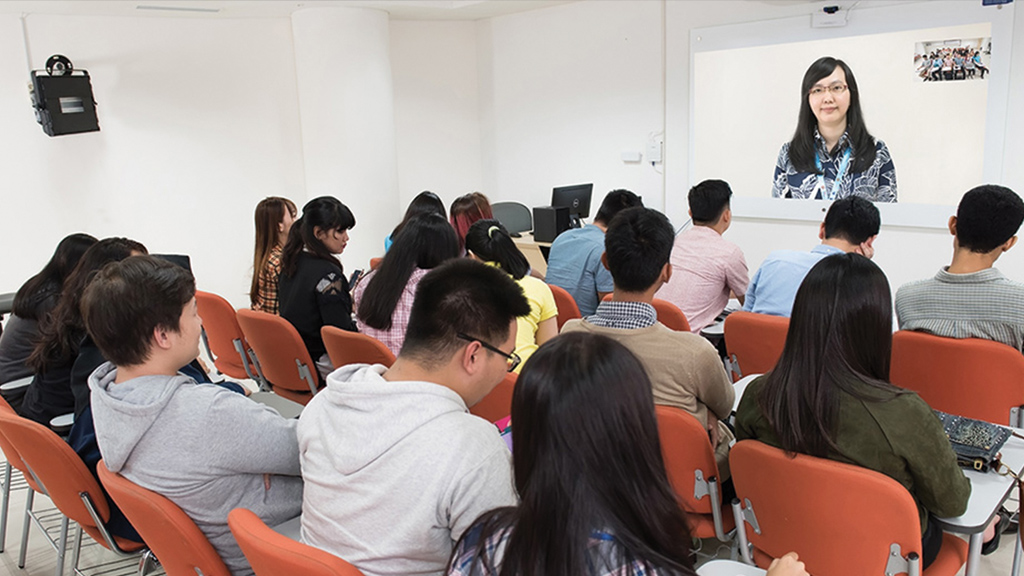
UMN is committed to advancing digital and online learning as an integral part of its […]
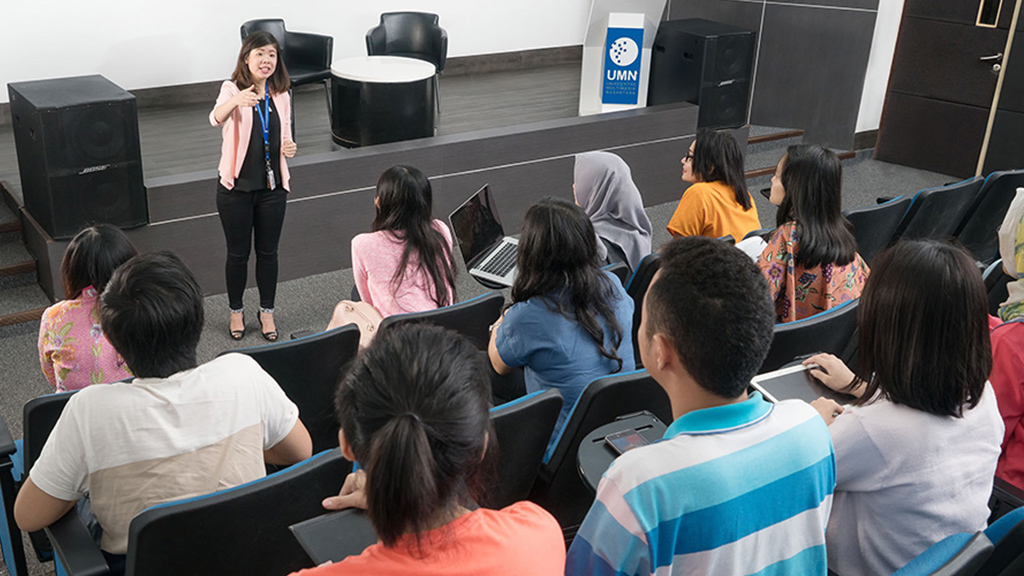
This modern theater hall has a capacity of up to 200 people. This room is […]

With the extent of modern interior designs, tens of thousands of local and international reading […]

Every UMN student holds an account to log in to the MYUMN application that provides […]

UMN’s Wi-Fi has a free flow system where UMN students are not charged with cellular […]
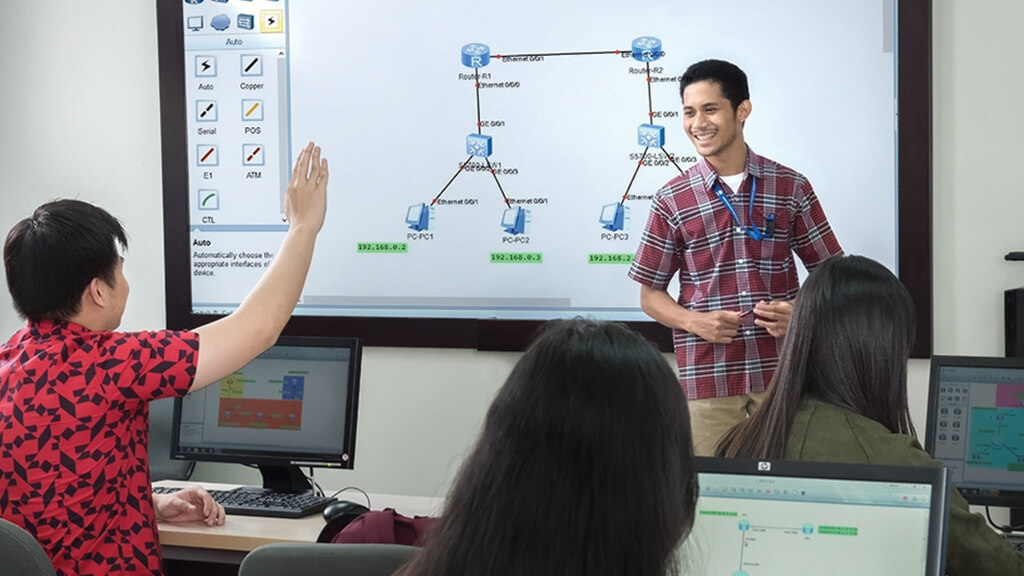
By using an official device from Huawei, this laboratory is used by students to study […]
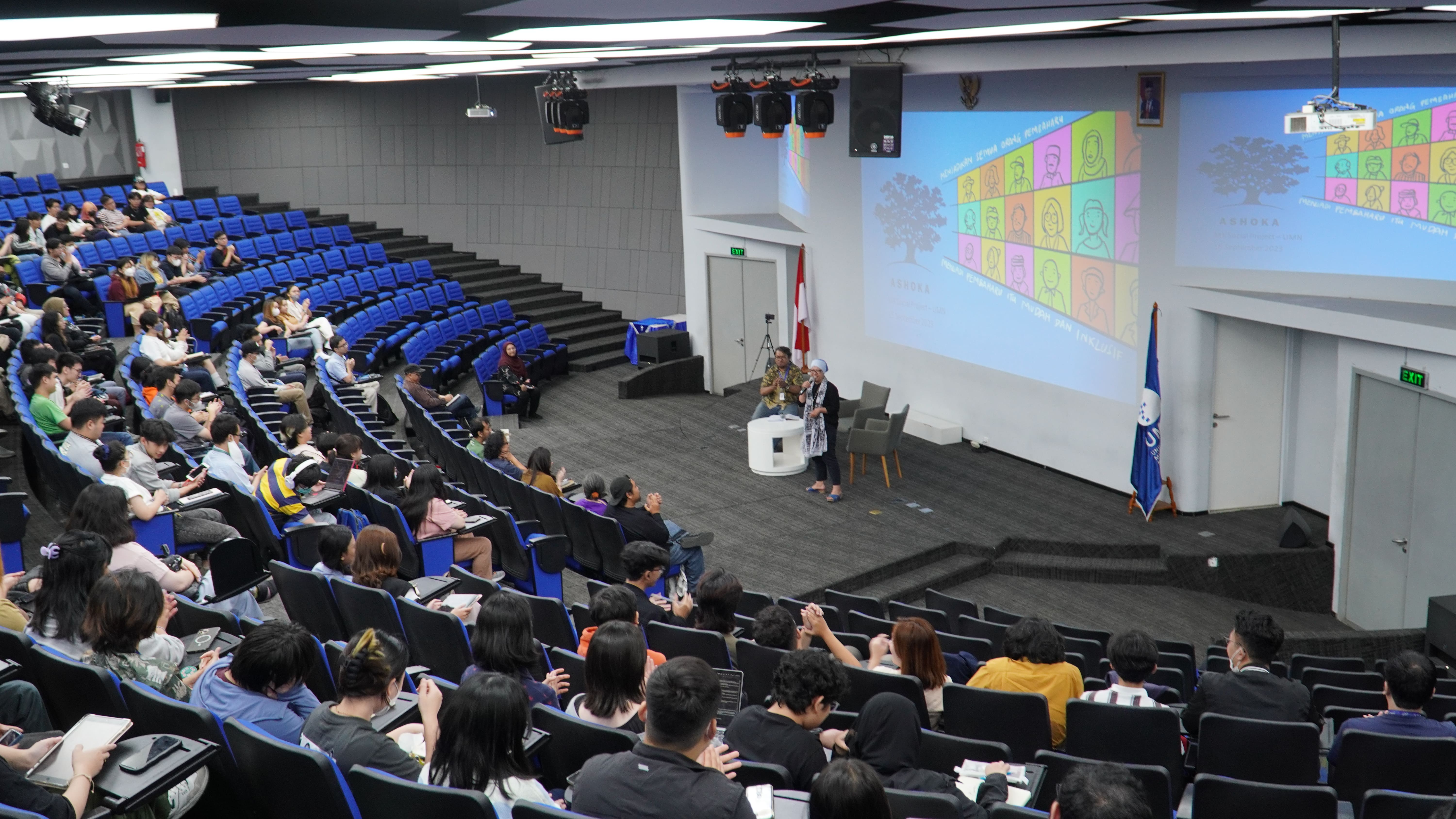
With a larger capacity compared to the other halls, the Lecture Theatre can accommodate up […]

UMN became the first campus established by Kompas Corner. Here, UMN students can access information […]
Extracurricular Student Activities
In order to help students explore and develop their non-academic potentials, UMN also provides a variety of extra-curricular activities for students which is locally called UKM, Student Activity Unit.
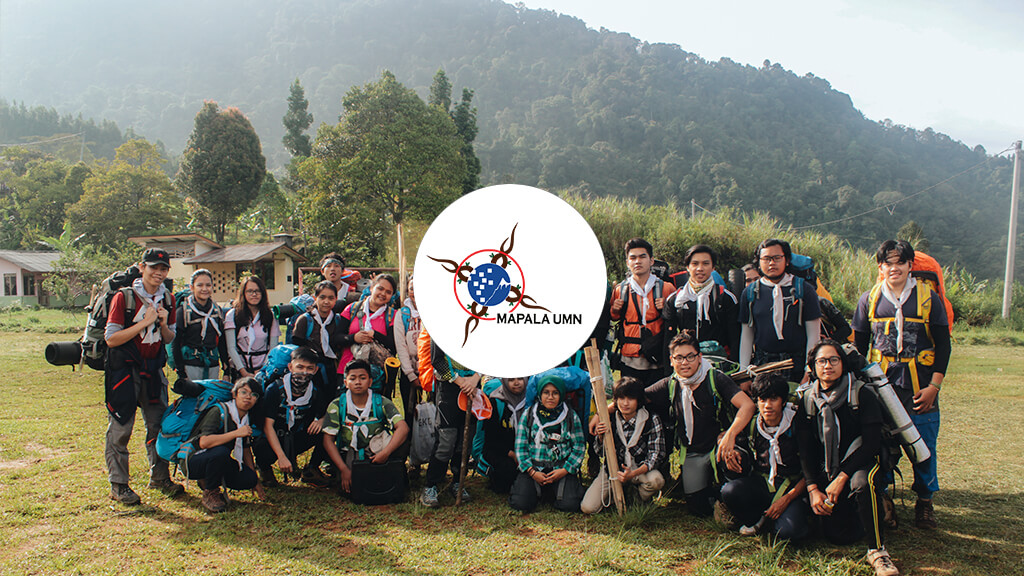
Student who are Nature Lovers in University Multimedia Nusantara can join and participate in UMN’s […]

Ultima Sonora is the Universitas Multimedia Nusantara Choir ensemble which has been established since 2007. […]

UMN Symphony Orchestra (USO), is one of the arts and culture UKM at UMN. As […]

Traditional Music and Dance or familiarly known as TRACCE is one of the Student Activity […]

Qorie is one of the many Student Activity Units at Universitas Multimedia Nusantara that has […]
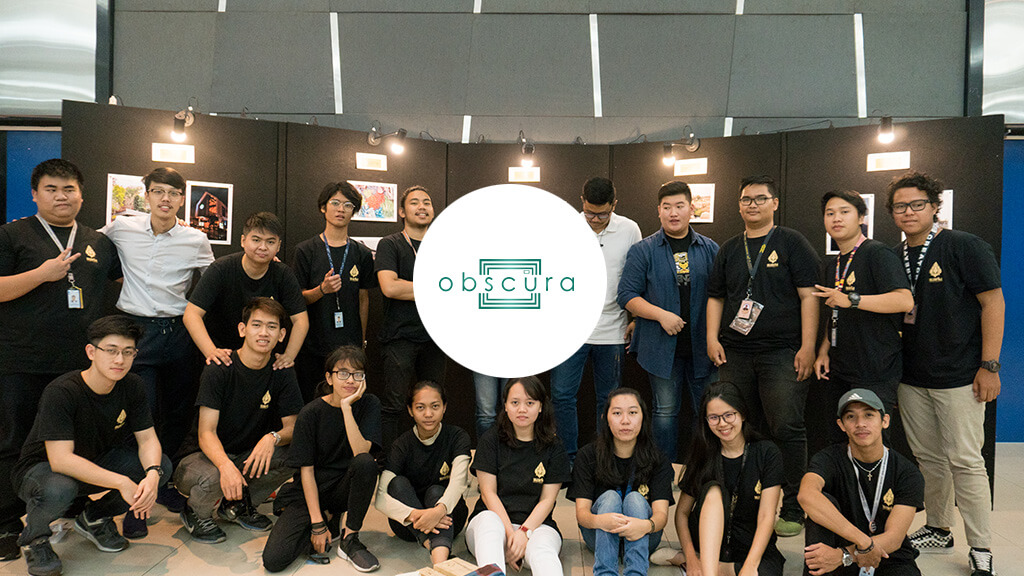
Obscura is a Student Activity Unit (UKM) engaged in photography under the auspices of Universitas […]

SEE OTHER
UMN’S STUDENT ACTIVITIES
Penelitian Hibah DIKTI - Sistem Informasi
Rekapitulasi Penelitian Internal - Sistem Informasi
Daftar Kegiatan PKM Dosen
Rekapitulasi Inovasi Hak Cipta - Sistem Informasi
Rekapitulasi Inovasi Merek - Sistem Informasi
CERTIFICATION
Information Literacy
Information literacy is an ability that individuals have in determining, searching, managing and evaluating information effectively and efficiently. This training is open to UMN active students. For further information, please contact: library.umn.ac.id
Continuing Education Department
Continuing Education Department (CED) is an educational development program at Multimedia Nusantara University (UMN) which is part of the Kompas Gramedia Group. We have various programs in language courses, human development, Testing Centers for national and international certification, and training programs. UMN's CED is designed to meet the needs of high school and college students, as well as communities and professionals.
While studying Information Systems at UMN, I developed not only technical skills but also business skills. UMN Information Systems students are designed not only to be able to create/use the latest technology but also to apply it in the business world so that it can make a meaningful impact. Lecturers at UMN not only teach academic knowledge but also teach how business processes work in the real world.
Rickent Putra Haki
Alumni Sistem Informasi 2014
Business Intelligence Consultant & Trainer at Deloitte Indonesia
Information System
The curriculum is designed in such a way to prepare graduates who are able to design database system, to develop application tools, to create infrastructure system, to design and build a smart system for various people’s activities.
Ririn Ikana Desanti, S.Kom., M.Kom.
Director of Studies of Information Systems Program