UMN Catat Kenaikan Peringkat, Duduki Posisi 126 Global UI GreenMetric
Desember 22, 2025
Tak Sekadar Akademik, Mahasiswa Pertukaran Pelajar KUMA dan NSUADA Rasakan Kehangatan Belajar Selama di UMN
Desember 18, 2025Universitas Multimedia Nusantara (UMN) demonstrates its commitment to climate action through a series of community-based environmental initiatives that integrate climate change adaptation, ecosystem conservation, sustainable agriculture, and environmental education. Through collaboration with government institutions, local communities, industry partners, and academic stakeholders, UMN translates its sustainability commitments into practical programmes that address environmental challenges while strengthening community resilience. These initiatives reflect the university’s approach to promoting climate awareness and encouraging collective action towards sustainable development.
The “PKM Women Farmers Group with Vertical Farming Technology Adaptation as the Development of an Educational Green Open Space in Curug Kulon Village, Tangerang Regency” represents a strategic collaboration between Universitas Multimedia Nusantara (UMN) and the Indonesian government, specifically funded by the Directorate of Research and Community Service (DPPM) under the Ministry of Education, Higher Education, Science, and Technology (Kemdiktisaintek). This program directly addresses climate adaptation by empowering local women farmers to implement vertical farming technology, promoting sustainable agriculture, and enhancing urban green spaces. See the video here.
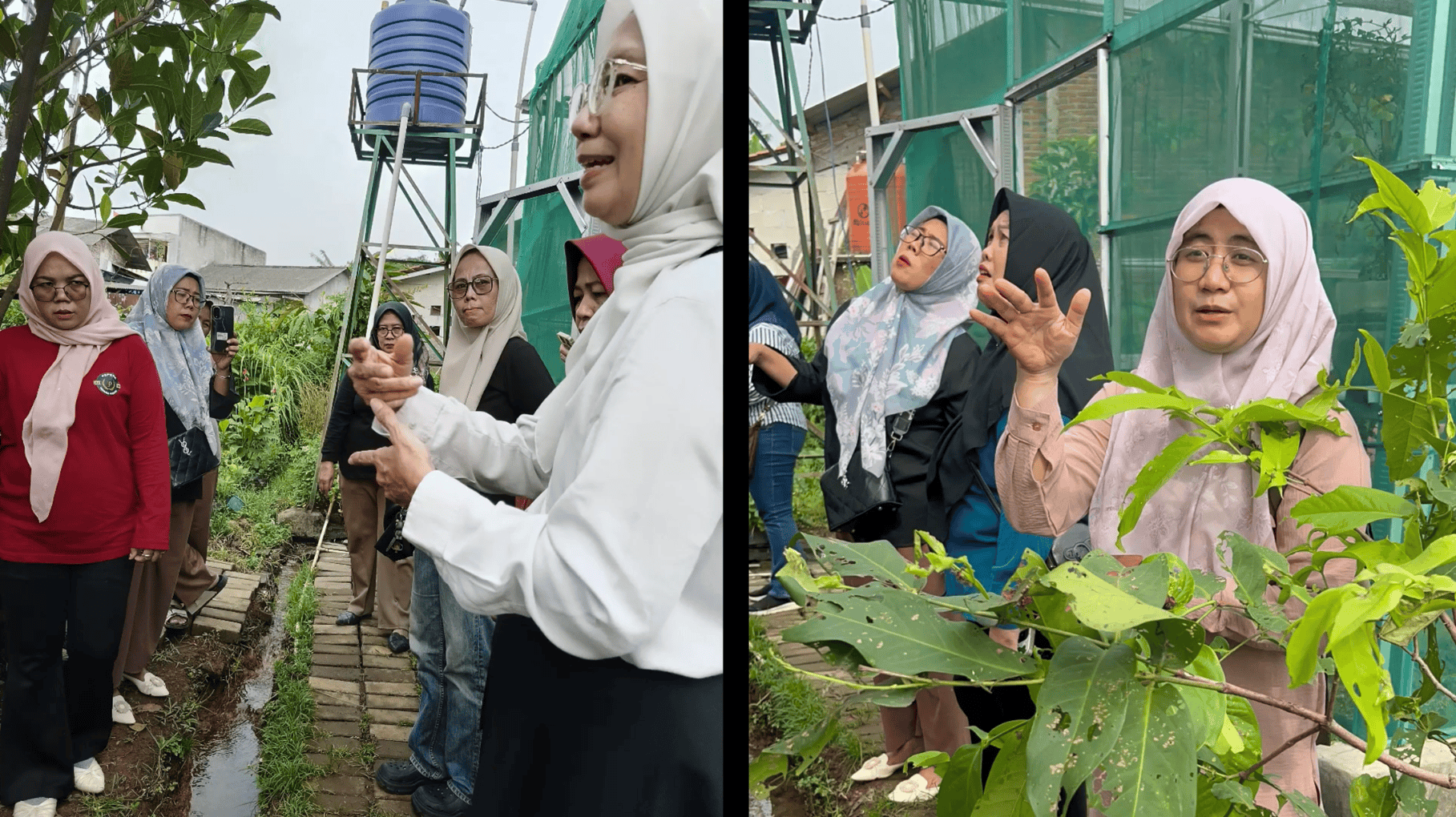
(Source: LPPM UMN)
By integrating technology with community engagement, this initiative not only enhances food security but also strengthens ecological resilience within an urban environment. It aligns with environmental education efforts that emphasize cooperative planning and collaboration with government agencies for effective climate change adaptation.
The program involves multidisciplinary teams of lecturers from UMN’s Architecture and Engineering Physics departments, local women farmers as primary beneficiaries, and government stakeholders providing funding and technical support. The impact of this initiative extends beyond agricultural productivity; it creates an educational green open space that fosters community awareness on climate resilience and sustainable urban development. This collaboration serves as a model for inclusive climate adaptation strategies that combine science, education, and local empowerment, delivering tangible benefits to vulnerable communities and advancing Indonesia’s sustainable development goals.
Another significant initiative is the “PKM Revitalization of the Lembur Mangrove Patikang Observation Deck to Develop Educational Tourism Potential and Disaster Mitigation in Citeureup, Pandeglang Regency.” Implemented through collaboration between UMN, PT Chandra Asri Pacific, and local community stakeholders, the programme focuses on mangrove ecosystem conservation, environmental education, and coastal disaster mitigation. Working alongside Pokdarwis Putri Gundul, a local tourism awareness group, and village representatives, UMN supports the development of educational ecotourism facilities through the revitalization of the mangrove observation deck. The facility also serves as a disaster preparedness function as an evacuation point during emergencies.
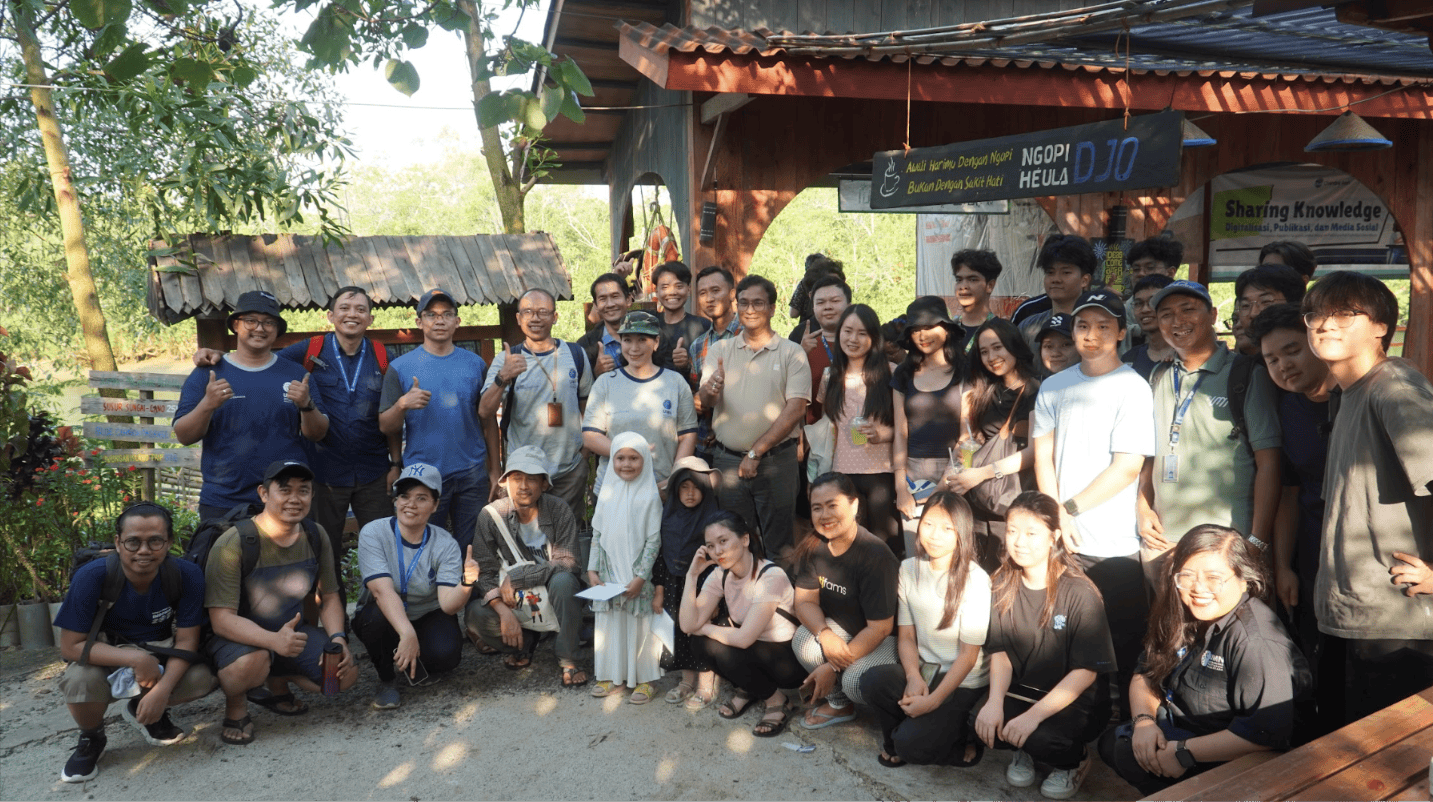
(Source: radarbanten.co.id)
This initiative highlights the importance of mangrove ecosystems in protecting coastal areas against erosion, tidal flooding, and other climate-related risks. Furthermore, the involvement of local community organizations and village government representatives demonstrates how universities can work with local stakeholders to promote environmental protection, strengthen disaster preparedness, and support sustainable community development.
UMN also extends its climate action efforts to marine ecosystem conservation through the “Coastal Seagrass Restoration and Environmental Education Initiative in Pulau Pari, Thousand Islands.” Organized through UMN ECO and the Center for Sustainability, the programme involved seagrass planting activities at Pantai Bintang, Pulau Pari, with the participation of students, lecturers, sustainability representatives, and Visiting Professor Prof. Randy Jay C. Solis.
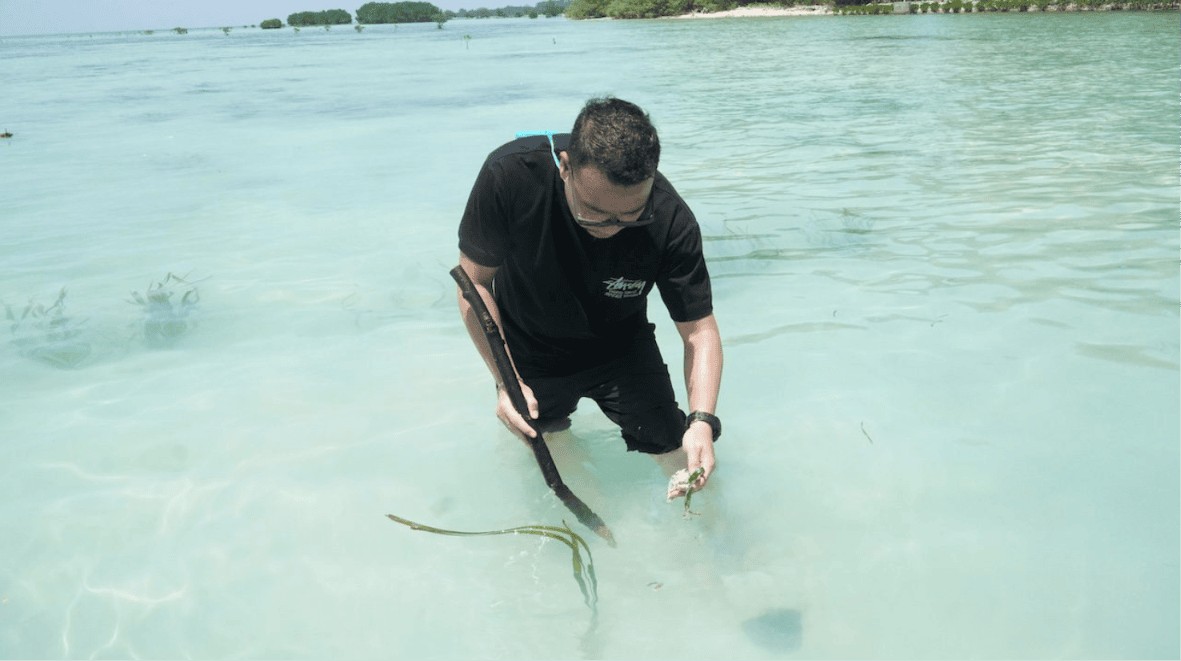
(Source: Doc UMN)
The initiative highlights the ecological importance of seagrass meadows, particularly their ability to absorb and store carbon, support marine biodiversity, and help protect coastal environments from erosion. By combining practical restoration activities with sustainability education, UMN provides students and academic participants with direct experience in nature-based climate solutions. The programme also incorporates environmental communication and social media education to broaden public awareness of marine conservation and encourage wider participation in protecting coastal ecosystems.
Collectively, these three initiatives demonstrate UMN’s integrated approach to climate action through community empowerment, environmental restoration, and knowledge dissemination. They address different but interconnected environmental challenges, ranging from sustainable urban agriculture and coastal ecosystem protection to marine biodiversity conservation. More importantly, they illustrate the university’s efforts to establish meaningful partnerships beyond campus by engaging local communities, village representatives, government institutions, and private-sector partners in the implementation of environmental programmes.
Through these collaborations, UMN promotes shared responsibility for climate resilience and sustainable environmental management. The initiatives contribute to the achievement of the United Nations Sustainable Development Goals, particularly SDG 11 (Sustainable Cities and Communities), SDG 13 (Climate Action), SDG 14 (Life Below Water), and SDG 15 (Life on Land). By integrating academic expertise, community participation, and practical environmental interventions, UMN continues to strengthen its role as a higher education institution contributing to climate action and sustainable development at the local level.