

Industry Visit UMN ke Vivo Mobile Communication Co., Ltd.
Juni 27, 2025
Kolaborasi UMN dan Wadhwani Foundation
Juni 25, 2025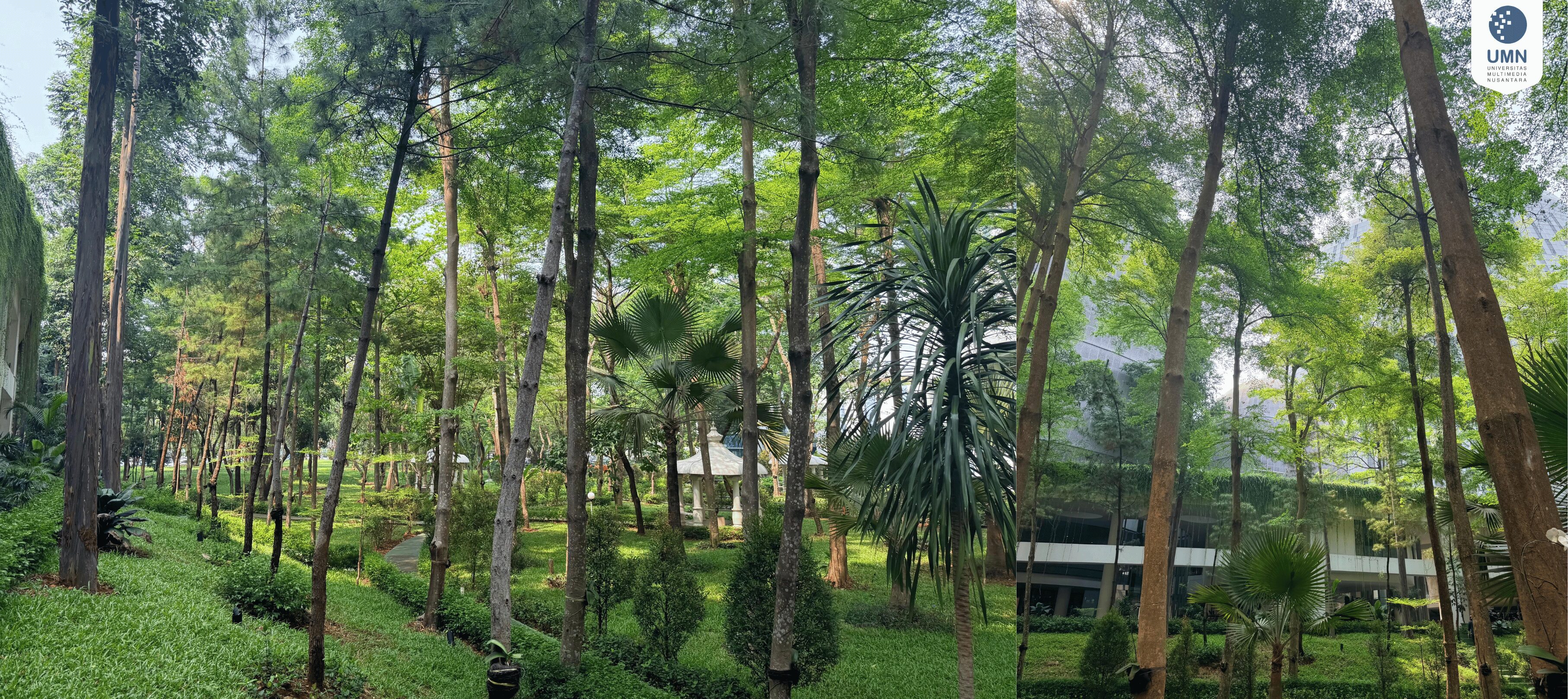
Tangerang – Universitas Multimedia Nusantara (UMN) continues to maintain its green campus areas through appropriate plant selection and water-efficient landscaping practices. The campus landscape includes a combination of native and drought-tolerant plant species suited to the local tropical climate and requiring relatively less water. Among the species found across the campus are Pulai (Alstonia scholaris), Ketapang Kencana (Terminalia mantaly), Trembesi (Samanea saman), Teak (Tectona grandis), and Sheoaks (Casuarina equisetifolia).
Recycled Water for Landscape Irrigation
UMN continues to use treated and recycled water for landscape irrigation, reducing the need to use clean water for maintaining campus greenery. Water treated through the campus wastewater treatment system is distributed for appropriate non-potable uses, including landscape irrigation through sprinklers.
The use of recycled water is particularly relevant during drier periods when maintaining campus vegetation requires continued irrigation. By using treated water for landscape maintenance, UMN can maintain its green areas while reducing reliance on clean water resources for irrigation.
Water-Saving Irrigation System
UMN’s landscape areas are supported by a sprinkler-based irrigation system that allows water to be distributed across planted areas in a controlled manner. The system supports more targeted irrigation of campus greenery while helping maintain the condition of plants during periods with lower rainfall.
The continued use of a water-efficient irrigation system together with drought-tolerant plant selection allows UMN to maintain its green areas without relying solely on frequent watering with clean water.
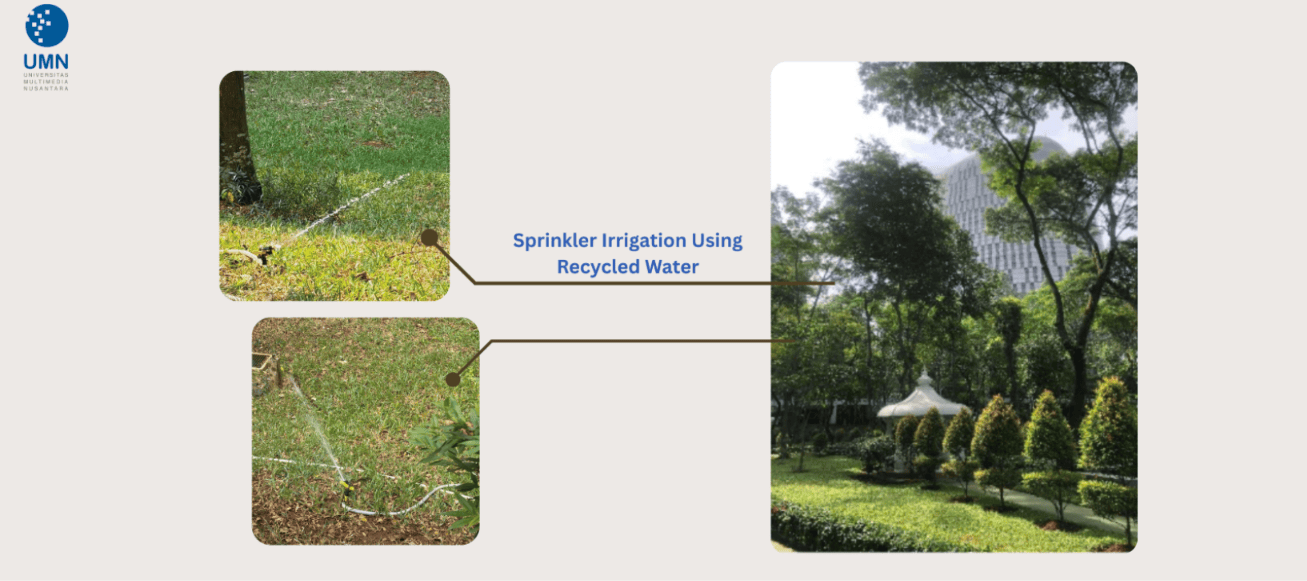
(Water-Saving Sprinkler System in UMN Green Area)
Landscape Design Supporting Rainwater Management
UMN’s landscape design is also integrated with its broader rainwater management system. One example is the use of Lee Kuan Yew vines along the edge of the third-floor garden balcony. The dense vegetation provides natural shade while helping to reduce the direct impact of rainfall on the area below.
During rainfall, the foliage helps slow the movement of water before it reaches the ground below. The water is then directed towards perforated metal inlets connected to UMN’s rainwater harvesting system, allowing rainfall to be managed through the campus drainage and infiltration system.
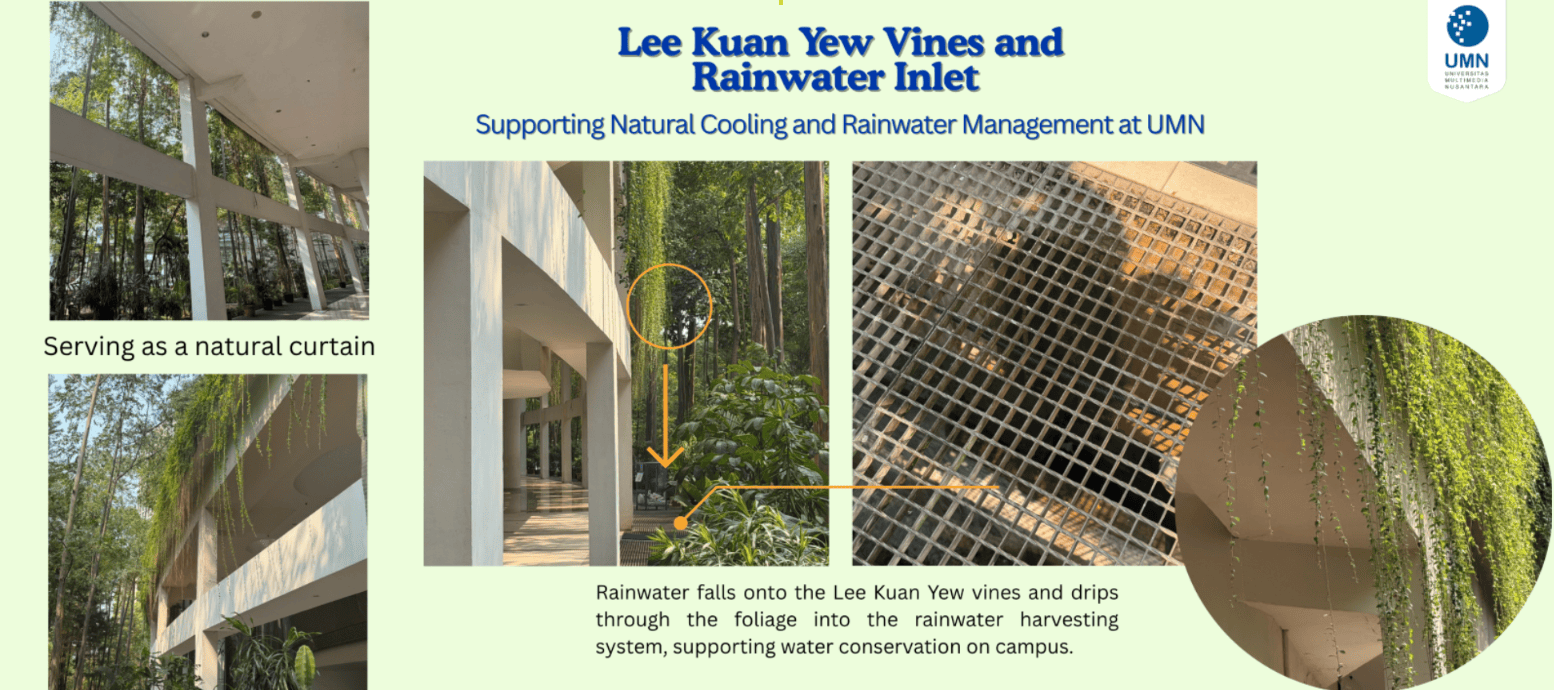
(Lee Kuan Yew Vines and Rainwater Inlet at UMN)
Through the combination of drought-tolerant and climate-suitable plants, recycled water for irrigation, controlled sprinkler systems, and landscape features that support rainwater management, UMN continues to maintain its green areas while minimizing water use. These practices form part of the university’s ongoing approach to responsible water management and sustainable campus landscaping, contributing to Sustainable Development Goal 6 (Clean Water and Sanitation).