
Festival Budaya Nusantara UMN 2025 Tekankan Pentingnya Nilai-Nilai Kebudayaan Indonesia ke Mahasiswa
November 7, 2025
Prof. Randy Jay C. Solis, PhD jadi Visiting Professor di FIKOM UMN!
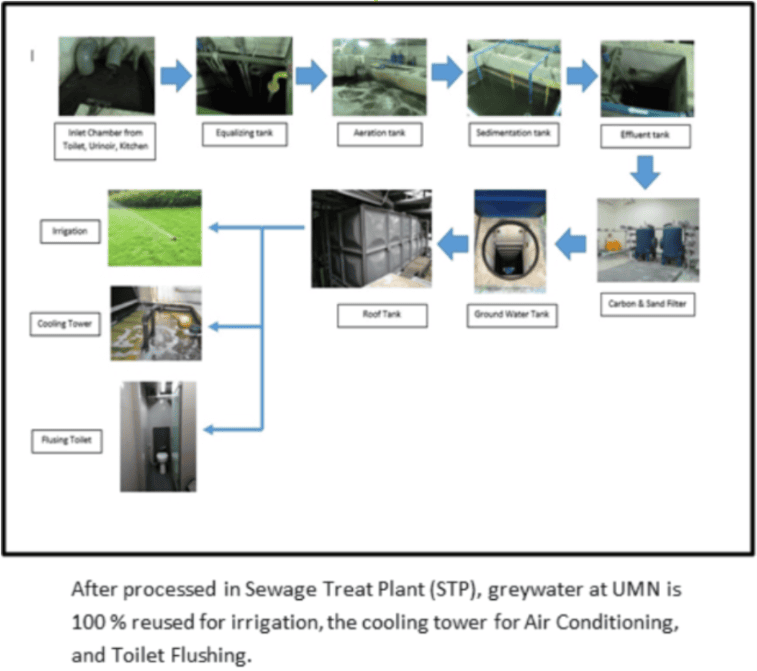
November 6, 2025Tangerang – Universitas Multimedia Nusantara (UMN) operates an on-site wastewater treatment system to ensure that all wastewater generated across the campus is properly treated. Following treatment, 100% of the treated wastewater is reused on campus for irrigation, toilet flushing, and cooling tower operations in the air-conditioning system. As a result, no treated wastewater is discharged into the surrounding environment. Nevertheless, the treated water undergoes regular quality testing to ensure compliance with applicable water quality standards and environmental regulations.
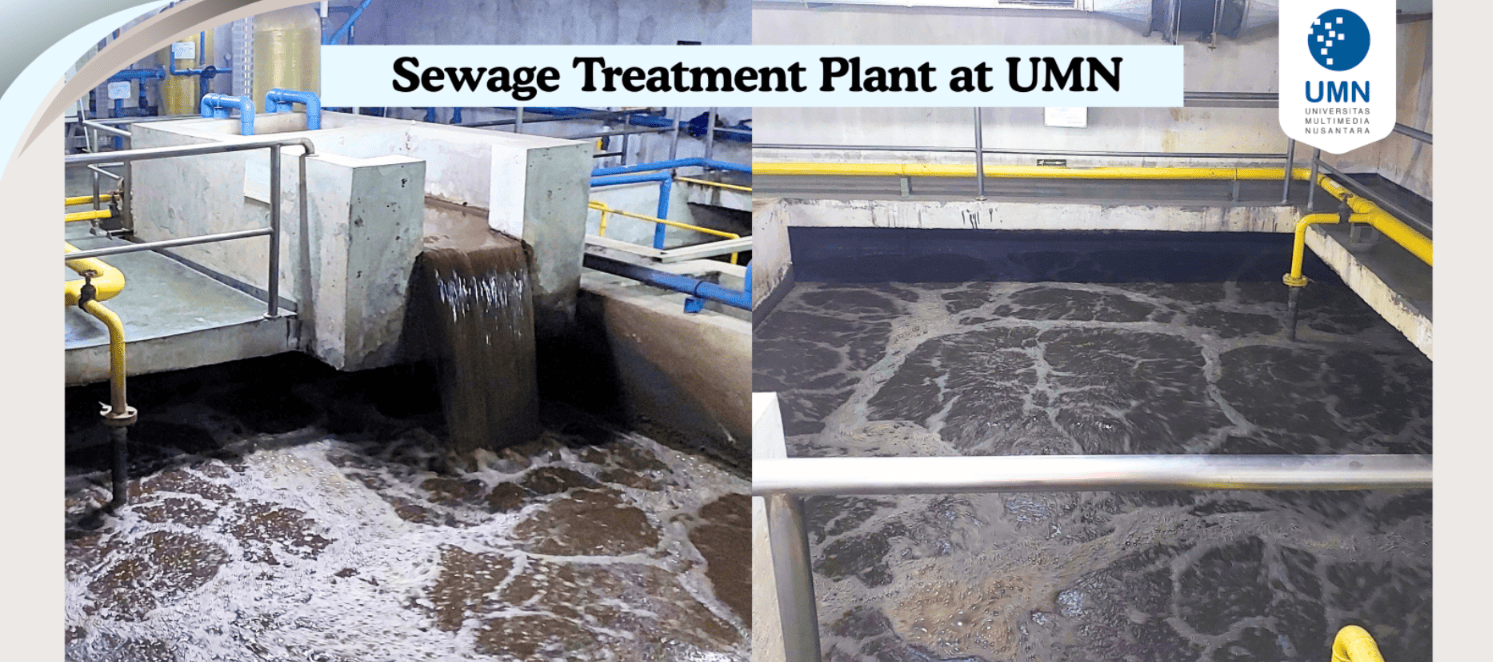
At the STP, wastewater undergoes biological treatment using aerobic bacteria that break down and decompose organic waste materials. The treated water is then further processed at the Water Treatment Plant (WTP) through sand and carbon filters before being reused for various campus needs.
The prevention and management of wastewater pollution at UMN are supported by a formal institutional provision under Rector’s Decree No. 088/SK-R/II/2022 on Water Use at Universitas Multimedia Nusantara. Point FOUR requires wastewater from facilities including toilets, washbasins, prayer rooms, canteens, and kitchens to be processed through the Sewage Treatment Plant (STP), with the treated water subsequently reused for central air-conditioning cooling towers, toilet flushing, and landscape irrigation. Point SIX further requires the quality of treated STP water to be tested in a standardized laboratory every six months, providing a formal mechanism for periodic water-quality monitoring. These provisions establish institutional requirements for wastewater treatment, reuse, and quality monitoring to help prevent contaminants and pollutants from affecting water resources.



Source: UMN Rector’s Decree No. 088/SK-R/II/2022 – Provisions on Wastewater Treatment, Reuse, and Water Quality Monitoring (Points Four and Six)
The wastewater treatment facility is located in the basement area of the campus, while the wastewater system is separated from the campus clean water supply. This separation helps prevent wastewater from mixing with the clean water system during collection and treatment, supporting the prevention of potential water contamination.
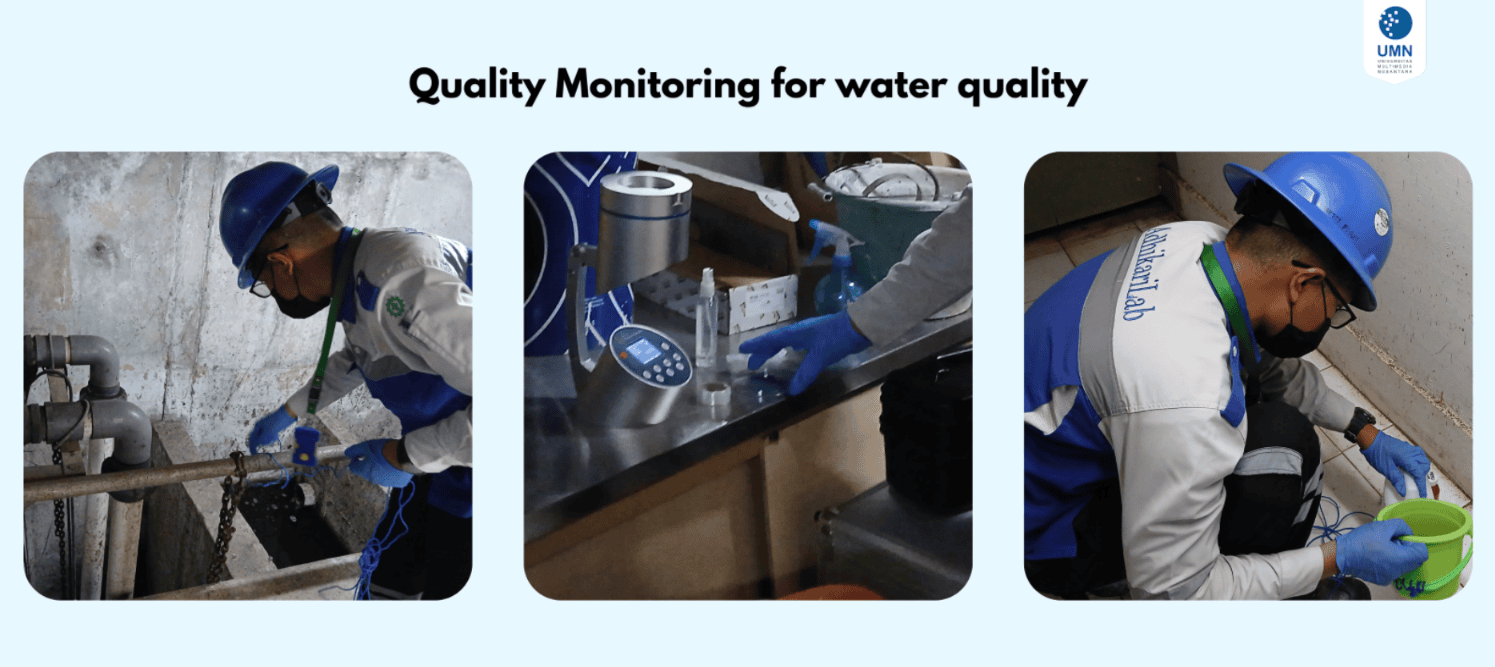
To maintain the effectiveness of the system, UMN’s mechanical engineering team conducts routine maintenance and monitoring of key components. Regular checks include the wastewater inlet, blower, and water pump. The inlet is inspected to ensure that solid waste does not block the flow before filtration and treatment. The blower is checked to maintain the aerobic conditions needed for biological treatment, while the water pump is inspected to ensure continuous wastewater flow through the system.
These routine checks help identify and address potential operational issues before they affect the wastewater treatment process. Together with the physical separation of the wastewater and clean water systems, the measures help reduce the risk of untreated wastewater entering the campus water supply or surrounding environment.
(Doc. UMN)
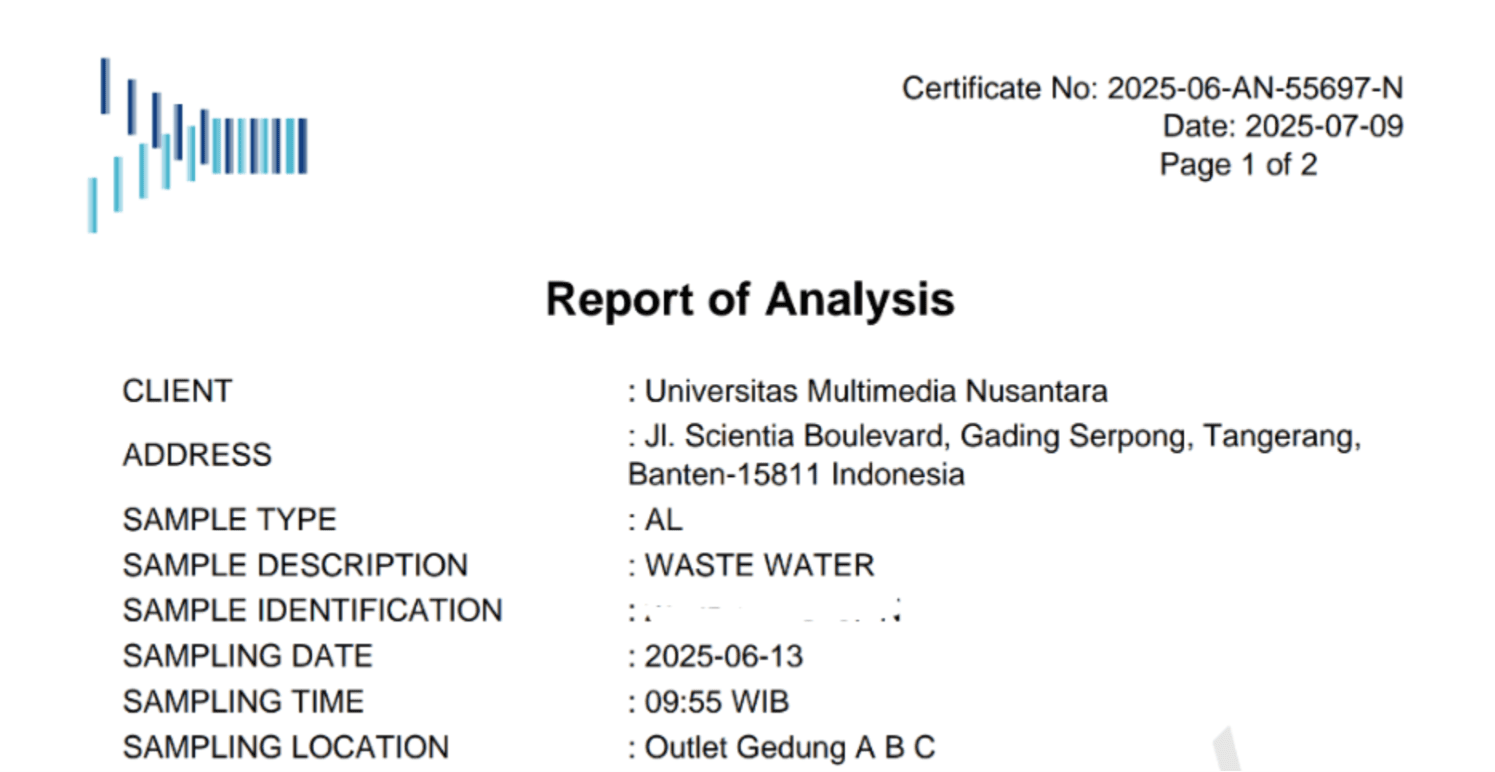
In addition to these routine operational checks, UMN also conducts regular water quality monitoring through its internal technical team and external laboratory testing. Wastewater samples are analyzed for parameters including pH, Biochemical Oxygen Demand (BOD₅), Chemical Oxygen Demand (COD), Oil & Grease, Ammonia (NH₃), Total Suspended Solids (TSS), and Total Coliform. These measurements help assess the quality of treated wastewater and support the continued operation of the treatment system.
The campus clean water supply is also tested regularly for microbiological, physical, and chemical properties, including odor, color, temperature, aluminum content, pH, dissolved iron, and residual chlorine. These tests help monitor the quality of water distributed across campus and identify potential contamination issues.
Through its integrated water management approach, UMN ensures that wastewater generated from campus activities is treated, monitored, and reused through its own wastewater treatment system. This closed-loop process prevents wastewater from being discharged into the surrounding environment, while routine maintenance and water quality testing help minimize the risk of water pollution. Together, these practices reflect UMN’s commitment to responsible water management, environmental protection, and Sustainable Development Goal 6 (Clean Water and Sanitation).