UMN’s Carbon-Free Future Starts Now
December 20, 2024
Supporting Government Policy Development in Clean and Energy-Efficient Technologies
December 20, 2024Universitas Multimedia Nusantara (UMN) firmly upholds the principles of gender equality by ensuring that all academic and support programs—including mentoring and scholarships, are open equally to all students, regardless of gender. This commitment is clearly articulated in UMN’s official regulations, such as the New Student Admission Decree, and Inclusiveness Policy. In 2024, 49% of mentoring program participant are female new students, reflecting UMN’s commitment in empowering women during their academic journey. In addition to mandatory mentoring programs, various voluntary initiatives also welcome women’s active involvement.
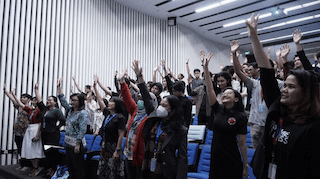
(Documentation of UMN)
UMN also supports gender equity through its scholarship distribution. In the academic year 2024/2025, with active female students receiving 53.9% of all scholarships. This illustrates the university’s inclusive approach in recognizing academic potential regardless of gender.
Female Representation
Beyond academic support, UMN places great emphasis on creating a safe and supportive campus environment for women. The establishment of the Task Force for the Prevention and Handling of Sexual Violence (Satgas PPKS), also known as Safe Space UMN, exemplifies this commitment. Formed in accordance with Indonesia’s Ministry of Education and Culture Regulation No. 30 of 2021, Satgas PPKS is responsible for preventing and addressing cases of sexual violence on campus, as well as conducting educational outreach to raise awareness. Through these efforts, UMN fosters a campus culture that respects and protects women’s rights and safety.
(Safespace UMN)
UMN’s dedication to gender equality is further reinforced by compliance with the Ministry of Education, Culture, Research, and Technology Regulation No. 55 of 2024 concerning the Prevention and Handling of Violence in Higher Education Institutions. This regulation mandates female representation of at least one-third in task forces and decision-making bodies where possible, ensuring women’s voices are integral to institutional governance. At UMN, careful attention is given to meeting these representation targets in the composition of task force members and leadership positions.
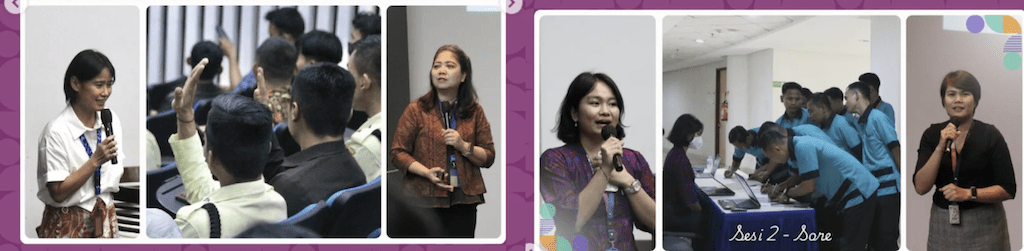
(Female representative; Safespace UMN)
In academic domains where women are traditionally underrepresented, such as engineering and informatics, UMN actively promotes female participation through targeted outreach and inclusive practices. Female students are encouraged and supported to take on leadership roles and participate fully in faculty activities, demonstrating the university’s genuine commitment to bridging gender gaps. This ongoing effort underscores UMN’s recognition of women’s potential and contribution across all fields of study.
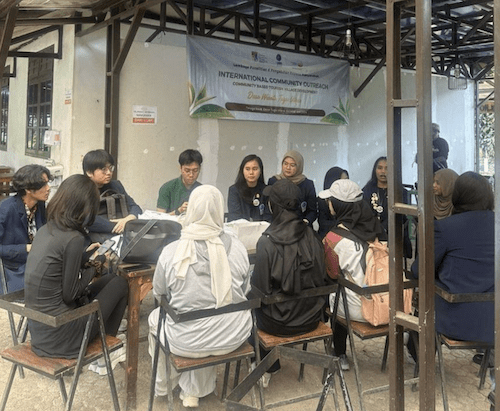
(Female Student Participation in Engineering and Informatics Outreach, 2024)
In academic domains where women are traditionally underrepresented, such as engineering and informatics, UMN actively promotes female participation through targeted outreach and inclusive practices. Female students are encouraged and supported to take on leadership roles and participate fully in faculty activities, demonstrating the university’s genuine commitment to bridging gender gaps. This ongoing effort underscores UMN’s recognition of women’s potential and contribution across all fields of study.
Similarly, women’s leadership is visibly reflected in student organizations, where many leadership positions, including the heads of the Student Executive Board (BEM) 2024 and other student clubs and communities (UKM), are held by female students. This demonstrates UMN’s commitment to equal access and opportunities beyond the classroom.
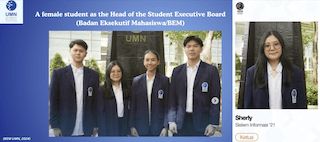
(Doc. BEMUMN., 2024)
Also, UMN maintains a merit-based scholarship policy that enables high-achieving students, regardless of gender, to become tutors or mentors, fostering an inclusive academic environment where talent and achievement are the primary criteria. Together, these initiatives highlight UMN’s holistic approach to supporting female students—not only encouraging their enrollment and academic success but also promoting leadership and equal participation throughout campus life.
KOICA program at UMN
Moreover, UMN’s partnership with SILLA University in Korea and involvement in the KOICA program further advance support for women on campus.
The KOICA program at UMN is a training initiative focused on Industry 4.0 skills such as Smart Factory and Cloud Big Data. This program is organized by Universitas Multimedia Nusantara (UMN) in collaboration with Silla University, Korea, and supported by the Korea International Cooperation Agency (KOICA). Its main goal is to enhance the employability of university graduates by equipping them with relevant technical skills aligned with current industry demands.
In addition to academic development, UMN provides dedicated facilities such as a counseling room for women on the 11th floor of Building D, reflecting the university’s holistic approach to women’s welfare. The KOICA program also offers certification support for female participants, reinforcing UMN’s broader strategy to empower women through both academic and personal growth opportunities.
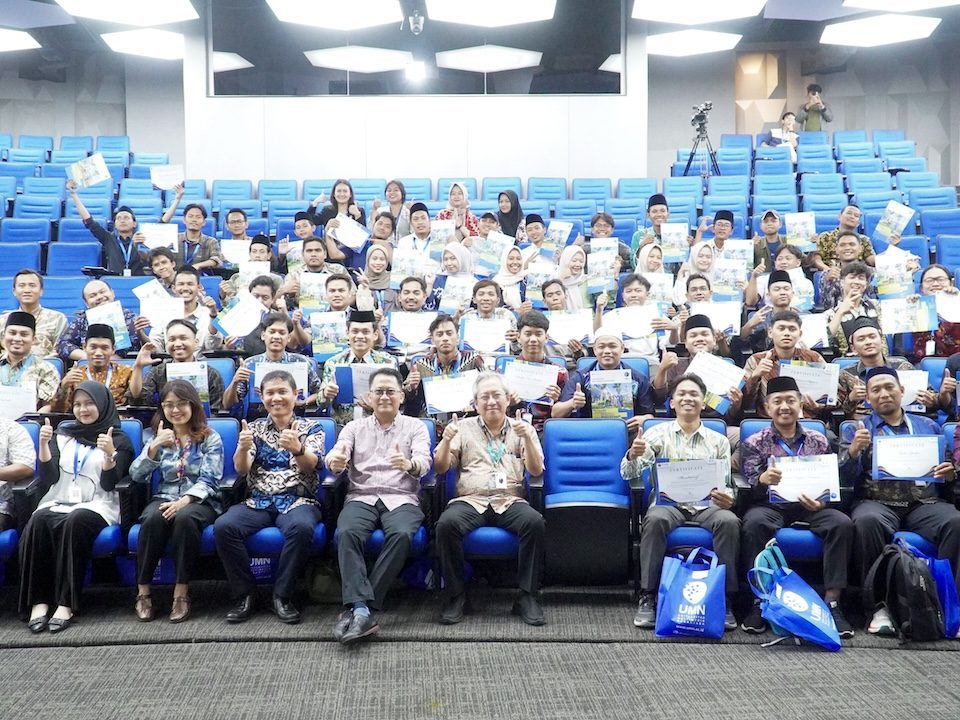
In 2024, UMN and KOICA held discussions on the continuity of their collaboration program, aiming to strengthen and expand this partnership to benefit more students, especially women, in future cohorts. More details about this ongoing collaboration can be found in UMN’s news here.
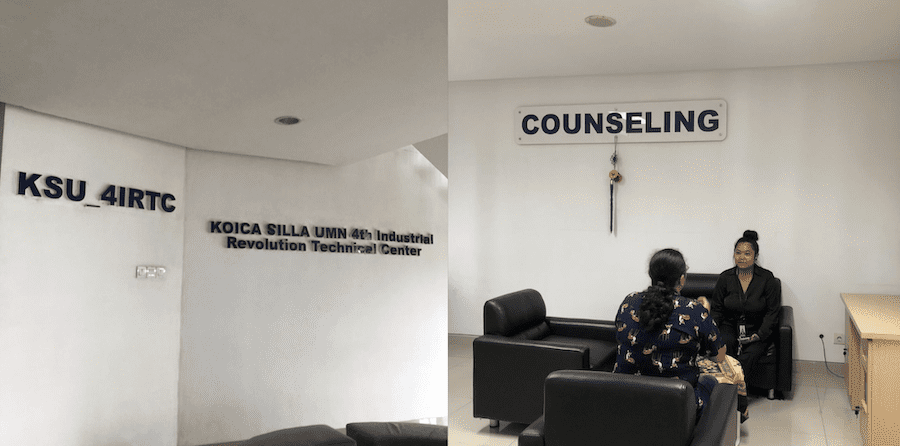
Through these comprehensive initiatives and policies, UMN continues to embody the values of Sustainable Development Goal 5 (Gender Equality), fostering an inclusive, safe, and empowering environment for all women within its academic community.