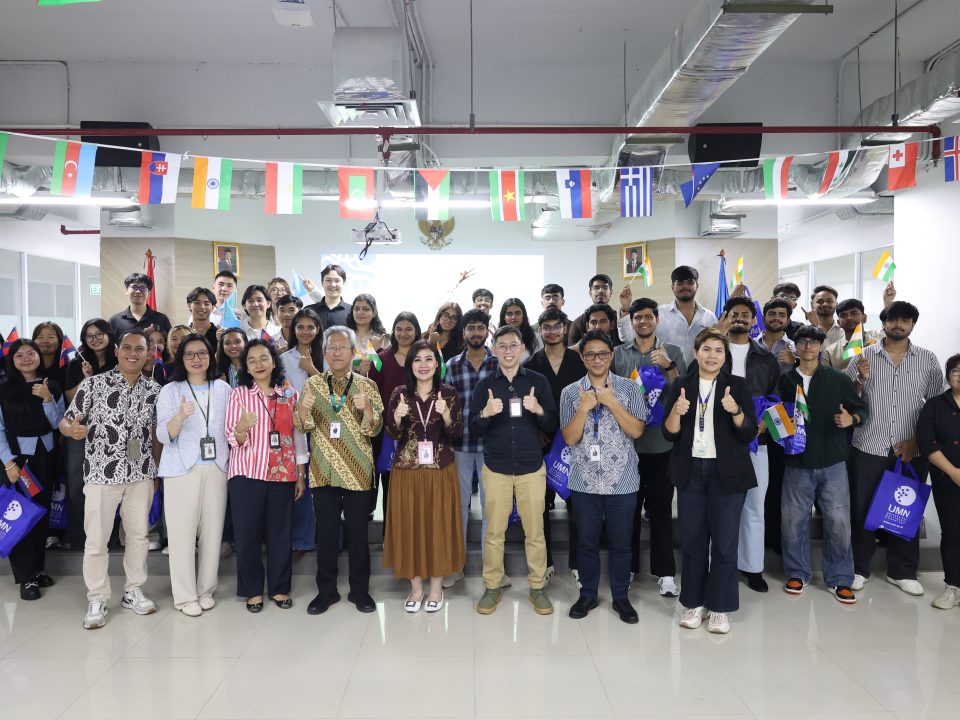
UMN Communications Faculty Strengthens International Collaboration through Visiting Professor Program with Prof. Jude W.R. Genilo, PhD
January 13, 2026
Multimedia Training Participants at Islamic Boarding Schools Produce Various Digital Works!
January 16, 2026
UMN Journalism student Theresia Sekar Kinanti Deviatri poses in front of the GIJC banner. (Doc. Theresia Sekar Kinanti Deviatri)
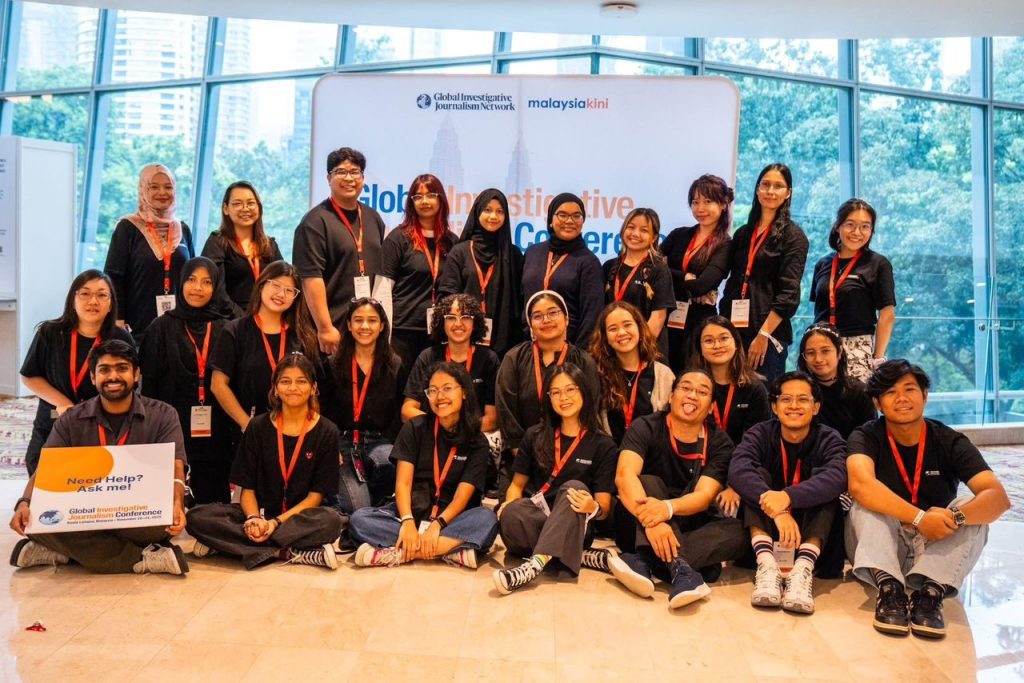
TANGERANG – Journalism students at Universitas Multimedia Nusantara (UMN) have once again achieved international recognition. Theresia Sekar Kinanti Deviatri, a 2023 student, was selected to represent Indonesia at the 2025 Global Investigative Journalism Conference (GIJC) as a volunteer.
The Global Investigative Journalism Conference (GIJC) 2025 is the world’s largest investigative journalism conference, which will be held in Kuala Lumpur, Malaysia, on November 20-24, 2025. GIJC is a biennial event that brings together thousands of journalists from around the world. Since its first edition in Copenhagen in 2001, the conference has gathered more than 8,000 journalists from 130 countries.
GIJC has since been held in various major cities, from Amsterdam, Toronto, Geneva, Kyiv, to Rio de Janeiro, which was the first conference in the southern hemisphere. After being held in Johannesburg (2017), Hamburg (2019), and online in 2021, GIJC returned to an in-person format in Gothenburg (2023). The year 2025 marks a new milestone as the conference will be held in Asia for the first time.
“GIJC is held every two years, and in 2025, it will be held for the first time in Asia, specifically in Kuala Lumpur, Malaysia,” Kinan said.
Kinan said his interest in journalism began in high school, when he was studying at Stella Duce 1 in Yogyakarta. He first learned about UMN through an education fair. Kinan was immediately interested because UMN is one of the universities that offers a specific Journalism Study Program and is affiliated with Kompas. Kompas is one of the most trusted and most prominent media outlets in Indonesia. The journalistic work of this media outlet is often recognised and frequently receives various international and national awards.
“In high school, I was already interested in becoming a journalist, and UMN was the only university that had a specific Journalism study program and was affiliated with Kompas. Who doesn’t know Kompas?” she said.
During college, Kinan felt that interpersonal communication skills were the most developed competency and had the most influence on her selection to participate in GIJC 2025. She was accustomed to building networks with professors, journalists, and media activists. According to her, this process honed her sensitivity in interacting with people from diverse backgrounds. “This is where my ability to speak and connect with people from various cultures was tested,” Kinan said.
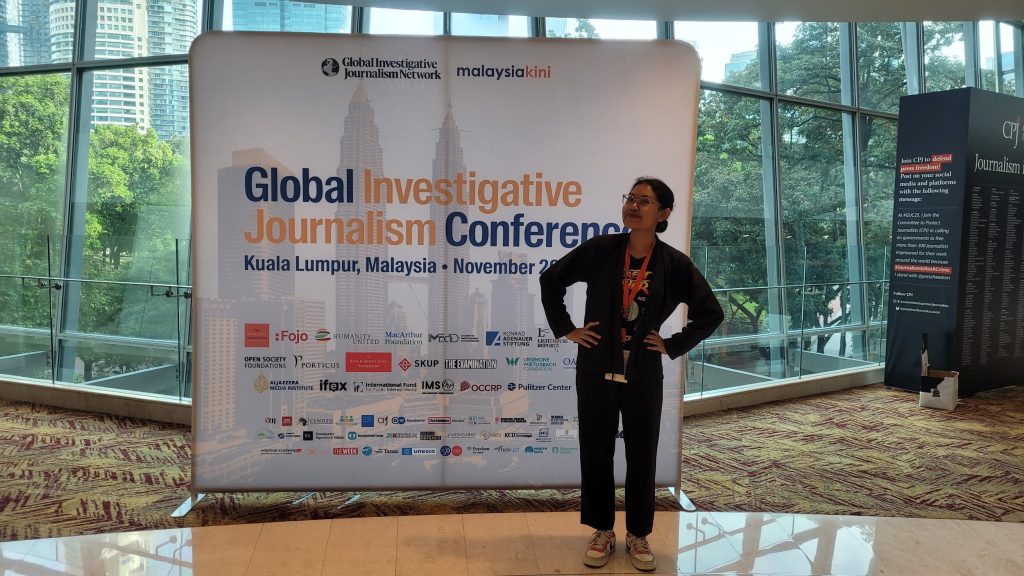
UMN Journalism student Theresia Sekar Kinanti Deviatri poses in front of the GIJC banner. (Doc. Theresia Sekar Kinanti Deviatri)
During the conference, Kinan attended panel sessions and workshops. One of them was a special session with keynote speakers, including 2021 Nobel Peace Prize-winning journalist Maria Ressa.
However, her most memorable experience was volunteering for three days. This opportunity allowed her to interact directly with the panellists before the session began. She said that conversations with international journalists gave her a new understanding of the dedication required of journalists. One of the most memorable stories came from a journalist from Papua New Guinea who wrote investigative reports for more than five years in the public interest. That moment prompted her to reflect on the meaning of the journalism profession.
“I became more aware that being a journalist is not just a profession, but a calling in life,” Kinan said.
Kinan also emphasized that the participation of Indonesian students in the GIJC is crucial because such gatherings provide opportunities for personal development while testing the knowledge gained on campus within the global journalism ecosystem. He stressed that UMN Journalism students should actively pursue international opportunities, including conferences, fellowships, and other academic programs.
According to Kinan, this opportunity will provide long-term benefits, ranging from professional networking to a more mature perspective on reporting.
Kinan earned the opportunity to attend GIJC 2025 after receiving a recommendation from the Head of the Journalism Department at UMN, who introduced her to the GIJN Indonesia network. Subsequently, she was contacted by GIJN to fill out a registration form as a student delegate candidate. According to her, the lecture materials, faculty guidance, and learning environment at UMN greatly helped her understand the global issues discussed at the conference, so she did not feel “empty” when facing international-level discussions.
She advised other UMN Journalism students to dare to take every opportunity, no matter how small. “Opportunities don’t come twice, that’s for sure,” she said.
By Melinda Chang | UMN News Service
English translation by Levina Chrestella Theodora
Kuliah di Jakarta untuk jurusan program studi Informatika| Sistem Informasi | Teknik Komputer | Teknik Elektro | Teknik Fisika | Akuntansi | Manajemen| Komunikasi Strategis | Jurnalistik | Desain Komunikasi Visual | Film dan Animasi | Arsitektur | D3 Perhotelan , di Universitas Multimedia Nusantara.