
DQLab UMN Attends Indonesia Digital 2025 Declaration: Strengthening The Role of AI Education
December 11, 2025
New Year, New Me: It’s Time for Students to Prepare Their Data Skills for 2026
December 11, 2025
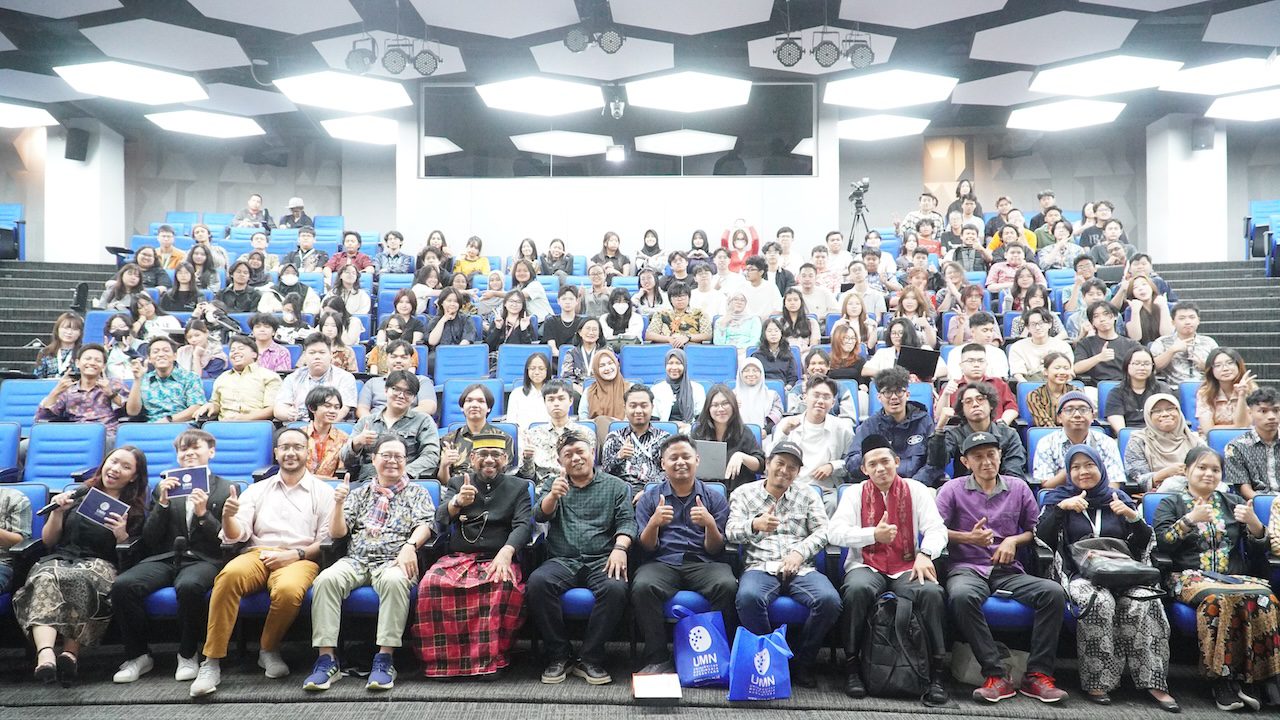
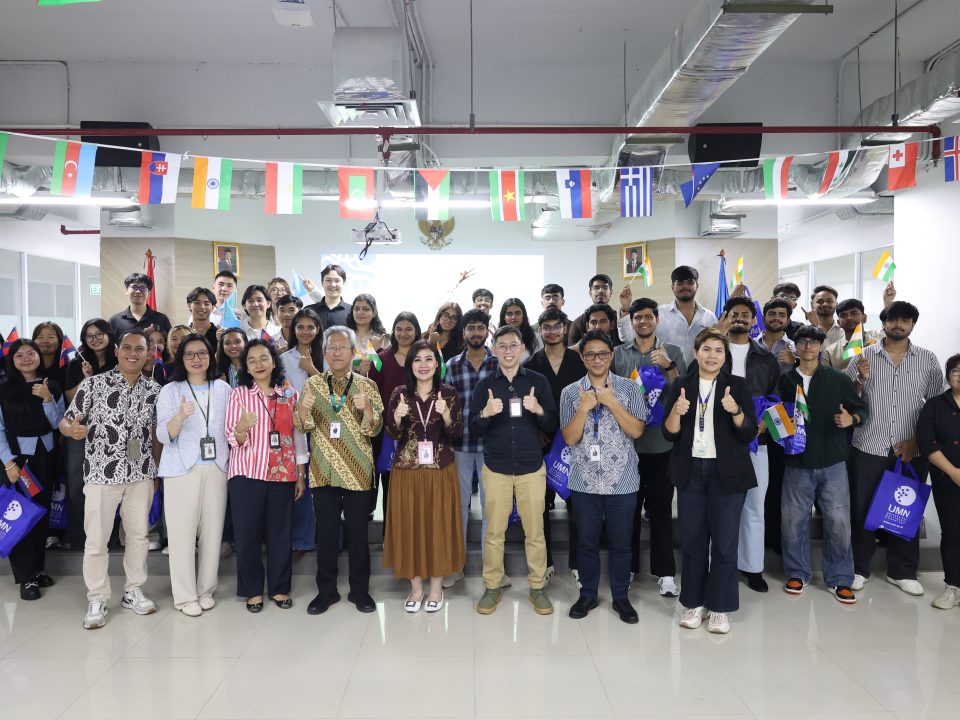
Group photo of Pekantara talk show speakers and UMN students. (Doc. UMN)
Tangerang, (December 8, 2025) – Pekantara UMN and Pekijing Village hosted the first day of the talk show, which addressed the topic “From Corruption to Integrity: The Role of Young Leaders in Breaking the Poverty Cycle.” The talk show was presented by Dr. Ignatius Haryanto Djoewanto, S.Sos, M.Hum., Head of the Master of Communication Studies Program, Bayu, and Edi Suryadi as Pekijing Village Coordinators.
The prevalence of corruption cases in Indonesia is certainly not only a public concern but also a concern for educational institutions in Indonesia. Higher education institutions, in particular, have a role in educating students to build a bright future and instill values of integrity. It is hoped that future generations will end the greed that fuels corruption, thereby positively impacting sustainable economic development in Indonesia.
The first Pekantara talk show took an in-depth look at corruption and how we can learn good management practices from Pekijing Village. The first speaker, Ignatius, gave a clear explanation of corruption and a simple definition. Namely, the act and abuse of power or position for personal or group gain that is detrimental to society and the state.
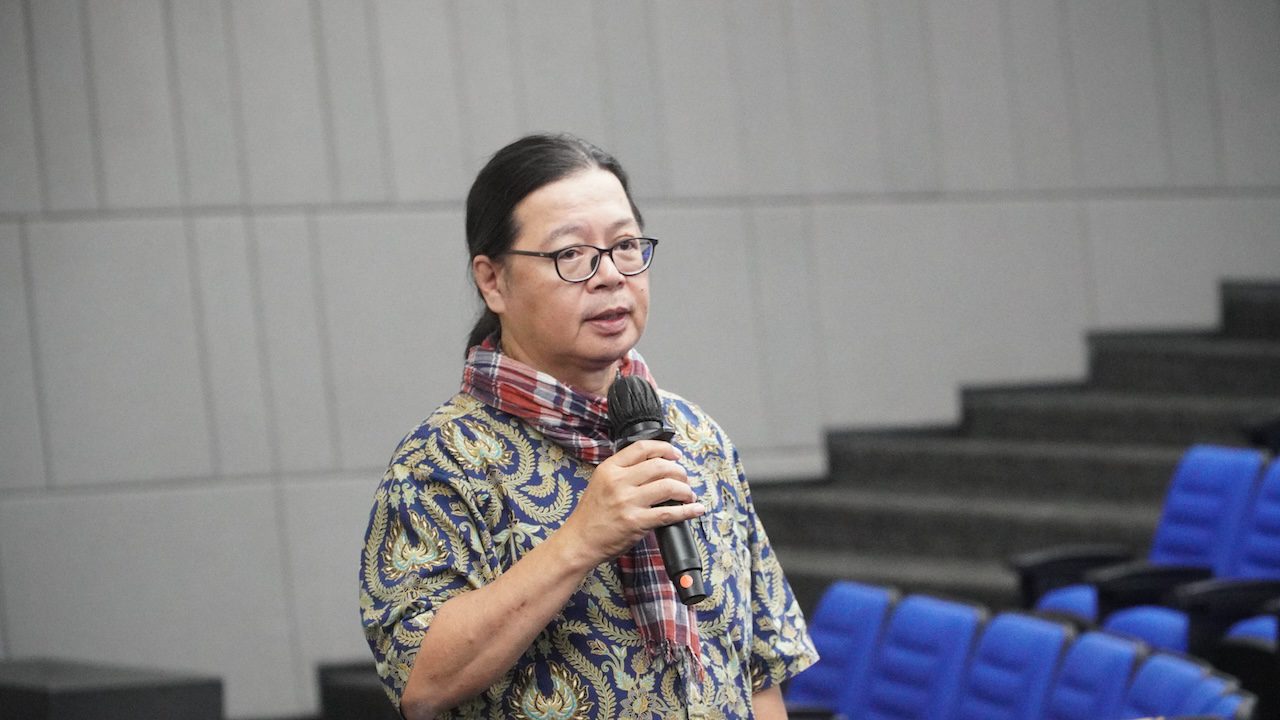
Ignatius delivered his presentation during the talk show. (Doc. UMN)
“This discussion is important because there are many cases of corruption in Indonesia, and the losses are enormous. There are many examples, and the losses amount to hundreds of trillions of Rupiah. Based on data from Asia, Indonesia is the fifth most corrupt country,” explained Ignatius to the students who attended and paid close attention to the talk show session.
Ignatius also explained that, in fact, corruption does not discriminate based on a person’s background. It does not matter whether the person is poor, rich, of a specific origin, profession, religion, face, or appearance. Corruption is driven by greed and avarice, and environmental degradation; even its eradication has become a game.
“It seems that all areas of our lives have been tainted by corruption. If we look at the details, we can feel its impact. Starting from poor public services, disrupted state revenues, poverty, overpayments when services could be free, to the most saddening thing, which is the loss of human lives,” Ignatius said.
Seeing the situation and impact of corruption, Ignatius left a small message for students to remember forever. Ignatius’ message to students was to promise that they would be honest, live a simple life, not be tempted by shortcuts, and not get carried away by social media, which is full of image-building and flexing.
Learning to build an honest system from Pekijing Village
To enrich this talk show, Bayu and Edi, who have lived in and developed Pekijing Village, shared how they continue to maintain an honest, impactful, and anti-corruption system for the community. Pekijing Village is proof that building an honest and anti-corruption system can provide a prosperous life for the community.
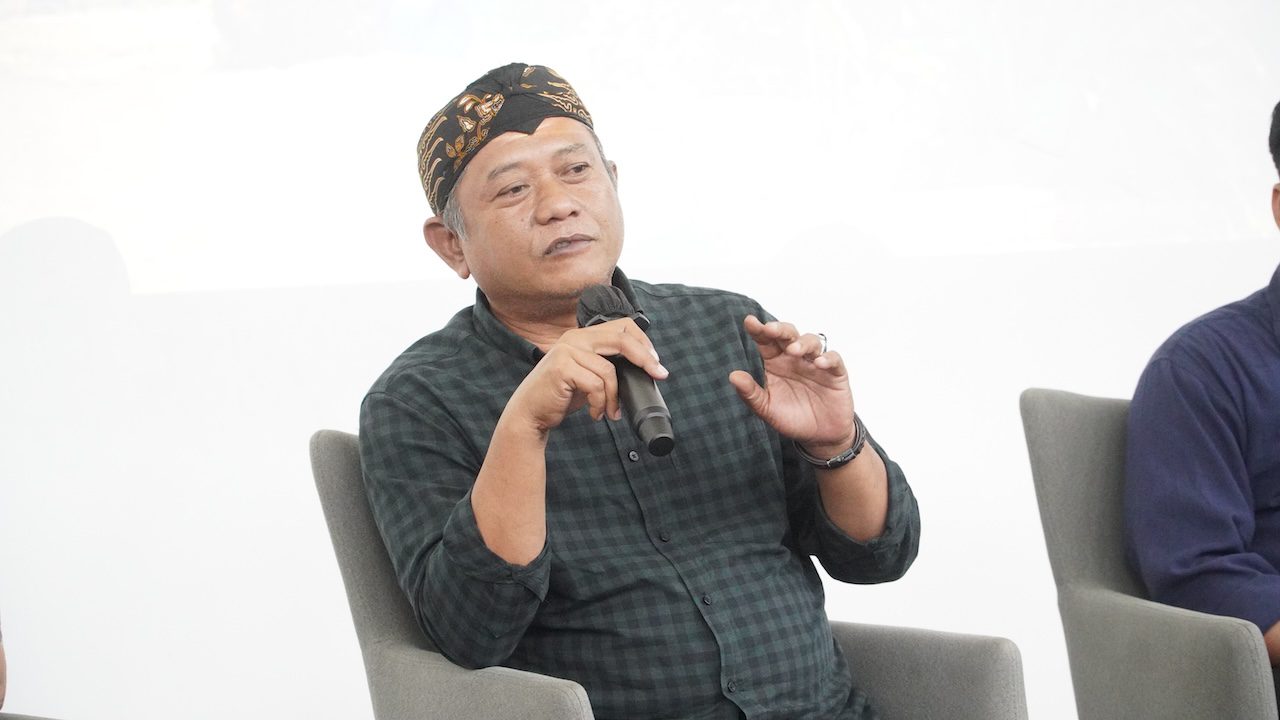
Introduction to Pekijing Village by Bayu. (Doc. UMN)
“In the past, our neighborhood association (RT) chairman was never replaced, and it was clear that the community was gradually rebelling in subtle ways. This became our initiative to improve the village and reform our own place of residence,” Bayu said.
Bayu also shared his view that this cannot be done quickly or easily. It takes time to change the mindset and behavior of the local community. According to Bayu, the most effective way is to set an example and educate the community, starting with families.
“After we proved it in the smallest environment, which is the family, we then proved it in Pekijing Village. It wasn’t easy at first, but after we reformed the management, many people accepted it. Perhaps if we hadn’t made the changes, Pekijing Village would not have changed completely,” added Bayu when explaining the changes to the system in Pekijing Village.
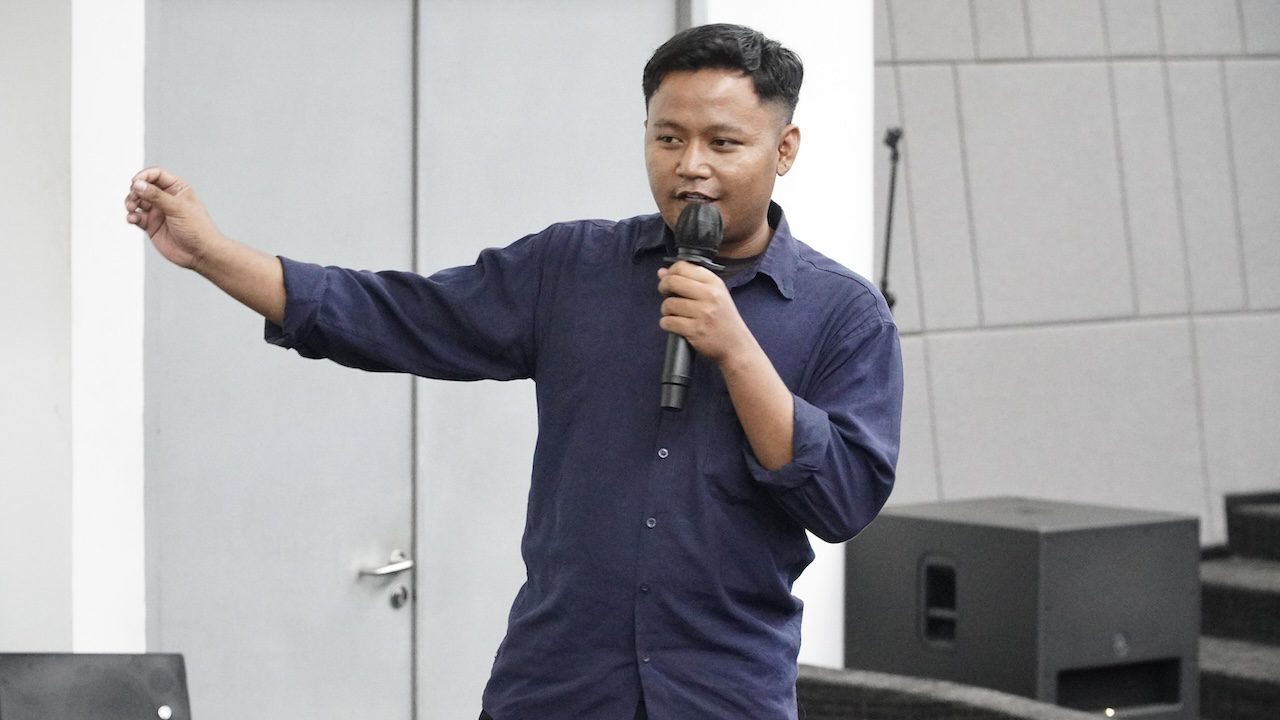
Presentation of material related to the Pekijing Village strategy by Edi. (Doc. UMN)
Edi continued by explaining his concerns at that time, which were also shared by the local community. Edi said that the residents’ concerns at that time were the difficulty of accessing education and health care. With Edi’s initiative, he conducted research to meet the needs of the community, from children to the elderly.
“We built a library for children and families, created a women’s farming group, a legal awareness group, a waste bank, a security group, and various other programs that can support and provide a better life for the community,” Edi said.
Edi provided one interesting program that could serve as an example for improving literacy in Indonesia: the elderly stall. In this program, it is not the elderly who provide literacy to children, but rather the children who provide literacy to the elderly. This program is also considered to have a positive impact and build a good community.
“Our system also rotates leadership periodically, every three years, so that all community members can discuss, work together, and build leadership character in the community. All community members have the same experience, and with this transparent approach, we can prevent corruption,” he added.
For Edi, Pekijing Village has one shared vision, namely, welfare and togetherness, which is also ingrained in the community. By instilling these values, Edi believes they will be automatically implemented in the community and prevent corruption.
Pekijing Village has won various awards and recognition for its commitment to maintaining and developing a sustainable village in terms of operational and social systems, the environment, and the economy.
By Rachel Tiffany | UMN News Service
English translation by Levina Chrestella Theodora
Kuliah di Jakarta untuk jurusan program studi Informatika| Sistem Informasi | Teknik Komputer | Teknik Elektro | Teknik Fisika | Akuntansi | Manajemen| Komunikasi Strategis | Jurnalistik | Desain Komunikasi Visual | Film dan Animasi | Arsitektur | D3 Perhotelan , di Universitas Multimedia Nusantara.