
Tak Sekadar Akademik, Mahasiswa Pertukaran Pelajar KUMA dan NSUADA Rasakan Kehangatan Belajar Selama di UMN
Desember 18, 2025
UMN Perkuat Kolaborasi Bersama INHA University, Korea Selatan
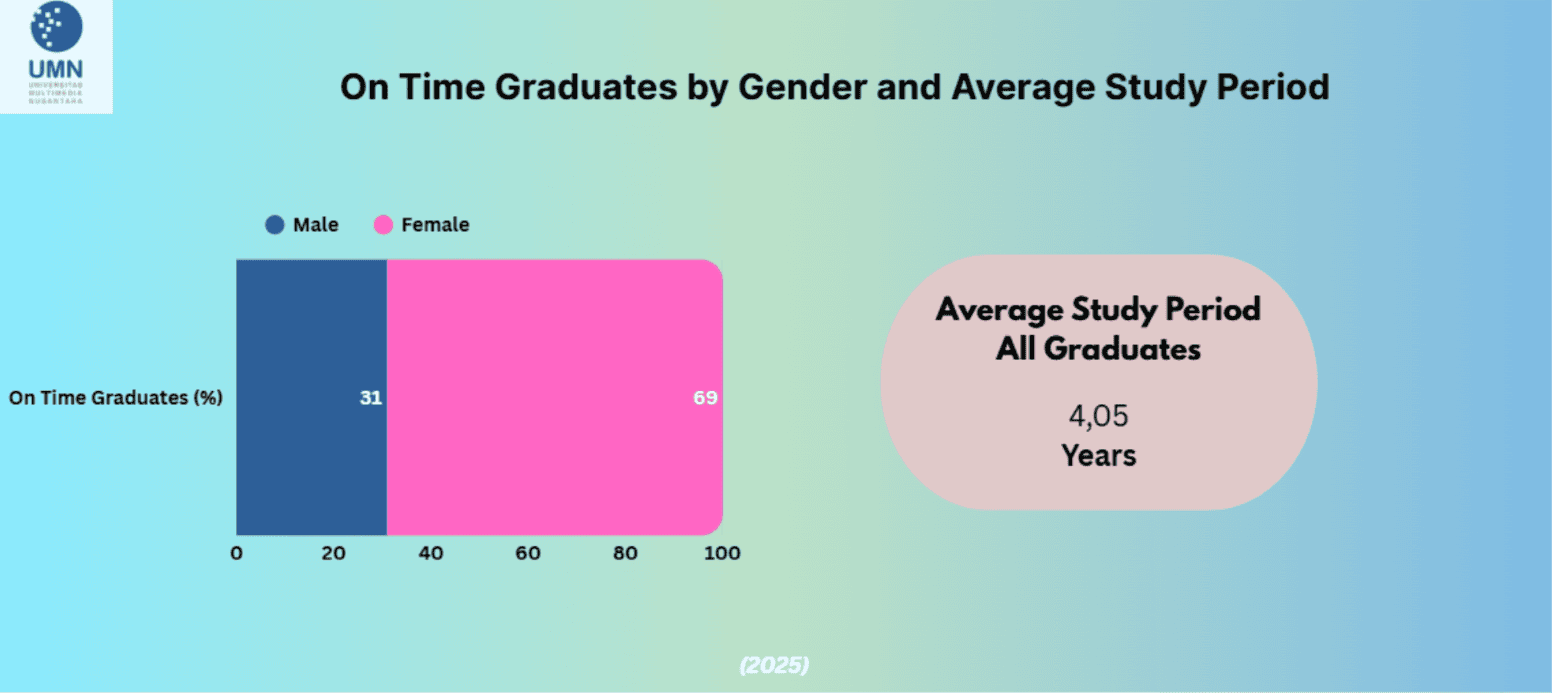
Desember 17, 2025Tangerang, Indonesia — Measuring and tracking women’s likelihood of graduating compared to men’s is an important part of promoting gender equality in higher education. Through gender-disaggregated graduation data, the university monitors academic completion patterns, identifies potential disparities between female and male students, and evaluates measures to ensure equitable opportunities for academic success. These efforts reflect the institution’s commitment to SDG 5: Gender Equality, particularly in ensuring that students of all genders have equal opportunities to complete their higher education.
According to the 2025 graduation data, female graduates represent 69% of all on-time graduates, while male graduates account for 31%. These figures provide an overview of gender representation among students who complete their studies within the expected timeframe. Meanwhile, the average study period for all graduates is 4.05 years. By monitoring these outcomes, the university can identify patterns in academic completion and determine areas that may require further attention.
Institutional Schemes to Ensure Equality and Close Gaps
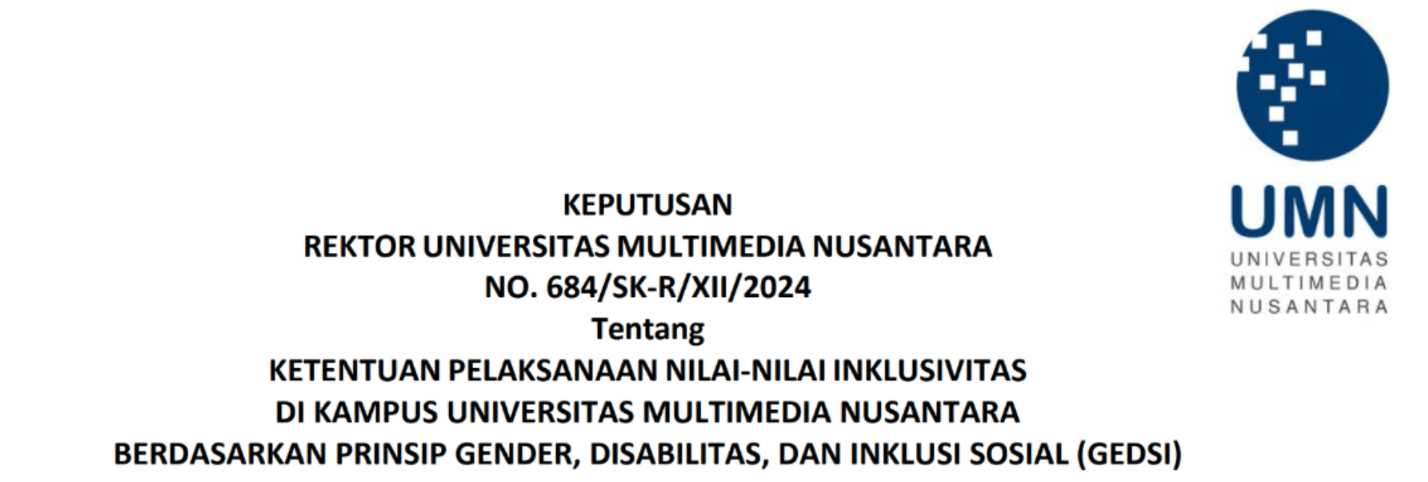
To support an equitable and inclusive environment, the university has established a policy framework formalised through the Rector’s Decree concerning the Implementation of Inclusivity Values. This decree affirms that educational opportunities and institutional services are provided equally to the entire academic community, including students, staff, and lecturers, without discrimination based on gender.
Policy and Support for the Academic Community
The inclusivity framework also promotes equal opportunities in employment, ensuring that job applicants are treated regardless of gender or marital status. Furthermore, supportive provisions include maternity leave and miscarriage leave for female academics, as well as parental leave for male academics. These measures help create a supportive institutional environment, allowing members of the academic community to balance professional responsibilities with family-related needs without gender-based disadvantage.
Monitoring Academic Progress and Supporting Timely Graduation
In addition to institutional policies, the university implements an Early Warning System to monitor student academic progress and support timely graduation. Through an academic dashboard, student performance and academic progression are tracked across the student population, providing information to identify potential academic difficulties at an early stage.
The university also assigns an academic advisor to every student, providing continuous monitoring, individual guidance, and academic support throughout their studies. These advisors help identify academic challenges and encourage appropriate follow-up actions to prevent delays in study completion and reduce the risk of student dropout.
By combining gender-disaggregated graduation tracking, institutional inclusivity policies, supportive provisions, and proactive academic monitoring, the university strengthens its efforts to promote equal opportunities and address potential disparities in higher education. These initiatives demonstrate an ongoing commitment to ensuring that both female and male students can successfully progress through their studies and achieve their academic goals in an inclusive learning environment.