
Integration of Environmental Sustainability in the Academic Curriculum
December 30, 2025Collaboration with NGOs to Tackle the SDGs through Student Volunteering Programmes, Research Programmes, and Development of Educational Resources
December 21, 2025
Tangerang – Planned actions are implemented to recruit students from underrepresented groups by providing equal opportunities in admission and supporting access for students from disadvantaged and underserved regions. These efforts are supported by Universitas Multimedia Nusantara (UMN)’s admission policy and scholarship programmes, which aim to broaden access to higher education for students from diverse backgrounds.
UMN demonstrates its commitment to promoting equal access to higher education through the Rector’s Decree No. 220/SK-R/VI/2022 on Guidelines for New Student Admission. The decree establishes a non-discriminatory admission process that provides equal opportunities for prospective students who meet the required academic and documentation criteria, regardless of ethnicity, religion, race, social group, cultural background, gender, social status, or political views. This policy reflects UMN’s efforts to ensure an inclusive recruitment process and reduce potential barriers for students from under-represented groups in accessing higher education.
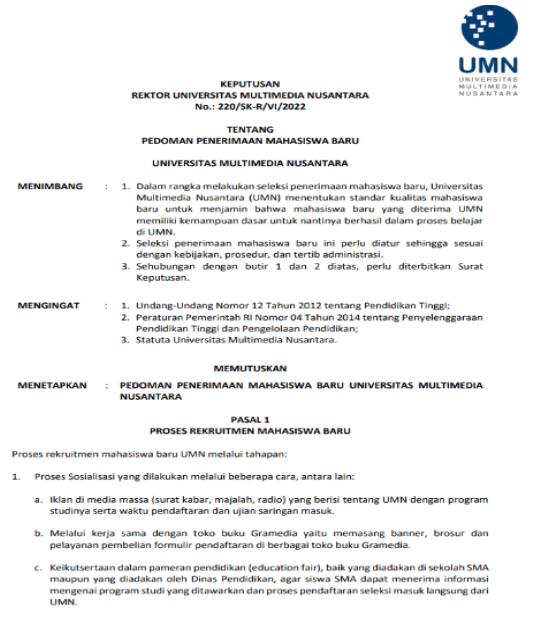 Official Decree on Non-Discriminatory Student Admissions to Promote Equal Access to Higher Education
(Doc. UMN)
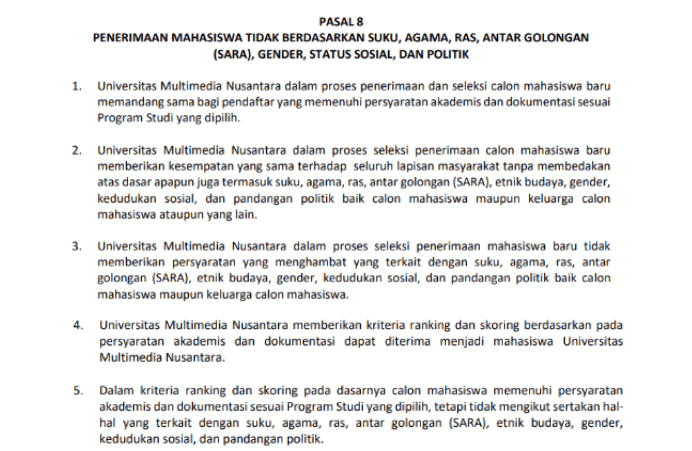
Official Decree on Non-Discriminatory Student Admissions to Promote Equal Access to Higher Education
(Doc. UMN)
Furthermore, the decree reinforces this commitment by ensuring that admission decisions are based solely on academic qualifications and required documentation. It also prohibits selection criteria that could disadvantage applicants based on their personal or social backgrounds, helping ensure a fair and inclusive student admission process.
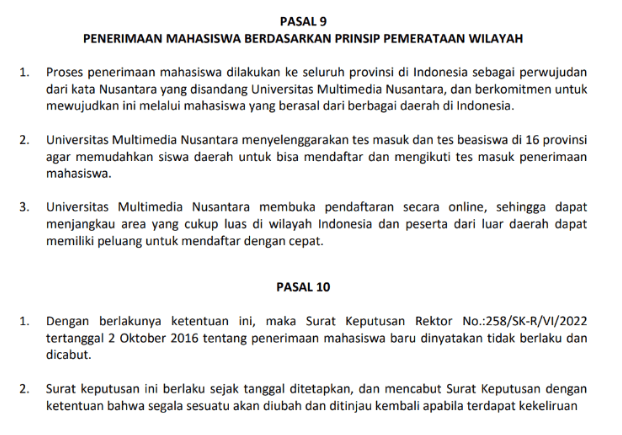 The admission policy also includes a specific commitment to regional equity. UMN conducts student recruitment across provinces in Indonesia and provides opportunities for students from different regions to access the university. To support this approach, the university has organized entrance and scholarship tests in multiple provinces, while online registration allows prospective students from outside the surrounding area to apply without having to travel to campus for the initial registration process.
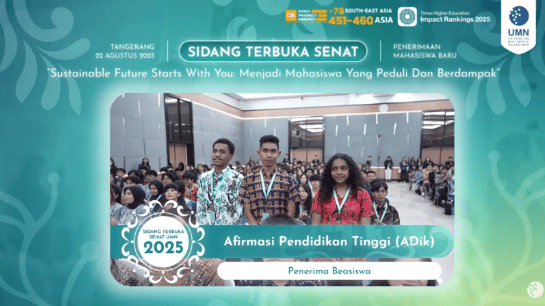
In 2025, UMN also continued to support access for students from developing regions through the Government of Indonesia’s Higher Education Affirmation Scholarship (ADik) programme. The programme provides higher education opportunities for students from areas including Papua, West Papua, and disadvantaged (3T) regions. Through participation in the ADik programme, UMN provides an additional pathway for students from regions that may face greater barriers to accessing higher education.
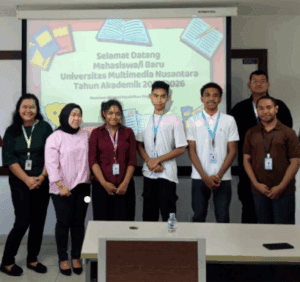
(UMN students participating in the ADik programme, 2025)
These measures demonstrate that UMN’s approach to student recruitment goes beyond general non-discrimination. Through its formal admission policy, regional recruitment approach, scholarship access, and participation in the ADik programme, UMN takes planned steps to reach students from diverse backgrounds.
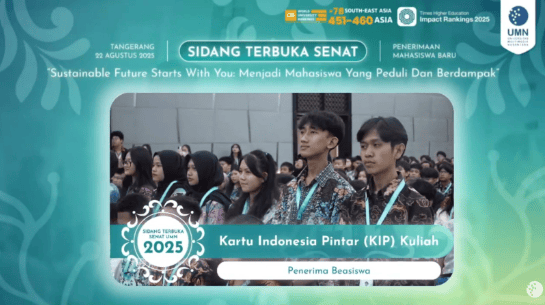
In addition, UMN welcomes students from underrepresented and economically disadvantaged backgrounds through the Kartu Indonesia Pintar (KIP) Kuliah program, a government-funded financial assistance scheme designed to expand access to higher education. Through this program, eligible students receive financial support to pursue their university education, helping reduce financial barriers, and ensuring more equitable access to higher education opportunities regardless of their socioeconomic background.
Through these continued actions, UMN supports a more inclusive admissions process and expands opportunities for students from different social, cultural, geographic, and socioeconomic backgrounds to access higher education.