UMN Takes Planned Actions to Recruit Students from Underrepresented Groups
December 23, 2025
UMN Records Rank Increase, Ranked 126th Globally in The UI GreenMetric
December 21, 2025Throughout 2025, Universitas Multimedia Nusantara (UMN) collaborated with NGOs, community organisations, and local stakeholders to address sustainable development challenges through three key approaches: student volunteering programmes, collaborative research initiatives, and the development of educational resources. These initiatives extended UMN’s educational contribution beyond its enrolled student population, engaging local communities, children, and other groups through practical knowledge-sharing, capacity-building, and cross-sector partnerships.
Student Volunteering Programmes
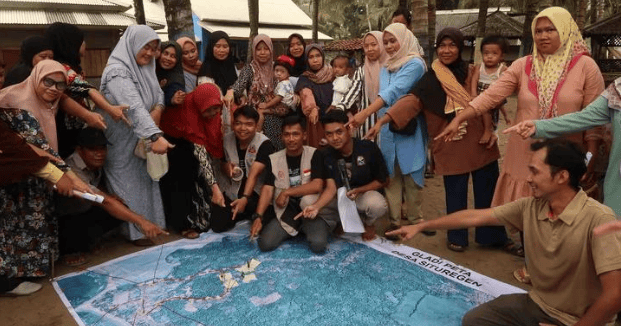
One example was UMN’s engagement with Gugus Mitigasi Lebak Selatan (South Lebak Disaster Mitigation Group) through the Sobat Siaga Tsunami initiative. UMN students participated in community-based disaster preparedness education, introducing residents and children to essential emergency preparedness practices, including the importance of preparing emergency bags (tas siaga bencana).
Through this initiative, students had the opportunity to contribute directly to community resilience while applying their knowledge and skills to address real-world challenges. The collaboration demonstrates how student participation in community-based programmes can support disaster awareness and preparedness beyond the university environment.
Development of Educational Resources
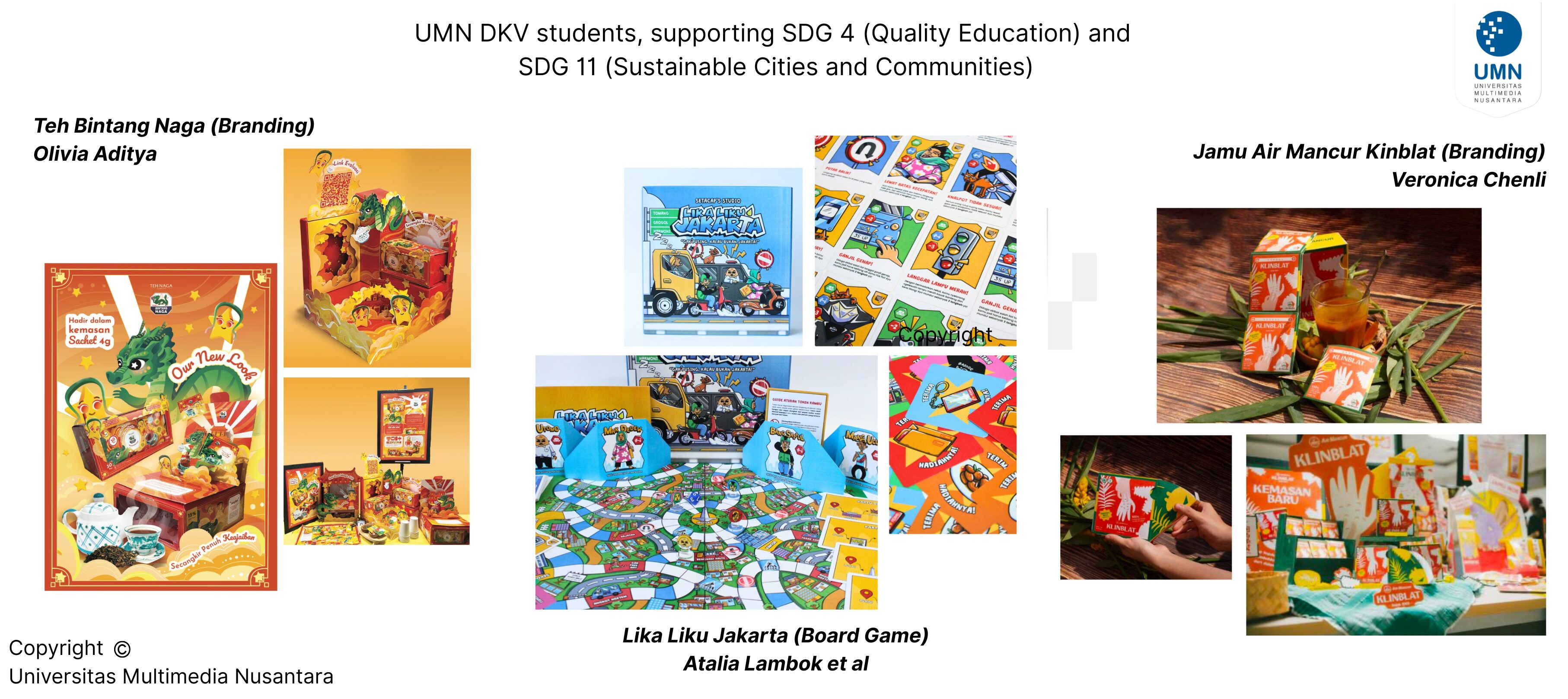
UMN’s collaboration with Gugus Mitigasi Lebak Selatan also included the development of educational board games by UMN Visual Communication Design (DKV) students, created to help the community learn in a more engaging and accessible way. One example is Lika Liku Jakarta (Board Game) by Atalia Lambok et al. By turning learning into play, these projects support SDG 4 (Quality Education) by widening access to quality learning resources, and SDG 11 (Sustainable Cities and Communities) by contributing to better-informed and more inclusive communities.
UMN also supported community empowerment through the community service project Revitalisation of the Lembur Patikang Mangrove Observation Tower to Develop Educational Tourism and Disaster Mitigation Potential, which received the second phase of the 2025 Ministry of Higher Education community service grant. Led by lecturers from UMN’s Faculty of Arts and Design, the project adopted a participatory design approach involving Architecture and Visual Communication Design students. Its objectives included revitalising mangrove observation facilities and developing interactive educational information boards to promote environmental awareness and disaster mitigation.
Located in Citeureup, Panimbang, Pandeglang Regency, Lembur Mangrove Patikang is a four-hectare conservation area that supports local livelihoods through fisheries, mangrove-based products, and community-based ecotourism. The project builds upon existing community activities, including environmental education, mangrove conservation, and training on the benefits and sustainable utilisation of mangrove ecosystems. By strengthening educational tourism infrastructure and involving students in the design of learning resources, the initiative seeks to expand environmental learning opportunities while supporting community participation and local economic development.
Research Programmes
Collaborative Research on Climate Change Education – GenerAKSI
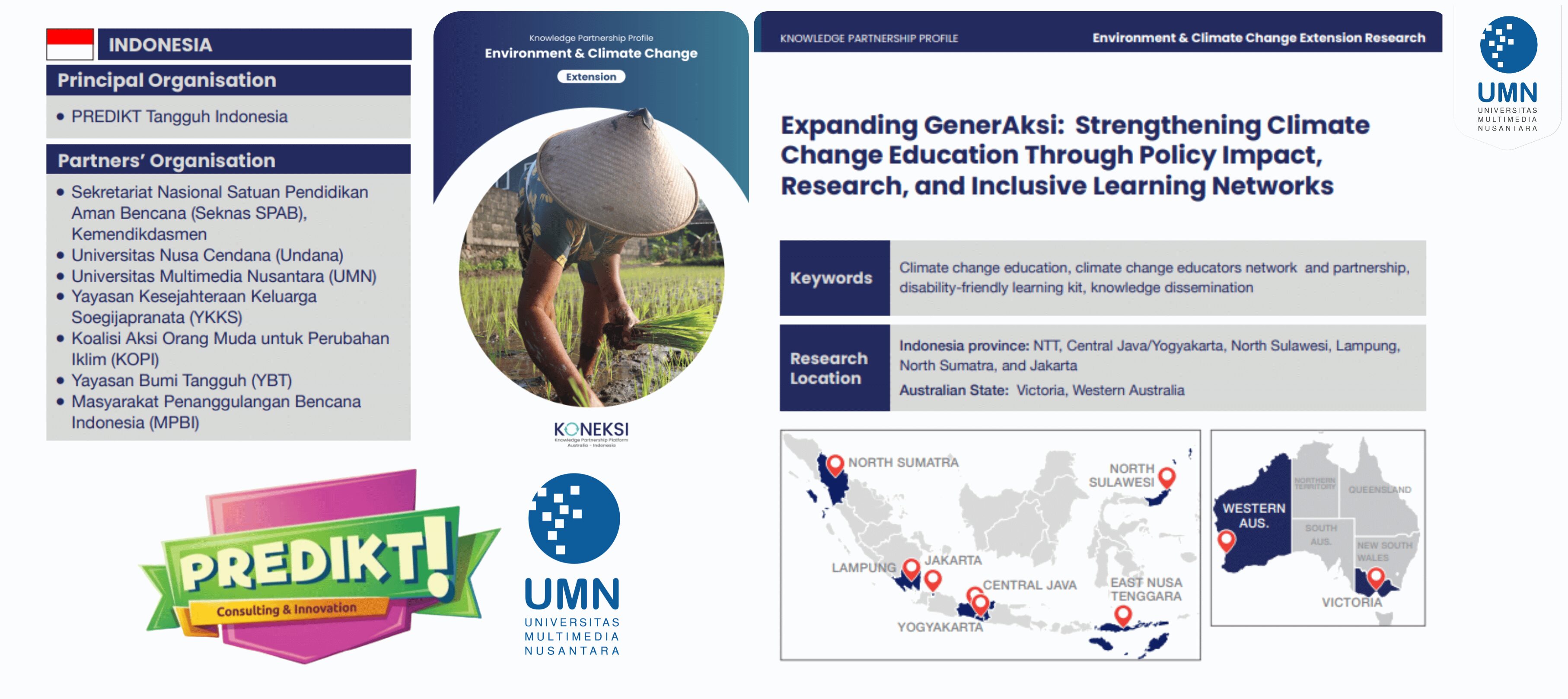
UMN strengthened its research collaboration with non-governmental and community-based organisations through the KONEKSI research programme, particularly the Expanding GenerAKSI: Strengthening Climate Change Education Through Policy Impact, Research, and Inclusive Learning Networks project. The initiative involves collaboration with PREDIKT (PREDIKT Tangguh Indonesia), a social enterprise focusing on disaster preparedness education, to strengthen climate change education through research, inclusive learning networks, and educational innovation. The research builds on partnerships involving organisations such as ChildFund Indonesia and the Indonesian Disaster Management Society (MPBI).
Through this collaborative research, UMN contributes academic expertise to developing inclusive approaches to climate change and disaster education. By connecting universities, NGOs, and community organisations, the initiative supports SDG 17 (Partnerships for the Goals) through cross-sector research partnerships, alongside SDG 4 (Quality Education) and SDG 13 (Climate Action).
Collaborative Research on Technology-Driven Humanitarian Response – Sky Volunteer Indonesia
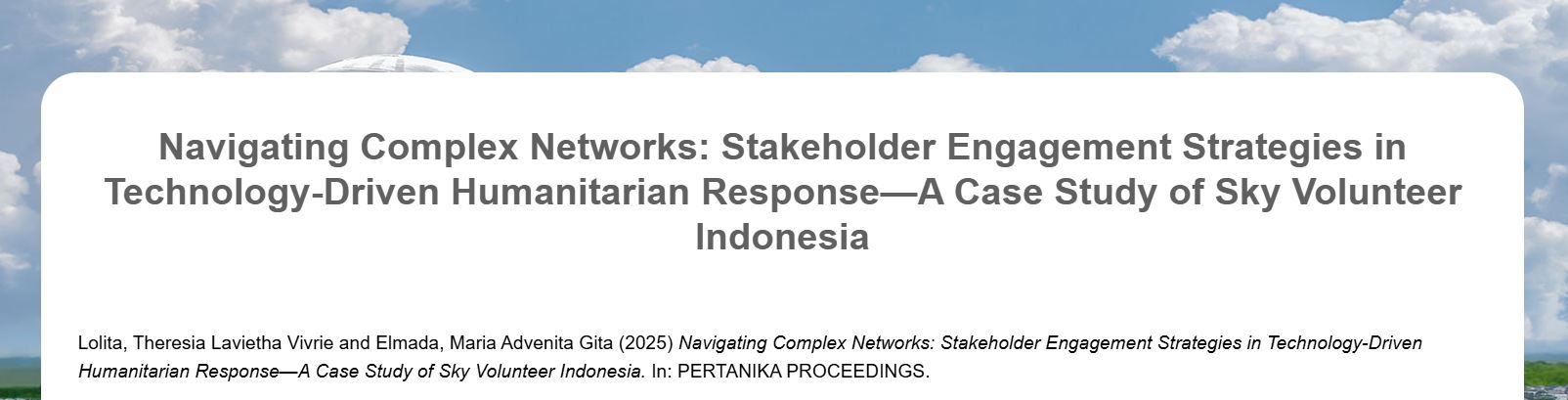
UMN academics conducted research entitled Navigating Complex Networks: Stakeholder Engagement Strategies in Technology-Driven Humanitarian Response – A Case Study of Sky Volunteer Indonesia, published in the 2025 PERTANIKA Proceedings. The research examines Sky Volunteer, an initiative of Synersia Foundation, focusing on stakeholder engagement, communication, and collaboration in the application of drone technology for humanitarian and disaster response. Through qualitative research and stakeholder interviews, the study explores how NGOs and other stakeholders coordinate their efforts in addressing disaster-related challenges.
This research highlights the importance of collaboration between academic institutions, NGOs, and humanitarian stakeholders in strengthening disaster response initiatives. By examining cross-sector partnerships and knowledge-sharing practices, the research contributes to SDG 17 (Partnerships for the Goals), as well as SDG 11 (Sustainable Cities and Communities) and SDG 13 (Climate Action).
Contribution to the Sustainable Development Goals
Through these collaborations, UMN demonstrates how student engagement, community partnerships, collaborative research, and the development of accessible educational resources can contribute to addressing the SDGs beyond the university campus. In particular, these initiatives support SDG 17 (Partnerships for the Goals) through collaboration with NGOs and community organisations; SDG 4 (Quality Education) through community learning and educational resources; SDG 11 (Sustainable Cities and Communities) and SDG 13 (Climate Action) through disaster preparedness and resilience; and SDG 14 (Life Below Water) and SDG 15 (Life on Land) through mangrove conservation and environmental education.