
UMN dan ASSA Diskusikan Bidang Karir yang Berpeluang Besar Namun Jarang Diminati Mahasiswa
November 10, 2025
Festival Budaya Nusantara UMN 2025 Tekankan Pentingnya Nilai-Nilai Kebudayaan Indonesia ke Mahasiswa
November 7, 2025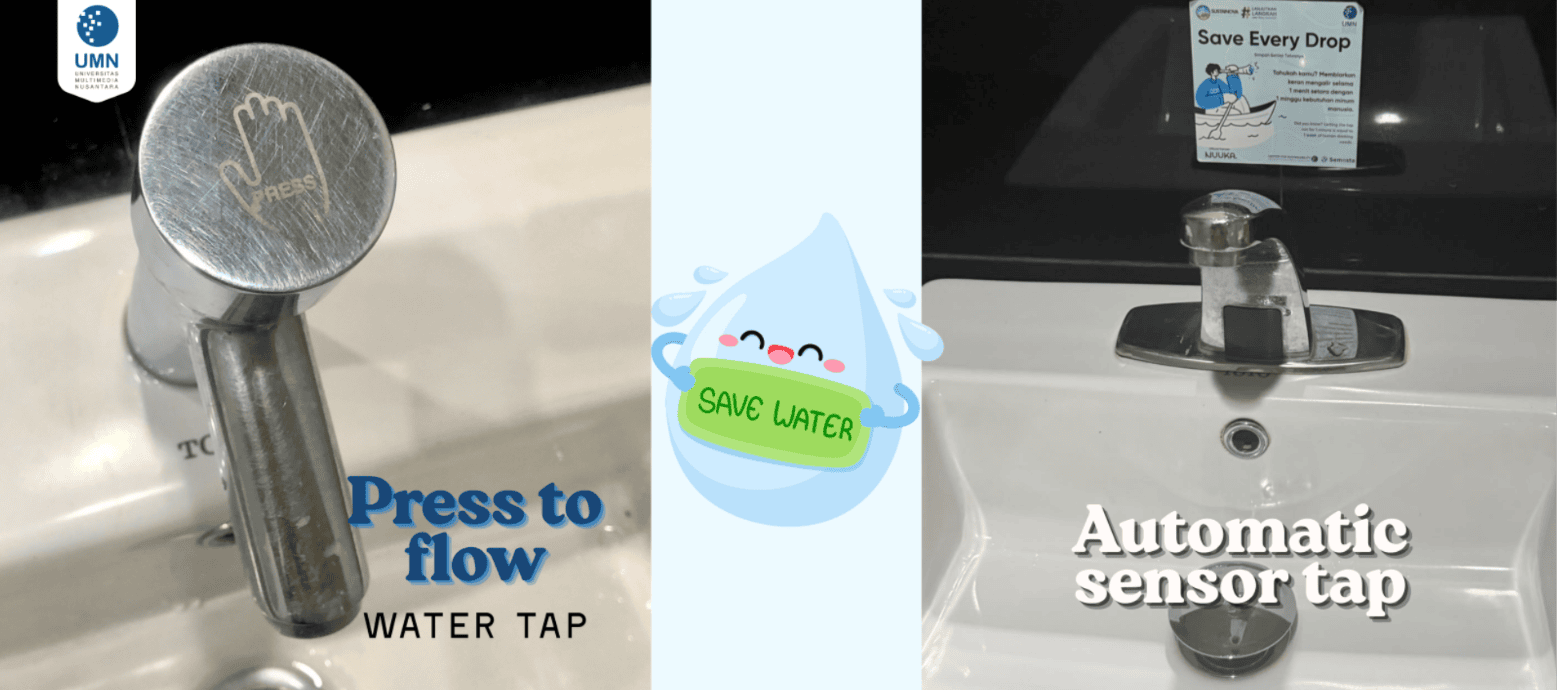
Universitas Multimedia Nusantara (UMN) applies green building standards and water-efficient systems across its campus to minimize water use. The approach combines water-efficient sanitary fixtures, recycled water use, rainwater conservation, and water-efficient building and plumbing systems as part of the campus’s ongoing water management practices.
Water-Efficient Building and Plumbing Systems
UMN has established formal provisions for water conservation through Rector’s Decree No. 088/SK-R/II/2022 on Water Use at Universitas Multimedia Nusantara. The decree establishes water-saving measures across campus, including the use of tap-to-flow or automatic sensor faucets at washbasins, sprinkler-based landscape irrigation, and toilet flushing systems with a 3.6-litre water capacity.
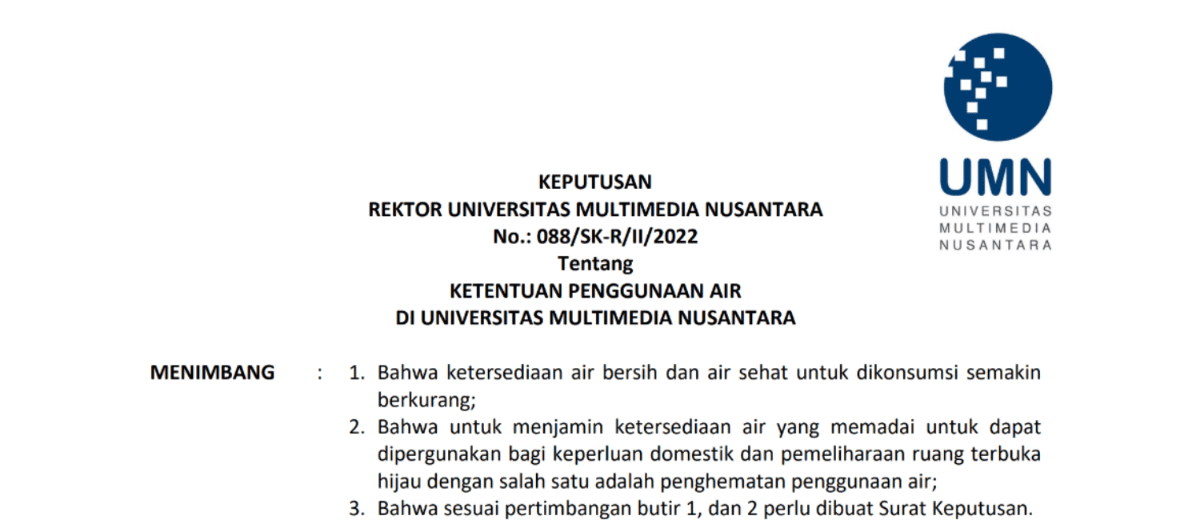
(Rector’s decree on Water Use)
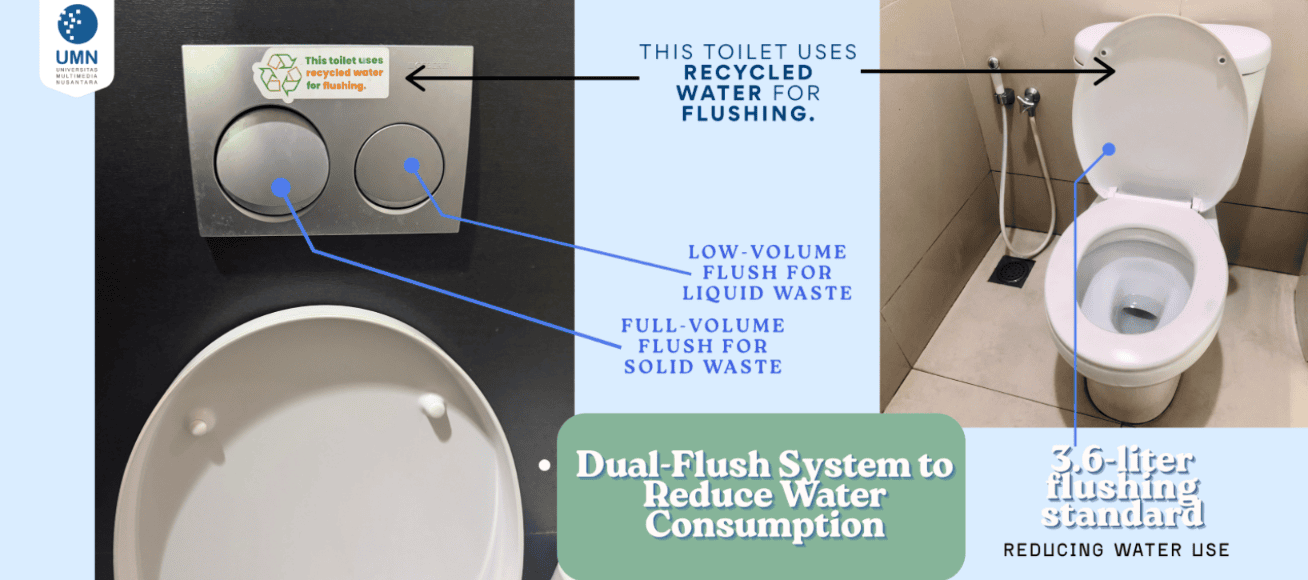
The policy also promotes the use of treated and recycled water to reduce dependence on clean water sources. Wastewater processed through the Sewage Treatment Plant (STP) is reused for toilet flushing, landscape irrigation, and cooling towers in the central air-conditioning system. To further conserve water, campus toilets are equipped with a dual-flush system that provides different water volumes depending on usage needs, using a lower volume for liquid waste and a higher volume for solid waste. This closed-loop approach enables treated water to be reused for appropriate non-potable purposes while minimizing freshwater consumption across campus. 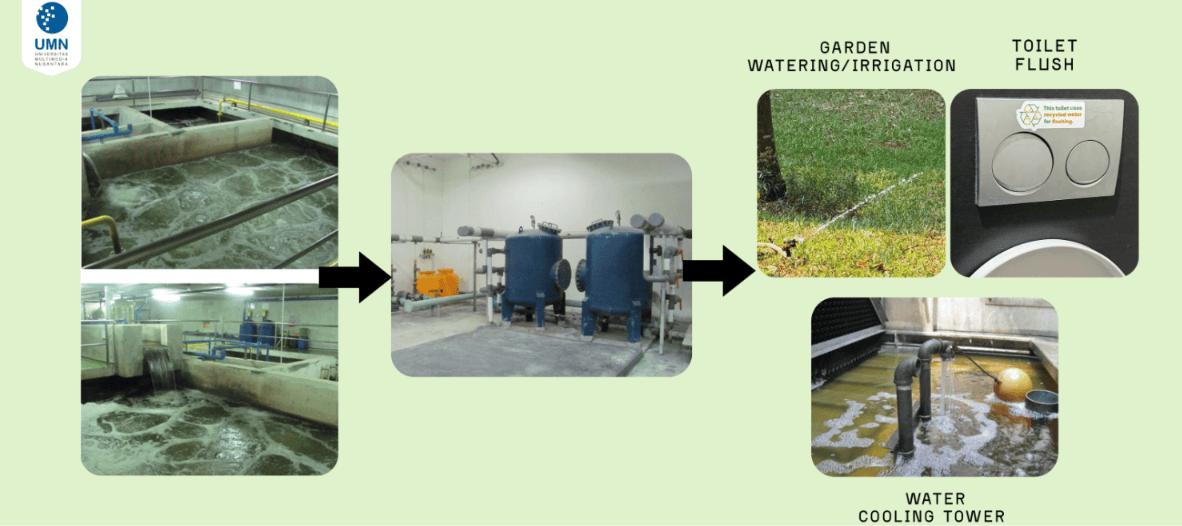
(Recycled water system / water reuse application at UMN)
Rainwater Conservation and Green Building Standards
UMN also incorporates rainwater conservation into its campus building and landscape systems. Rainwater collected from building roofs is directed into drainage channels and distributed to infiltration wells, allowing water to return to the ground. Across the campus, approximately 80 infiltration wells support rainwater infiltration, while bio pores and water-absorption areas in the outdoor parking area further support groundwater recharge.
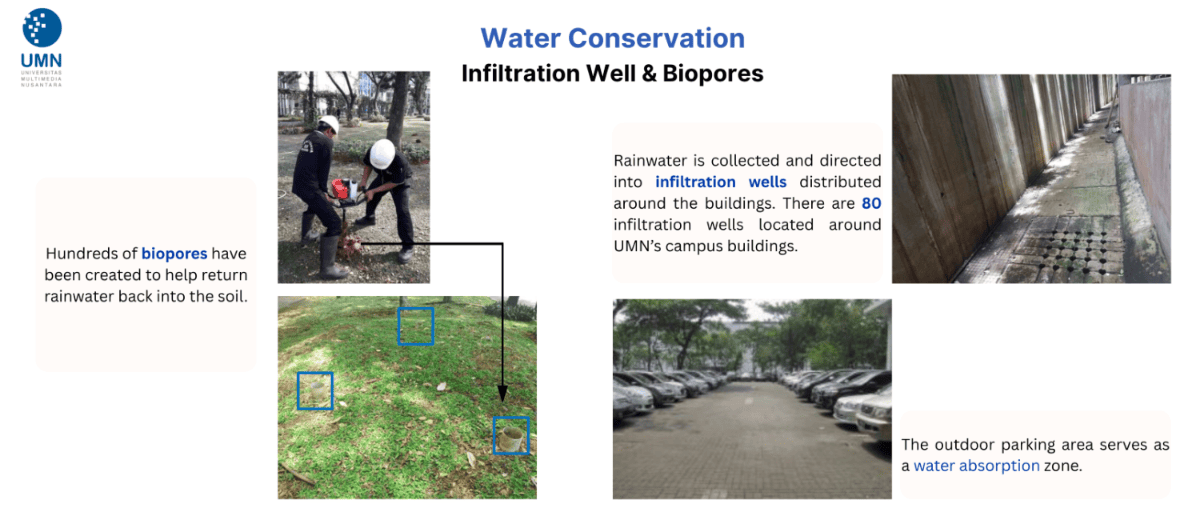
(Rainwater drainage and infiltration system at UMN, 2025).
These practices form part of UMN’s broader application of green building standards. UMN has implemented green building principles across campus in accordance with relevant institutional and national guidelines, including Policy No. 7823, the Green Building Council Indonesia guidelines, and Ministry of Public Works and Housing Regulation No. 21 of 2021.
UMN’s implementation of green building standards is also reflected in the Greenship Net Zero Ready Certification awarded by the Green Building Council Indonesia to the PK Ojong–Jakob Oetama Tower. The certification recognises the building’s implementation of sustainable building practices and further demonstrates UMN’s application of green building principles in its campus infrastructure.
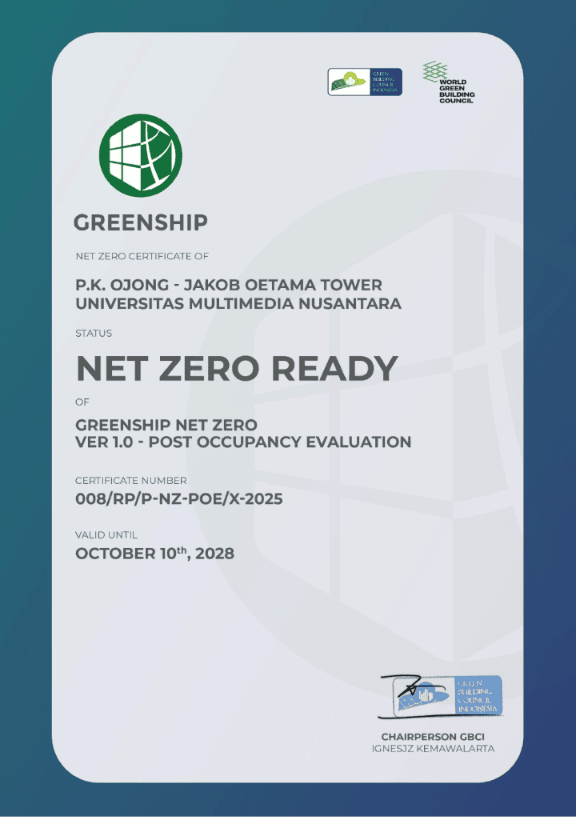
(Greenship Net Zero Ready Certification – PK Ojong–Jakob Oetama Tower, 2025).
Through these measures, UMN applies building standards and water-efficient systems to reduce the use of clean water, while incorporating recycled water, rainwater conservation, efficient fixtures, and sustainable building practices into campus operations and infrastructure.