Welcoming World Autism Month, ULD UMN Together with PORTADIN Hosts Art for Autism Workshop
June 28, 2026
UMN’s Master of Technology Management Program Strengthens MSME Competitiveness Through Technology and AI-Based Training
July 7, 2026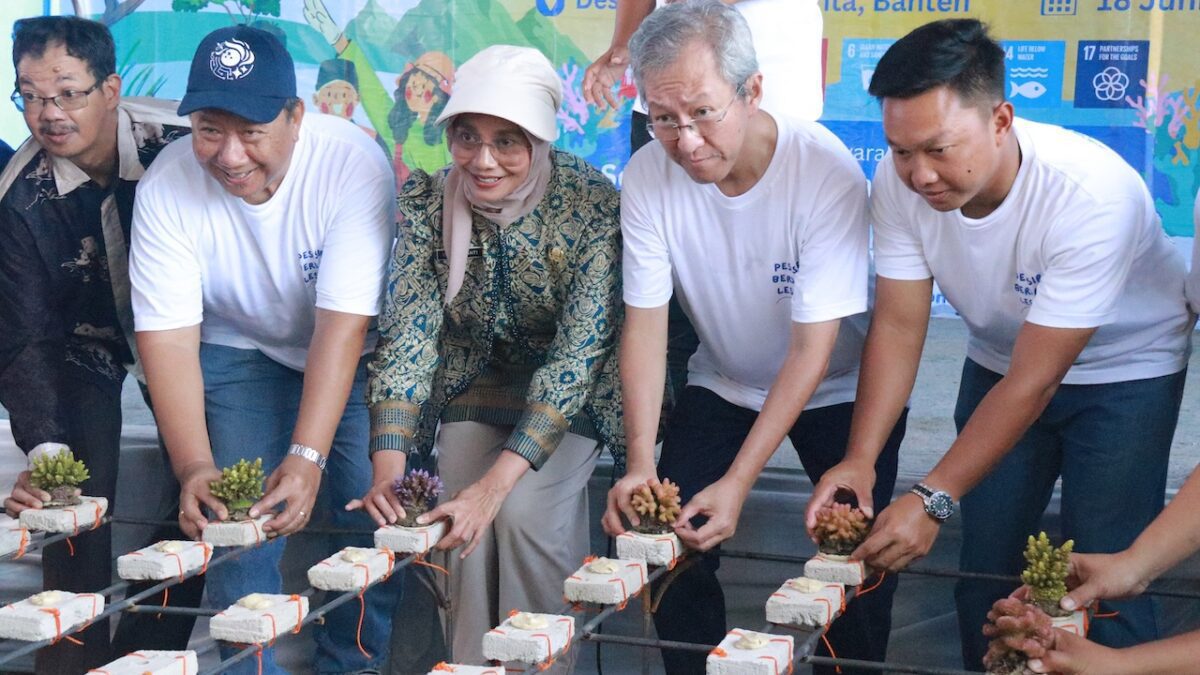
Pandeglang, Banten —Universitas Multimedia Nusantara (UMN), PT Surveyor Indonesia (Persero), and Yayasan Konservasi Alam Bawah Laut (KABL) officially launched the Pesisir Berdaya Lestari (Empowered and Sustainable Coastal Communities) program at Ketapang Beach, Sukarame Village, Carita, Pandeglang, on 18 June 2026.
The multi-stakeholder initiative aims to strengthen coastal community resilience through three interconnected pillars: economic empowerment, social development, and environmental conservation. It brings together the private sector, university, government, schools, community organisations, and local residents to address challenges related to livelihoods, education, health, clean-water access, and coastal ecosystem degradation.
The program also contributes to community-based climate action. Coastal communities face interconnected pressures from extreme weather, intense rainfall, coastal inundation, ecosystem degradation, and disruptions to local livelihoods. Pesisir Berdaya Lestari responds by combining measures that strengthen the community’s adaptive capacity with ecosystem restoration that may provide climate mitigation co-benefits.
Strengthening Local MSMEs
In the economic pillar, a total of 15 participants representing eight local micro, small, and medium enterprises (MSMEs) joined training and knowledge-sharing sessions facilitated by four academics from UMN’s Faculty of Business and two professional practitioners from PT Surveyor Indonesia.
The sessions covered cash-flow management, calculation of the cost of goods sold, product pricing, halal certification, Business Identification Numbers (NIB), Home Industry Food Production Certificates (P-IRT), access to business financing, and social media marketing. The training is expected to help local entrepreneurs make more informed business decisions and strengthen their capacity to respond to future economic and environmental disruptions.
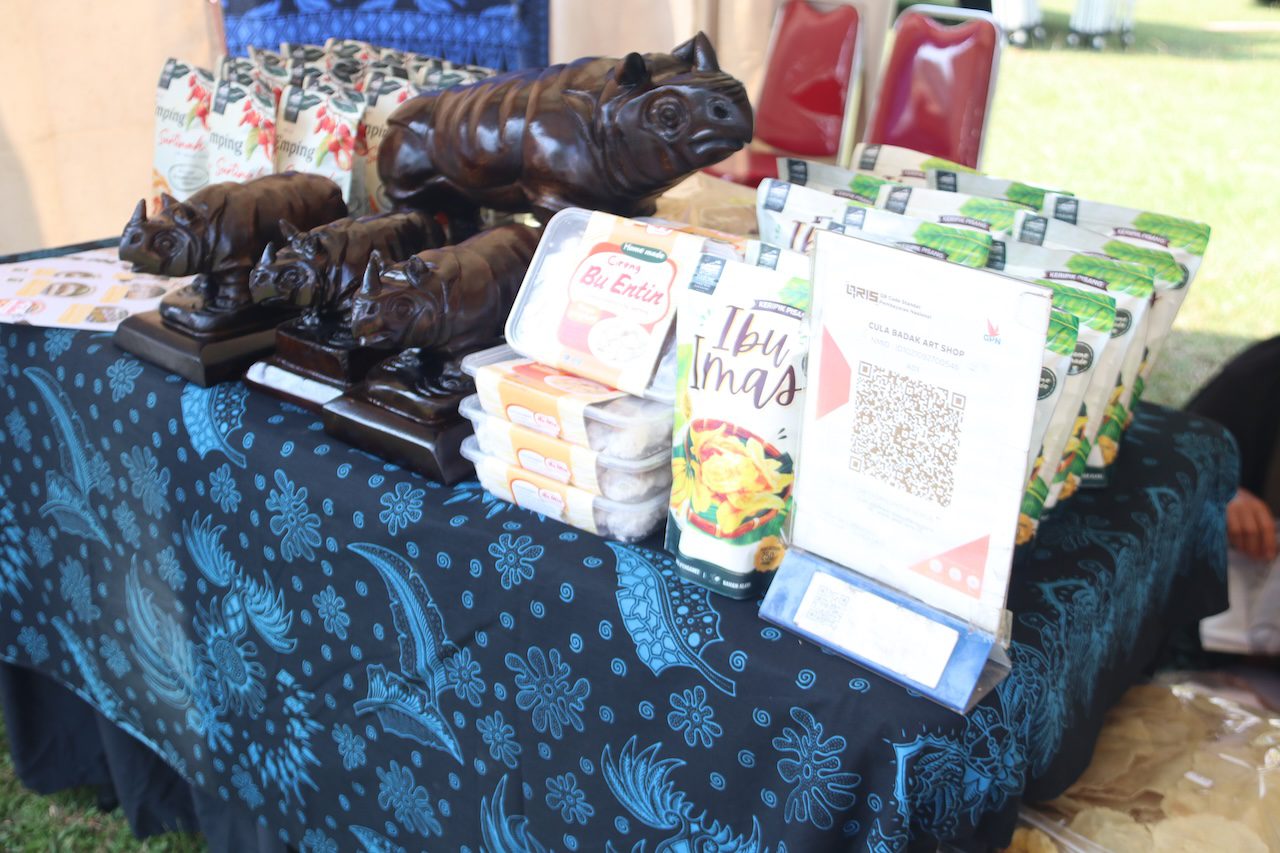
The program also provided product packaging and visual-branding assistance. Following observations and interviews conducted by two academics from UMN’s Faculty of Art and Design, new packaging was developed for selected local products, including emping, banana chips, and cireng.
The products were brought together under the shared identity HABUME, an abbreviation of Hasil Bumi Sukarame, or “Products of Sukarame.” The identity was created to improve the visibility of local products while representing the cultural and natural characteristics of Sukarame Tourism Village.
By strengthening business management, product identity, and market access, the economic pillar contributes to more diverse and resilient local livelihoods—an important component of climate adaptation in coastal communities.
Supporting Education, Health, and Clean-Water Access
The social pillar included educational support for SDN Sukarame 02 and SMAN 15 Pandeglang.
A total of 329 books donated by UMN students were distributed to the two schools. SMAN 15 Pandeglang received 186 books, while SDN Sukarame 02 received 143 books. The books were curated based on their relevance and physical condition and included children’s and young adult literature, science and general-knowledge books, and other popular reading materials.
PT Surveyor Indonesia also donated two laptops: one laptop to SDN Sukarame 02 and one laptop to SMAN 15 Pandeglang. The books and laptops are intended to strengthen literacy, digital inclusion, and access to learning resources.
At SDN Sukarame 02, UMN lecturers and students facilitated educational activities for students from Grades 1 to 6. The sessions introduced Perilaku Hidup Bersih dan Sehat (PHBS), or Clean and Healthy Living Behaviour, alongside lessons on proper handwashing, waste sorting, water conservation, environmental responsibility, and coastal ecosystems.
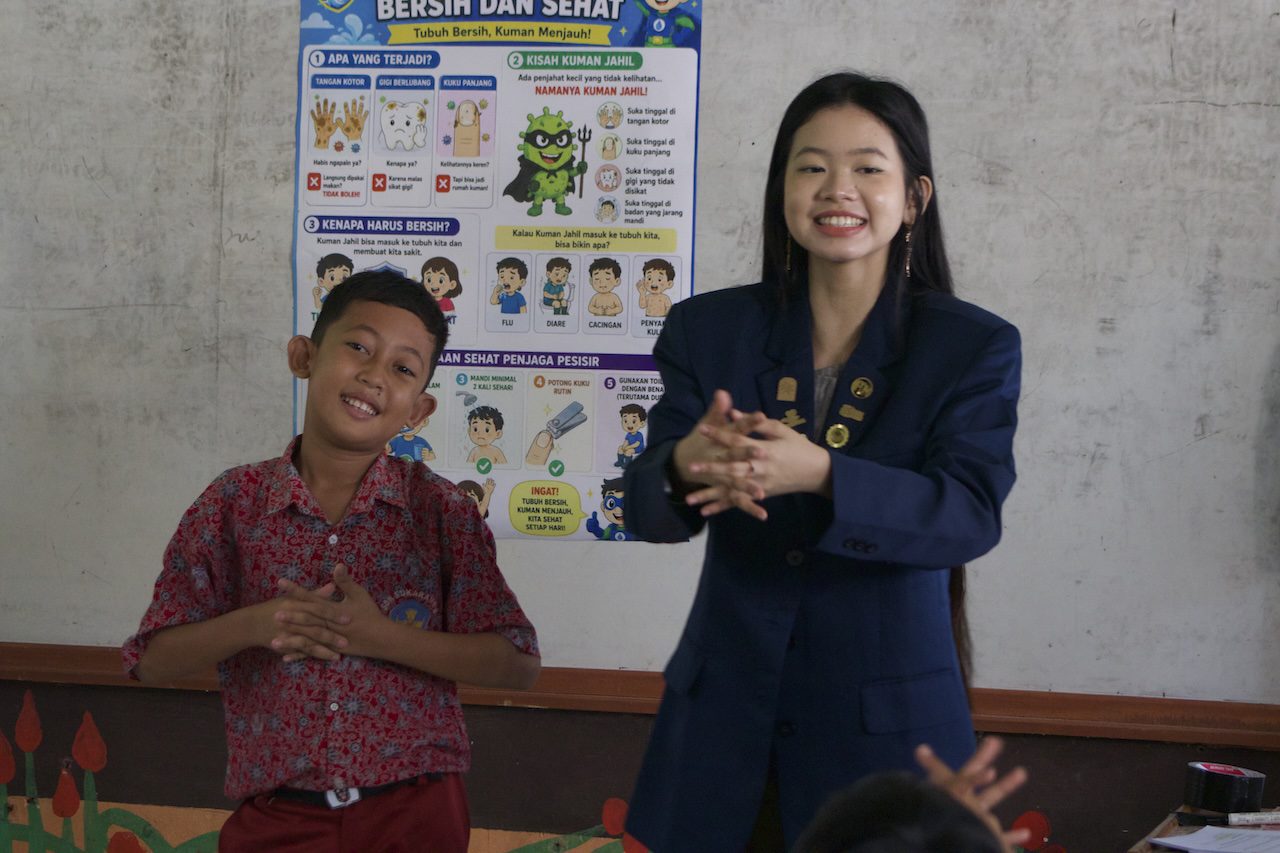
Students learned and practised how to wash their hands correctly with soap and clean running water. Educational modules on PHBS and waste sorting were also provided so teachers could continue incorporating the materials into student learning.
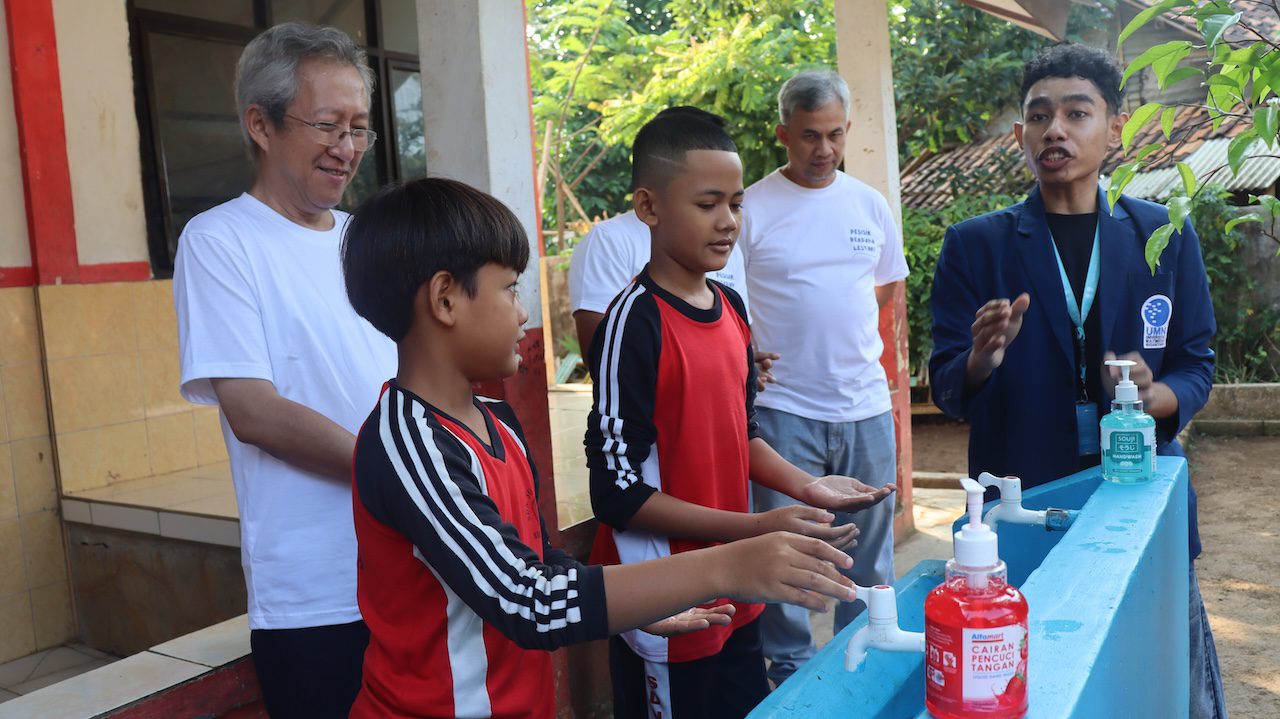
To support these healthy practices, the program installed a 90-metre clean-water pipeline at SDN Sukarame 02. The system includes a 520-litre water tank connected to three toilets and four handwashing stations. Toilet facilities were also improved, while persuasive stickers were installed to encourage handwashing, personal hygiene, and responsible water use.
The program additionally provided four waste-sorting bins, with two placed at SDN Sukarame 02 and two at SMAN 15 Pandeglang.
Introducing Practical Water-Management Solutions
Five biopore infiltration holes, each 80 centimetres deep, were installed at SDN Sukarame 02 to absorb rainwater and water discharged from the handwashing stations.
Biopores offer a simple and locally applicable method for increasing water absorption, reducing surface runoff, and facilitating the decomposition of organic matter. From a climate adaptation perspective, they introduce students and the school community to a practical form of water management that may help respond to intense rainfall and localised flooding.
By combining behavioural education with supporting infrastructure, the program enables students to put lessons on sanitation, water conservation, and environmental responsibility into daily practice.
Restoring Seagrass and Coral Reef Ecosystems
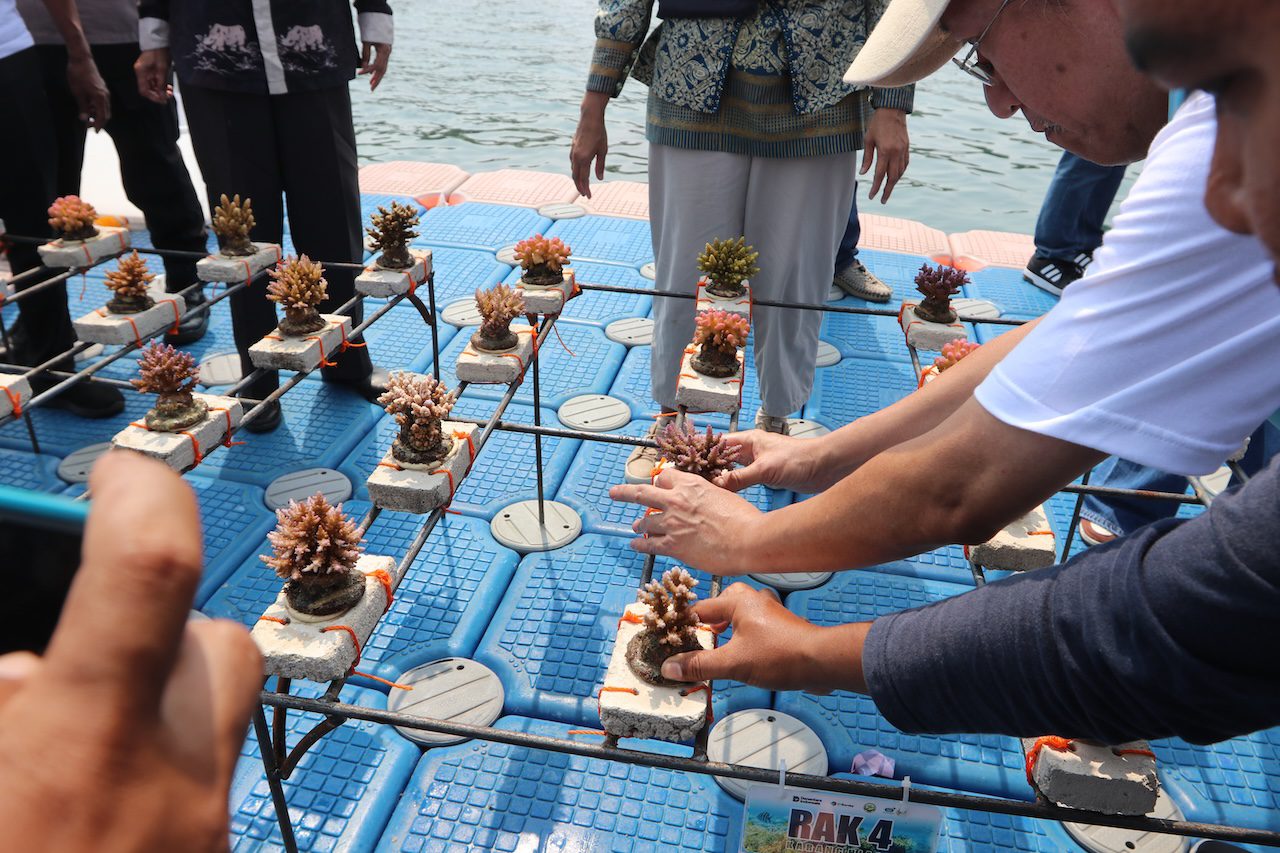
The environmental pillar focused on restoring and protecting Sukarame’s marine and coastal ecosystems. As part of the program, 200 seagrass seedlings were planted, while 37 square metres of coral reef area were rehabilitated through coral transplantation at Ketapang Beach.
Seagrass meadows provide habitats and feeding grounds for marine species and can store carbon in their biomass and underlying sediments. Their restoration contributes to ecosystem health and coastal resilience while offering potential climate mitigation co-benefits through blue carbon storage. However, the amount of carbon stored or sequestered through this intervention has not yet been measured.
Coral reefs support marine biodiversity, fisheries, tourism, and community livelihoods. Healthy coral reefs can also help dissipate wave energy and contribute to the natural protection of coastal areas. Coral transplantation can therefore support ecosystem-based adaptation while strengthening the environmental foundation for sustainable coastal tourism.
Together, seagrass planting and coral transplantation demonstrate how nature-based solutions can connect biodiversity conservation, climate resilience, local livelihoods, and the future development of community-based ecotourism.
Building a Foundation for Continued Collaboration
The program’s launch was attended by representatives of PT Surveyor Indonesia, UMN, local government agencies, technical institutions, schools, community organisations, and residents of Sukarame. The Head of the Banten Provincial Tourism Office, Eli Susianti, S.H., M.H., was also present, reflecting the provincial government’s support for initiatives that combine community empowerment, environmental protection, and sustainable tourism development.
UMN contributed through the involvement of lecturers and students in education, MSME empowerment, product development, communication, design, infrastructure, and community engagement. PT Surveyor Indonesia contributed professional expertise, clean-water infrastructure, learning facilities, and support for local capacity building, while Yayasan KABL provided local knowledge and experience in marine conservation.
Coordinated through UMN’s Center for Sustainability, Pesisir Berdaya Lestari contributes to SDG 1 on No Poverty, SDG 3 on Good Health and Well-being, SDG 4 on Quality Education, SDG 6 on Clean Water and Sanitation, SDG 8 on Decent Work and Economic Growth, SDG 12 on Responsible Consumption and Production, SDG 13 on Climate Action, SDG 14 on Life Below Water, and SDG 17 on Partnerships for the Goals.
The activities implemented in 2026 are intended as an initial foundation rather than the conclusion of the program. The partners have developed a longer-term direction for supporting Sukarame’s development as a resilient and sustainable coastal tourism village, while recognising that future activities will need to remain responsive to community priorities, environmental conditions, available resources, and opportunities for further collaboration.
Potential areas for future development include continued assistance for local MSMEs, community-based coastal tourism management, environmental and climate education, coastal disaster-risk awareness, marine-tourism safety, and continued conservation of coral reefs and seagrass ecosystems.
Through continued collaboration and community participation, Pesisir Berdaya Lestari is expected to evolve as a locally grounded platform for building a healthier, more empowered, climate-resilient, and sustainable coastal community.
By Center for Sustainability UMN
Kuliah di Jakarta untuk jurusan program studi Informatika| Sistem Informasi | Teknik Komputer | Teknik Elektro | Teknik Fisika | Akuntansi | Manajemen| Komunikasi Strategis | Jurnalistik | Desain Komunikasi Visual | Film dan Animasi | Arsitektur | D3 Perhotelan , di Universitas Multimedia Nusantara.