UMN Officially Partners with The Government of Banggai, Central Sulawesi
December 5, 2025
UMN Communications Faculty Students Participate in Dining Etiquette Training: Essential Skills for Young Professionals
December 5, 2025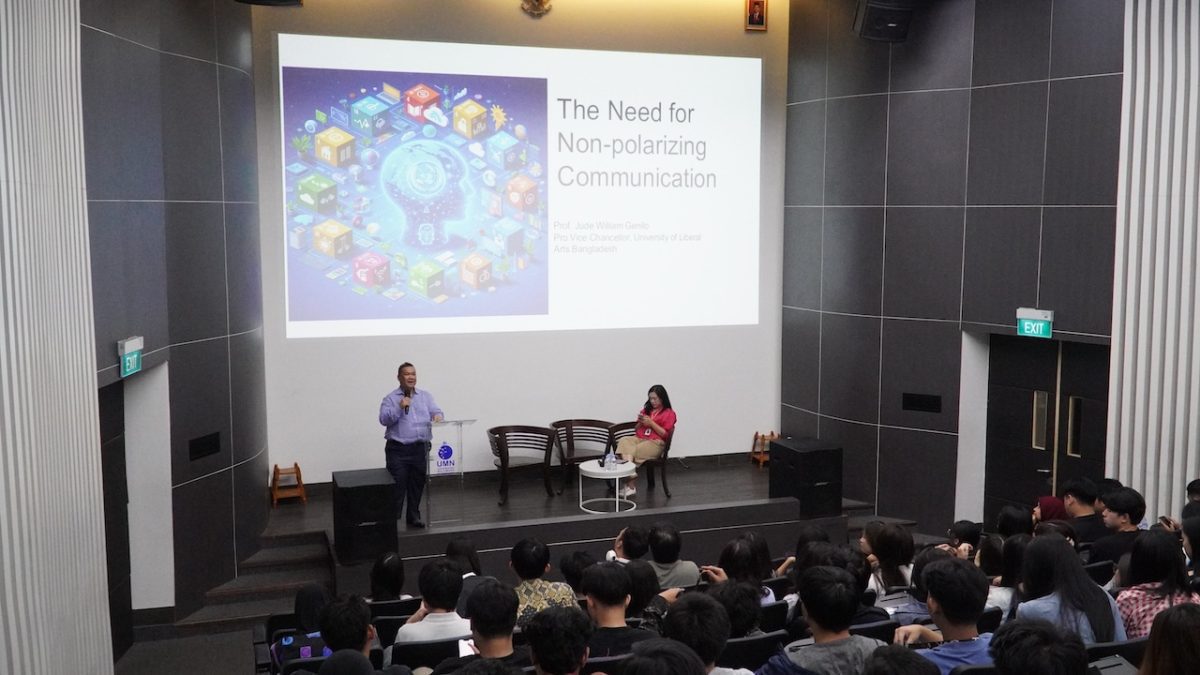
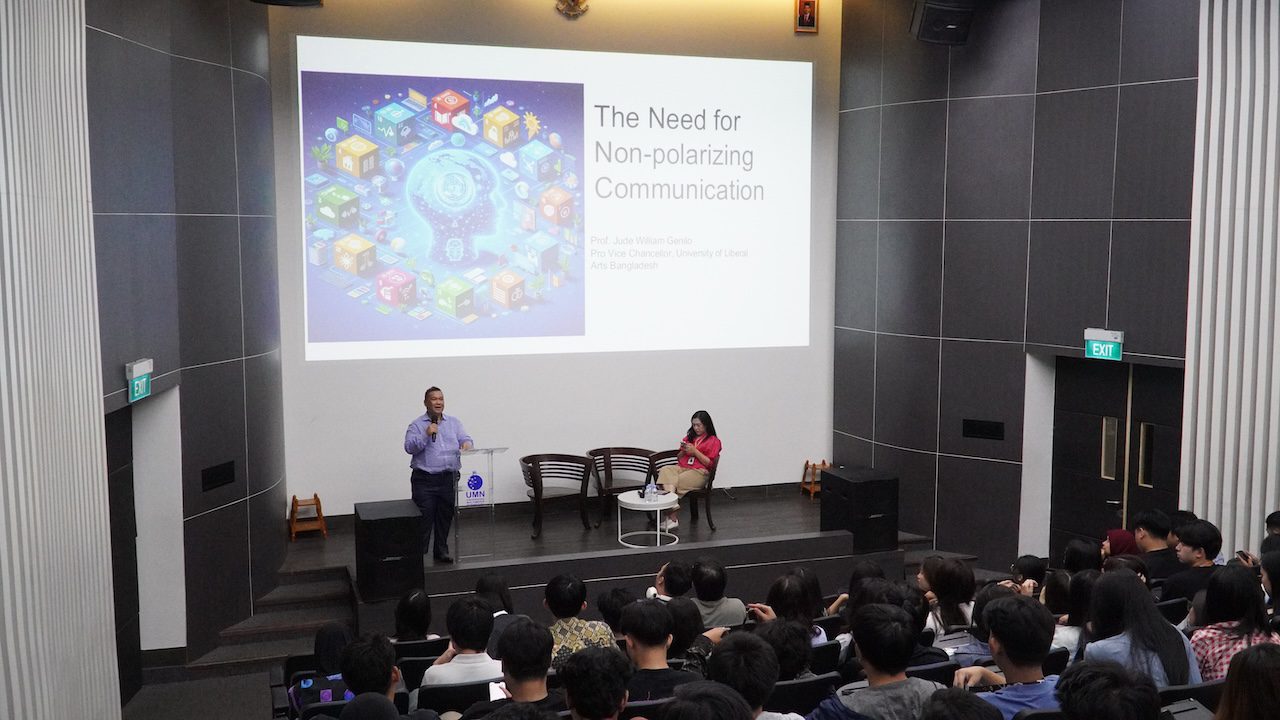
Guest lecture at The UMN Communications Faculty with Jude. (Doc. UMN)
Tangerang, (November 3, 2025) – The Faculty of Communication Sciences at UMN once again welcomed visiting professor Prof. Jude W.R. Genilo, PhD, Acting Vice Chancellor of the University of Liberal Arts Bangladesh (ULAB). During this session, Jude addressed the topic of “Professional Applications of Organizational Communication.”
Before delving into the topic, Jude shared the fundamentals of strategic communication, ranging from honesty and sincerity, transparency, comprehensibility, co-creation or collaboration, professionalism, and adaptability. These fundamentals are essential for students to understand what needs to be done before communicating.
“This is not easy to do in communication, especially with polarization. Where there are various differences in opinions, views, or group values. This is also complex, but fortunately for us, Asia is not among the countries with low polarization,” explained Jude.
Jude explained that on average, Asian countries have low levels of polarization. This is in contrast to most Western countries, which have relatively high levels of polarization, including the United States, Spain, Colombia, and others.
“Polarization can occur because it is human nature to constantly seek out differences. A simple example is that individuals who share the same religion will still look for differences between each other, whether in accent, tone of voice, or even opinion,” Jude added.
Jude also explained various types of polarization, ranging from belief polarization and partisan alignment to affective polarization, a condition in which a person dislikes another group for no apparent reason, based solely on group identity. These three forms of polarization can influence how individuals view issues, engage in debate, and interact in the public sphere.
Social Media, Artificial Intelligence, and Polarization
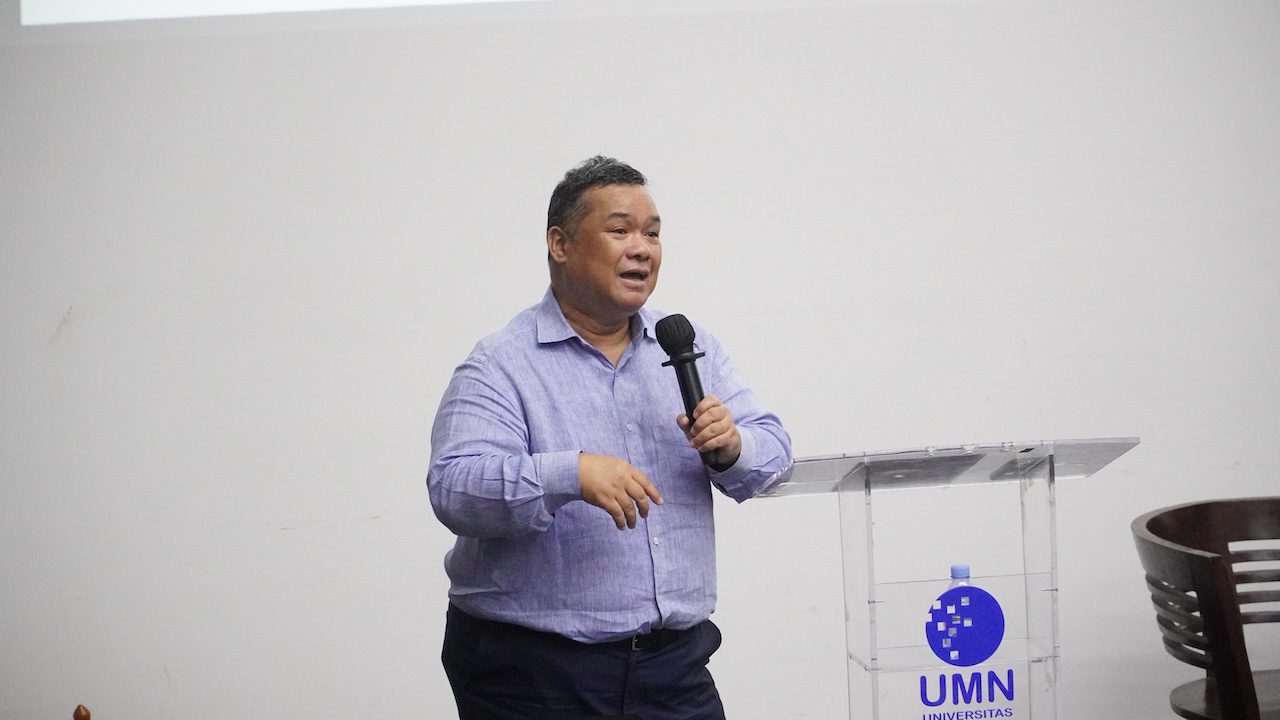
Guest lecture presentation by Jude. (Doc. UMN)
Jude emphasized that social media also contributes to increased polarization. This can be seen clearly in social media today, where there are many instances of attacks, hate speech, cyberbullying, racism, and various other negative effects caused by polarization.
“Therefore, we must be wise and selective in what we see when using social media. What we see actually feeds our minds, so we cannot immediately believe everything we see on social media. This is why trust in communication is important because the prevalence of disinformation can divide and increase polarization,” Jude explained.
Jude also explained that to build and become good communicators, students must be able to control what they see and consume on social media. In fact, social media algorithms can still be controlled by users. He encouraged students to balance their use of social media and real life so that they can become professional communicators.
“In addition to social media, the use of Artificial Intelligence (AI) also plays a role in supporting strategic communication. Although it may seem trivial, AI can support strategic and sustainable communication. Starting from algorithm transparency and ethics, digital literacy, providing factual and accurate information, strategic removal of consent, collaboration, and strategic framing,” Jude explained.
Jude emphasized that the world is currently facing a crisis of trust, and wise, reliable, and transparent communication is needed. Jude also believes that in the future, AI will contribute to and be used to create a more honest and trustworthy environment. Jude is confident that with positive algorithms, we can build a better world.
By Rachel Tiffany | UMN News Service
English translation by Levina Chrestella Theodora
Kuliah di Jakarta untuk jurusan program studi Informatika| Sistem Informasi | Teknik Komputer | Teknik Elektro | Teknik Fisika | Akuntansi | Manajemen| Komunikasi Strategis | Jurnalistik | Desain Komunikasi Visual | Film dan Animasi | Arsitektur | D3 Perhotelan , di Universitas Multimedia Nusantara.