UMN XXIX Graduation Ceremony: Graduating Students Ready to Face Global Challenges of AI & Sustainability
October 12, 2025
Equality, Diversity and Inclusion Policy
October 7, 2025Tangerang – Universitas Multimedia Nusantara (UMN) contributes to water sustainability through international research collaboration and engagement with government institutions at various levels. These efforts support water security through knowledge exchange, technological innovation, and environmental management initiatives.
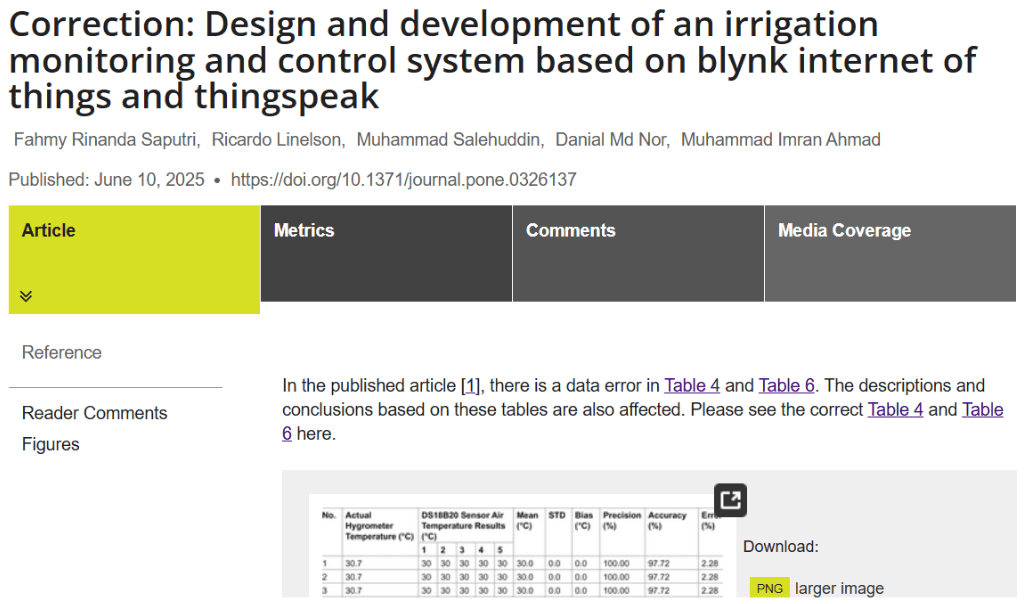
One example is the research conducted by UMN Engineering Physics lecturer, Mr. Muhammad Salehuddin, titled “Correction: Design and Development of an Irrigation Monitoring and Control System Based on Blynk Internet of Things and ThingSpeak.” Involving international experts from Malaysia, the study focuses on developing an IoT-based irrigation monitoring and control system to improve irrigation efficiency and promote sustainable water resource management. The involvement of international researchers demonstrates the global scope of this research, extending collaboration and expertise beyond Indonesia.
UMN also collaborates with local government institutions at the local and provincial levels to support environmental management, including water quality monitoring and wastewater management. These collaborations involve regulatory reporting, environmental data collection, and technical assessments that contribute to government efforts in maintaining environmental quality and supporting sustainable water management.
The results are documented through the university’s UKL-UPL (Environmental Management and Monitoring Efforts) reports, which are submitted to the relevant local government authorities. This ongoing reporting and monitoring process provides a formal mechanism for UMN to work with the government in monitoring water quality and wastewater management.
In 2025, UMN also participated in data collection for local government buildings under the DKI Jakarta Provincial Government, involving the Dinas Cipta Karya, Tata Ruang dan Pertanahan Provinsi DKI Jakarta. The activity contributed to the collection of environmental and building-related data for government facilities and provided an opportunity for UMN to support government efforts through data and technical information.
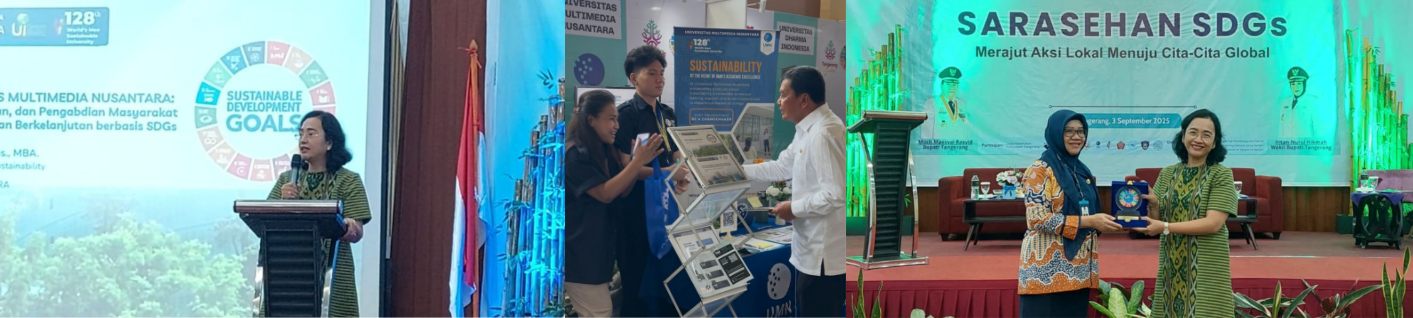
(Prof. Florentina Sari at the SDGs Forum of Tangerang Regency (Sarasehan SDGs Kabupaten Tangerang 2025)
For the regional-initiative, UMN participated in the SDGs Forum of Tangerang Regency (Sarasehan SDGs Kabupaten Tangerang 2025), organised by Bappeda Kabupaten Tangerang on 3 September 2025. The forum brought together representatives from government, academia, business, media, and civil society to discuss the implementation of the SDGs in the region. During the forum, UMN shared its sustainability practices and discussed how its academic, research, operational, and community engagement activities contribute to local sustainable development priorities.
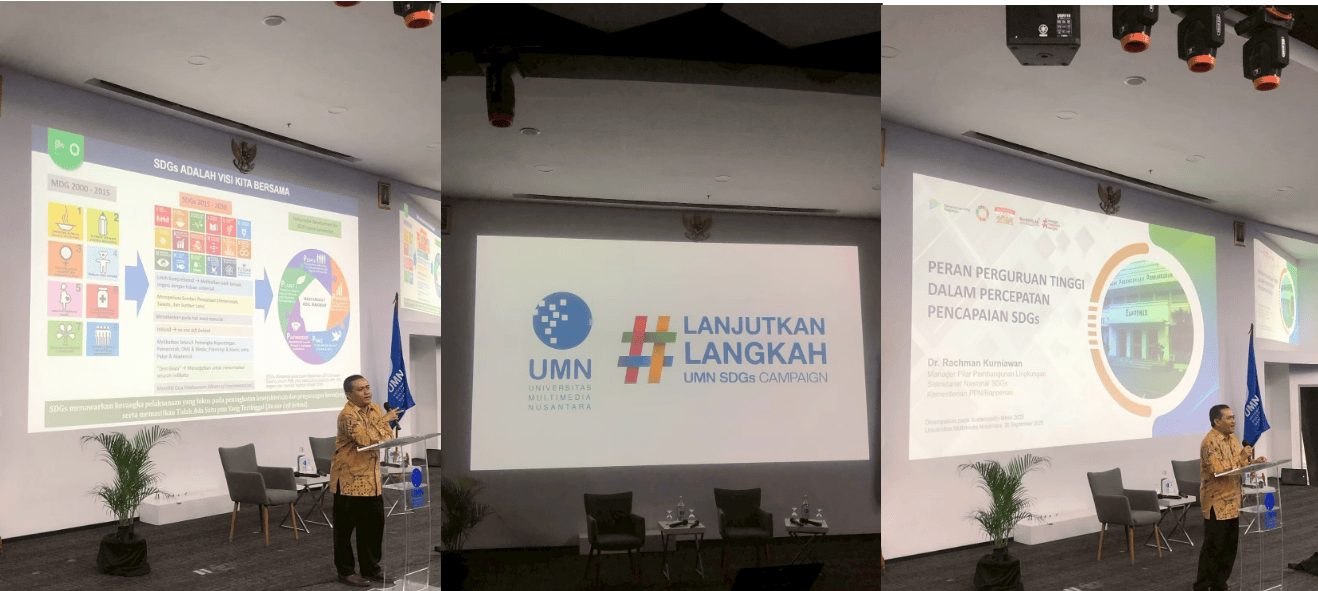
(Mr. Rachmat Kurniawan, UMN Sustainability talks 2025)
UMN’s collaboration with national government was also reflected in its Sustainability Week 2025, which included a Sustainability Talk involving academic, industry, and government representatives. One of the speakers was Rachman Kurniawan, Manager of Environmental Development at the Secretariat of Sustainable Development Goals, Ministry of National Development Planning/Bappenas. The discussion highlighted the importance of collaboration between government, industry, and higher education institutions in advancing sustainable development in Indonesia.
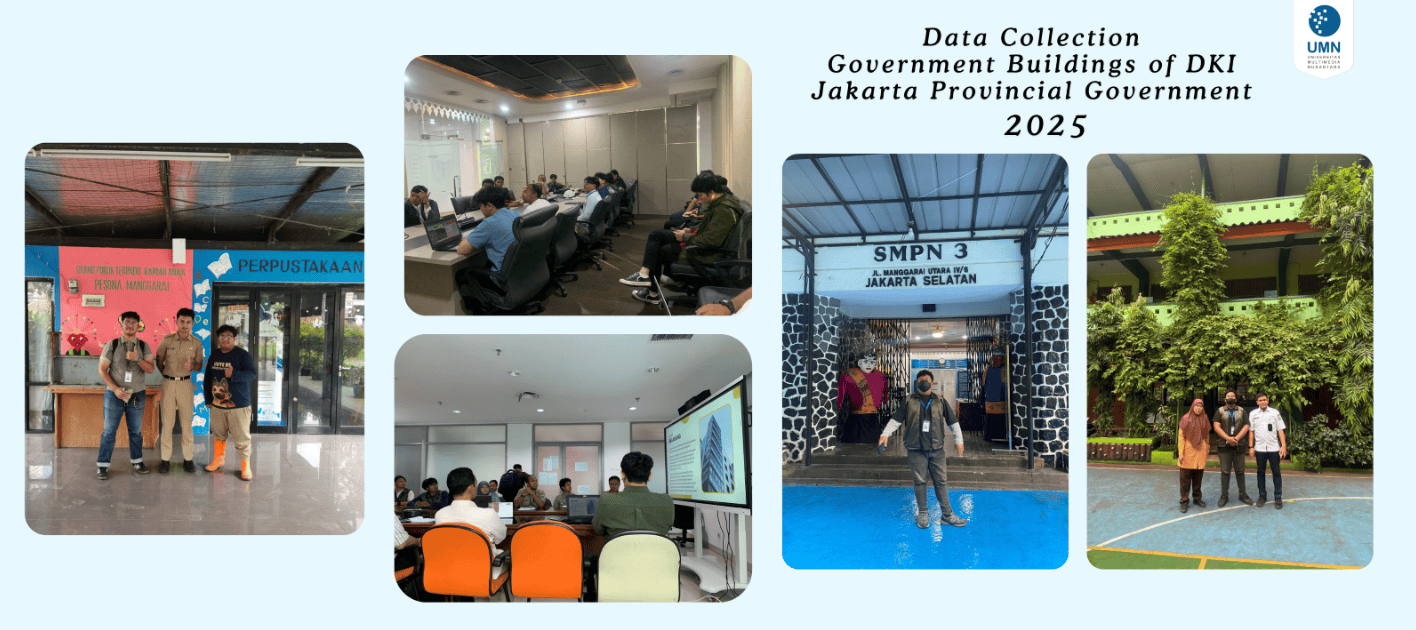
Universitas Multimedia Nusantara (UMN) contributes to water security initiatives through its collaboration with the DKI Jakarta Provincial Government, particularly in supporting the development of more sustainable and water-efficient buildings. UMN participated in the data collection of government buildings under the provincial administration of DKI Jakarta, providing information to support the assessment of building conditions and the identification of opportunities to improve building performance, including water management and resource efficiency. This collaboration reflects UMN’s engagement with national-level public institutions in supporting government efforts toward more sustainable building management and improved water resource efficiency.
Through these activities, UMN maintains engagement with local, regional, national government and global institutions on environmental management, water-related data, and sustainable development. These collaborations provide opportunities to share environmental information, monitor water-related aspects of campus operations, and contribute academic and institutional resources to broader government sustainability efforts. At the global level, UMN also contributes to international research collaborations addressing environmental sustainability and water-related issues, extending its academic engagement beyond national boundaries.