
Cross-Border Collaboration: UMN and GMLS Use Music and Stories to Teach About Disasters
December 11, 2025
Good Governance (Student Union & Student Organization Elections)
December 10, 2025Throughout 2025, Universitas Multimedia Nusantara (UMN) conducted dedicated educational outreach programmes to extend access to knowledge, practical skills, and capacity-building opportunities beyond its enrolled student population. These initiatives engaged local residents, micro, small, and medium-sized enterprises (MSMEs), community organisations, professionals, school communities, and alumni through training programmes, workshops, environmental education, and community-based learning activities.
- Business Administration and Financial Literacy Training for Local MSMEs
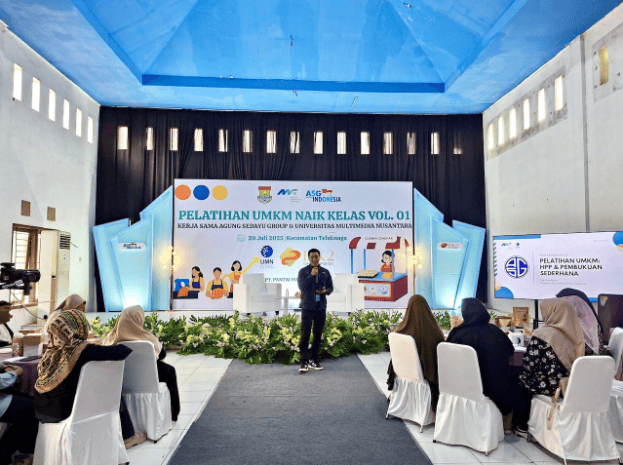 On 29 July 2025, UMN collaborated with PT Agung Sedayu Group to organise a business administration and bookkeeping training programme for local MSMEs in Teluknaga District, Tangerang Regency. The programme involved local entrepreneurs, the Agung Sedayu Group CSR team, and UMN Master of Technology Management (MMT) students, under the supervision of UMN lecturer Prio Utomo. The training provided practical knowledge in two key areas: calculating Cost of Goods Sold (COGS) and implementing simple bookkeeping practices for small businesses. Through this initiative, UMN contributed to strengthening the financial literacy and business management capabilities of local entrepreneurs, supporting their ability to manage business operations and improve competitiveness.
- Community Empowerment through Mangrove Education and Disaster Mitigation
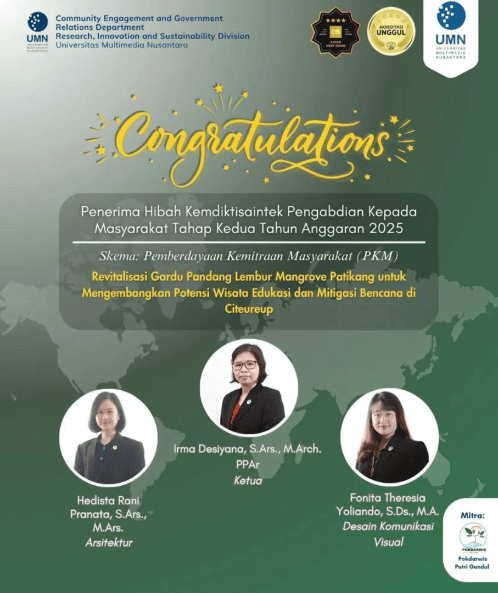 UMN also supported community empowerment through a community service project titled Revitalisation of the Lembur Patikang Mangrove Observation Tower to Develop Educational Tourism and Disaster Mitigation Potential. The project received the second phase of the 2025 Ministry of Higher Education community service grant. Led by UMN lecturers from the Faculty of Arts and Design, the initiative adopted a participatory design approach involving Architecture and Visual Communication Design students. Its objectives included revitalising the mangrove observation facilities and developing interactive educational information boards to promote environmental learning and disaster mitigation awareness.
Located in Citeureup, Panimbang, Pandeglang Regency, Lembur Mangrove Patikang is a four-hectare mangrove conservation area that also supports local livelihoods through fisheries, mangrove-based products, and community-based ecotourism. The initiative builds upon existing environmental education activities for residents and visitors, including training on mangrove ecosystem benefits, conservation, and sustainable utilisation.
By strengthening educational tourism infrastructure and community participation, the project seeks to expand environmental learning opportunities while supporting local economic development.
- Artificial Intelligence and Digital Skills Training for the Wider Community
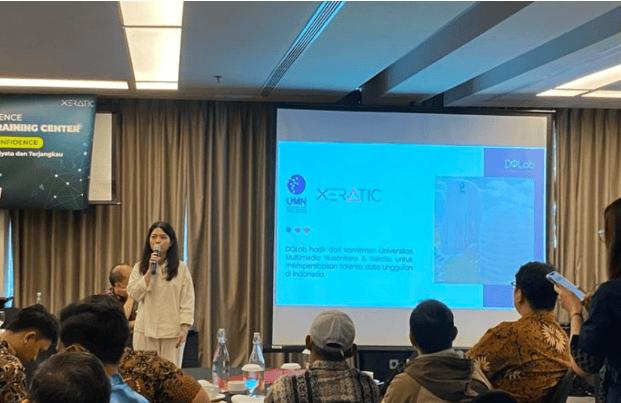 In June 2025, UMN collaborated with DQLab to establish the AI Training Center, an initiative designed to provide practical and accessible artificial intelligence education for students, professionals, and industry practitioners. The programme aims to bridge the gap between general awareness of AI and its practical application in professional and business environments. Participants are introduced to AI applications through real-world case studies, including database chatbot applications, and receive guidance from experienced mentors on implementing AI solutions to improve productivity and business processes.
Through this initiative, UMN promotes inclusive and continuous digital skills development, recognising the importance of equipping wider society with the competencies needed to navigate technological transformation. The programme also supports the development of AI capabilities as part of UMN’s broader commitment to sustainable education.
4. Disaster Preparedness Education for Local Communities
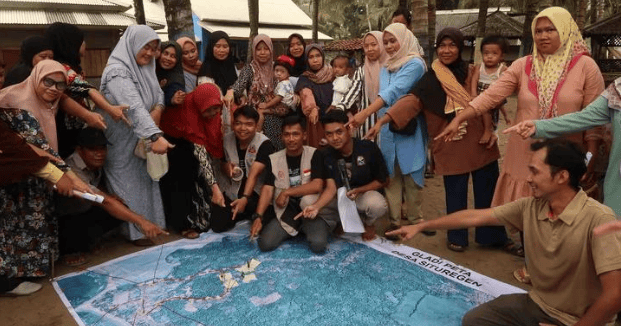 UMN students also participated in community-based educational initiatives through their engagement with Gugus Mitigasi Lebak Selatan (South Lebak Disaster Mitigation Group). One documented activity was the Sobat Siaga Tsunami initiative, which involved educational outreach on disaster preparedness, including introducing community members and children to the importance of emergency preparedness bags (tas siaga bencana).
The initiative contributes to strengthening disaster awareness and preparedness among communities living in disaster-prone areas. By introducing practical emergency preparedness knowledge, the activity supports community resilience and encourages the development of a culture of disaster risk awareness.
5. Professional Capacity Building through Digital Journalism Training
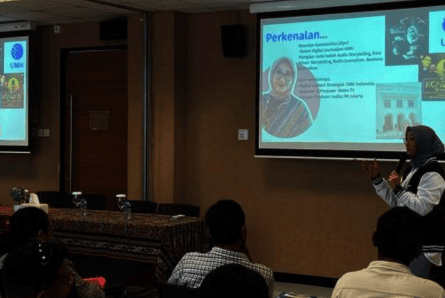 UMN extended its educational outreach beyond local communities by providing professional capacity-building opportunities for journalists from Timor-Leste through digital journalism training. The initiative reflects the university’s commitment to sharing academic knowledge and professional competencies with wider regional communities.
Through professional training, participants gained opportunities to strengthen their digital journalism knowledge and skills, supporting the development of media capabilities and access to quality information in the digital era.
6. Continued Learning and Knowledge Sharing through Alumni Engagement
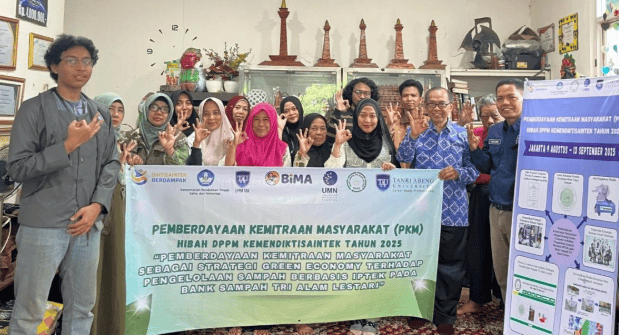 UMN also extended educational opportunities to its alumni through KAMI UMN activities in 2025. The Alumni Homecoming programme, held on 8 February 2025, featured an entrepreneurship workshop and networking session, alongside creative skills workshops in crochet and totebag painting.
These activities provided alumni with opportunities for continued learning, professional networking, entrepreneurial development, and creative skills enhancement beyond their formal university education.
Through these diverse outreach initiatives, UMN demonstrates its commitment to making education accessible and relevant to wider society. By engaging local entrepreneurs, community organisations, school communities, professionals, and alumni, the university extends its educational contribution beyond campus boundaries and supports lifelong learning, economic empowerment, environmental awareness, digital inclusion, and community resilience