Representing Student Voices Through Student Union
December 10, 2025
PANDU-WISTA: The Youth Uniting Our Village
December 5, 2025Universitas Multimedia Nusantara (UMN) strengthened its engagement in sustainable development policy dialogue throughout 2025 through strategic discussions with international organizations and participation in regional government-led SDG initiatives. These engagements reflect UMN’s commitment to contributing academic perspectives, research expertise, and institutional initiatives to the development and implementation of sustainability strategies beyond the university.
Engaging with UNESCO on Education, Sustainability, and Youth Development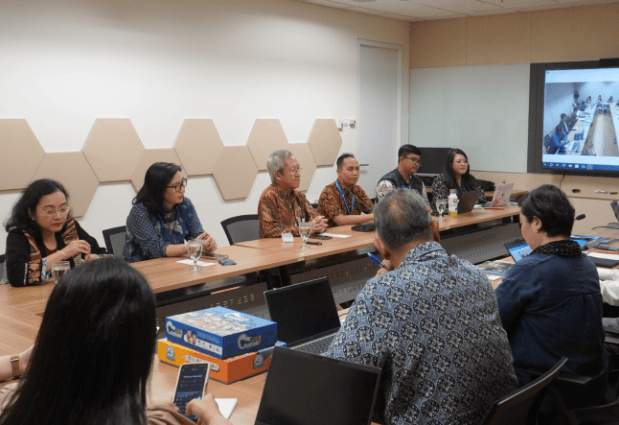
On 22 June 2025, UMN held a strategic dialogue with the UNESCO Regional Office in Jakarta to explore opportunities for collaboration in education, sustainability, and youth development across Southeast Asia. The meeting was attended by UMN Rector Dr. Andrey Andoko and Ms. Maki Katsuno-Hayashikawa, Director and Representative of UNESCO Jakarta.
The discussion explored potential collaborative initiatives, including student participation in UNESCO programmes, public awareness campaigns on artificial intelligence (AI) and digital rights, and creative entrepreneurship. UMN also presented its sustainability initiatives through the Center for Sustainability, which integrates the Sustainable Development Goals (SDGs) into academic curricula, research activities, and university-wide programmes.
The dialogue provided an opportunity to exchange perspectives on emerging challenges in education, digital transformation, and sustainable development, while identifying potential strategies to empower young people and strengthen their contribution to the SDGs. It also highlighted the importance of connecting academic institutions with international organizations to facilitate knowledge exchange and collaborative approaches to addressing sustainability challenges.
Contributing to Regional SDG Development Planning in Tangerang Regency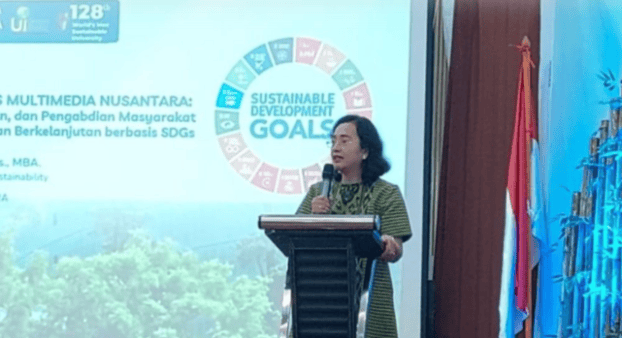
UMN further strengthened its engagement at the regional level through its participation in the 2025 Tangerang Regency Sustainable Development Goals (SDGs) Forum, held on 3 September 2025. Organized by the Tangerang Regency Regional Development Planning Agency (Bappeda), the forum brought together representatives from local government, academia, the private sector, media, and civil society to strengthen multi-stakeholder engagement in achieving the SDGs.
The forum provided a platform for stakeholders to identify regional development challenges, exchange perspectives, and discuss strategies for integrating the SDGs into local development priorities. Discussions also addressed the alignment of the SDGs with the Regional Medium-Term Development Plan (RPJMD) and the National Medium-Term Development Plan (RPJMN), emphasizing the importance of coordinated planning and collaborative action.
Through its Center for Sustainability, UMN participated in this multi-stakeholder dialogue, reinforcing the role of higher education institutions in supporting evidence-informed regional development. Universities can contribute to the policy development process by providing academic insights, identifying local challenges, sharing research-based solutions, and facilitating collaboration between government institutions and other development stakeholders.
Strengthening the University’s Role in Advancing the SDGs
These two engagements demonstrate UMN’s efforts to connect academic expertise with broader sustainability agendas at both international and regional levels. Through dialogue with UNESCO and participation in government-led SDG forums, UMN seeks to contribute to the exchange of knowledge, identification of development challenges, and exploration of collaborative strategies to advance sustainable development.
UMN remains committed to strengthening partnerships with government institutions, international organizations, and other development stakeholders. By connecting education, research, and institutional expertise with public-sector development priorities, UMN aims to support more inclusive, evidence-informed, and adaptive approaches to achieving the Sustainable Development Goals.