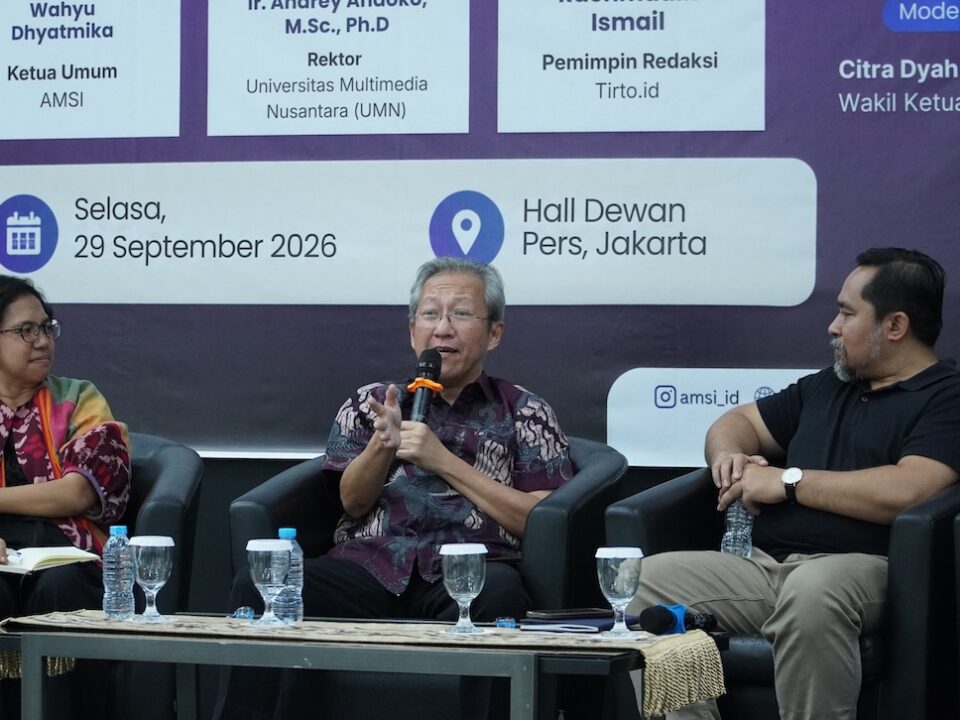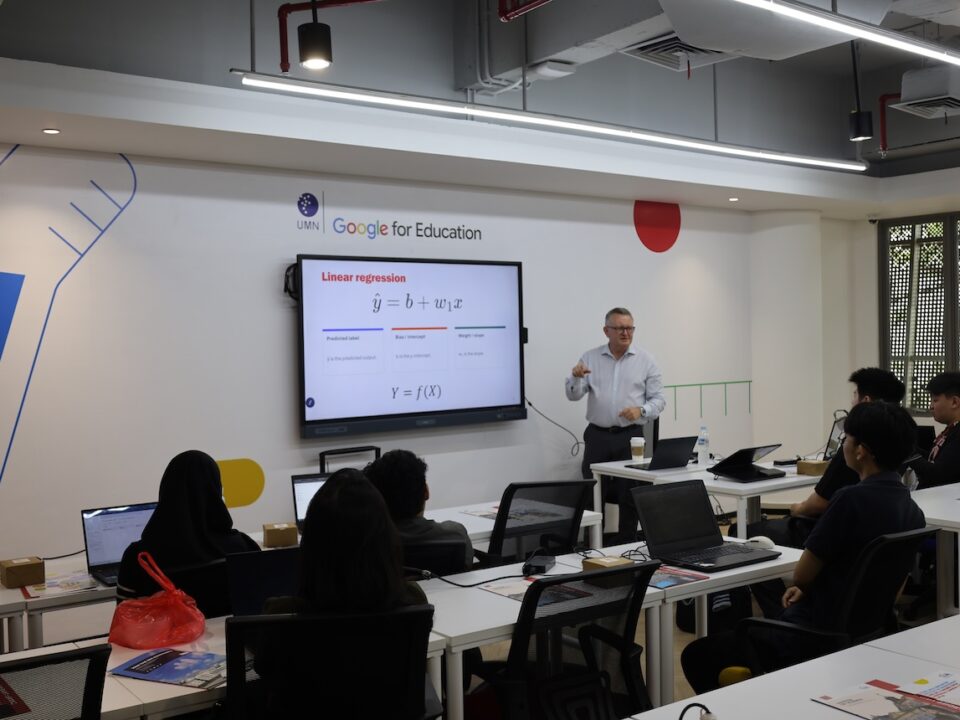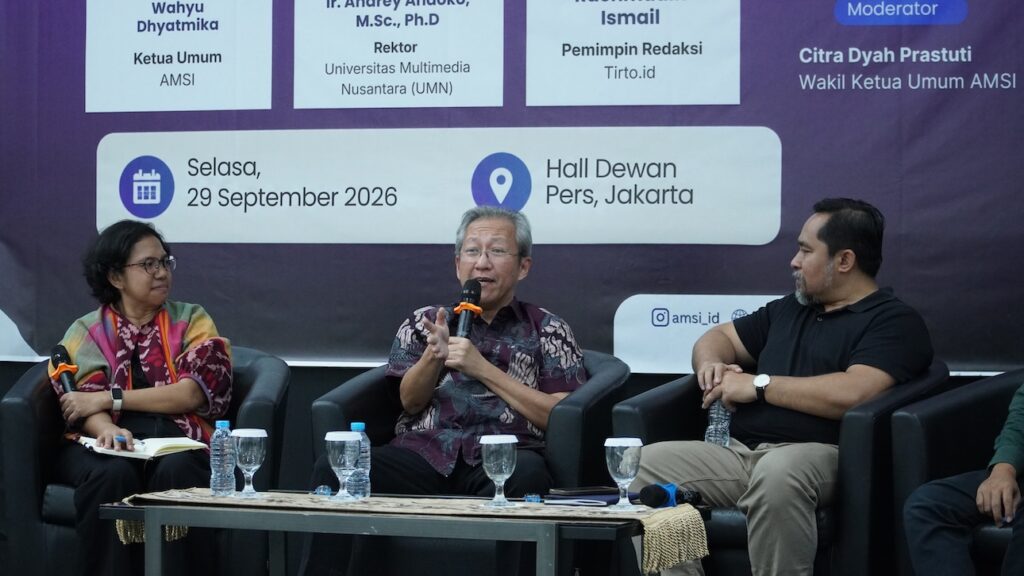

Interesting Content Isn’t Enough: UMN Rector Highlights “News We Can Use” in the Era of the News Creator
October 8, 2026
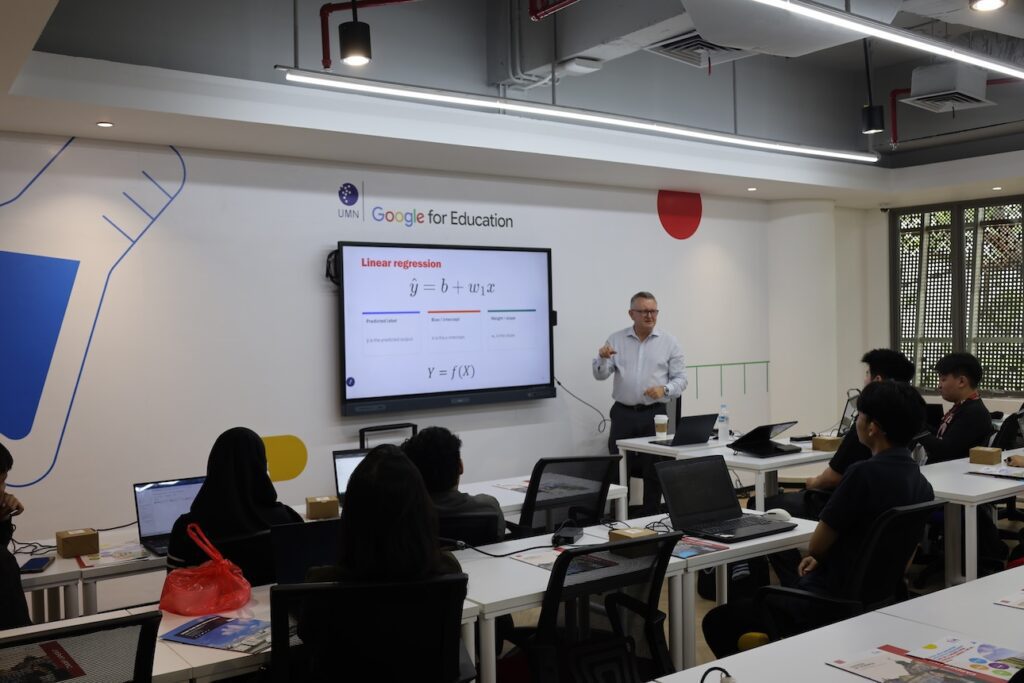
AI Workshop by Cardiff University Equips UMN Students with Everything from the Basics to the Ethics of Using AI
October 8, 2026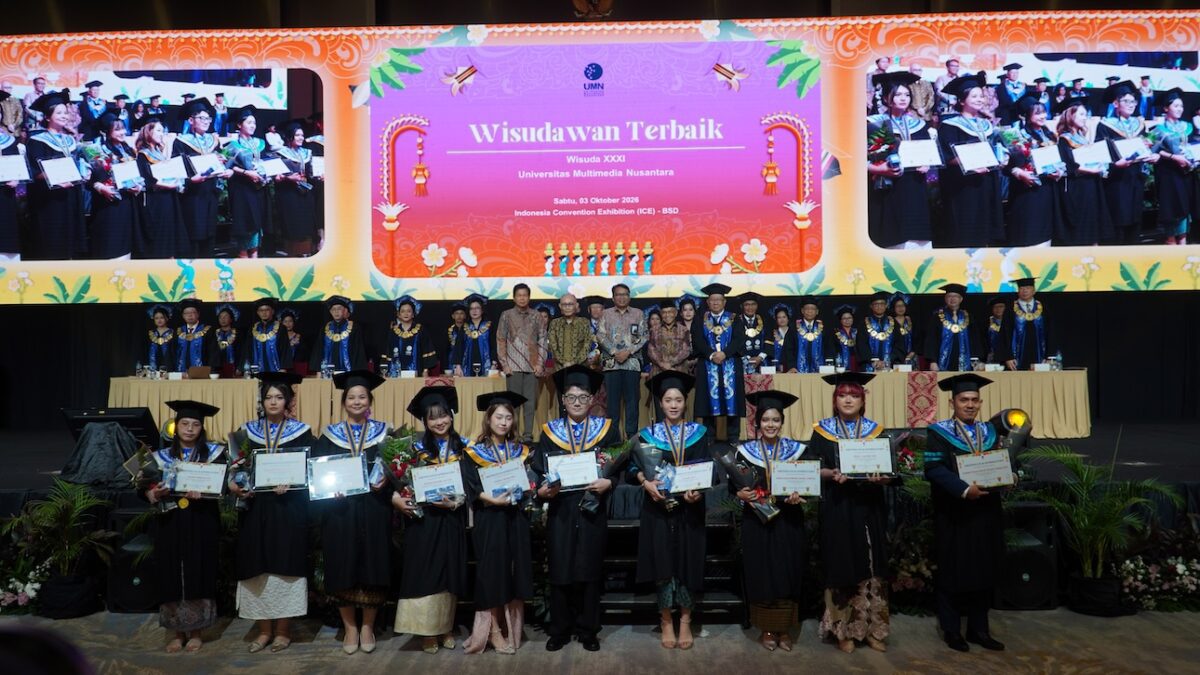
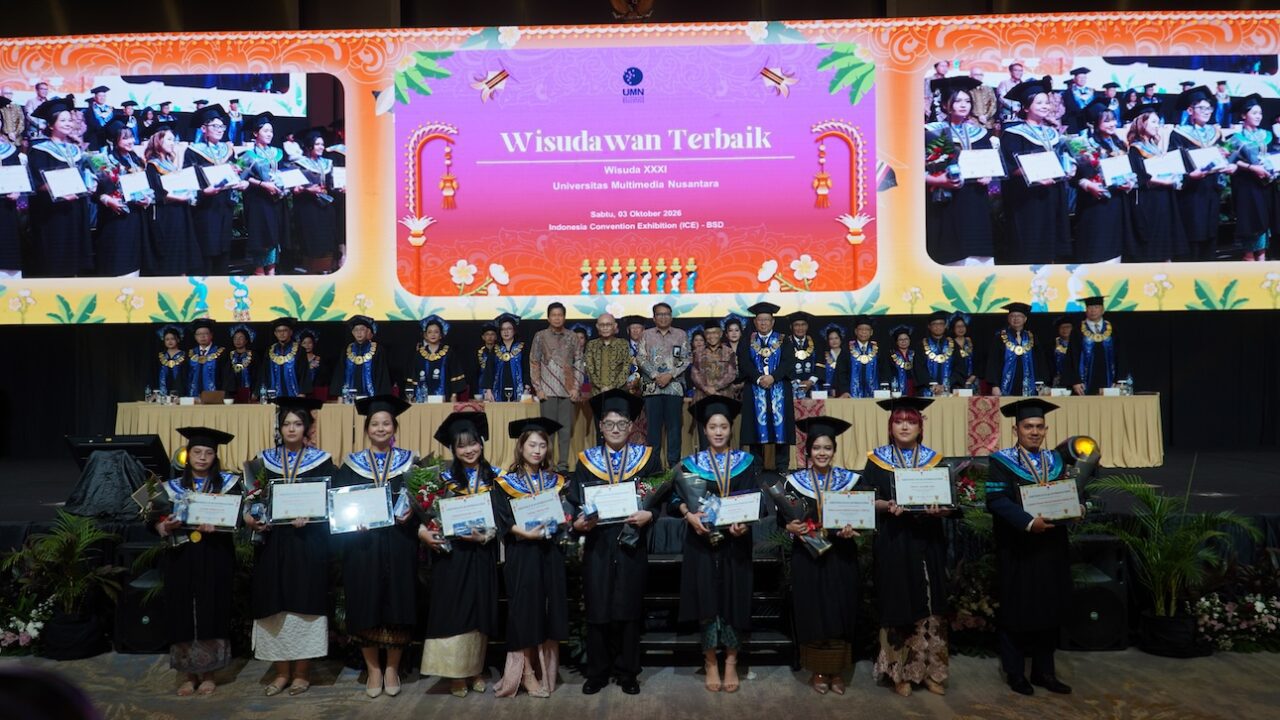
Group photo of the graduates and the UMN senate (Doc. CorCom UMN)
ICE BSD, Saturday (03/09/2026) – UMN has once again held a commencement ceremony, graduating 1,608 students. The moment is an important stepping stone for UMN’s graduates as they move into the professional world, ready to make a real contribution in an era of dynamic change.
The 31st UMN Commencement marks the beginning of this journey as alumni step into the professional sphere and deliver their best work. In an era of global dynamics accelerated by advances in artificial intelligence (AI), graduates cannot rely on specific technical expertise alone; they are also expected to be responsive and to keep sharpening their capabilities on an ongoing basis.
According to Dr. Andrey Andoko, M.Sc., Rector of UMN, graduation is an important starting point for students as they begin their careers and deliver their best work. He said alumni have ample opportunity to enter the professional world or step into business, whether as entrepreneurs or self-preneurs.
Andrey said, “The knowledge and competencies you have gained are the main provisions for starting a career and bringing real work into the future. This achievement is deeply meaningful for those of you who have been absorbed into the workforce amid the dynamics of the national and global economy. The same goes for those who choose the path of entrepreneurship: your role is invaluable in lifting Indonesia’s economy by opening up new jobs.”
The Transformation of Work by AI: Why Beyond-AI Skills Matter for Graduates
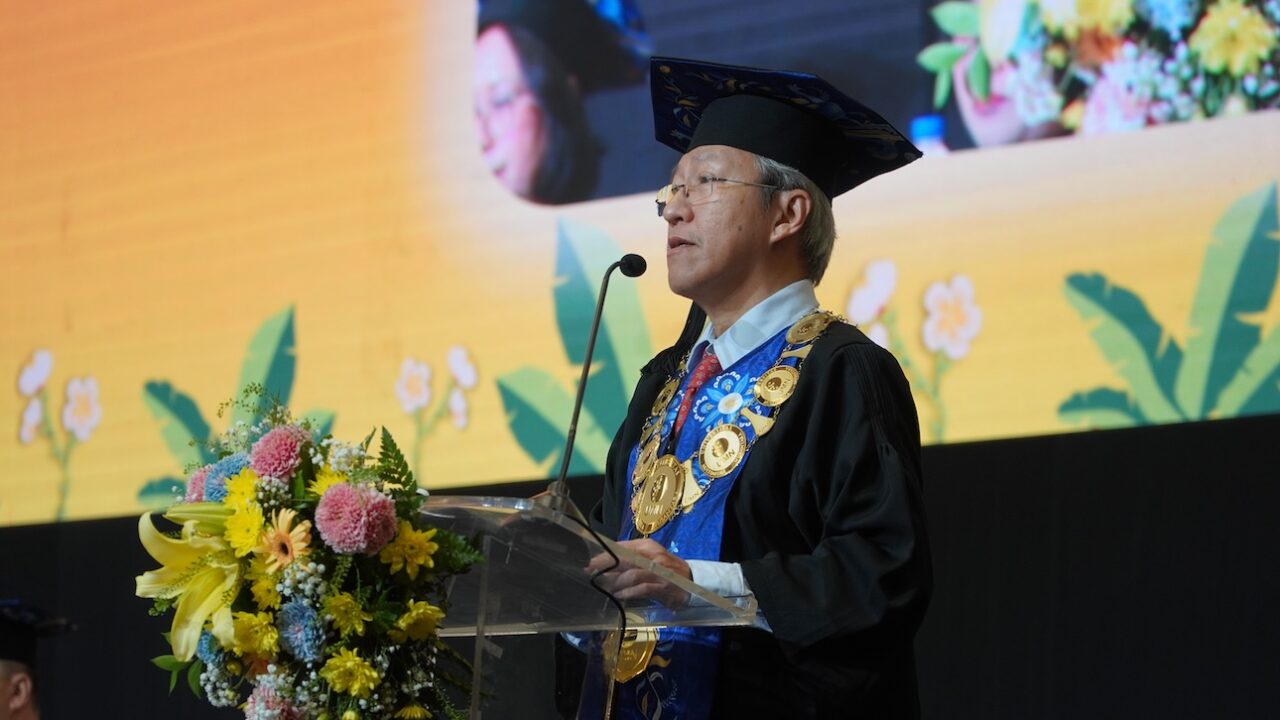
The 31st Commencement address by the Rector of UMN (Doc. CorCom UMN)
The main challenge facing graduates today is the rapid development of technology, particularly artificial intelligence (AI). According to Andrey, a command of AI will become an increasingly crucial baseline qualification in the world of work, even as its implementation in national industry continues to progress.
He added that artificial intelligence will go beyond its basic role as a means of driving human efficiency. Industry will shift into a phase of co-existence, a situation in which human workers collaborate directly with artificial intelligence systems and advanced robotics.
“Where AI was previously used only as a means of supporting efficiency and co-creation, we are now moving into an era of co-existence—a time when humans live alongside and work directly with intelligent robots,” he explained.
Alongside technical expertise in their own fields, graduates must also sharpen their fundamental human skills. A command of artificial intelligence is no longer enough on its own without critical thinking, communication, and collaboration—the crucial competencies that lie beyond the limits of technology, or beyond AI.
Good character was also emphasized by Andrey as a crucial element in supporting graduates’ readiness for the professional sphere. This character formation is rooted in instilling UMN’s 5C values—Caring, Credible, Competence, Competitive, and Customer Delight—throughout a student’s academic journey at UMN.
Creating Future-Ready Graduates Through a Commitment to Lifelong Learning
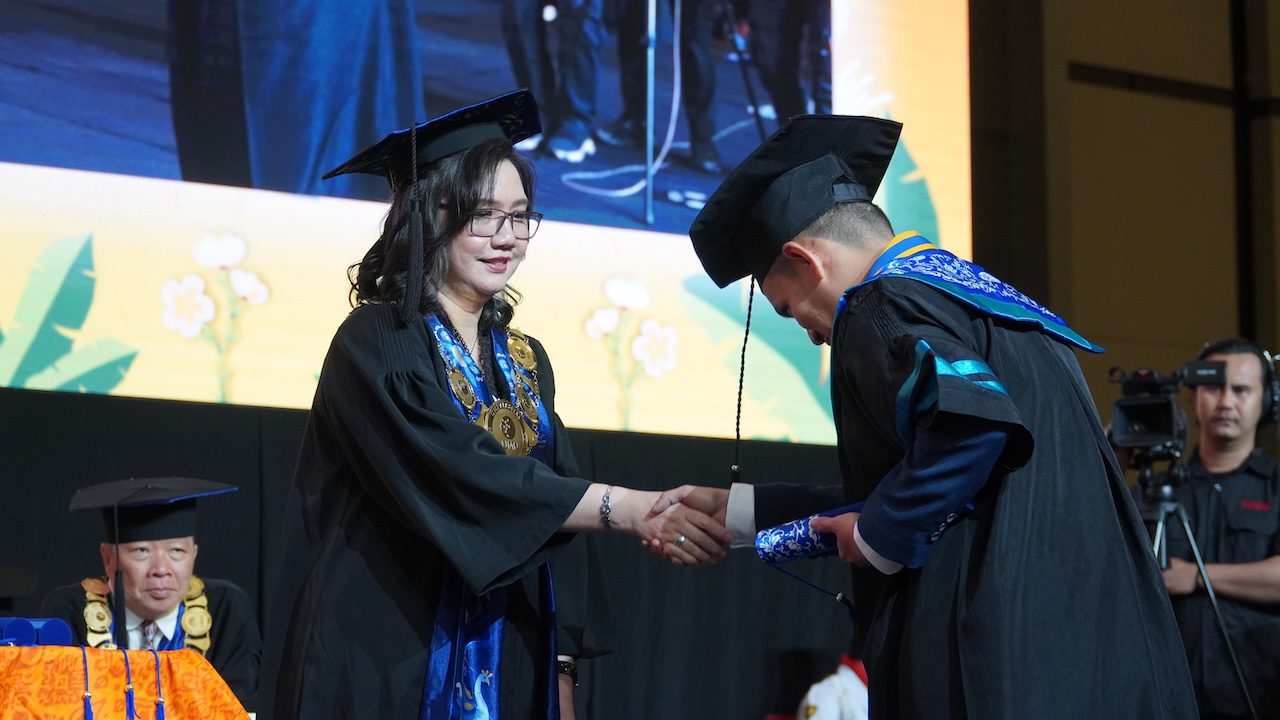
The inauguration of graduates by UMN’s Vice Rector for Student Affairs (Doc. CorCom UMN)
Beyond the academic grounding gained in the lecture hall, future readiness depends largely on the ability to adapt. The dynamics and shifting demands of industry require everyone to continually update and develop their skills.
Andrey cited a World Economic Forum report in stressing that the shelf life of a skill is now generally under five years, especially in high-tech fields, where change moves faster still. Graduates are therefore expected to have a strong capacity for adaptation and to keep refreshing their understanding.
“It’s important for us to realize that the expertise we have today may no longer be relevant a few years from now. Being adaptive and agile is therefore a must. We are expected to keep renewing ourselves and learning again, which makes a lifelong learning mindset absolutely essential,” Andrey said.
To keep pace with the times, graduates must also continually sharpen their ability to learn, unlearn, and relearn—letting go of outdated expertise and proactively adopting new, relevant competencies.
This initiative reflects UMN’s commitment to educating future-ready graduates: graduates who are not only ready to enter today’s job market, but also resilient and responsive in anticipating future dynamics of change.
Strengthening Employability and Internationalization
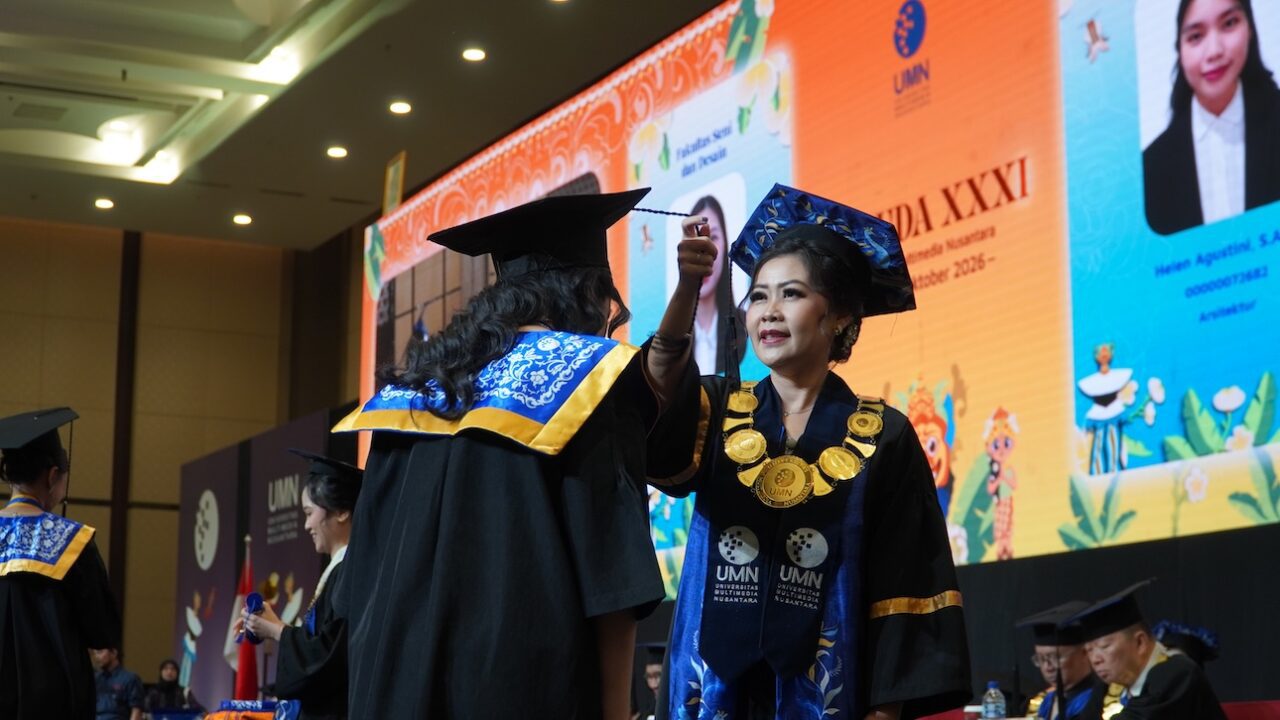
The inauguration of graduates by UMN’s Vice Rector for Academic Affairs and Internationalization (Doc. CorCom UMN)
To support its graduates’ readiness, UMN continually strengthens strategic partnerships with industry at home and abroad. This synergy is a concrete step by UMN toward optimizing workforce absorption while ensuring that its alumni’s qualifications remain aligned with professional requirements.
In addition, as an expression of its commitment to becoming a World Class University, UMN consistently builds its reputation on the global stage. This internationalization is realized through lecturer exchanges, student exchanges, visiting professor programs, and research and scientific publication partnerships with universities abroad.
UMN’s international achievements support that effort. In 2025, UMN ranked 126th globally in the UI GreenMetric World University Ranking. UMN also secured a 5 Stars (Excellent) rating in the QS Rating System for teaching, employability, online learning, and inclusiveness. Its position has also strengthened regionally, breaking into the Top 500 in Asia and the Top 100 in Southeast Asia in the QS World University Rankings.
Beyond that, UMN broke into the world’s 151–200 band for Art & Design in the QS World University Rankings by Subject. Its commitment to sustainability is also reflected in its global ranking of 801 in the Times Higher Education (THE) Impact Rankings.
These initiatives reflect UMN’s dedication to delivering high-quality education to produce graduates who are adaptive, ready to contribute to Indonesia, and able to compete globally.
Through the 31st Commencement, UMN hopes its graduates will apply the qualifications and core values formed during their studies, so they can continue to grow professionally while also making a real contribution through entrepreneurship.
“It is our great hope that our alumni will grow into adaptive individuals with a tenacious learner’s spirit, always ready to meet the challenges of the age. That they will emerge as future-ready graduates, contribute to Indonesia’s progress, and compete with distinction on the global stage,” Andrey concluded.
By Patricia Valencia | Public Relations Officer
English translation by Levina Chrestella Theodora
Kuliah di Jakarta untuk jurusan program studi Informatika| Sistem Informasi | Teknik Komputer | Teknik Elektro | Teknik Fisika | Akuntansi | Manajemen| Komunikasi Strategis | Jurnalistik | Desain Komunikasi Visual | Film dan Animasi | Arsitektur | D3 Perhotelan , di Universitas Multimedia Nusantara. www.umn.ac.id